Biden’s promise will weigh on court nominee

Joe Biden’s promise two years ago during a debate in South Carolina about a future pick for the Supreme Court will create undue pressure, at least temporarily, on his nominee to replace retiring Justice Stephen Breyer.

Here’s what then-candidate Biden said: “I’m looking forward to making sure there’s a Black woman on the Supreme Court, to make sure we in fact get everyone represented.”

With Breyer’s announcement that he will step down, Biden now gets to perform what is arguably a president’s most important task — and to make good on his campaign promise, which he confirmed the other day. Selecting a Black liberal would be an excellent move, since conservative Clarence Thomas has been the court’s lone Black justice for the last three decades. A fourth woman would also be a welcome addition.

This all sounds good, so what’s the problem?

The problem is that selecting a nominee to serve on the highest court in the land is supposed to involve an exhaustive process to find the most qualified person, regardless of sex or race. In practical political terms that is not always the case, but for the good of the nation and the nominee it should at least appear that way.

If you flatly eliminate all men and all non-Black women, you dismiss about 93% of the population. Logically and mathematically, you can’t promise that the best justice will necessarily come from just 7% of the population. She very well might. But you shouldn’t announce that two years before beginning a search.

I’m sure when Joe Biden made his promise he had the best interests of the nation at heart. But he was also trailing in his effort to win the Democratic presidential nomination and desperately needed a win in South Carolina, where six in 10 Democratic voters are Black. Prior to the debate, Rep. James Clyburn of South Carolina urged Biden to make the promise.

Biden isn’t the first to make such a pledge: In 1980 Ronald Reagan promised to appoint a woman to the Supreme Court. A year later Reagan nominated Sandra Day O’Connor as the first female justice.

I believe that nominating justices isn’t just a matter of picking the best individual candidates, but also making sure the composition of the bench is balanced. The historical absence of women in Reagan’s era, and of Black women in Biden’s time, makes it legitimate to focus on such criteria. But with such perspective comes controversy.

Biden’s likely choices include Judge Ketanji Brown Jackson of the U.S. Court of Appeals in the District of Columbia, who clerked for Justice Breyer; Justice Leondra Kruger of the California Supreme Court, and Judge J. Michelle Childs of the Federal District Court in South Carolina. Any of them might be the best for the job, but each will be confronted by the fact that the president cut the field by 93% before making his choice. If nothing else, that’s ammunition for Biden’s opponents.

A few weeks after making his South Carolina pledge, candidate Biden said in another debate, “I commit that I will in fact pick a woman to be vice president.” His on-stage opponent that night, Vermont Sen. Bernie Sanders, wouldn’t guarantee he’d pick a woman, saying, “In all likelihood I will.”

Biden’s pledge, leading to his selection of Kamala Harris, prompted pushback from conservatives such as Washington Examiner columnist Kaylee McGhee, who wrote that Biden’s choice “will be seen as the most inclusive option, rather than the most accomplished.”

Whoever replaces Breyer, one of her first challenges will be to help decide whether affirmative action should continue as practiced in college admissions. The Court recently agreed to weigh whether race-conscious admission practices at Harvard and the University of North Carolina are lawful. Present law is rooted in a 2003 decision that said it is permissible to consider race as a factor to achieve racial diversity at schools.

The Supreme Court needs a Black woman. It’s unfortunate that she will face the unintended consequence of having to refute those who assert that a political battle in South Carolina got her the job.

Copyright 2022 Peter Funt distributed by Cagle Cartoons newspaper syndicate.

Peter Funt’s new memoir, “Self-Amused,” is now available at CandidCamera.com.

Comments Off on Biden’s promise will weigh on court nominee

Dog walkers know rules of the road

“How cute. What’s his name?” I get that several times a day while walking our female Shih Tzu, Abigail. So it is in dog walking protocol: Everyone wants to know Abbie’s name, but no one ever asks mine.

Though fewer people are sheltered at home these days, dog walking doesn’t seem to be waning in my Central California neighborhood — if anything, it’s increasing. There’s the Poodle who is always wearing a heavy coat, even on the warmest days. The German Shepherd, held tightly on a very short leash by a guy who marches militaristically up the street as Abbie and I scurry out of the way. The elderly Schnauzer who can no longer walk, but gets pushed every afternoon in a baby stroller.

When we encounter a person without a dog who wants to pet Abbie, the polite ruse goes like this. Abbie jumps up, tail wagging furiously, and licks their hand. I know this will happen because she does it unfailingly with everyone we meet. “Oh, wow, she really loves you!” I exclaim. And the stranger walks off feeling special.

Some dogs we encounter are aggressive. Every evening we see a large, white mixed breed who growls and strains on his leash. The guy struggling to hold him back always seems mildly embarrassed, shouting “No!” as if he’s never witnessed this behavior before.

Abbie doesn’t enjoy wet weather anymore than I do, so she dutifully wears a red raincoat that my wife Amy made. It looks nice, but somehow by the time we get home Abbie is always soaking.

On daily walks I carry the plastic bag that my newspaper was delivered in. I’m fastidious about cleaning up, as I believe most dog walkers are. But a few folks seem callously irresponsible which is annoying, because as Larry David explained in a recent episode of “Curb Your Enthusiasm,” when the mess gets in the tread on running shoes, it’s really tough to clean.

That said, I’m apparently wrong to toss the bag in the nearest residential trash bin. None other than Dear Abby, Jeanne Phillips, wrote last month: “Readers, encourage dog walkers to take a larger bag with them or wear a fanny pack with multiple compartments to transport their pets’ ‘souvenirs’ back to their own home.”

I had no idea there could be a market for fanny-poop-packs, although I doubt Larry David would ever wear one.

I recently read on The Hustle website about a guy in New York City named Ryan Stewart who claims to be earning over $100k per year walking dogs. Sounds like a terrific job. But I don’t see how Abbie could possibly afford to pay me.

Copyright 2022 Peter Funt distributed by Cagle Cartoons newspaper syndicate.

Peter Funt’s new memoir, “Self-Amused,” is now available at CandidCamera.com.

Comments Off on Dog walkers know rules of the road

New Year. New Laws. New Disparities.

The pastiche of new state laws taking effect as the New Year begins underscores how different we are — at least in the eyes of legislators — on matters small and large.

In New York State, for example, Styrofoam containers for takeout food are now prohibited by law, as are those pesky Styrofoam peanuts. But 46 other states have no such statewide prohibition, at least not yet. In California it’s now illegal to distribute tiny ketchup packets unless they are specifically requested, while in Rhode Island single-use straws are similarly restricted.

Twenty-one states are raising minimum wage, but differences are dramatic. Virginia implemented one of the largest increases, $1.50 an hour, bringing the state’s rate to $11.00. Michigan, on the other hand, gave minimum-wage earners a minuscule 22-cent increase to $9.87 per hour.

Not surprising in light of the nation’s political climate are new laws about voting. California and Nevada have made voting by mail a permanent option for all registered voters. Arkansas, however, has a new law prohibiting the distribution of absentee ballots unless specifically requested.

Another trend that follows national headlines involves police behavior. Louisiana has a new law prohibiting chokeholds, except in cases where great bodily harm in threatened. In Connecticut, an officer’s deliberate failure to activate a body camera can now be cited at trial in cases involving excessive force. A new law in California limits the use of tear gas and rubber bullets by police during protest demonstrations.

There are new laws affecting kids and animals. Georgia tightened protections for foster children, adding new safeguards against sexual and emotional abuse. Illinois enacted a law requiring restaurants to serve water, milk or juice as the default beverage with kids’ meals, rather than soda.

Illinois now forbids people from possessing animals if they have been convicted twice of animal abuse. In New Hampshire it’s now against the law to remove a tracking collar or microchip from someone else’s dog. California veterinarians may now operate community animal blood banks. Virginia becomes the fourth state to ban the testing of cosmetics on animals. Oklahomans named the “rescue animal” the official state pet.

Also this month: Iowa establishes speed limits for e-bikes. Oklahoma caps the price of prescription insulin at one dollar per dose. Indiana legalizes electronic prescriptions to avoid problems with doctors’ poor handwriting. Hawaii allows private citizens to carry Tasers in public. Oregon makes it a crime to intimidate anyone by displaying a noose. Rhode Island’s governor can now authorize anyone over 18 to perform a wedding.

We’re a nation of laws. Comforting as that might be, the regulations sometimes seem to go in 50 different directions.

Copyright 2021 Peter Funt distributed by Cagle Cartoons newspaper syndicate.

Peter Funt’s new memoir, “Self-Amused,” is now available at CandidCamera.com.

Comments Off on New Year. New Laws. New Disparities.

8mm Memories in a Digital Age

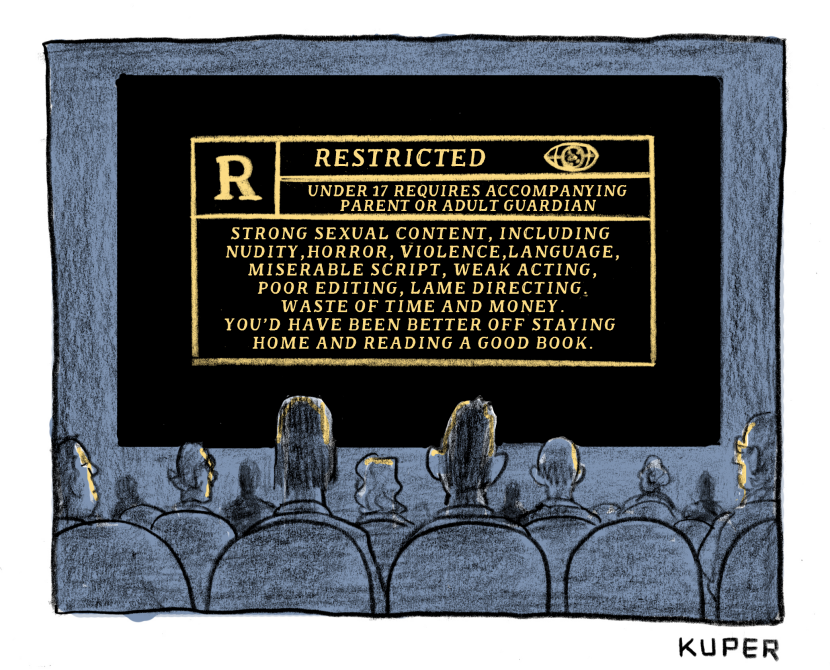
In an interview promoting his new movie “Being the Ricardos,” about the beloved sitcom “I Love Lucy,” writer-director Aaron Sorkin referred to Lucy’s “Friday audience taping.” I suppose even a media maven like Sorkin should be forgiven for bollixing terminology about motion pictures. We all do it.

“Lucy” was never taped. In fact, videotape was not in use in 1952 when the story takes place. Lucille Ball and Desi Arnaz were actually pioneers in developing a three-camera set-up using 35mm film, not tape.

This time of year, most of us shoot a lot of digital cell-phone video, and we might call it “taping” or “filming” but it’s not. To appreciate the distinction, you had to grow up back when people really did shoot film.

The Kodak camera my parents owned in the 1950s used 8mm film and had to be cranked before each use, sort of like a child’s wind-up toy. A small reel of film was good for about 3 minutes. Once exposed, the precious footage was given to the local drug store for processing, which usually took about a week because they had to send it out to a lab.

When the film came back, on another tiny reel, Dad carefully set-up his projector to display the glorious, bouncy, scratchy, silent moving pictures on the living room wall. Since there was never adequate indoor light during photography, color images were almost too dark to identify. Lighting was better outdoors — except that sun flares often obliterated the picture.

Still, the family watched in rapt attention, with the kids yelping about how goofy we looked. As for my parents and grandparents, whenever the camera was pointed their way they waved. They didn’t smile much back then, but they really knew how to wave.

True horror came when the film jammed. The projector’s bulb required so much wattage that it became red hot, causing the film catch fire. We’d watch an eerie image on the wall of a still frame burning from the center outward until it melted away.

Home-moviemaking became simpler when videotape reached the consumer market in the 1970s. Technically, we were no longer “filming,” we were “taping.” I owned a bulky Panasonic camcorder that used full-sized VHS tapes and was so heavy I had to balance it on my shoulder.

Most of us quickly discarded our movie projectors, leaving many 8mm reels of unwatchable family memories. I sent my film to a company that transferred the content to VHS so it would “last forever,” which turned out to be roughly 15 years.

VHS tapes wore out, especially during furious fast-forwarding and rewinding, with hours of material on a single tape. I had Christmas celebrations, followed by baseball games, followed by an old episode of “Saturday Night Live,” followed by another Christmas gathering.

When digital formats came along, I sent my VHS tapes to be digitized so they would, you know, “last forever.” That’s when I started reading about something called “digital rot.” It refers to the fact that when our phones stop functioning, or online storage sites disappear, video memories are lost.

Nowadays I’m using a fancy iPhone to shoot “high dynamic range” video (HDR). I’ll be thrilled if the images last as long as episodes of “I Love Lucy.”

Copyright 2021 Peter Funt distributed by Cagle Cartoons newspaper syndicate.

Peter Funt’s new memoir, “Self-Amused,” is now available at CandidCamera.com.
Comments Off on 8mm Memories in a Digital Age

Nike Becomes a Uni-Bomber

All eyes were on Steph Curry the other night as he stepped behind the arc and lofted a shot that made him the NBA’s all-time leader in 3-point baskets. But my eyes were drawn to Curry’s uniform. Had he accidentally dressed in the uni of the Philadelphia 76ers?

The Sixers wear red and blue, while the Warriors mix yellow with a bit of blue, but never, ever red. Yet here was Curry, with his number 30 in bright red, wearing what appeared to be a Philadelphia uniform.

It’s Nike’s fault. The equipment company is behind the NBA’s uniform switches, as well as color changes in the NFL and MLB. In what Nike calls its “Classic Edition” uniforms, the Warriors were supposedly honoring the fact that 60 years ago they were a Philadelphia team — a heritage that fans in both Philly and San Francisco would probably rather forget.

Is nothing sacred in sports anymore, even team colors? Imagine the shock Boston fans received last spring when the Red Sox began wearing yellow. For several games the team abandoned its traditional red, navy blue, and white color scheme for yellow jerseys with a cyan logo, white pants, cyan caps, and yellow shoes. Players looked more like Big Bird on “Sesame Street” than the fearsome denizens of Fenway Park.

Most teams now wear “alternate” uniforms for some games, which loosely translated means, “By alternating we have more stuff to sell fans.” Nike introduced new color schemes for seven MLB teams last season, dubbing it the MLB “City Connect Series,” which for many fans created a serious disconnect.

MLB began fiddling with colors back in the 1990s. Back then the Mets, who normally wore white or gray with the team’s orange and blue letters, showed up one day dressed in black. Baseball uniforms have been a hodgepodge of colors ever since. Last summer, when the Giants donned creamy orange uniforms, a writer for the Chronicle newspaper dubbed the team the Creamsicles.

The NFL also has a deal with Nike that began seven years ago with so-called Color Rush uniforms that are monochromatic. According to a report in USA Today, fans complained when the Bills and Jets played an all-red vs. all-green game, and some color blind fans said they couldn’t tell the teams apart.

In the NBA last February, both the Atlanta Hawks and Oklahoma City Thunder arrived on the court in uniforms that were entirely shades of red. After fans raised a fuss on Twitter, the Thunder changed at halftime and returned to the court dressed in white.

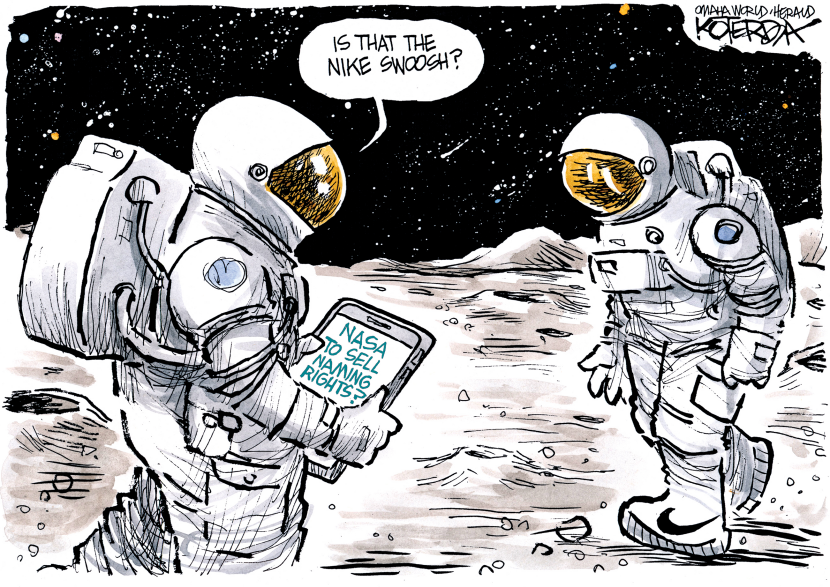
But while colors keep changing, a constant is the Nike Swoosh logo that now adorns jerseys in all three major sports. As long as lucrative equipment contracts stay in place, it’s unlikely Nike will be designing alternates for that.

Copyright 2021 Peter Funt distributed by Cagle Cartoons newspaper syndicate.

Peter Funt’s new memoir, “Self-Amused,” is now available at CandidCamera.com.
Comments Off on Nike Becomes a Uni-Bomber

Life Lessons From the Road

FORT MYERS, Fla. — The traffic light on Winkler Avenue was green, yet the Camaro in front of me hit the brakes. I managed to avoid him as he stopped short of the duck and her eight babies, who were slowly trying to cross the four-lane street.

It was rush hour and cars were whizzing in both directions. Camaro Guy and I held our ground as the duck family reached a two-foot center strip of grass. Now what? Like a shot, the Camaro swerved into the two oncoming lanes and stopped, successfully blocking traffic.

I jumped out and tried to shoo the ducks across the remaining two lanes. The mom and five babies made it, but the three smallest ducklings were stuck, unable to climb the four-inch curb on the far side of Winkler. As impatient motorists honked, I picked up each of the gray and yellow babies and shoved them in the mother’s direction.

Finally, with the ducks safely on their way, Camaro Guy and I exchanged thumbs up and drove off.

A short while later I came upon a road sign on Daniels Parkway that gave me pause. The official black-on-yellow advisory said: PANTHER XING. I’d seen “Moose Crossing” signs in New Hampshire, but never a warning about panthers.

My rental car slowed as my mind raced. Would I see a panther? If panther babies struggled to cross the road would I dare offer help? And how would nature’s playbook work if ducks and panthers found themselves on the same street at the same time?

The panther, which can weigh over 160 pounds, is Florida’s state animal. However, according to an estimate published in 2017, only some 230 remain in the wild, due mostly to accidents with cars.

If a panther had, indeed, needed my help on Daniels, it wouldn’t have been the first time I stopped traffic to rescue a cat. That would have been 40 years ago at the intersection of 125th Street and Madison Avenue in Harlem. I was stopped at the light when several pedestrians began shouting that a tiny kitten had run under my Toyota.

I got out but couldn’t see anything under the car. As soon as the light changed, horns sounded and passersby divided into two groups. Half yelled, “Get going!” The others screamed, “Don’t move, you’ll crush the cat!”

With the help of a passing mailman, we finally located the frightened animal and put him on the seat next to me for a one-hour drive to Connecticut. By the time I pulled into my office parking lot, the kitten was nowhere to be found. However, unmistakable meowing sounds were coming from the dashboard.

Seems the cat had climbed up under the dash and became lodged behind the clock. For the next hour my colleagues and I dismantled pretty much the entire front of the Toyota until we could reach the little guy who would become my best pal and our office mascot for the next five years. I named him Dasher.

During my occasional roadway rescues I think how nice it is that most of us have soft spots for baby animals, and how unfortunate that we don’t always maintain more of that compassion as creatures, people included, get older.

In Fort Myers, I also asked myself the obvious question: Why did the duck cross the road?

Simple, really. To remind me and a guy in a Camaro that life is good.

Copyright 2021 Peter Funt distributed by Cagle Cartoons newspaper syndicate.

Peter Funt’s new memoir, “Self-Amused,” is now available at CandidCamera.com.
Comments Off on Life Lessons From the Road

A Guy Never Forgets His First Car

The other day, Otis, the used car dealer, pulled out a wad of bills and handed my son two crisp C-notes. That’s all Danny’s ’98 Pontiac Grand-Am was worth anymore, but the rite of passage it had provided was invaluable.

Danny purchased his car from Otis years earlier with $3,000 saved from two summers of maintenance work at the local golf course. The Grand-Am served him well, but it didn’t really shape his development or fuel memories the way a first car did in my day. That was the 1960s, when kids with cars reached a zenith. Movies such as “American Graffiti” and TV shows like “Happy Days” celebrated a time when teens lucky enough to have wheels drove just for the sake of driving — often up and down the same block for hours at a time.

My first car was a two-seat ’57 Thunderbird convertible. Never mind that by the time I got it the rag top was missing, the seats were ripped and rust had eaten through the fenders. It was a classic, and it was mine.

For three months before my 16th birthday I spent afternoons polishing the T-Bird and most evenings cruising in our driveway — a distance of about 150 feet. I listened to WABC on the radio and fantasized about driving with my girlfriend, Diane, on Grand Street in our small town of Croton, N.Y., about 40 miles north of Manhattan.

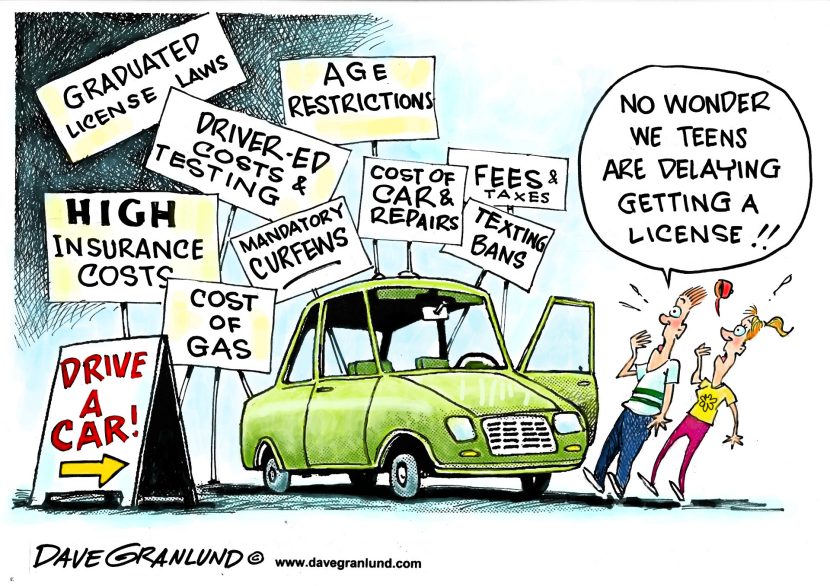
Statistics show that since the ‘60s the percentage of American teens owning cars has declined steadily. Today’s kids tend to ride bikes, scooters and even roller blades, while those with cars are mostly interested in getting from Point A to B and back. They’re not like George Lucas, who made “American Graffiti” after what he said were, “four years of my life cruising the streets of my hometown, Modesto, California.”

In my neighborhood, cops were always looking for me and the T-Bird. That’s because soon after I got my junior license, which prohibited after-sunset driving, I was caught coming out of Robbins Pharmacy after the deadline. I beat the case in court, with Mrs. Robbins testifying that although it was after sunset when I left her store, I never actually drove; I was immediately ticketed and my parents came to take me home. For the next two years local police were determined to catch me doing something wrong — which served to make me a remarkably careful teenage motorist.

Then there was the time I drove the T-Bird off the road and deep into the woods near Silver Lake, where Diane and I made love for the first time. The windows steamed over, the car became stuck in mud, and a woman walking her dog tapped on the door to ask two naked teens whether we “need help.”

I don’t imagine Danny had any such experiences with the Grand-Am. Then again, if he did he probably wouldn’t have told his parents. That’s how it goes with young men and their first cars.

Copyright 2021 Peter Funt distributed by Cagle Cartoons newspaper syndicate.

Peter Funt’s new memoir, “Self-Amused,” is now available at CandidCamera.com.
Comments Off on A Guy Never Forgets His First Car

Money, Money, Money

Slick Willie Sutton, the 1930’s bandit who favored elaborate disguises, was once asked why he robbed banks. He famously replied, “Because that’s where the money is.”

Oh, how times have changed. The other day my daughter, Stephanie, walked into the Chase branch in South San Francisco, seeking 16 quarters to do her laundry. She was informed by the teller: “We don’t handle cash anymore.”

Wait, what? A bank that refuses to give or take…money?

I phoned the branch seeking clarification. “We have all the services other branches offer,” the manager explained, “except we don’t handle coins or bills. No cash.”

The nation was moving away from cash even before the pandemic, but COVID-19 added to the jitters, especially when the CDC issued guidance last year urging merchants to use “touchless payment options.” Seems some businesses actually prefer it that way.

Major retailers — from Starbucks to Whole Foods — have experimented with no-cash retailing. In response, some municipalities and a few states have passed laws making it illegal to refuse cash. Oddly, there is no federal law requiring businesses to accept cash, even though the Coinage Act of 1965 states: “United States coins and currency (including Federal reserve notes and circulating notes of Federal reserve banks and national banks) are legal tender for all debts, public charges, taxes, and dues.”

Try telling that to a flight attendant who will only accept a credit card for a Coors Light.

Aside from the fact that refusing cash discriminates against those who don’t have bank accounts or credit cards, the muddle about whether or not to deal with currency makes it difficult for all of us.

Motorists know this all too well. Modern parking meters won’t accept coins, only credit or debit cards. Many bridges and highways no longer take cash for tolls. At the same time, most gas stations want you to pay with cash and will jack up the price if you prefer to use a credit card.

On a recent business trip I rented a car from Avis that did not have an E-ZPass toll device. On the thruway I encountered a toll plaza that would not accept cash for a $2.22 charge. New York State billed Avis and a few weeks later Avis billed me, adding its own $5.95 “Convenience Fee,” for a total of $8.17. This I paid by credit card.

I still stop and pick up coins on the sidewalk, an act my mother said brings good luck. I toss them into a large jar, which for more than a decade I’ve been planning to take to a bank. I suppose that’s still possible somewhere, although clearly not at the Chase branch in South San Francisco.

Copyright 2021 Peter Funt distributed by Cagle Cartoons newspaper syndicate.

Peter Funt’s new memoir, “Self-Amused,” is now available at CandidCamera.com.

Comments Off on Money, Money, Money

This NFL Season Is in Handcuffs

In the national obsession known as fantasy football, the most valuable position this season is not the quarterback or wide receiver, it’s the handcuff.

Handcuff is the term describing a player who isn’t good enough to see much action unless the guy ahead of him gets hurt. Just six weeks into the NFL season, the number of injuries among elite players is so high that fantasy team owners spend most of their energy rooting against, or as the case may be for, debilitating collisions.

Alexander Mattison of the Minnesota Vikings, for example, is hardly a household name and not likely to be hired for beer commercials. But he’s among the NFL’s most valuable handcuffs. Sure enough, when the Vikings star running back Dalvin Cook injured his ankle after two games, Mattison became an immediate star.

I drafted Dalvin Cook for my fantasy team but wasn’t able to secure his handcuff, so I was stuck. I also selected Joe Mixon of the Cincinnati Bengals who, after a great first game, injured his ankle and hasn’t been the same since. Alas, I don’t have his handcuff, Samaje Perine, nor do I own the backup for George Kittle, star tight end on the San Francisco Forty-Niners. Kittle quickly hurt his calf and was placed on Injured Reserve.

As bad as my luck has been, it’s not even unusual. Despite improved training, better diets and computer-programmed workouts, NFL players seem increasingly like racehorses — fast, powerful, but fragile. The league keeps amending its rules to limit injuries, but to no avail.

Recently I took a chance and added a little-known player on the Kansas Chiefs just minutes before kickoff. If running back Clyde Edwards-Helaire were to get hurt, my handcuff, Darrel Williams, would be next up. Edwards-Helaire lasted only a few plays before suffering an MCL sprain. I’m embarrassed to admit I felt like a lottery winner as he was helped off the field.

Back at draft time, I selected a handcuff on the Baltimore Ravens named Gus Edwards, knowing that if anything were to happen to the team’s top running back, J.K. Dobbins, I’d be set. Immediately after my draft, Dobbins suffered a season-ending knee injury. Well! I was sorry to see a player hurt, but now Edwards was gold.

Days later, Gus Edwards tore his ACL and his season ended before it began.

I never thought fantasy football would require me to draft a handcuff for the handcuff.

Copyright 2021 Peter Funt distributed by Cagle Cartoons newspaper syndicate.

Peter Funt’s new memoir, “Self-Amused,” is now available at CandidCamera.com.

Comments Off on This NFL Season Is in Handcuffs

SNL Stumbles Over Biden

Whatever problems the real Joe Biden faces with polls and policies, they pale in comparison to what fake Joe Biden characters are suffering on “Saturday Night Live.”

When the NBC series returned for its 47th season, a new cast member named James Austin Johnson took a crack at portraying Biden. His performance, to be diplomatic, was not very good. A hairpiece and a raspy voice does not a persuasive parody make.

SNL can’t seem to solve its Biden problem. That’s mystifying considering that the series helped invent the genre of mocking sitting presidents back in 1975. That was the year President Gerald Ford slipped on the steps of Air Force One, leading to Chevy Chase’s memorable depiction of Ford, an accomplished college athlete and by no means a klutz, as a bumbler and stumbler. It branded Ford and helped dash his chances against Jimmy Carter the following year.

Every president since Ford has received the SNL treatment, but a Biden character hasn’t clicked. Indeed, the show went 255 days without portraying the current president in an opening sketch — an unprecedented lapse, suggesting that either the show can’t cast a proper President Biden, or its producers don’t know how far to go in lampooning him at a time when the nation is beset by political division.

“Broadway’s back, and that’s exciting, right?” said Johnson’s Biden. “so is the Taliban. Win some lose some.”

The shortfall in humor was made worse by the fact that Johnson didn’t look or sound the part. In Chevy Chase’s day that hardly mattered, but more recent television impersonators have used heavy makeup and facial appliances to capture a president’s appearance, and the best of them have nailed aspects of mannerism and speech.

This reached a zenith with Donald Trump, the most imitated sitting president since the entire exercise began in 1962, with the impersonation of John F. Kennedy by the comedian Vaughn Meader. Prior to Meader’s smash record album, “The First Family,” sitting presidents were rarely imitated. After all, until the late 1920s, few Americans could even recognize the sound of their president’s voice.

When Joe Biden was vice president, SNL featured a slick imitation by Jason Sudeikis. During Biden’s presidential run Woody Harrelson took a turn, with a toothy, straight-from-the-headlines portrayal, followed by Jim Carrey’s controversial effort. Some felt Carrey, while funny, was unconvincing. A few commentators went so far as to suggest that the Carrey character was dangerous because it could hurt Biden’s chances.

After the election, Jim Carrey disappeared from SNL, as did almost any attempt to portray President Biden. Cast member Alex Moffat took a brief and forgettable turn, and that was it until Mr. Johnson turned up to start the current season.

Arguably, SNL’s most successful presidential performance was Dana Carvey’s George H. W. Bush. As with his other characters, Carvey identified unique speech patterns and exaggerated them. But here’s the deal: Carvey now does Joe Biden better than anyone, as can be glimpsed on his guest shots with Stephen Colbert. Why doesn’t SNL pay him whatever he wants to take over the role?

Last March, President Biden stumbled on the steps of Air Force One. We know what Chevy Chase and the original SNL writers would have done with that, but the current group didn’t deem it worthy of a sketch. In its pale effort to mock the sitting president, SNL has been stumbling ever since.

Copyright 2021 Peter Funt distributed by Cagle Cartoons newspaper syndicate.

Peter Funt’s new memoir, “Self-Amused,” is now available at CandidCamera.com.

Comments Off on SNL Stumbles Over Biden