Making Voting Easier

The 2020 election will be profoundly affected by what’s known as AVR. If you live in one of 15 states where it’s been implemented you’re undoubtedly aware how simple and significant it is.

Automatic voter registration has boosted the number of eligible voters added annually by 16 percent in Colorado, 60 percent in Vermont, and a remarkable 93 percent in Georgia. According to data from the Brennan Center for Justice at NYU School of Law, if established nationally AVR would add up to 50 million voters to the rolls.

Each state’s AVR policy differs slightly, but the Georgia system is representative of the process and its impact. Beginning in September 2016, registering to vote has been the default option on the state’s driver’s license form. Unless Georgians check a box to “opt out,” they are automatically registered.

Previously, Georgia residents had to check a box on their license form to be registered – a process that resulted in about 80,000 new registrations in 2015. With AVR, that number increased in 2016 and 2017 by a total of nearly 700,000.

Kevin Morris, a researcher at NYU, says the impact of AVR goes beyond the number of voters registered. “It keeps voter rolls more accurate,” he explains, “which reduces errors that cause delays on Election Day, and it also lowers costs by allowing states to save money on printing, mailing and data entry.”

So far, the 15 states plus the District of Columbia that have enacted AVR tend to be Democratic strongholds – from California, Oregon and Washington in the West, to Massachusetts and Vermont in the East. States currently considering AVR legislation would bring more Republican-leaning regions into the mix.

“New voters will on balance be lower-income, and they’re probably more likely to identify with the Democratic Party,” noted Dan Franklin, a political science professor at Georgia State University, quoted in the Atlanta Journal-Constitution.

Georgia’s Republican Gov. Brian Kemp was frequently criticized during his time as secretary of state for making it harder for residents to vote. The AVR program is drawing many previously disenfranchised Georgians back into the voting process.

The fundamental right to vote should be as easy as possible to access, and should extend equally to all Americans. Automatic voter registration is a basic ingredient in the process, too important to be left to individual states.

When Democrats took control of the House in January, the first bill introduced, known as “For the People Act of 2019,” included AVR. It passed 234 to 193. A Senate version is not likely to get far, however, after Majority Leader Mitch McConnell labeled it a “power grab” by Democrats.

Of course, enabling Americans to vote is not any sort of grab. But it is power all right – to the people.

A list of Peter Funt’s upcoming live appearances is available at www.CandidCamera.com.

Peter Funt is a writer and speaker. His book, “Cautiously Optimistic,” is available at Amazon.com and CandidCamera.com. © 2019 Peter Funt. Columns distributed exclusively by Cagle Cartoons, Inc., newspaper syndicate.

Comments Off on Making Voting Easier

California and the Death Penalty

SAN FRANCISCO – Gov. Gavin Newsom has not only acted swiftly to save 737 souls on California’s death row, but he has also had the courage to call state-sponsored executions what they are: uncivilized.

“I do not believe that a civilized society can claim to be a leader in the world as long as its government continues to sanction the premeditated and discriminatory executions of its people,” the recently elected Democrat explained. He signed an executive order preventing executions while he is in office.

Too often, politicians take an easier path in confronting the death penalty issue. They dwell on the methods used in death chambers, or they fixate on the costs required to handle capital cases. These considerations, while valid, are cop outs.

As with many other controversial issues in America, California is at the center of the death penalty debate. Although overwhelmingly liberal in its state government, voters here nonetheless approved a measure in 2016 to streamline the appeals process for capital cases – in effect, a vote for the death penalty. It passed with 51 percent support.

Although California has not carried out an execution since 2006, its roster of 737 condemned inmates represents about 25 percent of the national total.

Newsom becomes the fourth sitting governor to issue a moratorium on the death penalty, joining chief executives in Oregon, Colorado and Pennsylvania. Twenty states have banned the practice entirely, with Washington joining that group last year.

Opponents of capital punishment, understandably, accept any rationale for halting the practice. But Newsom cuts to the heart of the matter when he says it is simply “inconsistent with our bedrock values.”

That is the only basis on which the United States will eventually join over 100 civilized nations in eliminating capital punishment. It does no good to seek more “humane methods” of killing, nor to speed up an already flawed appeals process, nor to find ways of reducing costs.

Most executions worldwide are carried out by Saudi Arabia, Iraq, Pakistan and Iran. Add to that the unpublicized state killings in China, North Korea and presumably in Russia, and you have a pretty good picture of the company America currently chooses to keep.

Predictably, President Trump tweeted a fast response to Newsom’s action, saying he was “not thrilled.” Trump appealed on behalf of “friends and families of the always forgotten victims” – as if executing people would do anything to bring their loved ones back. State-sponsored revenge is immoral.

Newsom’s action is likely to rekindle debate about the death penalty on the national stage. California presidential contender Sen. Kamala Harris opposes the death penalty but has faced tough questions about her handling of capital cases while state attorney general.

Every Democrat seeking the presidency in 2020 should speak out clearly regarding capital punishment. The 2016 party platform, pushed by Sen. Bernie Sanders, called it a “cruel and unusual form of punishment” that “has no place” in the nation. The eventual nominee, Hillary Clinton, supported its “limited use.”

The GOP platform that year stated, “The constitutionality of the death penalty is firmly settled.”

“The intentional killing of another person is wrong,” said Gavin Newsom while campaigning for governor. In signing his executive order he has underscored the fact that the issue is really no more complicated than that.

A list of Peter Funt’s upcoming live appearances is available at www.CandidCamera.com.

Peter Funt is a writer and speaker. His book, “Cautiously Optimistic,” is available at Amazon.com and CandidCamera.com. © 2019 Peter Funt. Columns distributed exclusively by Cagle Cartoons, Inc., newspaper syndicate.

Comments Off on California and the Death Penalty

Politicians Are Running for TV Jobs

The snide old saw in college used to be: If you can’t make it in business, teach it. In media today, it’s become: If you can’t make it in politics, preach it.

Republican Jeff Flake, who declined to seek reelection as a senator from Arizona and recently abandoned the notion of challenging Donald Trump for the presidency, turned up recently in his new post as contributor at CBS News. Meanwhile, Democrat Andrew Gillum, the former Tallahassee mayor who narrowly lost his bid to become Florida’s governor, took a seat as a commentator at CNN.

Back in the day vanquished politicians retired to a cabin by the lake to think deep thoughts and write a memoir. But for the new crop of articulate, photogenic and somewhat younger also-rans, the path of least resistance – and a guaranteed paycheck – often leads to the TV studio.

Utah’s renegade Republican Mia Love, who lost her House seat, ran over to CNN last month, tweeting that she will offer an “unleashed perspective.” Another Utah Republican, former Rep. Jason Chaffetz, took a gig at Fox News. He was joined at Fox last month by retired South Carolina congressman Trey Gowdy.

When Love arrived at CNN she sat alongside Democrat Louis Gutierrez of Illinois who retired from Congress. Missouri Democrat Claire McCaskill, defeated in her Senate re-election bid, signed on at NBC News.

Clearly, for many politicians the road to the news desk is proving less difficult to travel than the road to the White House or to Capitol Hill.

Networks are staffing up for what will be roughly 600 straight days of analysis about the 2020 election. Cable channels in particular need articulate commentators, since the big three – Fox, CNN and MSNBC – all fill vast amounts of airtime with talking heads.

What they learned in the 2016 campaign was that finding a mix of compelling opinions was difficult. On CNN, for example, Kayleigh McEnany, who had held a few minor, non-elected political jobs and was still in her twenties, was called upon to represent the conservative side in heated debates with a panel of largely liberal pundits. McEnany was out of her depth and resigned after the election.

CNN fared much better by hiring a polished pol, former Pennsylvania Senator Rick Santorum in 2017. Santorum has provided calm, reasoned analysis on the panel – the very thing CNN is now seeking by opening its door to other former office-holders.

Of course, politicians taking TV posts isn’t new: Sarah Palin tried it on Fox and failed, while Joe Scarborough did it on MSNBC and has been quite successful.

But never in political or broadcasting history have so many former elected officials signed up for TV duty. For one thing, the leap to television isn’t as difficult as it used to be. Nowadays, slapping on makeup, finding the red light on your camera, and speaking in manageable sound bites is routine.

Moderate Republican John Kasich, the former Ohio governor, probably knows as much about shuttling between politics and media as anyone. After serving 18 years in Congress, Kasich flirted with running for president in 2000, but decided against it and went to work for Fox News as a commentator and fill-in host.

He stepped away from that gig in 2009 to run for governor and served two terms, the second of which ended just last month. A few days later Kasich reported for work as a commentator at CNN.

Unlike most in TV’s new crop of pundits, however, Kasich says he hasn’t ruled out running for president in 2020. His agency, UTA, issued a statement saying that Kasich’s CNN post would “help him navigate the next phase of his public and private life.”

Really? A TV performer running for president? What are the odds of that?

A list of Peter Funt’s upcoming live appearances is available at www.CandidCamera.com.

Peter Funt is a writer and speaker. His book, “Cautiously Optimistic,” is available at Amazon.com and CandidCamera.com. © 2019 Peter Funt. Columns distributed exclusively by Cagle Cartoons, Inc., newspaper syndicate.

Comments Off on Politicians Are Running for TV Jobs

Amy for America

There are many metrics for what makes a good president, but being able to deliver a speech in falling snow and mid-teen temperatures without hat or gloves for nearly a half hour isn’t one of them.

Fortunately for Americans, there’s more to Amy Klobuchar’s candidacy than Sunday’s wintry scene on the shore of the Mississippi River. The Minnesota Democrat is the real deal.

Entering a crowded field of presidential aspirants, Sen. Klobuchar is not yet a front-runner. Much will transpire over the next 600 days in what is likely to be the most brutally fought and tediously analyzed presidential election since – what? – 2016.

Back in November I suggested that two Democrats have the best shot at winning the presidency: California’s freshman Sen. Kamala Harris, and Minnesota’s three-term veteran Sen. Amy Klobuchar. Both women have since formally declared their candidacies and each has gotten off to a smooth start. I’m most impressed by Klobuchar.

Face it, the process of picking a president drags on for too long. Incessant polling is pointless. Cable-TV’s obsession with daily minutiae is boring. And, yes, early analysis by thumb-sucking opinion writers is often underwhelming.

But, and it’s a big but, this campaign is different. Donald Trump rewrote the rules in 2016 and his victory shocked the nation. The Trump presidency is an embarrassment; worse, it is dangerous. To say that 2020 might be the most important election of our lives is not an exaggeration.

So, it’s vital that politicians, pundits and the public engage right now.

Amy Klobuchar is a progressive, but drifts closer to the center of liberal politics than, say, Senators Elizabeth Warren, Bernie Sanders and, to a slightly lesser degree, Kamala Harris. For example, Klobuchar favors repairing the Affordable Care Act and lowering the prices of prescription drugs, but stops short of “Medicare for all.” She acknowledges the need for immigration reform, but doesn’t advocate abolishing I.C.E. as some progressives have.

Klobuchar seeks to aggressively combat climate change, favors automatic voter registration when people turn 18, and demands mandatory background checks and other measures for tighter gun control.

Candidates with more extreme positions tend to be effective in primaries but not so much in the general election. Democrats would have to go back to 1972, when George McGovern was the nominee, to find a candidate with positions significantly left of center. McGovern won only Massachusetts and Washington, D.C., and lost in the Electoral College 520-17.

If ever there was an election in which Democrats need to rally, early, around a somewhat more centrist candidate, this is it. The singular goal should be retaking the White House.

One negative that has already surfaced in Klobuchar’s campaign is the senator’s demanding, at times harsh, treatment of her staff. This troubles me, as it should all voters.

Klobuchar concedes that she has been tough. Several reporters, including CNN’s Dana Bash, who is well connected on Capitol Hill, note that women in elected office often feel the need to push their employees – and themselves – harder than their male counterparts do. Bash also asks, as many observers have, if a male candidate would be subjected to the same type of scrutiny that Sen. Klobuchar has.

I don’t think this will ultimately be a barrier for Klobuchar. She’s positioning herself as a Midwesterner with “grit.” I like grit, but I don’t like a public persona that is contradicted by behavior in private – so I hope we’ve already heard all there is to hear about Klobuchar’s “baggage.”

The perfect Democrat to defeat Donald Trump is a center-left, middle-aged, limited-baggage, experienced woman from Mid-America. Like it or not, age and sex are important this time around. The nation needs a somewhat younger president and it needs to break the glass ceiling once and for all.

Lou Grant, the fictional news director, once said to Minnesota up-and-comer Mary Richards: “Mary, you’ve got spunk.”

Then, he added, “And I hate spunk.”

Well, Minnesotan Amy Klobuchar has spunk. And it says here that Americans are going to like it.

A list of Peter Funt’s upcoming live appearances is available at www.CandidCamera.com.

Peter Funt is a writer and speaker. His book, “Cautiously Optimistic,” is available at Amazon.com and CandidCamera.com. © 2019 Peter Funt. Columns distributed exclusively by Cagle Cartoons, Inc., newspaper syndicate.

Comments Off on Amy for America

For Whom the Horn Honks

During the years I lived in Manhattan I got used to sleeping through screeching sirens, revving engines and even, sadly, the occasional cry for help. Here in Central California, things are so quiet that a falling pine cone can be jarring.

Which brings me to the other night, just after 2 a.m., when I twisted and turned for 20 painful minutes, wondering why someone in the neighborhood would be blowing a car horn, nonstop.

With my wife fretting and our Shih Tzu yapping, I stepped outside to investigate. In the driveway, where it has been parked during recent storms, my son’s 1998 Pontiac Grand Am hardtop was honking at a volume that would have been annoying in mid-afternoon but in the dead of night was positively deafening.

Danny was in New York, having left his car in my care. When I unlocked it and got in my feet plunged into several inches of water.

The engine wouldn’t start – no surprise there. Yet the horn blared on, seemingly louder than before – which was confounding.

For some reason my mind ran to semantics. If I were to phone Triple A would I say that my car’s horn was stuck because the vehicle was “leaking”? That didn’t seem right. When a car leaks oil, for example, the stuff spills out. When a pipe under your sink leaks, water drips onto the floor. But does the word “leak” apply when water collects inside a car?

If not leak, then what? “My car is absorbing water”? “Retaining water”? I was paralyzed by a loss for words.

In my delirium I puzzled over what to call the thing you push to blow the horn. It’s not a button or switch. What is that soft area in the center of the steering wheel? The honker? Could this be the only part of a car without a name?

After determining that I had neither the knowledge nor nerve to fiddle with wet wires under the hood, I decided the only course was to drain the battery – hopefully before the police showed up.

I turned on the headlights, defroster, windshield wipers and radio, which happened to be playing “Lady Marmalade,” the 1974 tune by Patti LaBelle. My mind ran to volume. Would the battery drain faster if the volume were turned way up?

I had wiper blades scraping, cold air pouring from the defroster, incessant honking, and “Voulez-vous coucher avec moi, ce soir?” at max volume. 

After 15 more minutes, that seemed like 115, everything stopped.

Back inside, my wife Amy, who is quite the night owl, was watching the soggy 1997 film “Titanic,” in which Leonardo DiCaprio and Kate Winslet would have happily settled for a transportation problem as mundane as a stuck horn. I imagined Jack Dawson telling Danny’s car not to give up, “no matter what happens, no matter how hopeless.”

To my surprise three plaintive toots – more like whimpers than full blown honks – came from the driveway. But before I could reach the door, the Grand Am fell silent.

A list of Peter Funt’s upcoming live appearances is available at www.CandidCamera.com.

Peter Funt is a writer and speaker. His book, “Cautiously Optimistic,” is available at Amazon.com and CandidCamera.com. © 2019 Peter Funt. Columns distributed exclusively by Cagle Cartoons, Inc., newspaper syndicate.

Comments Off on For Whom the Horn Honks

Kamala Harris Tests CNN’s Campaign

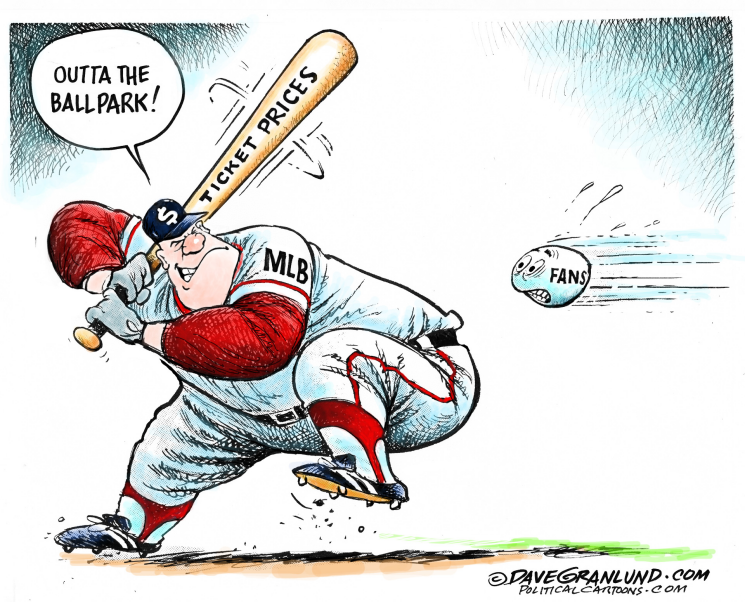
CNN’s “Town Hall” Monday night, featuring fast-rising Senator Kamala Harris, was moderately helpful in assessing the California freshman’s presidential candidacy, but far more useful in evaluating what television must do in the critically important 2020 race.

Host Jake Tapper promised that this would be the first of many such made-for-CNN events. Indeed, with a crowded field of Democratic contenders, many of whom are new to the national scene, an hour of prime-time can go a long way toward educating voters.

Or not. CNN chose the campus of Drake University in Des Moines as the setting for its program because, as Tapper explained, “The all-important Iowa caucuses are just over one year away.” That’s a distinction that might work for Iowans but which, at this stage, is lost on voters in 49 other states.

The audience was described by Tapper as “people who tell us they plan to caucus with the Democrats next year and members of the Drake University community.” Translation: A friendly crowd capable of fairly soft, straight-from-the-playbook questions, such as: “What would you plan to do to make America safer (for minorities)?” And, “What is the first thing you would do as president of the United States?”

Even the toughest question, about Harris’s record as a prosecutor, was presented without teeth. Moreover, although Tapper made a token effort to follow up, he did not challenge Harris as many critics have in recent weeks.

Writing in The New York Times, law professor Lara Bazelon noted that, “Time after time, when progressives urged her to embrace criminal justice reforms as a district attorney and then the state’s attorney general, Ms. Harris opposed them or stayed silent.”

For her part, Harris was engaging, even charismatic, but her answers often went too long, and Tapper never once interrupted. Without any meaningful pushback, Harris was left to glide along with boilerplate answers.

Perhaps CNN would argue that such introductory gatherings are intended to give candidates a forum to lay out their positions without the rigors of an actual debate – or even the stress of a Sunday talk show. Maybe the format is designed to make it more likely that candidates will accept the invitation, knowing that they will receive only predictable questions.

Previous, non-election Town Halls, such as one featuring Rep. Nancy Pelosi, had more meat on the bone and provided a much more valuable service to viewers.

Frankly, the entire Town Hall format is too gimmicky. Since audience questions are carefully screened by producers ahead of time, and their order predetermined, what’s the point? The forum would be far more useful if multiple hosts questioned the guest – with perhaps a fairly brief audience segment at the end.

It’s a long, some would say excruciating trek to Election Day 2020. Many people believe it’s far too early to pay close attention to an over-crowded field slugging it out in an overly long campaign.

Then again, the stakes couldn’t be higher. CNN is in a unique position – without the clear conservative bias of Fox, or the overt liberal leaning of MSNBC – to inform viewers about the candidates and issues.

Viewers seem to agree, with nearly 2 million watching the CNN program, the most ever for a single-candidate event of this kind.

Kamala Harris will undoubtedly grow as the campaign moves forward. CNN must as well.

A list of Peter Funt’s upcoming live appearances is available at www.CandidCamera.com.

Peter Funt is a writer and speaker. His book, “Cautiously Optimistic,” is available at Amazon.com and CandidCamera.com.Copyright2019 Peter Funt. Columns distributed exclusively by Cagle Cartoons, Inc., newspaper syndicate.
Comments Off on Kamala Harris Tests CNN’s Campaign

Corporate Players Love the Name Game

SAN FRANCISCO – Owners of the Giants baseball team have never struck me as stupid – greedy, perhaps, since they shamelessly sell a bottle of Bud for eight times what it’s worth, but not stupid. So, when they announced the other day that they have accepted a reported $20 million annually to change the name of their stadium for the fourth time in less than 20 years, I figured they must know what they’re doing.

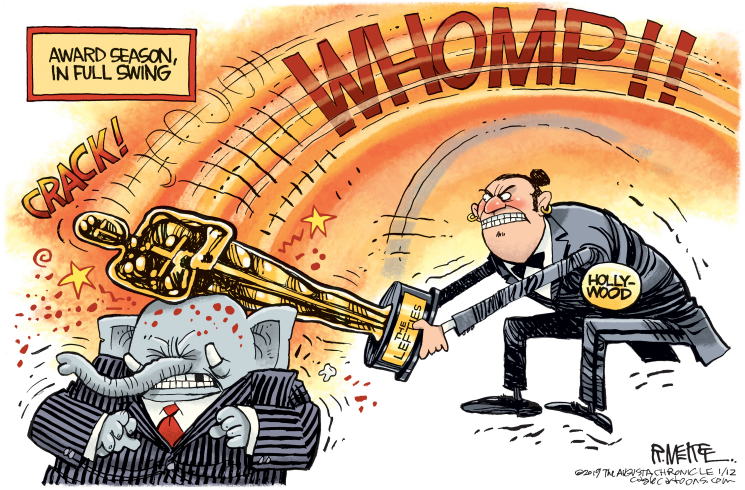
The Giants, like virtually every sports franchise in the nation, are cashing in on corporate vanity. Flush with cash thanks to Trump economics, companies are spending unprecedented sums to place their names on sports venues, despite growing evidence that playing this name game has little measurable value.

When the Giants opened their stadium in 2000 it was known as Pacific Bell Park. A few years later, the name changed to SBC Park, and then to AT&T Park. Now, it’s Oracle Park.

The Bay Area tech giant suffered ego damage when it lost out on naming rights to the basketball arena where the Warriors play. The Oracle name has been on the venue in neighboring Oakland since 2006, but the Warriors are moving to a new facility in San Francisco, branded Chase Center, for which JPMorgan Chase paid an estimated $200 million. Oracle quickly agreed to pay a similar sum to the Giants, whose fans already suffer naming fatigue.

For their first 35 years in San Francisco, the Giants were happily ensconced at Candlestick Park, named for the finger of land on which it was built. In 1995 naming rights were purchased by 3Com Corporation and Candlestick became 3Com Park. After the Giants moved out the rights were sold to Monster Cable, a maker of electric cables, and 3Com became Monster Park. Enraged San Franciscans voted to require that the name be legally changed back to Candlestick as soon as Monster’s contract expired.

The stadium’s football tenant, the 49ers, moved to a new facility in Santa Clara, for which Levi Strauss paid $220 million for the right to call it Levi’s Stadium – or, as sportscaster Chris Berman dubbed it, The Big Bellbottom.

Corporate naming can be traced back to 1921 when chewing gum magnate William Wrigley Jr. purchased the Chicago Cubs. Six years later Wrigley put his name on the iconic Addison Street stadium, and the rest is history.

Today, just about every pro sports venue bears a corporate name. Notable exceptions are Fenway Park, named after its Boston neighborhood, New York’s Madison Square Garden, named after a president, and Lambeau Field in Wisconsin, whose name honors the beloved football player and coach Curly Lambeau.

Daniel Rascher, who examined 85 North American naming-rights deals, estimates that if a team had three losing seasons, the value of its naming deal dropped by 5 to 7 percent.

Research by Sports Market Analytics found that among the three major pro sports – baseball, football and basketball – over half the fans indicated that a venue’s sponsorship had no influence whatsoever on their purchase of the sponsor’s product or service.

How could it, when some venues change names as quickly as their teams change players? Consider the place where the NFL’s Chargers play in Carson, Calif. Known as recently as 2012 as the Home Depot Center, it next became the StubHub Center, and is currently called Dignity Health Sports Park.

Enter a wireless company called Rokit. For the season just ended, the company arranged to buy naming rights to the playing field, while Dignity Health’s name was on the stadium itself. It’s called Rokit Field at Dignity Health Sports Park.

Meanwhile, the Giants, shrewdly managed to sell naming rights to the broadcast booth inside what is now known as Oracle Park to Hawaiian Airlines.

As P. T. Barnum might have put it, there’s an egomaniacal corporate marketing exec with a checkbook born every minute.

A list of Peter Funt’s upcoming live appearances is available at www.CandidCamera.com.

Peter Funt is a writer and speaker. His book, “Cautiously Optimistic,” is available at Amazon.com and CandidCamera.com.Copyright2019 Peter Funt. Columns distributed exclusively by Cagle Cartoons, Inc., newspaper syndicate.
Comments Off on Corporate Players Love the Name Game

No Oscar Host? No Problem!

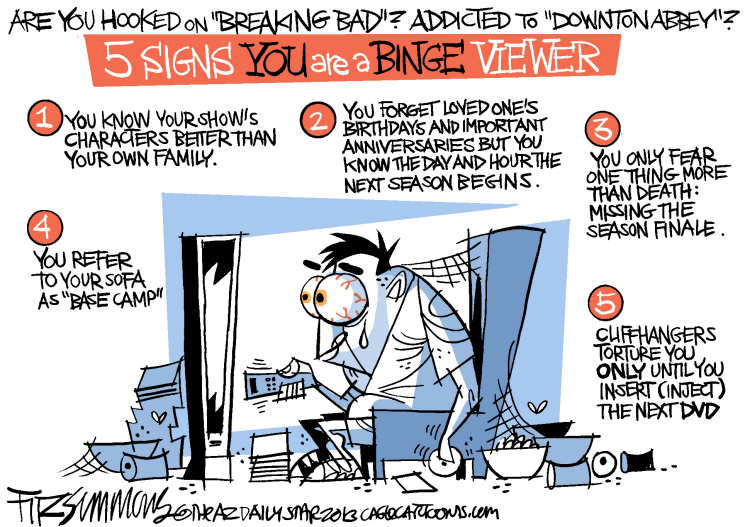
It seems this year’s Academy Awards will be conducted using a no-host format, now that Kevin Hart and his dossier of homophobic wisecracks have been officially ruled out.

This might be a good thing, starting with the fact that a no-host ceremony will be mercifully shorter. Previous Oscar shows have dragged on well beyond a reasonable bedtime – like a Monday Night Football game with 39 penalties, 54 commercials and overtime.

Nominations will be announced Jan. 22 and the Academy should use the occasion to confirm not only the no-host policy but also these additional no-nos.

No Politics. Insist that presenters and winners avoid all political references. If they mention Trump don’t play music, just cut their mics and move on.

No Notes. Winners should not be allowed to feign surprise while pulling out a lengthy written list of people to thank. You’re a Hollywood professional for goodness sake! If you can’t adlib a few thank-yous maybe moviemaking isn’t the right job for you.

No Sharing. We get it: the losers in your category all did good work – after all, they were nominated for an Oscar. But don’t pretend you’d like to “share” your award with them.

No Families. Leave your parents, your wife and your kids out of it. Above all, don’t use one of the biggest showbiz events of the year to tell Johnny and Suzie that “it’s ok to go to bed now.”

No Sobbing. Sure, you’re overwhelmed. Get a grip.

No Plugs. This is not the time to tell us about your next project, or that you just signed a first-look deal with Netflix.

No Gimmicks. The Golden Globes set a record for asininity by pretending to give flu shots to celebs in the audience. Spare us the sophomoric humor, please.

No Teases. Skip the announcer pitches for what’s coming next; we all know we have to wait three hours for the big awards. And don’t say, “Only ABC!” before each of the three dozen commercial breaks.

With these minor adjustments the 2019 Oscars could be really boffo.

Remember, the Academy has already wised up by backing away from its idiotic plan to award a “Most Popular” Oscar.

We should all get to sleep at a reasonable hour Feb. 24, except of course for the winners and near-winners who will cavort long into the night at Hollywood’s many After-Oscar parties, where the only change that would not be tolerated is a No-Host bar.

A list of Peter Funt’s upcoming live appearances is available at www.CandidCamera.com.

Peter Funt is a writer and speaker. His book, “Cautiously Optimistic,” is available at Amazon.com and CandidCamera.com.Copyright2019 Peter Funt. Columns distributed exclusively by Cagle Cartoons, Inc., newspaper syndicate.
Comments Off on No Oscar Host? No Problem!

Bingeing Makes an Unhealthy TV Diet

In 2019 I resolve to cutback on bingeing. Not at the dinner table – although that would be wise – but at the TV.

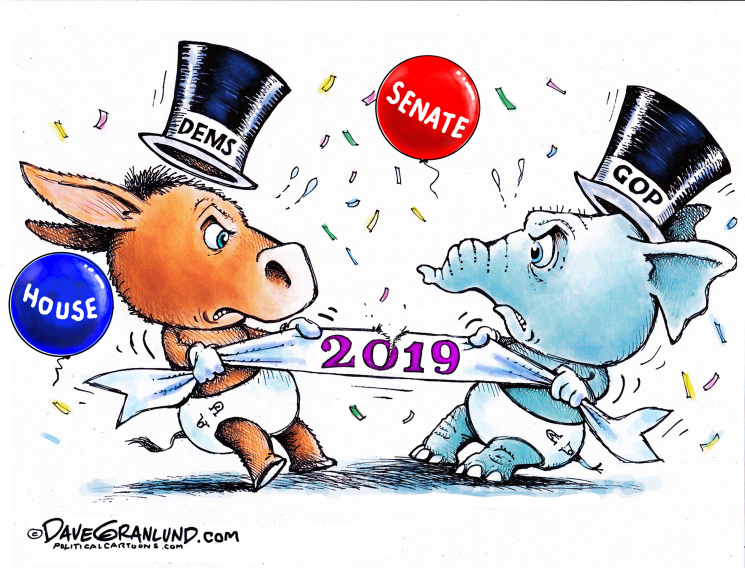
I believe TV programmers and viewers will come to regret serving up a show’s entire season at once, enabling viewers to binge through it as if it were a half-gallon of mocha-almond chip.

Bingeing seems like fun, as any overeater will attest, but it rarely feels good when it’s over.

Which brings me to a TV series that has prompted epic bingeing recently – myself among the over-indulgers. It’s Amazon’s delightful “The Marvelous Mrs. Maisel,” in which Rachel Brosnahan plays a 1950s housewife who finds herself attempting a career in stand-up comedy.

After waiting a full year for the second season to arrive, I gobbled it up in a day and a half. Frustration grew as I realized It will be as long as 12 months until I find out more about Midge’s career, the two men in her life, and the antics of her overly-typed yet beautifully played Jewish parents.

Binge-watching of first run TV shows wasn’t possible until early 2013, when Netflix released an entire season of the political drama “House of Cards.” For Netflix, the move represented a strategic breakthrough; for competitors, such as Amazon, it forced an immediate shift to emulate this new type of scheduling.

I’ve heard some producers compare the new system to reading a book: one consumes as many pages or chapters as he wants, setting his own pace. And many TV viewers say they welcome the freedom and convenience of self-scheduling – which, of course, need not result in bingeing unless that is one’s inclination.

I’m not sold. Series television is a distinct form that establishes a bond with viewers and nurtures it over the course of a season. Often a producer is able to adjust after the first few episodes to make improvements with casting or plot. Publicity and word-of-mouth build over time. Water-cooler conversation for a hit show makes every installment an event, rather than having it meld into a season-long arc.

Watching a series for two days a year, as I’ve done with “Mrs. Maisel,” is like visiting a summer cottage briefly and then boarding it up for many months. Things become musty. Series TV is at its best when viewers form a love – or, hate – relationship with key characters. What will Midge do next week? That intrigues me. Twelve months from now? Meh.

If you binged “Mrs. Maisel,” contrast the experience, and buzz, with Showtime’s “Escape at Dennemora,” the recent prison drama released in conventional weekly form. Despite being based on a true story, with the outcome well publicized, “Dennemora” built audience and enthusiasm week to week during its run.

To be clear, there is a distinction between bingeing a new series and exploring the library of an old one. “Friends,” the ensemble comedy that ran on NBC for 10 years beginning in 1994, remains one of Netflix’s top bingeing properties. Viewers are less likely to over-dose with an old favorite, but if they do it’s not as problematic as with an ongoing series.

A few years back I sought to remedy the fact that I had somehow missed all of Vince Gilligan’s quirky AMC drama about a teacher turned meth maker, “Breaking Bad.” I binged my way through all five seasons in the course of a few weeks.

Soon after, Gilligan’s companion series – actually a prequel – “Better Call Saul,” had its debut on AMC, and I have faithfully watched every episode since. For me, the anticipation of each weekly installment, followed by the chance to digest it and chat about it with friends, is far more enjoyable than consuming it all in a short time.

So, Midge, I envision you at a comedy club somewhere, in your party dress and pearls, knocking them dead with one-liners. I trust you’ll still be at it twelve months from now. I’m just not sure how I’ll feel by then about another half-gallon of mocha-almond chip.

A list of Peter Funt’s upcoming live appearances is available at www.CandidCamera.com.

Peter Funt is a writer and speaker. His book, “Cautiously Optimistic,” is available at Amazon.com and CandidCamera.com.Copyright2019 Peter Funt. Columns distributed exclusively by Cagle Cartoons, Inc., newspaper syndicate.
Comments Off on Bingeing Makes an Unhealthy TV Diet

2019 Precap

Wondering if things will change for the better in the New Year? Here’s a handy clip ‘n’ save Precap of news certain to occur during 2019.

JAN. 1 – In a New Year’s tweet to the nation, President Trump says he has surveillance showing that Hillary Clinton is continuing to use a private email server. He vows to appoint a special prosecutor to “bring her to justice.”

JAN. 3 – On “Fox & Friends,” Donald Trump Jr. discloses that he has broken up with girlfriend Kimberly Guilfoyle and is now dating Judge Jeanine Pirro.

JAN. 27 – A Pew poll reveals that 93 percent of politicians are unaware the government has been “shut down” since December.

FEB. 3 – At Super Bowl LIII, the NFL suspends 14 players for “socializing” with cheerleaders in the concussion protocol tent.

FEB. 9 – Colin Jost delights “SNL” viewers with news that he is engaged to Kimberly Guilfoyle.

FEB. 24 – At the 91st Oscars, Steve Carell receives the Irving G. Thalberg Award for “Most films released just before the end-of-year cutoff.”

FEB. 26 – A presidential tweet warns that if the government shutdown continues, 18,000 troops might have to be withdrawn from the Mexican border.

MAR. 16 – In a tearful announcement, Colin Jost tells “SNL” viewers that he is having the Kimberly Guilfoyle tattoo removed from his buttocks.

APR. 1 – President and Mrs. Trump host the third annual Trump Family April Fools Celebration.

APR. 27 – At the comedian-free White House Correspondents’ Association dinner, author Ron Chernow entertains with a gripping retrospective on “Presidential Tweets Over the Last One-Fifth of a Decade.”

MAY 11 – In an interview with Matt Drudge, President Trump expresses frustration that the Mueller investigation has continued unabated despite the government shutdown, asking, “Is George Soros secretly funding this guy?”

MAY 26 – The New York Times raises the price of its Sunday edition to $29.95 (higher in outlying areas).

JUNE 12 – At a “Show of Unity Conference,” Bernie Sanders, Elizabeth Warren, Joe Biden, Gavin Newsom, Kamala Harris and 14 other Democrats announce they are each entering the 2020 presidential race.

JUNE 13 – The White House unveils a national MAGA hologram tour, featuring a virtual President Trump and music by Elvis.

JULY 4 – At a Fourth of July celebration in Bedminster, N.J., Donald Trump Jr. surprises family with news that he is engaged to Fox host Laura Ingraham.

JULY 22 – CNN formally changes its name to BNN: Breaking News Network. According to a spokeswoman, “We believe everything we report is breaking, no matter when it happened or how trivial it might be.”

AUG. 2 – Walmart begins its Black Friday Christmas sale.

AUG. 28 – Kirsten Gillibrand, Cory Booker, Amy Klobuchar, Chuck Schumer and LeBron James declare they are seeking the Democratic presidential nomination.

SEPT. 10 – President and Mrs. Trump host a White House dinner to celebrate National Hashtag Day.

OCT. 7 – Netflix announces that all of its series will now be released in convenient three-minute episodes to facilitate bingeing.

OCT. 24 – Two dozen more hopefuls, including James Comey and the comedian Carrot Top, say they are seeking the Democratic presidential nomination.

NOV. 28 – Declaring “No one is above the law,” President Trump refuses to pardon the White House turkey.

NOV. 29 – President and Mrs. Trump fly to Mar-a-Lago to celebrate Black Friday.

DEC. 2 – The Washington Post quotes sources as saying the Mueller investigation is entering its “final phase” and “should be completed by early 2021.”

DEC. 10 – Amazon introduces a team of leading astronomers who will select a planet for its first extraterrestrial headquarters.

DEC. 31 – In a New Year’s Eve tweet to the nation, President Trump vows: “The fake government shutdown will not be allowed to disrupt our beautiful 2020 campaign!”

A list of Peter Funt’s upcoming live appearances is available at www.CandidCamera.com.

Peter Funt is a writer and speaker. His book, “Cautiously Optimistic,” is available at Amazon.com and CandidCamera.com.Copyright2018 Peter Funt. Columns distributed exclusively by Cagle Cartoons, Inc., newspaper syndicate.

Comments Off on 2019 Precap