The sweet taste of Halloween

Not until it got dark!

That was the trick or treating rule my mother set down every year. She didn’t want me to embarrass her by interrupting families still having dinner.

I hated the rule. Tommy Gillen and I had big plans to hit as many houses as possible before we had to come home.

It was the 1970s, after all. Schools weren’t yet banning Halloween activities. There was no kid obesity epidemic. There weren’t many modern sensitivities at all.

And so I dressed as a hobo, a Depression-era fellow with dirt on his face carrying a stick over his shoulder. That is considered insensitive today.

We didn’t care about our costumes much anyhow. All we cared about was the candy, kids’ gold. Candy and junk food were hardly ever permitted in our home the rest of the year.

And our Halloween mission was to pack as much of it into a pillowcase as we could.

Despite urban legends about candy laced with poison or needles, parents allowed their 10-year-old kids to roam the streets, banging on front doors miles away from home.

Tommy and I refined our plan every year.

We’d start with the bigger houses on the other side of the tunnel, where the “rich” people handed out full-size, name-brand treats.

They gave us Hershey’s, Nestle Crunch, Milk Duds, Good & Plenty, Almond Joy, $100,000 Bar, Twizzlers, Snickers, Milky Way, Kit Kat, M&M’s, Reese’s Peanut Butter Cup and the granddaddy of them all, the Mallow Cup.

We knew which houses to hit and which to avoid. There was always some little old lady who handed out popcorn balls or Rice Crispy marshmallow bars.

Hey, lady, we’d think, our mothers can make those for us at home! Go to the store and get some real candy next year!

After miles of walking, we’d hit the small ranch houses in the adjoining borough. The people there were nice but, boy, did they grate on a kid’s nerves.

Many handed out nickel candy — one fifth the size of a regular bar. We had to hit five houses to equal one lousy bar.

Or, worse, they handed out Clark Bars, a crunchy peanut bar that was made locally in Pittsburgh and, therefore, cheap.

The only thing I hated more than a Clark Bar was a Zagnut, which was a Clark Bar covered with toenail clippings.

Tommy and I would keep going until it was well beyond our 8:30 p.m. deadline. We never arrived home until after 10 p.m., our feet raw.

After getting lectured for embarrassing our mothers by knocking on people’s doors so late, we locked ourselves in our bedrooms to take inventory of our considerable stash.

What a thrill to dump a full pillowcase of candy onto the carpet, organize it by category and bask in our newfound wealth.

Of course, that wonderful feeling was soon overcome by the fear that our siblings would find where we’d hide it — so we’d spit on it!

Alas, that is how Halloween was for millions of baby boom kids in the ‘70s.

We learned to navigate dark alleys and busy roads. We learned to avoid mean dogs. We learned to outwit older kids who roamed the streets taking candy from younger kids.

I don’t eat candy often, but when I enjoy a Baby Ruth, Reese’s Peanut Butter Cup or Kit Kat now, the taste transports me instantly back to 1972, when I was a 10-year-old kid working like mad to fill my pillowcase with junk food my parents would never spend their hard-earned money on at the store.

Copyright 2024 Tom Purcell, distributed exclusively by Cagle Cartoons newspaper syndicate.

See Tom Purcell’s syndicated column, humor books and funny videos featuring his dog, Thurber, at TomPurcell.com. Email him at [email protected].

Comments Off on The sweet taste of Halloween

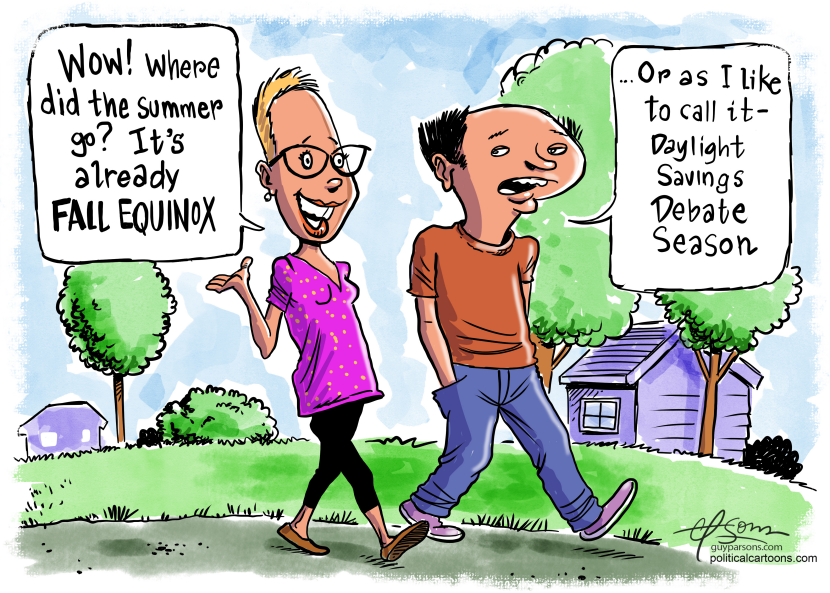
The dread of daylight saving time

Springing forward or falling back, daylight saving time was something my father always dreaded.

Having to reset all the clocks in his house behind or ahead by an hour twice a year meant he had a lot of work to do — and he didn’t enjoy doing it.

The chief cause of his pain was my mother. She loved clocks so much she had 14 scattered all over their house.

There were clocks in my parents’ bedroom, the laundry room, two guest rooms, the car and on the back patio.

Changing each of those clocks was an annoying and time-consuming task for my dad.

It didn’t take him too long to figure out how to change the microwave’s clock, but the stove was brand-new and its clock always caused him great grief.

“For gods sakes, Betty,” he’d complain to my mother, “I’ll never figure this daggone thing out.” He particularly disliked the clock in the basement family room.

Everyone in our family thought this framed “picture clock,” which displayed a mill on a river, was hideous. But my mother loved it because 40 years earlier I had used my meager high school savings to buy it for her as a birthday gift.

My father especially hated it because in order to reset it he had to use a stepladder.

“Why don’t you take it back?” he’d often plead with me.

“I don’t want that ugly thing in my house,” I’d reply.

The three clocks that troubled my dad the most all had chimes. One was a beautiful, hand-crafted wall clock that my Uncle Jimmy had gotten for my parents in West Germany nearly half a century earlier.

On an antique table in the dining room sat another chime clock that Verizon — which we called “the phone company” — had given my father to mark his 25th year of working there.

When he retired after nearly 40 years of service, Verizon gifted him another clock — a magnificent grandfather clock that sat in the living room. It also had chimes.

“For gods sakes, Betty, I’ll never get these three chimes to ring at the same time!” my dad would complain at the top of every hour — and at the top of his lungs! — for weeks after we sprang forward or fell back.

Daylight saving time, which aimed to squeeze an extra hour of daylight out of a typical summer day, didn’t become uniform across the United States until 1966.

People loved it and people hated it. All I knew was that nobody despised its arrival more than my father.

Just as he’d finally get all his clocks reset and synchronized to chime in concert, it was time to spring forward or fall back again, which meant his misery started all over again.

He had but one thing to say to that torture:

“For gods sakes, Betty, if I’d known these daggone chiming clocks would cause me so much grief, I would’ve asked the phone company for gold watches instead!”

My beloved father’s gone now. We lost him two years ago and now my mother is in the process of selling the family house and splitting up their things among us family members.

My sisters and I will each be getting our share of the 14 clocks. I’ll get the grandfather clock my father always wanted me to have.

But the best news is nobody will ever have to worry about getting those chimes in sync again.

Copyright 2024 Tom Purcell, distributed exclusively by Cagle Cartoons newspaper syndicate.

See Tom Purcell’s syndicated column, humor books and funny videos featuring his dog, Thurber, at TomPurcell.com. Email him at [email protected].
Comments Off on The dread of daylight saving time

Re-embracing the American spirit

When I was a 14-year-old kid in 1977, I rode my bike, played ball with my friends and had virtually no responsibility.

During that same time, halfway around the world, another 14-year-old boy named Tony was dragging dead bodies into the street and setting them on fire.

Tony was born and raised in Beirut. When civil war wreaked havoc on his country, there were lots of dead bodies lying in the streets.

As the bodies deteriorated, they filled the air with stench. So Tony and his neighbors periodically dragged them into the street and burned them.

And I used to complain when I had to clean up after our dog Jingles.

I learned of Tony’s story in 1999, as we became friends while I was living in Washington, D.C.

And his story is incredible.

When he was 17, his family had been forced to flee Beirut. At the airport, they were stripped of their money and belongings and sent on their way.

They settled in Cyprus for a few years and his parents survived by working menial jobs. Eventually, the family got permission to come to America and they settled in Washington.

Tony and his younger siblings had no time to finish high school or think about college. He took a job as a janitor while his siblings worked in a restaurant. They gave all their earnings to their father. After three years the father had saved $20,000 and he said the family should start a business.

Without any prior experience, Tony led the charge. The family opened a bakery. For the next seven grueling years, they worked round-the-clock, sleeping on flour sacks and putting all their profits into the business.

In 1993 the bakery started to turn a profit and Tony’s family began to enjoy the fruits of their labor. But then they lost two big accounts in the same year, burdening them with debt. The family hunkered down again, worked round-the-clock and saved the business.

Today, the family business is flourishing. Through dedication and long hours, Tony and his siblings created a good living for themselves and are now enjoying their version of the American Dream.

And Tony is not alone.

You see, in the Washington suburbs of Manassas and Tyson’s Corner, you’ll find $1 million homes all over. And guess who is living in most of them? A little hint: It isn’t middle-manager MBAs.

It’s the wave of newer Americans who came here with nothing. They took jobs as busboys, laborers and many other jobs fewer and fewer native-born Americans are willing to do. They scrimped and saved until they had enough money to build their own businesses.

They own restaurants, dry cleaners, gas stations and other enterprises that generate enough revenue that allow them to live next door to doctors, lawyers and CEOs — as they educate their own children to become the next generation of doctors, lawyers and CEOs.

God knows our immigration system has been a mess for three decades, and it’s never been more chaotic and broken than it is right now.
It’s in desperate need of genuine reform.

All I know is that we all benefit when immigrants like Tony and his family — people who asked absolutely nothing of their new government but the opportunity to pursue their American Dream — find so much success in our country.

We need to pay better attention to them, because they remind us that good things can still happen if all of us enthusiastically re-embrace the American spirit.

Copyright 2024 Tom Purcell, distributed exclusively by Cagle Cartoons newspaper syndicate.

See Tom Purcell’s syndicated column, humor books and funny videos featuring his dog, Thurber, at TomPurcell.com. Email him at [email protected].

Comments Off on Re-embracing the American spirit

My father, the crook and the British sports car

I’ll never forget the look on my father’s face when he learned about the crook who stole my British sports car.

It was the spring of 1988 and I was a senseless 26 year old. I’d just quit a sales job I hated to resurrect a stone masonry business I ran during my college years.

When my father learned I gave up a salary to work hard labor, he had one question: “What the heck were you thinking?”

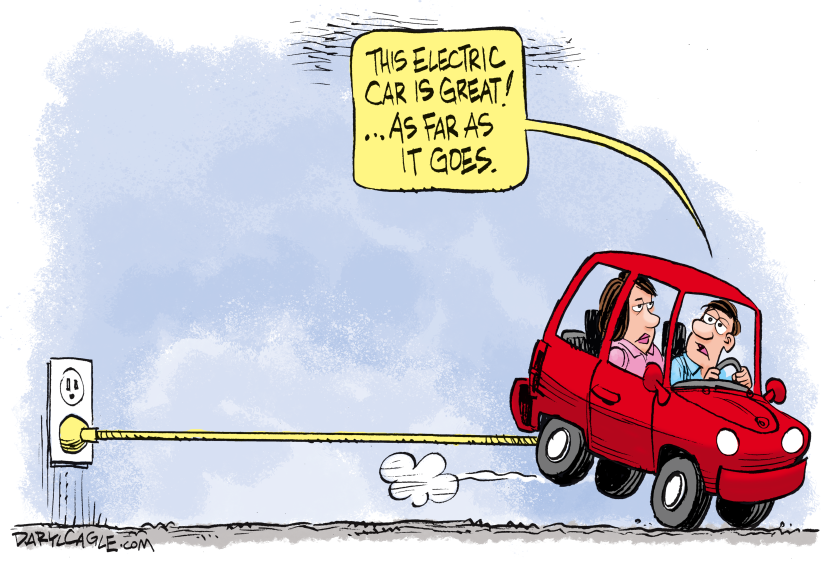
Since I no longer had a steady salary, I decided to cut my expenses. I put my 1986 Firebird up for sale, then I used my meager savings to buy a 1976 MGB convertible.

It was rusted out and needed work, which prompted my father to ask: “What the heck were you thinking?”

But I had a master plan: I’d buy the car cheap, restore it, then drive around in style WITHOUT car payments. And when I eventually would sell the car, I’d do so at a handsome profit.

Things didn’t work out that way, of course.

I was unable to sell the Firebird for what I owed on it. To complicate matters, the MG would break down about once a month and the cost of the repairs was a lot higher than my Firebird’s car payment.

Undaunted, I carried out my plan. I worked hard rebuilding stone walls. I paid my cousin to repaint the roadster, but I was flat broke and still unable to sell the Firebird.

After I took a job at a small advertising agency, I figured I could get $4,900 for the roadster — it was in pristine condition by then — but I wasn’t getting any interest. Until the crook showed up.

He drove a brand new Nissan Maxima, so I figured he had some dough. He said he loved cars and had a dozen of them. He said he wanted the roadster as a gift for his girlfriend.

He asked if he could have his mechanic look the car over and I didn’t hesitate. I gave him the keys. He returned an hour later and agreed to pay me the full $4,900. He’d return the following day with a cashier’s check.

Finally, I thought, my suffering was over. I didn’t know that the fellow was a con artist wanted in several counties.

I didn’t know the Maxima was stolen or that he made a duplicate key for my car. When I got home from work the next day, my car was gone — taken right out of my garage.

As it goes, the crook found the insurance card and title I had secretly hidden under the back seat and sold the car to a used car dealer.

Luckily, the police found the car and brought it back. I finally sold it for $3,300 — a $1,500 loss.

When my father got the details, he had but one thing to say: “What the heck were you thinking?”

I’m not sure what I was thinking then, but here’s what I’m thinking now: Some people think fathers aren’t important, but I’d be lost if my dad’s good sense didn’t finally penetrate my thick noggin.

We lost my dad a few years ago and we miss him dearly, but his good sense guides me still.

I now own a paid-off truck and was never dumb enough to buy a British sports car again!

Copyright 2024 Tom Purcell, distributed exclusively by Cagle Cartoons newspaper syndicate.

See Tom Purcell’s syndicated column, humor books and funny videos featuring his dog, Thurber, at TomPurcell.com. Email him at [email protected].
Comments Off on My father, the crook and the British sports car

Candidates are supporting the trades

There aren’t many positives to come out of a very noisy 2024 election, but here’s one: There’s growing support to get young people into the trades.

According to MSN, the prior two election cycles included battles over proposals to make a four-year college education free, or at least more affordable, but this year the emphasis is on two-year colleges and the trades.

Now that’s a great shift in thinking.

I’ve written about this subject many times over the years, as massive college debt has increasingly saddled young people with a huge monthly burden.

As Mike Rowe has long pointed out, high school counselors and parents have long pushed college degrees as the best alternative, but that trend began to shift a good 15 years ago.

One Washington Post article shared the stories of young people who, after receiving college diplomas, chose to get into the trades.

One 29-year-old fellow in Washington, D.C. — he had a degree from Notre Dame — became an electrician rather than attend law school and suffer in paper-pusher hell.

Around 2010, the Post said that more 20-somethings were forgoing the white-collar world to become plumbers, electricians, mechanics and carpenters — a trend that will benefit us all if it continues and it should.

Look, this country was designed by people who worked with their hands.

Ben Franklin started off as a printer’s apprentice, a messy job. His trade helped him master communication, business management, politics, human nature.

George Washington, a farmer, toiled in his gardens to crossbreed the perfect plant. He was forever trying new ways to cultivate and harvest his crops.

Many of our Founders were farmers. They were humbled by the unforgiving realities of nature.

Hands-on labor made them sensible and innovative. Their good sense is evident in the practicality of the U.S. Constitution.

We have lost touch with such common sense.

The shift happened over many years, of course. Industrialization moved Americans to the cities and, gradually, to paper-pushing jobs in the service-industry.

Now we’re a country of white-collar snobs with an underdeveloped understanding of how things work.

Consider this important white-collar maxim: “If you can’t dazzle them with brilliance, baffle them with BS.”

I’ve seen highly skilled BS-ers establish long white-collar careers without producing anything of any value.

Blue-collar workers cannot BS their way through their work.

An electrician mixes up the hot wire and ground wire only once.

A carpenter is kept honest by his level — he measures twice, cuts once.

A plumber’s skill is evident when the water valve is opened and the pipes don’t leak.

Blue collar workers have no choice but to develop horse sense — to develop efficient ways to solve real problems.

This common-sense, problem-solving wisdom eventually seeps into our public discourse and eventually demands that real people with real ideas are the people we elect to represent us.

I hope more college-educated folks leave the white-collar world to become skilled laborers.

I hope we stop glamorizing careers on Wall Street, the legal profession and many other paper-pushing careers.

I hope more people use their hands to produce something of value every day — and use their practical, decision-making skills to resolve other challenges we face.

That’s the only way to build a great republic — or, to paraphrase Ben Franklin, keep one.

Copyright 2024 Tom Purcell, distributed exclusively by Cagle Cartoons newspaper syndicate.

See Tom Purcell’s syndicated column, humor books and funny videos featuring his dog, Thurber, at TomPurcell.com. Email him at [email protected].

Comments Off on Candidates are supporting the trades

Offering some tax advice

As a self-employed writer, I’ve become knowledgeable about how high my income taxes really are. Every now and then I like to reply to readers with tax advice.

Q: Dear Tom, they say the only things certain in life are death and taxes, but could I still pay taxes when I am gone? (Curious in California)

A: Dear Curious, you could. Every now and then the federal government raises taxes retroactively. When this happens, the recently dead must pay higher taxes on their prior year’s income. But it’s not like they are going to complain about it!

Q: Dear Tom, my dog won’t stop howling. What could it be? (Ned from Nevada)

A: Dear Ned, you appear to have the wrong advice column, but let me try to help. It could be that your dog is self-employed and he just realized how high his income taxes really are.

Q: Dear Tom, someone also told me I’m paying taxes on gasoline, utility bills, retail goods and in many other ways I’m not even aware of. (Really Mad in Madison)

A: Dear Mad in Madison, you are correct, sir! If you were to calculate all the taxes you are paying, you would soon discover that more than half of your money is supporting some government body somewhere.

Q: Dear Tom, my dog is still howling, but now I have a bigger problem. My wife is howling, too. (Ned, still from Nevada)

A: Dear Ned, don’t worry. Your wife is probably worried about taxes going up even more, depending on who the next president is. Maybe you should give your wife some scotch.

Q: Dear Tom, didn’t FDR say of Social Security that “No damn politician will every take it away?” (Curious in Columbus)

A: Dear Curious, yes, FDR did say that, and he was right. However, politicians will have to keep taking more of our money through taxes, or cut Social Security payments, to keep the program going.

Q: Dear Tom, what is a tax bracket? (Annoyed in Minnesota)

A: Dear Annoyed, a tax bracket is a heavy metal object that the government uses to hit you over the head every time you succeed in pushing your income up.

Q: Dear Tom, then what is the capital gains tax? (Still Annoyed in Minnesota)

A: Dear Still Annoyed, the capital gains tax is a heavy metal object that the government uses to hit you over the head every time you succeed in selling an asset for more than you paid for it.

Q: Dear Tom, European countries pay a lot more in taxes than we do. We don’t pay enough. (Higher Taxes Are Good)

A: Dear Higher Taxes Are Good, many European countries have higher unemployment and slower economic growth as a result. At 7.3%, France’s unemployment rate is double the rate in the U.S. Of course, our government has spent $35 trillion more than it has taken in in taxes and our taxes are eventually going to have to go up to pay for years of reckless spending.

Q: Dear Tom, my dog and wife are still howling, but now we’re out of scotch. What should I do? (Ned, still from Nevada)

A: Dear Ned, give your dog and wife gin, bourbon, valium or anything else you can find. And if you have anything you can spare, please share it with me. Thanks to all this talk about taxes and government debt, I suddenly can’t stop howling, either!

Copyright 2024 Tom Purcell, distributed exclusively by Cagle Cartoons newspaper syndicate.

Purcell, creator of the infotainment site ThurbersTail.com, which features funny videos and lessons he’s learning from his beloved Labrador, Thurber, is a Pittsburgh Tribune-Review humor columnist. Email him at [email protected].

Comments Off on Offering some tax advice

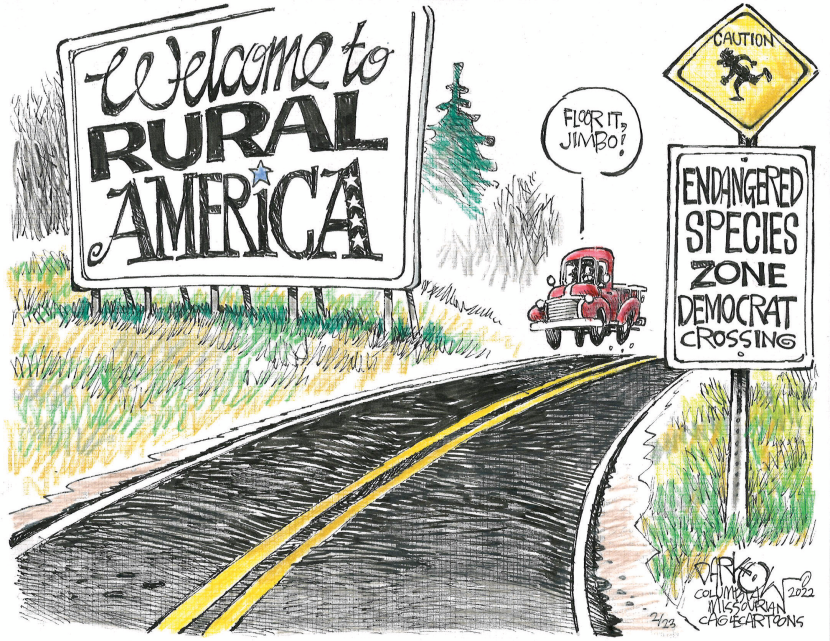
Think twice before relocating to a rural home

As more Americans can do their jobs from any remote location, a trend has been to relocate from urban and suburban areas to lower-cost, rural areas, according to a report by the Center for Rural Innovation.

Being something of an expert on the subject — my home is on a hill outside the suburbs in Pittsburgh, Pa. — let me share some insights.

I grew up the suburbs, which were invented by people who wished to isolate themselves from the world.

While kids in the city were raising their fists, we suburban kids were taking piano lessons.

While kids in the country were rebuilding truck motors, we were doing our algebra.

The only thing we knew about the city and country kids was that both could beat us up.

Before I moved to the country, I envisioned myself working the fields with a hoe. I would tear off porch roofs and rebuild stone walls. I would raise barns with other men, as grateful women and children would bring us sandwiches and lemonade.

But after a few decades of country living, I see that I’ve deluded myself.

For starters, my rural neighbors are still suspicious of me. I told them I’m a writer who works out of his home. But they’re certain I’m in the witness protection program.

And I don’t blame them. After all, I don’t own, nor have I ever fired, a gun. For years, I drove a four-door, four-cylinder Japanese sedan, not a 4 x 4. And worst of all, I hire people to do work on my house, instead of doing all of it myself.

As a new rural homeowner years back, I got a flat tire on my wheelbarrow. I strapped it into my trunk and headed up the hill to my neighbor’s ranch for help.

As I neared his home, I saw him with his friends: the first friend was the guy who bull-dozed my driveway, the second, the guy who painted my house, and the third, the guy who gave me an estimate on my gutters.

I saw in their eyes a look of sickening distress. These fellows had never seen a grown man in a four-door Japanese sedan hauling a flat-tired wheelbarrow.

And while my rural neighbors are suspicious of me, my suburban friends don’t like to visit.

I recall grilling dinner on my deck for one attractive lady from the suburbs. I’d hoped to impress her with the view from my deck. But as night descended, we were overcome by bugs. During her flight into the kitchen, she was hit in the forehead by a large moth.
“It’s a bat!” she shouted.

I reassured her it wasn’t a bat, but to no avail. That was the last time I’d heard from her, though a friend of mine told me she was so impacted by the incident, she had screens installed in her car windows.

It’s this simple: people raised in the suburbs don’t belong in the country.

We belong in the suburbs, where the porches are screened, where bugs are fewer, and where a man is not shunned by other men for hiring a landscaper to mow his lawn.

If you’re dreaming about moving to the countryside, I encourage you to reconsider.

Unless your wife likes bats.

Copyright 2024 Tom Purcell, distributed exclusively by Cagle Cartoons newspaper syndicate.

See Tom Purcell’s syndicated column, humor books and funny videos featuring his dog, Thurber, at TomPurcell.com. Email him at [email protected].

Comments Off on Think twice before relocating to a rural home

The house we live in

I’ve been listening to old crooners on Pandora lately, and one of my favorite Frank Sinatra songs is “The House I Live In.”

Sinatra performed the patriotic song in an 11-minute movie short that was made in 1945, shortly after the conclusion of the war.

In the short, Sinatra steps out of a recording studio into an alley, where he confronts a group of kids chasing a smaller boy. He learns that the smaller boy was being picked on by the others because of his religion.

Sinatra explains to the kids that it is un-American to dwell on what makes us different. Rather, we must celebrate the many unique characteristics we have in common — the characteristics that make us very strong as a nation.

To illustrate his point, Sinatra sings “The House I Live In:”

What is America to me?
A name, a map, or a flag I see.
A certain word, democracy.
What is America to me?

More than just a democracy, America is a representative republic. It was designed to put the power in the people’s hands — people like Sinatra’s Italian-born father, who understood how lucky he was to be American when, for many years, his birth country had been run by the fascist dictator Benito Mussolini.

The howdy and the handshake,
The air and feeling free.
And the right to speak my mind out,
That’s America to me.

The howdy and the handshake speak of a civility and friendliness that we are losing in modern America. Though people are still able to “speak their minds,” many fear punishment for doing so.

The things I see about me,
The big things and the small.
The little corner newsstand,
And the house a mile tall.

It’s hard to imagine now, but envy had never been a big part of the American spirit. America was a place people came to rise on their own merits. Most of our early immigrants were too proud to take handouts — all they wanted was the opportunity to work and prosper and make a better life for their children.

Sinatra’s father became a fireman and eventually a pub owner and lived a good life. But look at the remarkable life his son went on to live — a life and career that could be possible only in America.

The words of old Abe Lincoln,
Of Jefferson and Paine.
Of Washington and Jackson,
And the tasks that still remain.

The American Constitution went into effect on March 4, 1789 — 156 years before Sinatra recorded “The House I Live In.” Most Americans were still very much aware of the unique ideals upon which the country was founded — most realized that, despite America’s many imperfections that still needed to be worked out, it was a blessing to be an American citizen.

It was a blessing to have God-given rights to life, liberty and the pursuit of happiness.

In 2024, I dare say, many Americans have little understanding of the ideas and principles that make our country exceptional, and far too many are eager to give up our freedoms in exchange for government goodies.

A house that we call freedom,
A home of liberty.
And it belongs to fighting people,
That’s America to me.

That’s America to me, too. And we better work harder if we hope to maintain the principles and blessings that have made our country great.

Copyright 2024 Tom Purcell, distributed exclusively by Cagle Cartoons newspaper syndicate.

See Tom Purcell’s syndicated column, humor books and funny videos featuring his dog, Thurber, at TomPurcell.com. Email him at [email protected].
Comments Off on The house we live in

My ‘David Cassidy’ haircut

Editor’s note: This column is an excerpt from Tom Purcell’s humorous memoir, “Misadventures of a 1970s Childhood,” that was previously distributed in 2020.

Yahoo News reports that retro fashions from the ’60s, ’70s and ’80s have been making a comeback.
That makes me grumpy.

Because I’m still upset about the David Cassidy shag haircut my sisters made me get in 1973, when I was 11.

As I explain more fully in my book, “Misadventures of a 1970s Childhood,” available at Amazon.com, Cassidy, the heartthrob star of TV’s “The Partridge Family,” was all the rage in 1973.

Like millions of teenage girls, my sisters had a major crush on him.

They told me I’d be the first kid in St. Germaine School to part my hair down the middle and feather it over my ears. They told me I’d be popular with the girls.

So I did the unthinkable. I pedaled my Huffy spyder bike three miles to the unisex hair salon behind Murphy Mart, then set my crumpled bills and coins on the counter.

“Make me look like David Cassidy,” I said to the lady, a smoldering Marlboro Light dangling from her lips.

She clipped, cut, styled and set. She applied goops and sprays. When she turned the chair around so I could see myself in the mirror, I was horrified.

I didn’t look like David Cassidy. I looked like Cassidy’s TV brother, Danny Bonaduce!

The rest of that day, I hid in my room — until my father demanded I join the family for supper.

I took my seat to his right. He sensed something was off immediately.

Washing his burger down with gulps of Pabst Blue Ribbon, he kept looking at me.

“What the heck happened to your hair?” he finally said.

“I got it cut.”

“But it’s parted down the middle.”

I nodded.

“Why would anyone part his hair down the middle?!”

I had no answer for him then. But today, psychologists offer interesting insight into fashion’s deeper meaning.

Clothing and style reflect what’s going on in our culture. In a strong economy, dress is more playful, colorful and bold. That’s what current trends suggest — and it’s a positive.

“Clothing affects our mental processes and perceptions which can change our minds and the way we think,” according to research by Karen Pine, a University of Hertfordshire professor.

In her book “Mind What You Wear: The Psychology of Fashion,” Pine “shows how people’s mental processes and perceptions can be primed by clothing, as they internalize the symbolic meaning of their outer layers.”

In other words, playful retro fashion trends just might be beneficial to our national psyche. Can they help us loosen up rigid mental processes and perceptions, and maybe even change how we relate to people with whom we vehemently disagree?

Hey, it’s a small step but it’s worth a shot.

Which brings us back to my David Cassidy haircut. It wasn’t until my mid-20s that I got rid of that long-out-of-fashion style.

I asked for something modern and trendy. The hairdresser cut my hair short and slicked it straight back with greasy goop.

“What the heck happened to your hair?” said my father, when I visited him later that week.
“I got it cut.”

“You look like Eddie Munster!” he said.

Copyright 2024 Tom Purcell, distributed exclusively by Cagle Cartoons newspaper syndicate.

See Tom Purcell’s syndicated column, humor books and funny videos featuring his dog, Thurber, at TomPurcell.com. Email him at [email protected].

Comments Off on My ‘David Cassidy’ haircut

America’s last truly free market

All anybody needs to know about a free economy is alive and well thanks to social-media flea markets, such as Facebook Marketplace.

While procrastinating every morning, I review this site looking at cars, lakefront homes and a wide variety of highly entertaining items people are trying to hock.

Facebook Marketplace offers a hands-on lesson in how free-market economics really works.

You see, commerce and trading are what humans do. They are the basis of wealth creation and a thriving civilization.

Somebody with something to sell is eager to find somebody who is willing to buy. The seller and buyer work out an agreement, then make an exchange, and everybody is happy.

Purity and honesty are at the heart of these simple transactions.

An item is only worth what somebody is willing to pay for it. And as millions of transactions take place daily — and the seller tries to fetch as much as possible while the buyer tries to spend as little as possible — a natural market price evolves.

Consider the market for used leather couches.

Some people think that since they paid $2,000 for a new leather couch a few years ago, they can still fetch $1,700 for it now — even though their cat scratched the leather and their dog chewed one of its legs!

Unfortunately for them, their couch is only worth what somebody else is willing to pay for it.

And they’re not willing to pay anything near $1,700 for several reasons.

First off, most people don’t want furniture in their house that was used by somebody else. Reduced desire for the item you wish to sell equals reduced value.

Second, other people may be more motivated to get rid of their leather couches than you.

Maybe they just got divorced, or they’re moving across the country and need to liquidate, or maybe they’re rich and just got a new living room set and want to unload the prior one.

Whatever their motive, some people just want to sell their couch for pennies on the dollar, which beats down the value of your couch all the more.

That means your used, cat-scratched, dog-chewed leather couch is probably worth about 150 bucks on a good day!

That’s the breaks of economic reality — and nothing is more real than a free-functioning economy.

But what if a vote-seeking politician promised people who wanted to buy leather couches a $1,000 subsidy to help them — a Couch Stamp, if you will.

All of the sudden, there would be an unnatural demand for leather couches that would quickly drive leather-couch “values” from $150 to $1,000 and surely more.

The entire used-couch market would be disrupted by the vote-pandering politician and the taxpayers would have to pick up the tab — or more money would have to be borrowed — to pay for the costly disruption.

Thankfully, the government hasn’t bailed out the used-couch marketplace just yet, which is why Facebook Marketplace is such a wonderful example of people freely buying, trading or selling their goods without interference.

As a bonus, Facebook Marketplace also offers entertainment in its purest form, as some fool tries to get, say, $300 for a used commode that is probably worth about 20 bucks.

It’s a delight to watch the humbled seller keep lowering his price to meet the unflushable realities of the used-toilet marketplace.

Copyright 2024 Tom Purcell, distributed exclusively by Cagle Cartoons newspaper syndicate.

See Tom Purcell’s syndicated column, humor books and funny videos featuring his dog, Thurber, at TomPurcell.com. Email him at [email protected].

Comments Off on America’s last truly free market