Why price controls don’t work, even for pencils

Why do some politicians and bureaucrats constantly forget that when governments meddle in our mostly free market that bad things happen?

Vice President Kamala Harris gave what was supposed to be her biggest speech yet last week, but even some of her supporters say she blew it by promoting price controls over food to “fix” inflation.

The concept she promoted is simple enough.

It is the great conceit that government central planners can prevent inflation — which is caused when governments spend recklessly and massively expand the money supply — by forcing grocery stores, for instance, to set their prices at government-determined numbers.

But such central planning never works, mainly because nobody short of God is smart enough to make such incredibly complex decisions about an incredibly complex food supply chain that involves millions of incredibly complex actions.

In 1958, Leonard Read beautifully explained market complexity — and why the hubris of government central planners can only make matters worse — in his classic essay, “I, Pencil.”

As he showed, the making of something apparently as simple as a No. 2 pencil is an incredibly complex, collaborative, global process that involves thousands of people who don’t know each other.

It begins when a cedar is cut down and crews using ropes and gear tug it onto a truck or rail car.

Numberless people and skills are involved in mining the ore to produce steel and turn it into saws, axes and motors, wrote Read.

The logs are shipped to a mill and cut into slats. The slats are kiln-dried, tinted, waxed, then kiln-dried again.

Read wondered how many skills are needed to produce the tint and the kilns. What about the electric power? And the mill’s belts, motors and other parts?

The cedar slats are then shipped to a pencil factory.

A complex machine cuts grooves into each slat. Then another machine lays graphite into every other slat. Glue is applied.

Two slats — one with graphite, one without — are sealed together, then cut to pencil length. Each pencil receives six coats of lacquer. Complex processes employ thousands who create the graphite and lacquer.

Each pencil eraser’s brass holder is another marvel.

First, miners in places like Peru extract and ship the zinc and copper. Experts transform those raw materials into sheet brass, which is cut, stamped and affixed to the pencil.

The eraser, wrote Read, is made from “factice,” a rubber-like material produced when rapeseed oil from the Dutch East Indies (now Indonesia) reacts with sulfur chloride.

To be sure, an awe-inspiring amount of work goes into producing a simple pencil. Millions of strangers collaborate to make its ingredients, plying their unique trades and skills.

Even more amazing is this: No one person could possibly manage the process.

Despite the absence of a mastermind — or government central planners — billions of pencils are produced every year with such humdrum efficiency that we take pencils for granted.

History is clear on the failure of governments to set price controls in complex markets.

They didn’t work in the 1970s when President Nixon tried them and they haven’t worked anywhere else — unless you think Cuba is a paradise today and once-rich Venezuela is doing well under socialist central planning.

The simple pencil, explained Read, is a triumph of human freedom — of creative energies spontaneously responding to necessity and desire.

It’s alarming to learn that we have a presidential candidate who doesn’t appear to understand or appreciate this most simple economic truth.

Copyright 2024 Tom Purcell, distributed exclusively by Cagle Cartoons newspaper syndicate.

See Tom Purcell’s syndicated column, humor books and funny videos featuring his dog, Thurber, at TomPurcell.com. Email him at [email protected].

Comments Off on Why price controls don’t work, even for pencils

Government-mandated vacations

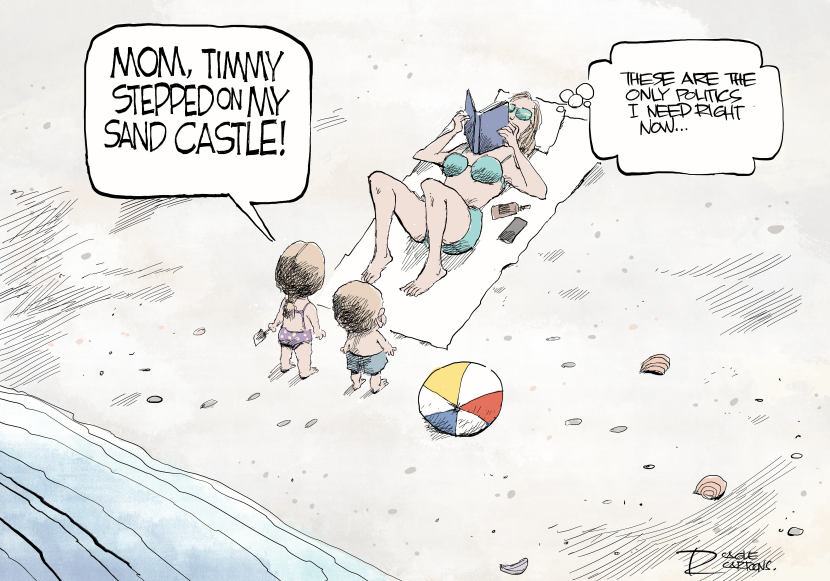
Sen. Bernie Sanders has sponsored a bill to mandate paid vacations for all employees.

Like so many of Bernie’s proposals, it sounds good until you get into the nitty gritty.

Look, it’s true, as Bernie argues, that the United States is the only advanced economy that does not require employers to provide paid vacation time.

It’s also true, reports CNN, that “not only do American workers get less vacation time than workers in other industrialized countries, but they also opt to take fewer days off.”

Consider: The average American worker gets about 18 paid vacation days a year and uses only 14 of them. Compare that to the French who average 37 paid vacation days a year and use nearly every one of them.

Bernie’s solution, reports MSN.com, is to “guarantee at least one hour of paid vacation for every 25 hours worked and ensure full-time employees two weeks of paid vacation in addition to paid sick or family leave.”

Though I don’t like the government telling any of us what we must and must not do, it is true Americans need to get better at freely choosing to vacation.

I’ve been self-employed for most of my career, and nobody has been worse at taking a break from their workload to recharge their batteries — but isn’t that a personal challenge I should work out on my own, without the government getting involved?

Back in 2014, I wrote about some interesting vacation insights shared by economist Stephen Bronars in a Forbes magazine article.

He said that, for starters, 91% of full-time private sector employees already received paid vacations. Those who did not were typically low-tenure employees at small businesses — and new government mandates would hurt, rather than help, such employees.

Bronars said that U.S. labor law is flexible enough to allow employees to negotiate fringe benefits that benefit them and their employers.

Perhaps some employees prefer higher pay and fewer vacation times, for instance. Maybe others prefer more flexible hours.

Paid-vacation mandates would eliminate such flexibility.

Plus, he continued, by forcing employers to give paid vacations to new or part-time workers, who may not currently be receiving them, labor costs will increase.

Bronars said that our current flexibility “is an advantage, not a weakness, of our system and leads to more employment growth and greater job security than we would have if we adopted European-style labor market regulations.”

In other words, the freedom of an individual and his employer to work out the terms of employment by themselves generally benefits everyone.

It incentivizes employees to demonstrate and improve their performance and value. And it incentivizes employers to reward employees with the fringe benefits they prefer — thus increasing employee morale and productivity.

Whatever the case, Americans need to get better at “vacating” more often.

TheStreet reports more than half of Americans who ARE on vacations continue to work on their laptops while they are away, because they fear falling behind at work and losing their jobs.

Look, if we Americans don’t get better at freely choosing to vacation, it’s just a matter of time before politicians like Bernie succeed in getting our ever-expanding government to manage that aspect of our lives, too.

Now turn off your digital devices and go for a long vacation walk!

Copyright 2024 Tom Purcell, distributed exclusively by Cagle Cartoons newspaper syndicate.

See Tom Purcell’s syndicated column, humor books and funny videos featuring his dog, Thurber, at TomPurcell.com. Email him at [email protected].
Comments Off on Government-mandated vacations

Survivor of a baby boomer childhood

Editor’s Note: This column is an except from Tom Purcell’s book, “Misadventures of a 1970s Childhood.”

The MSNBC.com article said that kids raised in the ‘50s, ’60s and ’70s are survivors.

We survived chain-smoking adults, meat-and-potato diets and rough-and-tumble fearlessness of every kind — such as the bike jump that nearly killed me in 1972.

It was the Evel Knievel era, after all. Knievel became famous doing wheelies and jumping his motorcycle over cars and buses. Every kid with a bicycle tried to emulate him
.
We jumped our bikes from ramps built from warped plywood that we set on rickety blocks.

It was a grand feeling to soar through the air — though our landings often weren’t pretty.

This was the early ’70s, after all. We didn’t wear helmets or pads. When our rear wheels hit the pavement, we wiped out plenty.

When a landing went really wrong, a mom was alerted, a moaning kid would be loaded into a wood-paneled station wagon and off he’d go to St. Clair Hospital for stitches or a cast.

Which brings us to the day I almost died.

I was riding a five-speed Murray Spyder bike that year. Its fifth gear allowed me superior speed and, thus, superior distance off the ramp.

I held the neighborhood record for the longest jump — until some outsider allegedly broke it.

I wasted no time reclaiming my record. I rode to the tippy-top of Marilynn Drive and began pedaling like mad.

I was moving faster than I ever had when I cut a hard left onto Janet Drive and hit the ramp.

The jolt was spectacular. It caused my sweaty fingers to lose hold of the handlebars. Everything went into slow motion.

I remember floating through the air like a directionless missile — my body flailing as it sought to regain its balance.

I remember the tremendous impact that shot through my spine as the rear wheel hit the pavement — how my bike began wobbling wildly.

I was heading for a big, splintery telephone pole. I leaned left, then right, and, miraculously, avoided the large pole.

The worst was yet ahead. I was roaring toward a thicket of pine trees. Their trunks and branches would surely turn me into kid stew.

Then providence intervened.

One of our neighborhood dads was a welder. He had built a giant steel-framed street-hockey net, and it was stored in the pine brush directly where I was headed.

The net caught me like a glove. I didn’t hit a single trunk. I didn’t suffer a scratch.

One doctor told MSNBC.com that most kids of my era survived their childhood just fine, but some did get badly hurt, and a helmet and some padding could have saved them.

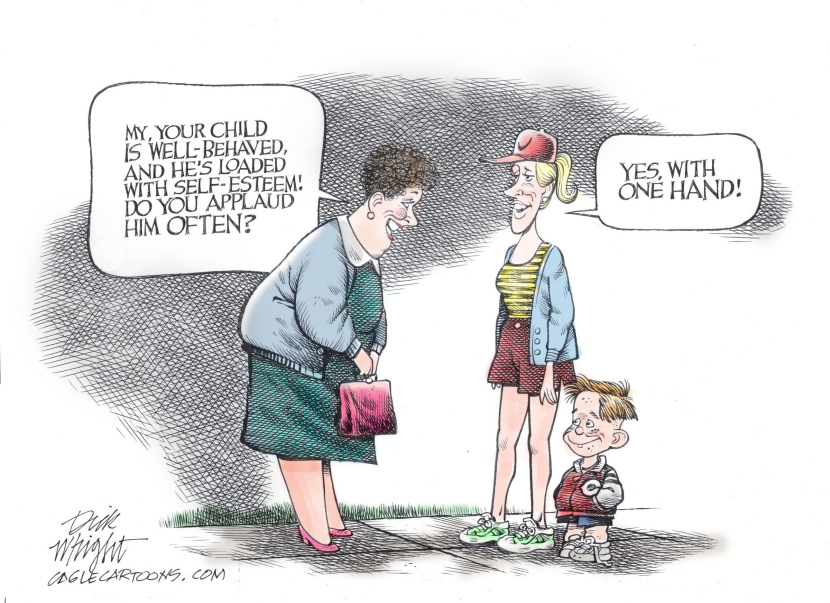
But it’s also true that whereas kids were once free to roam and explore, too many of today’s kids aren’t free to do much of anything.

In any event, I regained my bike-jump record that day and I’m confident it will stand forever.

Even if a 2024 kid was daring enough to jump his bike off of a ramp, he’d be covered in more protective padding than a hockey goalie.

There’s no way a kid carrying that much weight could ever fly as far as I did the day a bike jump nearly killed me.

Copyright 2024 Tom Purcell, distributed exclusively by Cagle Cartoons newspaper syndicate.

See Tom Purcell’s syndicated column, humor books and funny videos featuring his dog, Thurber, at TomPurcell.com. Email him at [email protected].
Comments Off on Survivor of a baby boomer childhood

Forgetting our Olympic woes

Bowling didn’t make the cut again.

Neither will baseball and softball, ballroom dancing, pole dancing and a host of other sports be featured in the 2024 Summer Olympics games in Paris.

The International Olympic Committee (IOC) is picky about the sports it chooses.

A sport must be widely practiced globally, draw a high level of interest among the media and public and also not pose too many cost and scheduling obstacles, such as the need to build large baseball stadiums.

But in a perfect world, wouldn’t it be great if the Olympics emphasized the world’s most entertaining sports — events that would help us take our minds off our woes?

Golf, which has been included since the 2016 Olympics, certainly accomplishes that.

Millions can relate to Olympics golfers who, after missing a putt, fight the urge to toss their clubs into the lake.

And show me another sport in which the athlete pays another guy to carry his bag, which includes an ice chest to keep his beer cold?

Skateboarding has been an Olympic sport since the 2021 Olympics, which is pretty dang cool.

However, the IOC should include agitated middle-aged “Karens” and “Kens,” who tell the skateboarders they’re not permitted to skate there and that the police are on their way.

It’s not fair that bowling was left out.

Bowlers have greater stamina than most Olympians. Only a real pro can drink three pitchers of Pabst Blue Ribbon and still win a gold medal.

Besides, it’s much easier for viewers to keep track of their favorite competitor, as each bowler displays a name tag on his front-shirt pocket — right under the “Bob’s Heating and Cooling” logo.

I think it’s a tremendous IOC oversight that ballroom dancing failed to make the cut.

Not only does ballroom dancing require the finesse of American legends Ginger Rogers and Fred Astaire, but it’s rife with risks you won’t find in other sports.

You’ll never see an Olympic sprinter blow out a knee after tripping on a buffet table.

That brings us to pole dancing.

Advocates argue that pole dancing requires superhuman strength, but because this “sport” is better associated with scantily clad ladies who dance in smoky bars for dollar bills, the IOC keeps rejecting it.

Whatever the case, IOC, it’s the thick of summer and we need a break from our woes.

In America, a trying presidential election is underway. One guy dropped out under bizarre circumstances and another just survived an assassination attempt under even more bizarre circumstances.

Elsewhere in the world, endless wars are being waged. Intense hatred and conflict are bringing us all down.

We look to the 2024 Olympics for an escape from our woes — not more politics and more woes.

We didn’t want to be lectured about inclusion and diversity in a dazzling opening ceremony that featured pagan themes that alienated a couple billion Christians.

No, we want to be unified as we watch dedicated athletes display their skills and enjoy the fruits of their labors.

To borrow from the “Wide World of Sports,” we want to see the world’s finest athletes enjoy the thrill of victory as they risk the agony of defeat.

Look, IOC, you could really help us escape our troubles by bringing us pole dancing — and by featuring world-class female athletes, who practiced their pole-twisting prowess in some of the world’s dingiest pubs.

I’d pay good money (again) to see that.

Copyright 2024 Tom Purcell, distributed exclusively by Cagle Cartoons newspaper syndicate.

See Tom Purcell’s syndicated column, humor books and funny videos featuring his dog, Thurber, at TomPurcell.com. Email him at [email protected].

Comments Off on Forgetting our Olympic woes

We need a better load of BS

What a bunch of BS.

BS is all over television, blogs, podcasts and newspapers these days.

It’s spouted by politicians and pitched by product spokesmen.

Modern life is manufacturing an unprecedented amount of it.

Thanks to cable “news” channels and social-media platforms, there are numerous opportunities for people to BS us about all kinds of things.

Just weeks ago, our newscasters were telling us President Biden was as fit as a fiddle. How dare we think otherwise!

Then we saw his debate performance, which was so painful to watch, he was forced to drop out of the race.

We decided to believe our own lying eyes, rather than the mistruths our esteemed talking-heads were telling us.

The truth is, BS has a long history in America. During our early years, the “tall tale” was an accepted form of BS. Exaggeration lent more credence and entertainment to stories, and yarn-spinning became a celebrated part of American culture.

From our beginning we’ve had our share of snake-oil salesmen and flimflam artists. These scoundrels weren’t judged on the rightness or wrongness of their scams, so much as the skill with which they practiced their craft.

The truth is that we want to be lied to in America.

Whereas the truth can be painful, costly and time-consuming, we’re suckers for a clever, though deceitful, yarn that puts us at ease and helps us sleep better at night.

In America, we want our politicians to limit spending — and build a new bridge in our backyard.

We want “free” health care and fatter Social Security checks — and we want believe such spending won’t raise taxes or the deficit.

But our politicians and “news” people are doing such a horrible job spinning their mistruths, we no longer believe much of anything they say.

I think it’s because they’ve gotten lazy.

I remember the “good old days” when news shows, such as “Dateline,” went to elaborate lengths to pull one over on us. They rigged up a truck with explosives, blew it up on-screen, then blamed the automaker.

Some time ago, cigarette companies said smoking wasn’t bad for us. They cited paid-for studies, and we happily believed them.

Lyndon Baines Johnson said government spending was going to end poverty, and, trillions of dollars later, we know how that whopper turned out.

I’m really missing Bill Clinton. He could twist and contort any mistruth into the prettiest, most believable tale.

We knew he wasn’t telling the truth, but we loved the way he didn’t tell it.

But we don’t like the way half-hearted mistruths are being sold to us now.

Cable news channels on the left and right spit out sensationalized reports to draw viewers, so they can sell advertising to make their newscasters, producers and corporate owners rich.

Social media is happily pitting us against each other, so we spend more time on their platforms demonizing and hating people who disagree with us — because the more we do that, the more advertising revenue we will generate.

As a result, none of us knows who or what to believe anymore.

If our press and political leaders have any hope of restoring any credibility, one thing is for certain:

They better come up with a better line of BS.

Copyright 2024 Tom Purcell, distributed exclusively by Cagle Cartoons newspaper syndicate.

See Tom Purcell’s syndicated column, humor books and funny videos featuring his dog, Thurber, at TomPurcell.com. Email him at [email protected].

Comments Off on We need a better load of BS

My childhood neighborhood did not raise assassins

I grew up in Bethel Park, the middle-class suburb south of Pittsburgh where 20-year-old Thomas Matthew Crooks lived with his parents.

Crooks’ attempt to kill Donald Trump last weekend has filled my old neighborhood with shock and sadness.

Bethel Park is populated by decent, salt-of-the-earth people — people such as my mom and dad who moved there in 1964 to raise their six children in a safe, friendly community with big yards and good schools.

Like many kids in my neighborhood in the 70s, I attended St. Germaine Catholic Elementary School.

The nuns there taught us to embrace the virtues: prudence, temperance and courage.

They demanded we fend off the seven deadly sins: pride, envy, gluttony, lust, anger, greed and sloth.

They also made us sit up straight and keep our shirts tucked in.

I didn’t know it then, but the good sisters gave us the gift of moral clarity — and what they taught us worked.

The vast majority of my St.Germaine classmates went on to live healthy, productive and happy lives.

So did most of the kids who graduated with me in 1980 at Bethel Park High School — where Crooks would have a troubled and unhappy time four decades later.

At 20, Crooks was a member of Generation Z. We don’t know yet what his unique inner demons were. But we do know that many in the Zoomer generation are struggling.

Social psychologist Jonathan Haidt explains their troubles in his book, “The Anxious Generation.”

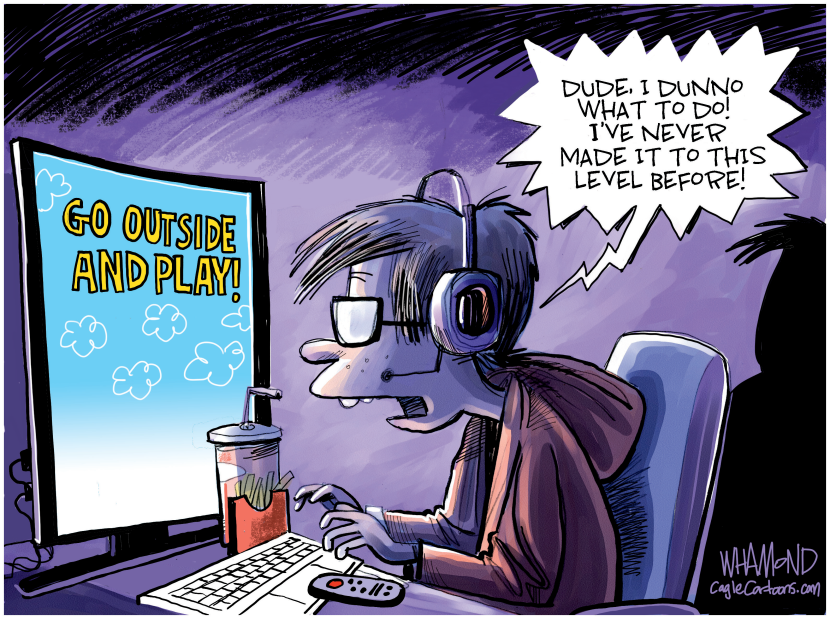
Haidt says the combination of helicopter parents and social media have rewired childhood for kids born after 1995, creating an epidemic of anxiety, depression and suicidality.

As it goes, parents have over-protected post-1995 children in their home lives, but under-protected them in their digital lives, where powerful, negative online forces overwhelm the positive influence of parents, churches and teachers.

To be sure, the mindset of America’s first smartphone generation doesn’t echo my generation’s in any way:

– Only 26% of Zoomers have faith in God/religion vs. 65% of Boomers, according to a Public Opinion Strategies/NBC News poll.

– About 2 percent of Boomers identify as LGBTQ, but 16 percent of Zoomers do, according to a Gallup survey.

– Zoomers are less than half as likely to be proud to be American, according to a 2023 Gallup poll.

– Four in 10 Zoomers say the Founding Fathers are better described as villains than heroes, and 75% think the nation demands dramatic change, according to a Democracy Fund survey.

Generationally speaking, we tail-end Boomers had it made. The basic values that were infused in us by our parents, neighbors, churches and teachers gave us the tools that helped us flourish as adults.

It is heartbreaking to see that the simple values we were taught — the tried-and-tested values that have been passed down for many generations — are not being transferred fully to younger generations, such as the Zoomers.

My heart aches for the Comperatore family that lost its brave and good father Corey at Trump’s rally, and also two other shooting victims, who are still in critical condition.

My heart also aches for the very confused young man from my old neighborhood who threw his life away and caused so many people so much unnecessary pain.

Whatever his motives were, his horrific act is a reflection of the political hatred that divides us.

Sadly, in our modern confusion, any community — even salt-of-the-earth communities, such as Bethel Park — can give birth to a troubled, would-be assassin.

Copyright 2024 Tom Purcell, distributed exclusively by Cagle Cartoons newspaper syndicate.

See Tom Purcell’s syndicated column, humor books and funny videos featuring his dog, Thurber, at TomPurcell.com. Email him at [email protected].
Comments Off on My childhood neighborhood did not raise assassins

A hairy situation for balding men

As our country goes to pot, I find myself more focused on personal matters, such as this hopeful item I read on MSN.com:

Researchers have identified a molecule called osteopontin, which is a potential game-changer for people who are losing their hair.

That’s good news for fellows like me, whose hair has been slowly receding for years.

For most of human history, you see, the roles of men and women were clearly defined. Since basic survival was so difficult, the division of labor was very clear and imprinted on our DNA.

Thus, men tended to perform the tasks that required size and strength. We wrestled bear and elk, plowed fields and defended our families from plunderers.

If a man was highly skilled in these areas, his baldness didn’t matter. The ladies were still attracted to him.

Women, on the other hand, tended to manage other important tasks, focusing on the homestead.

Because there was more work for both men and women than there was time in the day, men and women didn’t argue much over who did what and generally appreciated each other.

But as the technological revolution took hold, fewer jobs required strength and brawn. Technology made household chores much easier to accomplish. Women began working the same jobs men did just as well and often better.

Today, women have made tremendous advances. They’re doing way better than their male counterparts in advanced education and excelling in high-paying professions in the big metros.

Which is why bald men are in so much trouble.

In the old days, women chose to consort with dull men of high moral character, so long as they were a doctor or CPA.

Now that so many women are financially independent, they can be choosy, and who can blame them? They want fellows with full heads of hair and good looks.

Balding men have it worse than ever.

Not only do they generally have trouble competing for women against their full-head-of-hair rivals, they tend to have trouble succeeding in all areas of life.

Look at the top male officials in any organization and it is rare to find one without a thick head of “executive hair.”

Most of our presidents, with the exception of our current White House occupant who attempted to cure his baldness years ago with an early hair-plug technology that wasn’t very good, had terrific hair.

You have to go all the way back to Ford in the mid-’70s to find the last receding-hairline guy who made it to the top office, though he would go on to lose his only election for president to Jimmy Carter, who had a terrific head of hair.

You have to go all the way back to Eisenhower in the ’50s to find the last bald one, though he had been instrumental in winning a major world war.

My point: In the modern era, bald fellows are on the outs. The only exception is the current trend in which balding men shave their heads completely.

I’m thinking of giving the sleek, totally bald look a shot as I wait for scientists to figure out how to grow all of my hair back.

Or I can just pay extra-close attention to our incredibly stressful and bizarre presidential election and the rest of my hair will surely fall out by November.

Hey, maybe if the election makes all of us go bald, bald men won’t be on the outs anymore!

Copyright 2024 Tom Purcell, distributed exclusively by Cagle Cartoons newspaper syndicate.

See Tom Purcell’s syndicated column, humor books and funny videos featuring his dog, Thurber, at TomPurcell.com. Email him at [email protected].

Comments Off on A hairy situation for balding men

Fond memories of our Fourth of July gatherings

I miss watching the spectacular fireworks display at Eddie G’s house every Fourth of July.

Eddie G. was my grandmother’s longtime companion. For the last 20 years of her life, Eddie treated her like gold.

She’d had a hard life, after all. Widowed in her late 40s way back in 1955, she struggled for years to pay the bills — she struggled to tend to six children.

After she successfully completed that difficult task Providence intervened.

Always a regular churchgoer, she had caught the eye of Eddie, a colorful old bachelor.

Eddie and his brother ran a successful office-cleaning business, started years before by their immigrant father.

They had hundreds of employees who maintained the interiors and exteriors of Pittsburgh’s biggest high-rise buildings.

Though Eddie’s brother married and raised a family, Eddie was never blessed that way. Many years went by and Eddie was still alone — until he met my grandmother.

The two hit it off instantly and were soon inseparable. They went to Mass together every day. Eddie took her to Pittsburgh’s finest restaurants every night. Eddie was a staple at every Purcell family event.

Eddie made the last 20 years of her life her best years — and made our Fourth of July celebrations wonderful, too.

There was no better place on Earth to celebrate the nation’s birthday — thanks to Eddie’s dad.

You see, Eddie’s dad had been born in Hungary. He came to America as a young man seeking a better life. He took the first job he could get — janitor.

Where others viewed mopping and cleaning as demeaning work, Eddie’s father saw a future.

He started his own cleaning business. He began by cleaning small commercial buildings and kept moving his way up.

His company was soon maintaining larger buildings. He soon had the means to send his sons to college — to develop their business skills to help him keep growing the business.

He built himself a nice stone home in the suburbs — the home in which Eddie G. would live the rest of his life.

His home bordered a park that featured a magnificent fireworks display every Fourth. Eddie’s backyard offered a perfect view.

Eddie set out tables and chairs. He made refreshments and food. Just before dusk, my grandmother’s children, grandchildren, their spouses and others would arrive.

As the adults laughed and caught up with each other, the children danced around the yard, giggling as their sparklers burned bright.

Soon, the sky would fall black and the fireworks would begin.

As we “oohed” and “aahed” — as the sky exploded into bright colors — Eddie would be next to my grandmother, as contented as a man can be.

Eddie threw his last Fourth of July party in 1993, five years after my grandmother died. He died the following winter.

Our sadness at the loss of both hit hardest the next Fourth of July when we could no longer gather at Eddie’s to celebrate.

But this story is still one of joy.

That’s because the story of Eddie and his father is an American story. Through hard work, Eddie’s dad turned a mundane job into an incredible life for his family.

Eddie and his brother took his dream to the next level and grew the company into a multi-million dollar business.

Eddie had the means to treat my grandmother like royalty in the last 20 years of her life — and give my large extended family many wonderful Fourth of July memories we will cherish forever.

Happy Fourth of July!

Copyright 2024 Tom Purcell, distributed exclusively by Cagle Cartoons newspaper syndicate.

See Tom Purcell’s syndicated column, humor books and funny videos featuring his dog, Thurber, at TomPurcell.com. Email him at [email protected].

Comments Off on Fond memories of our Fourth of July gatherings

How air conditioning changed politics and the world

Thank God Willis Haviland Carrier invented air conditioning — for the most part.

Before air conditioning, the heat drove us outside and brought us together. Friends sought the shade of trees or a refreshing dip in a lake or river.

On the hottest nights, whole families brought their blankets and pillows to riverbanks, where it was cool.

In the evening, neighbors sat on their large front porches, enjoying a cool breeze as they sipped lemonade and told stories.

Even in the 1970s, when I was a kid in the suburbs of Pittsburgh, few homes had air conditioning. Our windows were always open.

At night you could hear neighbors talking, a distant baby crying and Pirates’ announcer Bob Prince calling a game on somebody’s porch radio: “… he missed it by a gnat’s eyelash!”

In the mornings, I’d wake early to the sound of chirping birds. I could smell the cool dew outside my window and the scent of toast and scrambled eggs my father was cooking up in the kitchen.

Air conditioning has certainly changed many things for the better — I’m nice and cool as I write this column — but it has brought with it some downsides.

Most neighborhoods are sealed shut now. Rather than the voices of children playing, all you hear is the hum of air conditioning motors.

My Uncle Jack’s 1920s home was designed with high ceilings, cross ventilation and large hallways to dissipate heat — magnificent features that are no longer necessary in today’s low-ceilinged suburban houses that put the porch in the back and the garage in the front.

No lemonade for you!

Commercial buildings used to have windows that opened, but that isn’t necessary anymore.

Today’s glass-plated buildings are designed to keep the light and air out, making us oblivious to whatever season it may be.

Before Congress got air conditioning in the 1920s, hot, humid Washington was empty from mid-June to September.

Now the Congress can spend lots more time working on — as the great New York Times columnist Russell Baker once put it — “… the promulgation of more laws, the depredations of lobbyists, the hatching of new schemes for Federal expansion and, of course, the cost of maintaining a government running at full blast.”

Sure, air conditioning has dramatically improved life for the elderly and others with respiratory problems. It’s saved a lot of lives. And our productivity has been vastly improved by the cool air.

I’m just saying that sometimes it’s good to be hot, sweaty and uncomfortable.

When I lived in the D.C. area in 2004, a group of us sat next to the Capitol Building in 102 degree heat during a Fourth of July ceremony.

Thousands of people were jammed together dripping with sweat, but nobody really minded.

We sang the National Anthem together and it was a moving event. We watched the fireworks go off above the Washington Monument. It was a spectacular experience to be together in the heat with so many others.

But as soon as the last of the fireworks exploded, most people fled to their air-conditioned cars and homes and went quickly back into isolation.

I didn’t.

I put my car windows down. We drove slowly through the streets of Washington, listening to the occasional firecracker and people talking as children played with sparklers.

Of course, as soon as I got to my Virginia condo, I cranked the AC as high as it would go — happily enjoying the incredible upside of Willis Carrier’s cool invention.

Copyright 2024 Tom Purcell, distributed exclusively by Cagle Cartoons newspaper syndicate.

See Tom Purcell’s syndicated column, humor books and funny videos featuring his dog, Thurber, at TomPurcell.com. Email him at [email protected].

Comments Off on How air conditioning changed politics and the world

Government largesse for writers

During the Great Depression, the government established the Works Progress Administration. The program hired nearly 8 million unemployed people to build buildings, parks, bridges and roadways.

And it paid writers to write.

As part of the Federal Writers’ Project, nearly 7,000 writers were hired to compile local histories, guidebooks, children’s stories — all kinds of things. The government edited and published the books.

Much to my disappointment, no government program of such magnitude exists now — but maybe it should.

Hey, our government leaders have passed several “stimulus” programs that squandered billions on every silly pet project under the sun — contributing significantly to our inflation woes.

And isn’t our president using every trick his administration can find to make taxpayers pick up the tab for college-loan borrowers, who don’t think it’s their responsibility to repay the debts they willingly took on?

Since the fools in Washington, D.C., aren’t making any effort to stop wasting money, they may as well create another program to support writers and painters and other struggling artists.

Sure, I know what you’re thinking: An artist shouldn’t expect his neighbor to fund his passion. His passion, alone, should be enough to motivate him to write.

I know, too, that the greatest writers this country has produced became great, in part, because they toiled so hard on their own.

O. Henry (real name William Sydney Porter) is one of my favorite writers. He worked odd jobs to pay the bills — and his odd-job experiences became the source of his most colorful stories.

Many great writers started off in the lowest, most miserable positions newspapers had to offer. These writers include Mark Twain, Ernest Hemingway and John Steinbeck, as well as Joan Didion, Maya Angelou and Erma Bombeck.

It’s true that struggle is the foundation of great art — that great writing comes from those who find a way, late at night or early in the morning, to work hard on their craft.

That’s how I’ve been working on my books. For years, I’ve worked long hours doing corporate work to pay the bills, then work on my books in whatever spare time I can find.

But I’m tired of working so hard. I think it’s high time that the government should bail me out, too.

I propose that the government pay off 1 million writers at a salary of $100,000 each per year. Our package will include full benefits and the standard four weeks of paid vacation.

The cost to taxpayers will only be $100 billion per year — a drop in the bucket, considering that our deficit is nearing $2 trillion for this year and that our debt is just shy of $35 trillion.

Think how much better our world will be if a million writers — many of them now unhappy in unpleasant jobs — are paid to produce fiction!

Think of all the prose that will flood bookshelves and kindle devices, thanks in part to the government editors and government printing shops that will produce our works!

I concede that most of the prose will be total, unreadable junk, but I have a solution for that, too.

We can simply create a tandem program that pays people to read the crap the government-paid writers keep producing!

What do you say, our pandering politicians in Washington?

Give writers their own fat hunk of government largesse and a million votes can be yours!

Copyright 2024 Tom Purcell, distributed exclusively by Cagle Cartoons newspaper syndicate.

See Tom Purcell’s syndicated column, humor books and funny videos featuring his dog, Thurber, at TomPurcell.com. Email him at [email protected].

Comments Off on Government largesse for writers