Be Civil, by George!

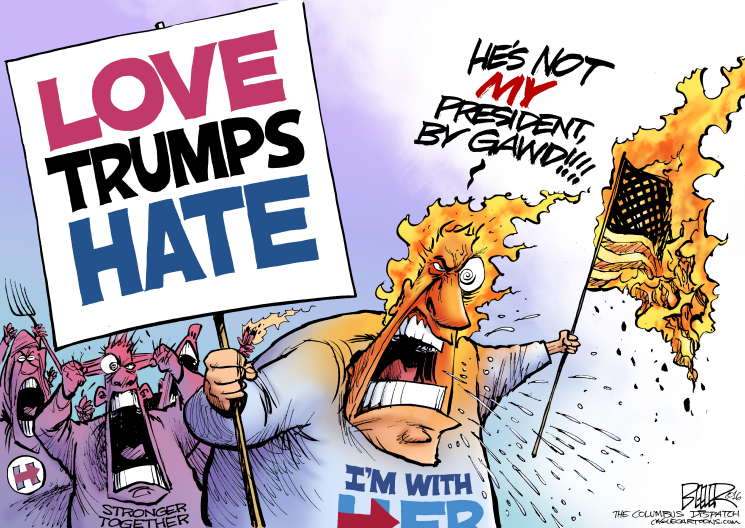
“Can you believe that a man dumped a drink on a teenager because the teenager’s baseball cap favored the president? What’s happening to civil discourse in our country?”

“That’s a question on a lot of people’s minds. Our political discourse is at a fever pitch. Like or dislike President Trump, his sharp rhetoric isn’t helping matters.”

“So what if he attacks his opponents with nasty comments and tweets? He’s a rough-and-tumble New Yorker fighting back the way New Yorkers do!”

“Maybe so, but a president has the power to set the tone, and the tone President Trump is setting is getting people fired up. Other political leaders are also stepping over the line. But the truth is civil discourse has been on the decline for years.”

“If you say so, you jerk!”

“Psychology Today reports on a recent study that found people are ruder to each other online for the simple reason that they don’t make eye contact, as they do in face-to-face discussions.”

“That explains why so many dirty rats leave nasty remarks on my Facebook posts!”

“Look, it’s easy to be rude. Being civil and polite requires effort. Civility is the cornerstone of all well-functioning societies.”

“Says who?”

“Did you know the word ‘etiquette’ originated under Louis XIV in the 1600s? Etiquette and manners define what social behavior is and isn’t proper.”

“I ain’t following rules drafted up by snooty old French people!”

“Then consider someone nearer and dearer to your heart: As a teenager, George Washington hand-copied ‘The ‘Rules of Civility,’ a list started by French Jesuits in the 1590s that was translated into English around 1640.”

“His mother probably put him up to it!”

“Washington’s 110 rules are still relevant. Here’s one that we all should heed: ‘Show not yourself glad at the misfortune of another though he were your enemy.'”

“You mean we ought to stop posting items on Facebook that gleefully celebrate election losses by our most reviled politicians?”

“Something like that. Here’s another Washington rule that we ought to heed: ‘Speak not injurious words neither in jest nor earnest. Scoff at none although they give occasion.'”

“If Trump heeded that advice, he’d have to shut down his Twitter account!”

“Washington’s rules include this one about the company we keep: ‘Associate yourself with men of good quality if you esteem your own reputation. For ’tis better to be alone than in bad company.'”

“If people started doing that, Congress would have nobody to talk to!”

“You get the point. Look, Judith Martin, better known as Miss Manners, says good manners are the philosophical basis of civilization, that it’s essential folks have a common language of civil behavior that restrains their impulses.”

“But impulsiveness is my favorite hobby!”

“She says that what used to be an insult is now called slander. What used to be meanness is now called hate speech. What used to be boorishness is now called sexual harassment. If the rules of civility and etiquette were stronger, fewer people would engage in actions that are now considered crimes. We all can and must do better. Civility and incivility are contagious. If we want more civility, we each need to practice it. And press our political leaders to do likewise – by George!”

“Slander, meanness and boorishness is against the law? There goes the weekend!”

Copyright 2018 Tom Purcell. Tom Purcell, author of “Misadventures of a 1970’s Childhood,” a humorous memoir available at amazon.com, is a Pittsburgh Tribune-Review humor columnist and is nationally syndicated exclusively by Cagle Cartoons Inc. For info on using this column in your publication or website, contact [email protected] or call (805) 969-2829. Send comments to Tom at [email protected].

Comments Off on Be Civil, by George!
Summertime Dinner Calls Long Overdue

Maybe a new Utah law will revive the lost art of parents calling their children home for dinner.

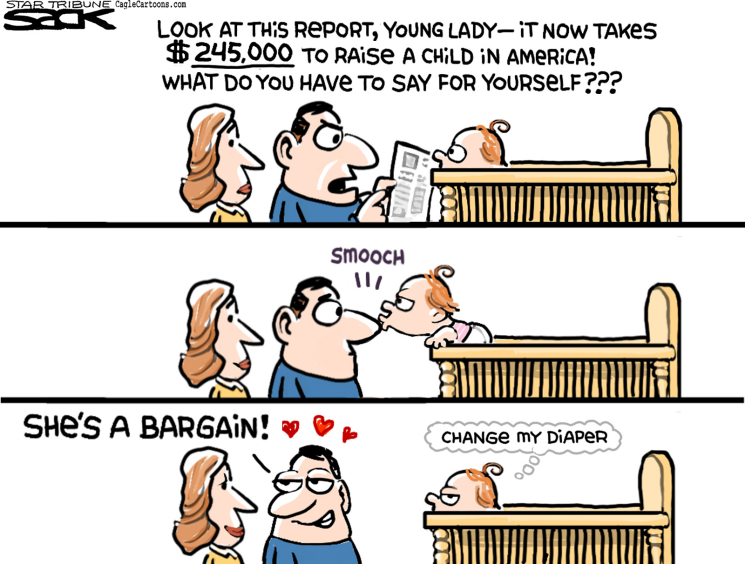
Utah recently passed the nation’s first “free-range parenting” law to protect parents from prosecution for allowing their children to play in nearby parks, walk to school, go to the store or rumble through a neighborhood creek – without adult supervision.

It’s a shame that it now takes passing laws to allow kids to enjoy childhood activities without adult supervision, but we must.

We must because, according to Parents Magazine, nearly 75 percent of parents fear their children are at risk of being abducted. Some 30 percent of parents fear child abduction more than they do car accidents, sports injuries or drug addiction involving their children. Parental fears have been stoked for decades by sensationalistic news stories on the internet and cable television, 24/7 – fears that, regrettably, are woefully out of sync with reality.

According to The New York Times, among America’s roughly 40 million elementary school-age children, approximately 115 are abducted by strangers each year – while 250,000 are in car wrecks.

According to The Washington Post, “children taken by strangers or slight acquaintances represent only one-hundredth of 1 percent of all missing children.” Such abductions are also on the decline.

In any event, media-stoked fears have changed childhood forever, prompting “helicopter parents” to “hover” over their children every moment of every day – placing undue burdens and stress on children and parents alike.

Lenore Skenazy says the heck with that.

Skenazy, an American blogger, columnist, author and reality-show host, wrote a newspaper column in 2008 that explained her decision to allow her then-9-year-old son to ride on the New York City subway alone.

The column sparked a flood of outrage among stressed-out parents and won her the label of “America’s Worst Mom.” It also led to Skenazy penning the book “Free Range Kids: Giving Our Children the Freedom We Had Without Going Nuts with Worry.”

Some 10 years later, Skenazy’s advocacy culminated in the passing of Utah’s new “free-range parenting” law, which hopefully will enable children to enjoy the sort of unsupervised freedoms we baby-boom kids experienced in abundance – and bring back the lost art of parents calling their children home for dinner!

In the ’70s, after we spent the day outdoors building shacks, going on bike hikes, swimming in a neighbor’s pool or enjoying dozens of other activities without adult supervision, our parents called us home for dinner.

Every parent’s dinner call had a unique sound. My father went with a deep, booming “Tom, dinner! Tom, dinner!” I could hear him a mile away or more.

When moms did the calling, they always used full names. They often sang, too, as my Aunt Jane did: “Miiiiiikkkeeelllll, Keeeeevvvviiiiinnn, suuuuuppppppeeerrrr!”

The Givens boys, up on the hill across the railroad tracks, were called in by a large bell. The clanging sounded at 6 every night, giving us the sense that a riverboat was making its way up the Mississippi or a chuckwagon was calling in cowboys for some grub.

These mystical summer sounds have been gone a long time now – too long.

Hopefully, the efforts of gutsy moms like Lenore Skenazy will gradually restore the happy, artful sounds of those shouts, chants and bells carrying through the sweet summer air.

2018 Tom Purcell. Tom Purcell, author of “Misadventures of a 1970’s Childhood,” a humorous memoir available at amazon.com, is a Pittsburgh Tribune-Review humor columnist and is nationally syndicated exclusively by Cagle Cartoons Inc. For info on using this column in your publication or website, contact [email protected] or call (805) 969-2829. Send comments to Tom at [email protected].
Comments Off on Summertime Dinner Calls Long Overdue

Illuminating Independence

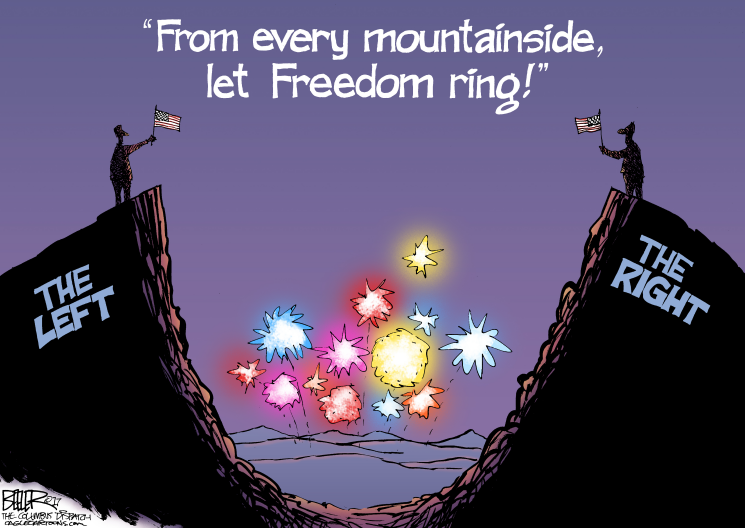
Burgers on the grill, great discounts at retail stores and amazing fireworks that s why I love the Fourth of July!

It s a grand time, to be sure the day every year that we celebrate American independence and the birth of our country. And there are lots of interesting fun facts about the Fourth.

Such as?

According to–ConstitutionFacts.com, the Continental Congress voted on the Declaration of Independence, which listed our grievances against King George III and explained to the world why our 13 colonies sought independence from Great Britain, on July 2, 1776 not July 4.

It did?

So to speak. The congress voted for a resolution of independence on July 2. It voted for the actual Declaration of Independence on July 4. Founding father John Adams, who would become our second president, believed our independence should be commemorated on the Second, not the Fourth.

Our politicians disagreed on basic stuff like that even back in 1776?

They disagreed widely on many matters small and large, just like now. In any event, though Adams did not get his wish on when Independence Day should be celebrated, he did get his wish on how it should be celebrated. He s a key reason we enjoy amazing fireworks displays all over our great land every year.

He is?

On July 3, 1776, in a letter to his wife, Abigail, he said: I am apt to believe that it will be celebrated, by succeeding Generations, as the great anniversary Festival… It ought to be solemnized with Pomp and Parade, with Shews, Games, Sports, Guns, Bells, Bonfires and Illuminations from one End of this Continent to the other from this Time forward forever more.

Way to go, Johnny!

History.com–says that immediately after its adoption, the Declaration of Independence was read in public, followed by festivities that included concerts, bonfires, parades and the firing of cannons and muskets,’ just as Adams had wished.

I think we should fire off muskets every year!

According to The Boston Globe, Boston and Philadelphia held ‘illuminatory’ celebrations on July 4, 1777. American University professor James Heintze, author of an extensive Fourth of July history, told The Globe that Boston lit off fireworks and shells and that Philadelphia, then the nation s capital, fired cannons, artillery and small arms before ending the night with a grand exhibition of fireworks.

How cool is that?

After the Revolutionary War, Americans celebrated the Fourth in towns and villages all over the new nation. In 1783, Boston became the first city to designate the Fourth of July an official holiday.–History.com–says the U.S. Congress made the Fourth a federal holiday in 1870, and in 1941, the provision was expanded to grant a paid holiday to all federal employees.

And the ‘illuminations’ Adams wished for are as much a part of the Fourth as hot dogs and apple pie!

They sure are. And if John Adams or any of the other Founders could see how well their fledgling nation has blossomed since July 4, 1776, one thing is for certain.

What s that?

Fireworks would go off!

Copyright 2018 Tom Purcell. Tom Purcell, author of “Misadventures of a 1970’s Childhood,” a humorous memoir available at amazon.com, is a Pittsburgh Tribune-Review humor columnist and is nationally syndicated exclusively by Cagle Cartoons Inc. For info on using this column in your publication or website, contact [email protected] or call (805) 969-2829. Send comments to Tom at [email protected].
Comments Off on Illuminating Independence

Confusing Facts & Opinions

Confusing Facts & Opinions

“The Pew Research Center quiz was harder than I expected.”

“Ah, yes, you speak of the recently released survey in which Pew quizzed 5,035 adult Americans to determine their ability to distinguish between factual information and opinion statements in the news.”

“That’s right. The Pew website lets anyone take a quiz featuring 10 statements, five that are true-or-false factual statements and five that are opinion statements. Pew told me to ignore whether or not a statement is accurate and also to ignore whether or not I agree with it. I follow the news and figured I’d ace the quiz, but I didn’t.”

“Let’s take a look at the quiz. Pew’s first statement says, ‘Abortion should be legal in most cases.’ Did you classify that as a fact or an opinion?”

“I classified it as an opinion and got it right. This is a contentious issue, but the statement is still an opinion.”

“Pew’s second statement said, ‘Immigrants who are in the U.S. illegally have some rights under the Constitution.’ How did you classify that one?”

“It’s factual. Look, it’s true that undocumented immigrants don’t have the full rights of a U.S. citizen, but, according to the ACLU, our Constitution does afford them some rights, such as freedom of speech, religion, privacy and others. I struggled with Pew’s next statement, however.”

“That ‘Democracy is the greatest form of government’?”

“Yes. I classified it as a fact, because I strongly believe that democracy – in our case a representative republic – is the greatest, but the statement is, in truth, an opinion.”

“It’s not always easy to separate one’s strong beliefs and opinions from facts. Pew found that each participant was more likely to classify both factual and opinion statements as factual when the statements validated his or her personal politics or beliefs.”

“That’s probably why Pew chose 10 statements that may get people fired up, depending on their political points of view. Such as this one that’s still driving conspiracy nuts crazy: ‘President Barack Obama was born in the United States.’ I correctly classified that as a fact.”

“Which others did you get right?

“It’s a fact that ‘Health care costs per person in the U.S. are the highest in the developed world,’ that ‘Spending on Social Security, Medicare and Medicaid make up the largest portion of the U.S. federal budget,’ and that ‘ISIS lost a significant portion of its territory in Iraq and Syria in 2017.'”

“Which opinions did you classify correctly?”

“It’s an opinion, not a fact, that ‘Immigrants who are in the U.S. illegally are a very big problem for the country today,’ and that ‘A $15 federal minimum wage is essential to the health of the U.S. Economy.'”

“That leaves us with one more statement: ‘Government is almost always wasteful and inefficient.'”

“Even though I know that statement is an opinion, I couldn’t resist classifying it as a fact!”

“You did better than most. Pew reports that only 26 percent of the adults surveyed correctly identified all five factual statements as factual, and just 35 percent identified all five opinion statements as opinion.”

“That’s worrisome.”

“To be sure. Our republic depends on a well-informed populace to remain strong. If the majority of our people can’t differentiate between fact and opinion – or fact and fiction, for that matter – they can be easily misled. That doesn’t bode well for our future.”

Copyright 2018 Tom Purcell. Tom Purcell, author of “Misadventures of a 1970’s Childhood,” a humorous memoir available at amazon.com, is a Pittsburgh Tribune-Review humor columnist and is nationally syndicated exclusively by Cagle Cartoons Inc. For info on using this column in your publication or website, contact [email protected] or call (805) 969-2829. Send comments to Tom at [email protected].

Comments Off on Confusing Facts & Opinions

We Need to Embrace the Wit and Wisdom of Will Rogers

Editor’s note: This column was originally distributed by Cagle Cartoons in 2013.

Things are mighty heated these days. Tempers are flaring and minds are closed. Here’s the solution: the wit and wisdom of Will Rogers.

“The short memory of voters is what keeps our politicians in office.”

“We’ve got the best politicians that money can buy.”

“A fool and his money are soon elected.”

Rogers spoke these words during the Great Depression, but they’re just as true today. With 24-hour news channels, our memories are shorter than ever. And in the mass-media age, the politician who can afford the most airtime frequently wins.

“Things in our country run in spite of government, not by aid of it.”

“Alexander Hamilton started the U.S. Treasury with nothing. That was the closest our country has ever been to being even.”

“Be thankful we’re not getting all the government we’re paying for.”

Today, unfortunately, we’re getting more government than we’re paying for. We cover the difference by borrowing billions every year.

As the king of the velvet-tipped barb, Rogers never intended to be mean, but to bring us to our senses. One of his favorite subjects was to remind the political class that it worked for us, not the other way around.

“When Congress makes a joke it’s a law, and when they make a law, it’s a joke.”

“You can’t hardly find a law school in the country that don’t, through some inherent weakness, turn out a senator or congressman from time to time … if their rating is real low, even a president.”

“The more you observe politics, the more you’ve got to admit that each party is worse than the other.”

That’s for certain. I used to fault the Democrats for cronyism and reckless spending. But that was before Republicans took over.

Rogers’ thinking on American foreign policy really hits home today:

“Diplomacy is the art of saying ‘Nice doggie’ until you can find a rock.”

“Diplomats are just as essential to starting a war as soldiers are for finishing it. You take diplomacy out of war, and the thing would fall flat in a week.”

“Liberty doesn’t work as well in practice as it does in speeches.”

Rogers was born and raised on a farm in Oklahoma. His wit reflected the heart of America – the horse sense, square dealing and honesty that were the bedrock of our success.

“When a fellow ain’t got much of a mind, it don’t take him long to make it up.”

“This country is not where it is today on account of any one man. It’s here on account of the real common sense of the Big Normal Majority.”

Franklin Roosevelt, a frequent target of Rogers’ barbs, understood how valuable Rogers’ sensibility was during the years of the Depression:

“I doubt there is among us a more useful citizen than the one who holds the secret of banishing gloom … of supplanting desolation and despair with hope and courage. Above all things … Will Rogers brought his countrymen back to a sense of proportion.”

A sense of proportion is clearly what we’re lacking right now. We need to get it back quickly.

Hey, we’ve got a rapidly aging population – a Social Security and Medicare train wreck is just over the horizon – and there is no shortage of additional woes we must resolve if we expect the American experiment to keep on rolling.

But instead of working to resolve our challenges, we snipe and point fingers and make absurd accusations. We forget we’re not Democrats or Republicans, but Americans.

What we need now more than ever is the calm, clear perspective of Will Rogers. He offered some sound advice on how we can get started:

“If stupidity got us into this mess, then why can’t it get us out?”

Copyright 2018 Tom Purcell. Tom Purcell, author of “Misadventures of a 1970’s Childhood,” a humorous memoir available at amazon.com, is a Pittsburgh Tribune-Review humor columnist and is nationally syndicated exclusively by Cagle Cartoons Inc. For info on using this column in your publication or website, contact [email protected] or call (805) 969-2829. Send comments to Tom at [email protected].

Comments Off on We Need to Embrace the Wit and Wisdom of Will Rogers

The Incredible Power of Fathers

Editor Note: This columnis an excerpt from Tom Purcell’s humorous book, “Misadventures of a 1970s Childhood,” available at Amazon.com.

My 84-year-old father still asks me why I did it.

The “incident,” as my family refers to it, dates back to 1973, when my father remodeled our basement into a family room. The project included a small bathroom, which would be the bane of his existence for more than 30 years.

You see, my father, always looking to save a buck – he had six kids to feed, after all – bought the cheapest sink and toilet he could find. Though the sink worked fine, the tiny toilet rarely functioned properly.

My father spent much of his spare time unplugging it. He pleaded with us not to use it unless it was “an emergency” and “for goodness sakes don’t even think about number two!”

Armed with this knowledge, then, it is remarkable I did what I did.

One Sunday morning, after chomping on a large Washington apple, I lay on the family room couch, too lazy to go upstairs to the kitchen to dispose of the core.

I noticed, 12 feet away, that the toilet lid was up. In a moment of insanity, I aimed the core at the toilet and flicked my wrist. The core floated majestically in the air, a perfect trajectory, and landed in the center of the bowl with a satisfying “ker-plunk!”

I later flushed it and never gave it another thought.

Over the next six months, the toilet plugged up several times. My father, a maestro with a plunger, was always able to clear the pipe. But one Sunday morning, the tiny commode presented him with the mother of all clogs.

Nothing would free it. The plunger failed, but not before my father was soaking wet. Two jars of Drano had no effect. Even a plumber’s snake, which my father borrowed from our next-door neighbors, failed to dislodge the blockage.

In a fit of rage, my father unbolted the toilet from the floor. In one mighty heave, he lifted it off its mount and set it aside. He knelt before the black hole in the floor. He reached his large paw inside, then his forearm, then his biceps.

His head pressed against the damp floor, sweat dripping off his nose, the veins in his temples ready to explode.

His eyes lit up. He had something. He carefully removed his biceps, then his forearm, then his paw. He was on his knees now staring at his clenched fist. He unpeeled his fingers slowly. In the center of his palm was a black, rotten apple core.

I could go into excruciating detail about my father’s incredible reaction – how he ran through the house shouting, “Which of my idiot kids flushed an apple core down the toilet?”

But I won’t.

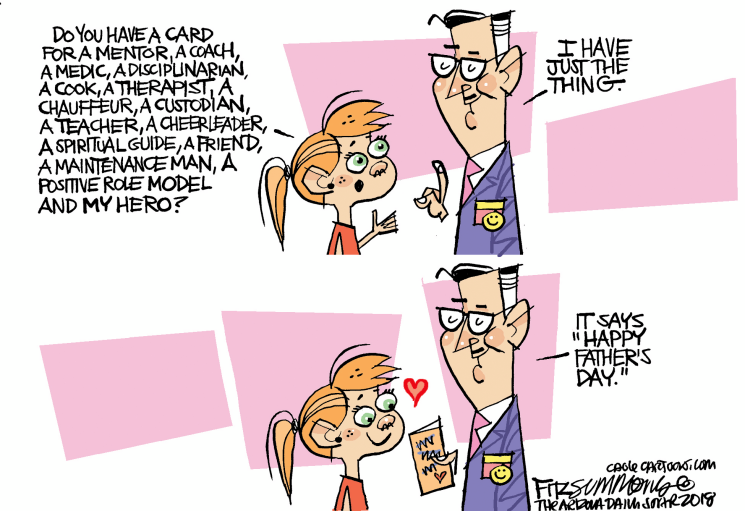
I will tell you that my father, unlike bumbling dads presented in the media today, earned our respect. He believed it was his job to help my sisters and me master basic virtues – certainly to master common sense – and I failed him that day.

His powerful model left a profound impact and guides me still. Even at 56, I’m filled with joy when I live up to his high standards and make him proud. I’m filled with disgust when my actions fall short and make him sad.

That is the incredible power my father holds over me.

Still, he phones me now and again with a familiar question: “Why did you flush an apple core down the toilet?”

Copyright 2018 Tom Purcell. Tom Purcell, author of “Misadventures of a 1970’s Childhood,” a humorous memoir available at amazon.com, is a Pittsburgh Tribune-Review humor columnist and is nationally syndicated exclusively by Cagle Cartoons Inc. For info on using this column in your publication or website, contact [email protected] or call (805) 969-2829. Send comments to Tom at [email protected].
Comments Off on The Incredible Power of Fathers

Skilled Trades Beat Degree Debt

When I was a 19-year-old college sophomore in 1982, my father gave me advice that makes even more sense for 19-year-olds today.

Despite his protestations, you see, I chose English as my major at Penn State. Worried about my ability to land a job, he begged me to at least minor in something practical.

I’m still the only person ever to graduate from Penn State with a major in English and a minor in air conditioning/heating.

I joke, of course, but if I were 19 now, I don’t think I’d go thousands upon thousands into debt to fund a liberal arts degree.

I’d give skilled trades – electrician, plumber, machinist, IT and many other skill sets – a serious look, because that’s where the opportunity is.

When I was in college in the early ’80s, a bachelor’s degree was the ticket into the corporate world, where the “good jobs” were. Few people were able to get their foot in the corporate door without first earning that diploma.

To be sure, a diploma has value. The purpose of a liberal arts education is to teach students not what to think, but how to think – how to approach and resolve problems, useful skills in business and in life.

However, with a glut of liberal arts majors out there, getting a foot in any corporate door is harder than ever. It’s making less sense to borrow thousands upon thousands of dollars to fund a degree that may not lead to a good job.

It’s making a lot more sense to master a skilled trade.

National Public Radio reports that “some 30 million jobs in the United States that pay an average of $55,000 per year don’t require bachelor’s degrees, according to the Georgetown Center on Education and the Workforce.”

Meanwhile, as millions of skilled tradespeople from the baby-boomer generation retire, there’s a massive shortage of workers with the skills needed to replace them. Thousands upon thousands of skilled-trade positions are open right now – and companies are having trouble filling them.

That’s even leading more college-educated people to give up white-collar, paper-pusher jobs to get into the trades.

As reported in The Washington Post, one 29-year-old in D.C. – he had a degree from Notre Dame – considered going to law school, like many others in that lawyer-saturated town. After watching his friends work long hours as paralegals – and watching his lawyer pals sign their lives over to their firms – he did something sensible. He became an electrician’s apprentice.

He wasn’t alone. The Post said many more 20-somethings are forgoing the white-collar world to become plumbers, electricians, mechanics and carpenters – all highly satisfying careers that can pay seasoned tradespeople six-figure incomes.

I think it’s great. We already have enough paper-pushers. We need skills.

Besides, a skilled tradesperson can earn more than many lawyers do – and likely enjoy the work more. Show me a dozen lawyers and I’ll show you 11 people who have considered quitting their unfulfilling careers to drive a cab.

Which reminds me of the joke about the plumber who fixes a leaky pipe at the home of a doctor. When the plumber successfully completes his work, he hands the doctor a bill for $600.

“Six hundred dollars for less than two hours of work?” said the doctor. “I’ve been practicing medicine for 20 years, and I can’t charge that much money.”

The plumber smiled and said, “When I was a doctor, neither could I!”

Copyright 2018 Tom Purcell. Tom Purcell, author of “Misadventures of a 1970’s Childhood,” a humorous memoir available at amazon.com, is a Pittsburgh Tribune-Review humor columnist and is nationally syndicated exclusively by Cagle Cartoons Inc. For info on using this column in your publication or website, contact [email protected] or call (805) 969-2829. Send comments to Tom at [email protected].

Comments Off on Skilled Trades Beat Degree Debt

For Happiness, Head for the Hills

In my experience, the study’s findings are true.

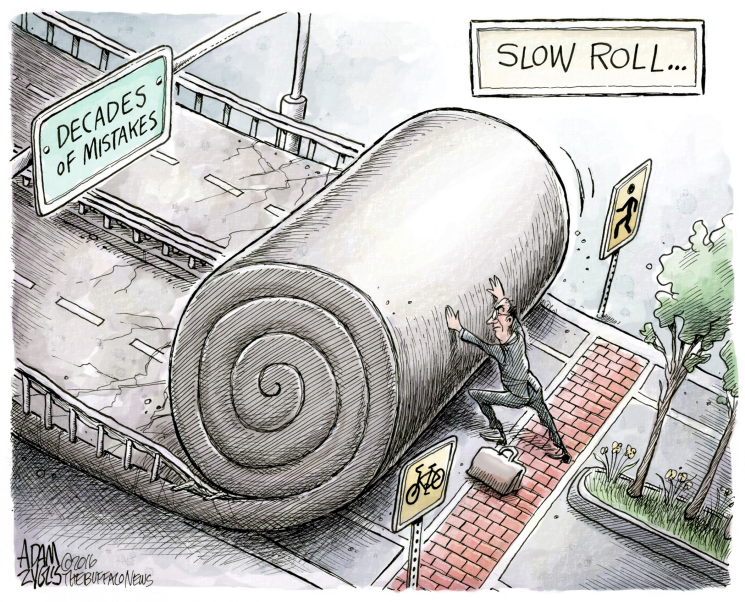
According to The Washington Post, the Vancouver School of Economics and McGill University have determined that people who live in rural areas and small towns are happier than those who live in congested urban and large metro areas.

McGill’s happiness researchers have found that the happiest communities have shorter commute times, less expensive housing, less transience and people who have a greater “sense of belonging” in their communities.

In 2010, after working on a yearlong project in Washington, D.C., I moved back to a country house I own in the outskirts of Pittsburgh. The house is surrounded on all four sides by a large open space and a forest. I rented it to tenants for nearly 14 years, but decided it was time to move back to the country.

When I purchased the place in 1996, I dreamt of getting closer to nature. I envisioned myself working the fields with a hoe. I would fell trees and rebuild large stone walls with my bare hands. I would raise barns with other men, as women brought us sandwiches and cold beer.

But reality quickly overcame such fantasies.

For starters, my rural neighbors were suspicious of me. I didn’t yet own, nor had I ever fired, a gun. I drove a four-cylinder Japanese sedan. And I displayed incredible incompetence the first time I was confronted by aggressive ground bees.

One neighbor told me the solution was to pour a half-cup of gasoline into the bee hole, then light it. I poured in two cups for good measure. I wisely moved the 2.5-gallon gasoline canister 10 feet away, then lit a match. It was then that I learned an important lesson about gasoline.

Gasoline doesn’t burn. Gasoline fumes burn. They burn because they are FLAMMABLE! And they are especially flammable when you create a massive carburetor in a dirt hole in your planter.

As I neared the hole, I heard a giant “WOOOOF,” the sound gasoline fumes make when they explode. A 15-foot flame shot up the side of my freshly painted house. But I was more concerned about the flame that was now coming out of the air hole on the top of the 2.5-gallon gasoline canister I had wisely sat 10 feet away.

I grabbed the giant Molotov cocktail and launched it as far from the house as I could, causing an explosion that would fill an al-Qaida trainee with envy. It took me an hour to douse all the flames and keep the countryside from burning down.

These are just some of the many failed confrontations I’ve had with nature at my little country house. I haven’t mentioned the snake incident, my war with the groundhogs or the great wild-turkey-destroying-my-mulch-looking-for-grubs incident of more recent years.

But I’m straying from the central point.

The essential finding of the McGill study is that greater happiness correlates with lower population density, where, in a nutshell, people are more rooted, expenses are lower and the pace of life is much more manageable.

The Post reports that the “findings comport with similar studies done in the United States, which have revealed a ‘rural-urban happiness gradient:’ The farther away from cities people live, the happier they tend to be.”

That makes sense to me.

I drive a 4×4 truck now, shoot guns and have become expert at dealing with ground bees.

I’ve grown to love country living, though some of my neighbors are still suspicious of me, “the writer who works from home.”

They think I’m in the witness protection program.

Copyright 2018 Tom Purcell. Tom Purcell, author of “Misadventures of a 1970’s Childhood,” a humorous memoir available at amazon.com, is a Pittsburgh Tribune-Review humor columnist and is nationally syndicated exclusively by Cagle Cartoons Inc. For info on using this column in your publication or website, contact [email protected] or call (805) 969-2829. Send comments to Tom at [email protected].
Comments Off on For Happiness, Head for the Hills

Left Behind at the Drive-in Theater

Editor Note: A prior version of this column was distributed by Cagle Cartoons in 2012. If you run this column, please mention that it is an excerpt from Tom Purcell’s humorous book, “Misadventures of a 1970s Childhood,” available at Amazon.com.

I can’t imagine such a thing happening today: In the early 1970s, when I was 9, my family left my sister Mary behind at the drive-in theater.

Allow me to explain, but you’ll have to read my humorous memoir, “Misadventures of a 1970s Childhood” on Amazon.com, to get the full story.

As it went, the outing had started off well enough. My father spent several minutes searching for a spot (it took time to find a window speaker that worked). We got out of the car as he opened the tailgate and folded down the back seats, then got back in. We began devouring corn curls, potato chips, onion dip and pretzels, and washed them down with Regent soda pop.

The blue sky soon fell dark and the film projector began rattling. Black-and-white numbers — “5, 4, 3, 2, 1… ” — flashed onto the screen. Yellowed footage advertised hot dogs, popcorn and other concession items we could never get our father to buy.

It didn’t take long before we began squabbling over pillows, blankets and positioning. My sisters complained that my big noggin was blocking their view, and so I was banished to the back of the car.

As I recollect, we went to see “Paper Moon” that night — a movie about a Depression-era con man and a young girl who travel around taking people’s money — but my sisters say it was “Herbie the Love Bug.”

Whatever the case, I was so busy devouring snacks — we didn’t have them often, so I was taking advantage of my good fortune — I didn’t care about the movie. My stomach was soon so full, however, that I ended up lying on my back, groaning in agony.

It’s important, at this point, to understand how everyone was situated.

My father sat in the front seat on the driver’s side. My mother sat to his right holding my sister Jennifer. She “shooshed” us constantly to keep us from waking the baby. In the back, under the pile of blankets and pillows, were my sisters Kathy, 14; Krissy, 12; Lisa, 6; and Mary, 4.

Throughout the first and second movies, there was plenty of sleeping, waking, snoring, squabbling, shooshing, complaining (“Mommy, Tommy stinks!) and trips to the restroom.

Unbeknownst to everyone, however, 4-year-old Mary — she always had a touch of wanderlust — had slipped out the back of the car to go to the restroom. Preoccupied with my aching belly — I was groaning pretty loudly by then — I didn’t notice her slip by me.

About then the second movie was coming to a close. My father, always eager to beat the rush, hurriedly packed up the cooler and fired up the car. It never occurred to anyone that Mary might not be under the blankets. Off we drove as the final credits began to roll.

I don’t recall how far we got before Lisa shouted, “Where’s Mary?”

My mother, trying not to disturb the baby, instinctively began shooshing. It took five minutes or more before Lisa persuaded everyone that Mary was still at the drive-in.

Panic overcame us. My father made a hard U-turn and floored it. Our wood-paneled Plymouth station wagon roared down the road like the car in “Chitty Chitty Bang Bang.”

We fishtailed as we hit the gravel parking lot. The lot was empty but for the car that had been next to ours. Mary stood next to it holding the hand of somebody else’s dad (who waited patiently for the dopey family that forgot one of its kids).

My sisters and I laugh every time someone brings up the incident — in part because such a thing could never happen today. Today’s obsessive parents, terrified by cable news, never let their kids out of their sight.

To my family’s credit, however, Mary was the only child we ever lost. None of us was ever left at a highway rest stop, as one family we knew did. Another left their kid at a camp ground in Ohio after a family vacation.

In any event, everything turned out well in the end. Mary has four children of her own now. She hasn’t lost any of them yet.

Copyright 2018 Tom Purcell. Tom Purcell, author of “Misadventures of a 1970’s Childhood,” a humorous memoir available at amazon.com, is a Pittsburgh Tribune-Review humor columnist and is nationally syndicated exclusively by Cagle Cartoons Inc. For info on using this column in your publication or website, contact [email protected] or call (805) 969-2829. Send comments to Tom at [email protected].
Comments Off on Left Behind at the Drive-in Theater

For Memorial Day – Serving Those Who Serve Us

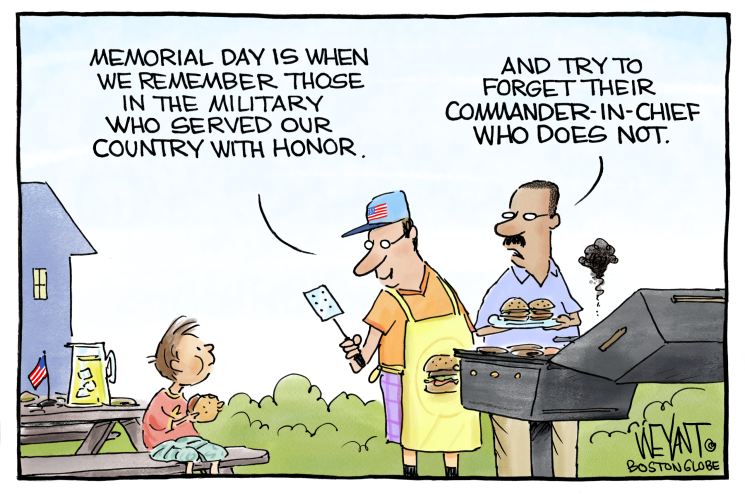
Every Memorial Day, we remember those who died during active military service. But the day gives us a special opportunity to serve those who serve us.

According to the Department of Veterans Affairs, nearly 42 million American men and women have served during wartime. Nearly 1.2 million died while serving. Nearly 1.5 million were wounded.

Since 9/11, nearly 7,000 U.S. service members have died in Iraq and Afghanistan. More than 50,000 have been wounded – many have debilitating injuries and mental challenges that have changed their lives forever.

We may debate the rightness or wrongness of various engagements, but we know that freedom comes at a steep price – and we honor those who have secured it for us.

But we can do more. We can serve them back.

“There are many small things people can do that can make a world of difference,” said Jerry Newberry, assistant adjutant general at the Veterans of Foreign Wars (VFW).

Such as assisting the family of a service member who has been deployed.

“Family members go through a long period of wondering, worrying and waiting,” said Newberry. “But they still need to deal with the car breaking down, a child getting sick, a death in the family. If you know of such families, reach out to them.”

Or write an e-mail or letter. The troops – particularly those recuperating in military hospitals – love receiving e-mails, letters and care packages. You can do so at amillionthanks.org.

Donate time. Your local Veterans Affairs office, VFW and other legitimate organizations are in desperate need of volunteers.

Organize a toy drive for children of deployed soldiers. Support the Marine Corps Toys for Tots program. Provide gift cards to troops through aafes.com.

Donate money. You can give to a variety of needed services for military members – or support the Red Cross to provide basic necessities to service members in military hospitals. Go to vfw.org and click on “Donate” or “Troop Support.”

Lori Felix at Military.com offers additional suggestions that are simple and inexpensive. One is to volunteer to place flags on the grave sites of fallen servicemen and women. Your local American Legion or VFW will have the details.

Felix writes that holiday weekends can be challenging times for those who are serving away from home. She suggests contacting the community relations office at your local military base to invite a service member or two to dinner.

Or do something kind for a wounded vet. The Walter Reed National Military Center has a Facebook page that provides inspiration and ideas for brightening a wounded vet’s day.

CNN offers some great suggestions.

Some disabled veterans are unable to drive. You can volunteer to give them a ride to their medical appointments at Disabled American Veterans (dav.org).

You can donate your frequent flyer miles so that family members can travel to the bedside of a hospitalized service member. That can be done through the Fisher House Foundation’s Hero Miles Program (fisherhouse.org).

CNN reports that more than a third of the men and women who served in Iraq and Afghanistan “have or will experience post-traumatic stress disorder.” The Puppies Behind Bars program trains companion dogs for veterans with PTSD. You can sponsor a dog at puppiesbehindbars.com.

Hey, Memorial Day is upon us. What better time to serve the men and women who have served, or are serving, us?

Copyright 2018 Tom Purcell. Tom Purcell, author of “Misadventures of a 1970’s Childhood,” a humorous memoir available at amazon.com, is a Pittsburgh Tribune-Review humor columnist and is nationally syndicated exclusively by Cagle Cartoons Inc. For info on using this column in your publication or website, contact [email protected] or call (805) 969-2829. Send comments to Tom at [email protected].
Comments Off on For Memorial Day – Serving Those Who Serve Us