Spendthrift Idioms Define Congress

“Republicans like to talk about fiscal discipline, but when they have control of Congress they spend like drunken sailors!”

“Ah, yes, you speak of the recent $150 billion spending bill that does some good things for veterans, but is loaded with goodies and pork – as though the Congressional Budget Office hasn’t warned that our annual deficits will exceed $1 trillion in 2020 and will increase our debt by $12.4 trillion by 2028!”

“That’s a lot of cabbage. That’s why every idiom that ever described reckless spending applies to Congress. To borrow from Ben Franklin, Congress and our hard-earned tax dollars are soon parted!”

“That’s regrettably true. Despite record economic growth and an increase in government revenue, the federal deficit through August was $224 billion more than it was last year at this time.”

“Well, as they say in Congress, easy come, easy go!”

“What’s worse: Congress isn’t just spending our money carelessly, it’s spending the money of millions of Americans who aren’t born yet.”

“You mean Congress is spending like there’s no tomorrow?”

“Exactly. And tomorrow looks dire where debt is concerned. Since 2002, our politicians have increased the debt by nearly $15 trillion. We’ve been spending, on average, roughly $930 billion per year more than we take in in tax receipts. These debt increases cannot go on forever.”

“You mean that at some point, Congress is going to run out of blank checks?”

“That’s right. Massive borrowing provides more money for Congress to spend now, but, says the independent Congressional Research Service, it comes at the cost of higher taxes and diminished economic growth for future generations.”

“I worry about my kids and my kids’ kids, but I’ll be long gone by the time my kids’ kids’ kids get stuck with the tab!”

“We’re already stuck. According to J.P. Morgan Asset Management, personal household debt – mortgages, credit cards, car loans, etc. – averages about $126,000. Meanwhile, our federal debt, currently $21.5 trillion, will average $127,000 per household by the end of this year!”

“My family owes more on government borrowing than on our mortgage because Congress thinks money grows on trees?”

“Regrettably. Yet so few people understand that a fiscal train wreck is fast headed our way. Mandated benefits, such as Social Security and Medicare, are going to explode as the baby boom generation retires.”

“You mean congressional spendthrifts will have to go through our money like it’s burning holes in their pockets?”

“Precisely. The president’s proposed budget for fiscal year 2019 is $4.407 trillion – up $300 billion over 2018. About 62 percent covers the annual costs of Social Security, Medicare, and Medicaid. As millions more retire, the cost of mandated benefits will skyrocket.”

“You’re a regular Suzy Sunshine!”

“Look, Americans need to get their heads around our rapidly increasing spending and debt. At some point, our debt will grow so large, we’ll have to offer lenders high interest rates to entice them to keep lending – rates so high we won’t be able to pay them. When that happens is anyone’s guess, but it will happen eventually if we don’t get our fiscal house in order.”

“In other words, to borrow from Margaret Thatcher, Congress will eventually run out of other people’s money!”

Copyright 2018 Tom Purcell. Tom Purcell, author of “Misadventures of a 1970’s Childhood,” a humorous memoir available at amazon.com, is a Pittsburgh Tribune-Review humor columnist and is nationally syndicated exclusively by Cagle Cartoons Inc. For info on using this column in your publication or website, contact [email protected] or call (805) 969-2829. Send comments to Tom at [email protected].

Comments Off on Spendthrift Idioms Define Congress

Government Grounds for Gobbledygook

Despite a 2010 law that requires federal agencies to describe rules and regulations in plain language, most government writing is STILL unintelligible. I met with my federal-bureaucrat mole, Deep Gibberish – and his interpreter – for answers.

“When President Obama signed the Plain Writing Act of 2010 into law,” I said to Deep Gibberish, “all federal agencies were required to use ‘clear government communication that the public can understand and use.’ Why do so few do so?”

“Your query poses prospective considerations,” said the bureaucrat, “that rise beyond the level of considerations that the voter-taxpayer base may be prepared to ascertain.”

“Huh?” I said to his interpreter.

“He said you wouldn’t believe him if he told you,” the interpreter said.

“Look, content-analysis company Visible Thread found in 2017 that most federal-government websites were in defiance of the Plain Writing Act – still using language that is abstract and unclear,” I said.

“Though we comprehend and find favor with those considerations,” Deep Gibberish said, “we nonetheless understand that there are arguments in favor of providing the voter-taxpayer base with the previous methods.”

“Huh?” I said.

“He said bureaucrats have good reason to use government gobbledygook,” the interpreter said.

“Let me get this straight,” I said. “Few of our legislators even take time to read the giant bills they pass. Once the bills become law, bureaucrats create rules and regulations using language nobody can comprehend. How can this in any way be good?”

“According to baseline assessments,” Deep Gibberish replied, “current employment rates would be adversely affected by changes resulting from actions directed by, but not intended to result in, jargon easily understood by citizens.”

“Huh?” I said.

“He said millions of lawyers, accountants and others make good livings helping their clients comprehend confusing federal language,” the interpreter said. “He also said that if average citizens really knew what government is doing, they’d be livid.”

“You’re going to have to explain,” I told Deep Gibberish.

“Well,” he said, “lawmakers and their aides are often persuaded, at the behest of revenue-generating entities, to apply lawyerly terminology to obfuscate clarity in a manner that benefits their outcome.”

“He said bills are written in confusing language, in part, to conceal the special favors politicians slip in for their buddies,” the interpreter said.

“That’s why plain language is so important!” I said.

“The public, however, notwithstanding the active voter-taxpayer base, may or may not acquiesce,” Deep Gibberish said.

“He said ‘blah, blah, blah,'” said the interpreter.

“Look,” I said. “The Regulatory Review reports that the Administrative Conference of the United States (ACUS), an independent federal agency tasked with improving federal agencies, recently approved a ‘Plain Language in Regulatory Drafting’ recommendation. ACUS understands that plain language is essential to increasing public participation in policymaking.”

“The public may or may not entertain its desired resolve,” Deep Gibberish said.

“He said ‘blah, blah, blah,'” the interpreter said.

“The need for clear language is perfectly clear to me,” I said. “In a well-functioning republic, citizens must know what their government is up to. Rules, regulations, requirements, forms, letters, etc., must be understandable! It’s the law! Now what do you say to that?”

“Are you nuts, pal?” Deep Gibberish replied. “Without government gobbledygook, how are my interpreter and I going to keep earning six-figure government salaries?”

Copyright 2018 Tom Purcell. Tom Purcell, author of “Misadventures of a 1970’s Childhood,” a humorous memoir available at amazon.com, is a Pittsburgh Tribune-Review humor columnist and is nationally syndicated exclusively by Cagle Cartoons Inc. For info on using this column in your publication or website, contact [email protected] or call (805) 969-2829. Send comments to Tom at [email protected].
Comments Off on Government Grounds for Gobbledygook

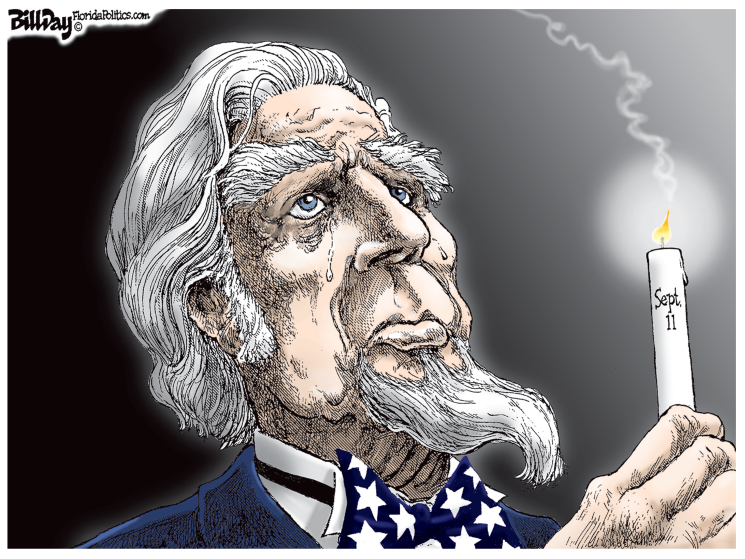
Recalling 9/11: We’re Not So Divided After All

On Sept. 11, 2001, I was driving along the Beltway to a Falls Church, Va., office building when a radio announcer said a plane had flown into the North Tower of the World Trade Center in New York City.

“What a horrible accident,” I remember thinking.

I was doing communications work for a big technology company. I parked my car and just as I was getting situated in my cubicle inside the office building, I heard the television blaring in my client’s office.

He told me a second plane had flown into the South Tower of the World Trade Center. Soon, we learned that a third plane had flown into the Pentagon.

We took the elevator to the top floor with several others. Only 9 miles from the Pentagon, we could see smoke billowing into the sky.

Radios and TVs were turned up. Local announcers were relaying reports of additional attacks, many of which would turn out to be untrue.

Dulles International Airport was under attack? Reagan National Airport? The White House? The Capitol? How many more hijacked planes were out there? Where would they strike next?

It was total chaos. Here I was in an impersonal office building as people cried, called loved ones, even prayed aloud.

We all experienced the horrific events of 9/11 in different ways and there was nothing special about my experience – except that I was living in the Washington, D.C., region when it happened.

Lucky for me, I had been regularly attending St. Joseph’s Catholic Church in Alexandria, Va.

A small church in a rapidly gentrifying area, its mostly black congregation can be described in one word: cheerful.

The first and third Sundays of every month, a 30-person choir belts out gospel music that would fill even the most cynical among us with hope and joy.

Father McBready, an Irishman of the Josephite order, was the pastor there in 2001. His Irish lilt and wit produced many uplifting sermons – none more uplifting than on the first Sunday after the attack.

The church was packed that morning, all of us feeling the same inability to comprehend the violence inflicted on so many innocents.

Father McBready began his sermon by telling us about a wonderful woman whose marriage he had presided over a few years before. She and her husband recently had been blessed with a son – and both she and her son were aboard one of the planes that struck the World Trade Center.

He said that in the midst of such sadness, however, there is hope: Tragedy reduces us to our most basic selves, helping us renew our efforts to lead virtuous lives. It helps us escape the narrowness of ourselves to join together with others to help those in need.

After the choir sang joyously, 200 people held hands and prayed as one. Filled with a renewed sense of hope, we were eager to do something, anything, to help our neighbors in need – donate funds, make sandwiches for first responders at the Pentagon, volunteer our time, etc.

It’s been 17 years since the 9/11 tragedy. We appear to be a divided, cynical people, but I don’t buy it.

God forbid such an alarming event ever happens in America again. But if it does, millions of Americans from every walk of life will come together as one to help our neighbors in need.

Just as we did after 9/11.

Copyright 2018 Tom Purcell. Tom Purcell, author of “Misadventures of a 1970’s Childhood,” a humorous memoir available at amazon.com, is a Pittsburgh Tribune-Review humor columnist and is nationally syndicated exclusively by Cagle Cartoons Inc. For info on using this column in your publication or website, contact [email protected] or call (805) 969-2829. Send comments to Tom at [email protected].
Comments Off on Recalling 9/11: We’re Not So Divided After All

The Higher Tech Gets, the Ruder We Get

Our rapidly growing incivility started with the invention of the telephone-answering machine.

Before the answering machine’s widespread adoption, people answered their landline phones with a pleasant “hello,” eager to learn who was calling.

To be sure, says social scientist James Katz, answering machines were considered rude in the ’70s.

By the ’90s, however, most homes had them and lots of people were using them, quite rudely, to screen calls – people like my pal, Griffy.

Calls to Griffy’s landline always made me grumpy:

“Hello, this is Griffy, leave a message at the beep.”

“Pick up the phone, Griffy, I know you’re there!”

Griffy demanded his friends leave messages on his machine, but always hung up on mine – until the invention of the “star 69” feature.

When you punched “star 69” into your phone keypad, you’d get the number of the jerk who had last hung up on your machine.

Boy, did that technology innovation escalate rudeness!

I had a telephone confrontation once with a fellow who had hung up on my machine. I keyed in star 69, got his number, dialed it, then got his answering machine:

“Hello, this is Bill. Sally and I aren’t in right now … .”

I didn’t know who the fellow was – I figured he’d dialed my number by mistake – so I hung up.

Later that day, after returning from a business meeting, I saw that someone had hung up on my machine again.

I dialed star 69, got the number, dialed it, then heard, “Hello, this is Bill. Sally and I aren’t in right now … .”

I hung up again. A few moments later, my phone rang. I picked it up.

“Hello,” I said.

“Who is this?” said the man. I recognized the voice. It was Bill.

“You called me and hung up!” I said.

“You called me and hung up!” said Bill.

“Nuh-huh!” I said.

“Yuh-huh!” he said.

Email was another innovation that escalated rudeness. I remember reading a Wall Street Journal story about two Boston lawyers whose email exchange went viral.

One lawyer, a 24-year-old woman, sent an e-mail to an older, established lawyer, declining his job offer.

The older lawyer, miffed that the woman would email her rejection after she’d already accepted the job offer in person, fired off an email telling her she wasn’t very professional.

She replied that if he were a real lawyer he would have made her sign a contract. He replied, in so many words, that she was a snot. She sent one last reply: “blah, blah, blah.”

These are just some examples of how earlier technology innovations made us ruder.

And now, the era of smartphones and social media – the era of nasty tweets and Facebook insults – is making rudeness, reports Psychology Today, “our new normal.”

The magazine cites research, published in the journal Computers in Human Behavior, that finds technology-enabled anonymity and “a lack of eye contact” are chief contributors to our growing incivility.

To wit: Technology is making it easier than ever to be rude to our fellow man, but we must fight this impulse, or else our already overheated public discourse will become increasingly uncivil.

It’s not going to be easy, though.

Even my parents use their answering machine to screen calls from my sisters and me.

Mom and Dad, I know you’re home. Please pick up the phone!

Copyright 2018 Tom Purcell. Tom Purcell, author of “Misadventures of a 1970’s Childhood,” a humorous memoir available at amazon.com, is a Pittsburgh Tribune-Review humor columnist and is nationally syndicated exclusively by Cagle Cartoons Inc. For info on using this column in your publication or website, contact [email protected] or call (805) 969-2829. Send comments to Tom at [email protected].

Comments Off on The Higher Tech Gets, the Ruder We Get

School Lunch Bell Signals Another Round in Fight

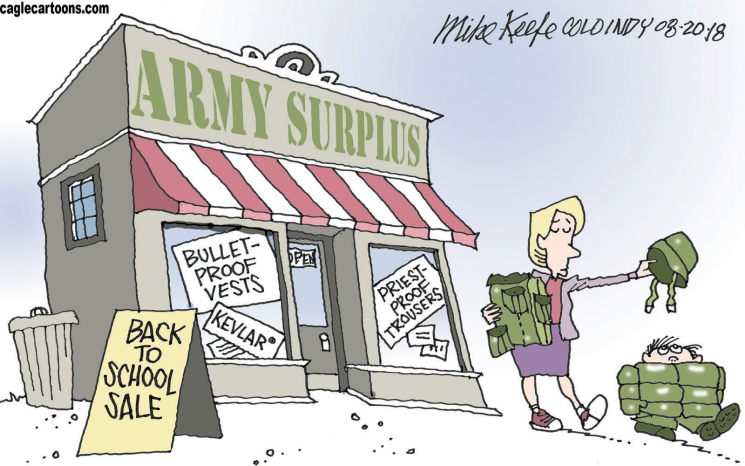
It’s back-to-school week for millions of American children, which means it’s time to debate the federal government’s role in deciding what our kids should eat for lunch.

To understand how the federal government got into the nutrition business, a little history is in order.

The government got into the school nutrition business during the Depression. FDR saw an opportunity to feed kids while winning the favor of farmers by buying their food with government money.

In 1946, the Truman administration formalized the feds’ school-nutrition role. During both World War I and World War II, after all, the government had noticed some recruits suffered from malnutrition and stunted growth. To address the problem – and win the favor of food producers – the National School Lunch Act was passed into law.

Though there lots of debate and politics still surround the program, the premise is reasonable enough: For some of America’s poorest kids, a hot breakfast or lunch at school may be the only decent food they have all day.

In response to America’s obesity epidemic, first lady Michelle Obama championed good nutrition through the Healthy, Hunger-Free Kids Act of 2010. It limited fats, sodium and sweets in school lunches, as it reduced portion sizes.

The Trump administration, which argued that many kids refused to eat the healthier, less-tasty fare, relaxed the school-lunch rules. According to Business Insider, kids are again consuming “sugary chocolate milk, fewer whole grains, and around 300 extra milligrams of salt.”

All I know is that I surely wish I could have enjoyed hot, government-subsidized grub at St. Germaine School in the 1970s. But my mother, a master at pinching pennies, packed our lunches every day.

Early in the school year, she approached the daily burden with great enthusiasm. We never got name-brand treats, such as Hostess Ho Hos, but she’d make a fresh ham sandwich, give us a fat peach or pear and sometimes mix up a batch of butterscotch pudding and put it in a small thermal container.

Unfortunately, her enthusiasm waned by the second week of school. The rest of the year, my lunch consisted of two end pieces of Cellone’s Italian bread and a hunk of bologna glued together by warm mayonnaise, plus some celery or carrots, some peanut butter crackers, and a Washington apple for desert; the apple was usually littered with multiple half-moon cuts, as my sisters examined every apple with their fingernails before choosing one to eat.

And every day, I sat next to Jimmy Schmidt. His lunch consisted of peanut butter and jelly on fresh Wonder Bread, a can of Coke, Hostess Ho Hos and a Nestle Crunch bar – not exactly nutritious, but lunch heaven for a kid back then.

Every day, I asked Jimmy if he wanted to trade. Every day, he looked at me like I had rocks in my head.

In any event, we now live in an era in which the federal government and politics are involved in every aspect of our lives.

Various congressmen have sponsored bills to repeal or replace the Hunger-Free Kids Act. Rep Tom Marino, R-Pa., recently sponsored a bill to allow kids to consume whole milk in school lunches, rather than the less-tasty 1-percent milk that is mandated by school-lunch law.

Looks like another school-lunch battle in Washington is inevitable.

Copyright 2018 Tom Purcell. Tom Purcell, author of “Misadventures of a 1970’s Childhood,” a humorous memoir available at amazon.com, is a Pittsburgh Tribune-Review humor columnist and is nationally syndicated exclusively by Cagle Cartoons Inc. For info on using this column in your publication or website, contact [email protected] or call (805) 969-2829. Send comments to Tom at [email protected].
Comments Off on School Lunch Bell Signals Another Round in Fight

Why Homeownership Pressure Is Good

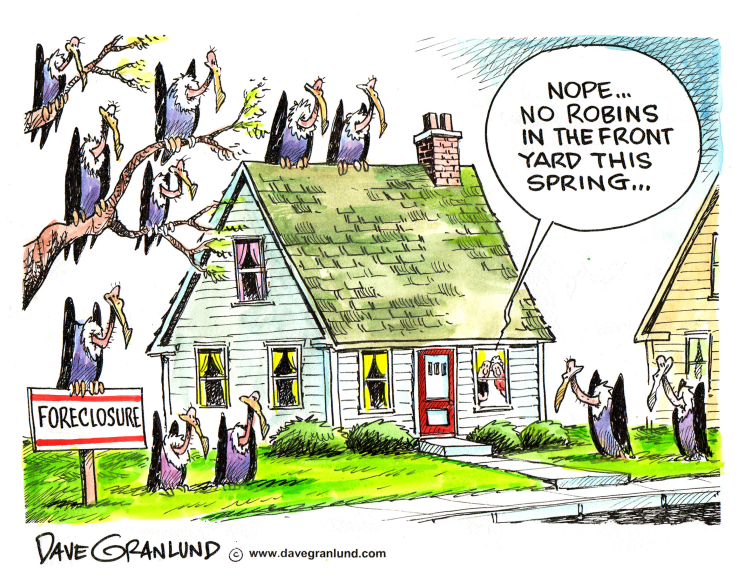
Younger generations buying fewer homes than prior generations is not good for America.

A recent Urban Institute study found home ownership among millennials, ages 25 to 34, is about 8 percent lower than it was for prior generations at the same age

Which means many millennials are missing out on the misery of home ownership.

The quaint cottage-style house I’ve owned for 22 years has given me grief from day one. The latest incident involved my pressure washer.

I have a lot of grounds to maintain. A pressure washer is essential. A few years ago, I bought the best one I could find at a big-box store.

It worked fine until this spring, when it went drier than the Mojave Desert at high noon.

I determined that the hose was the likely culprit – that something had collapsed inside, preventing water from flowing freely.

I drove to the big-box store, where I was greeted by a highly knowledgeable and enthusiastic pressure-washer expert – Ha, ha! That didn’t happen. It took me several minutes to find anyone who worked there. One fellow told me which parts to buy.

Back home, I immediately discovered he’d sold me the wrong parts.

I drove back to the store, spent several minutes looking for someone who worked there, bought more parts and drove home. None of those parts worked. I repeated this exercise five times before calling it a night.

The next day, a Saturday, I went back to the store with the disassembled pressure washer, new and old parts, etc. I purchased more parts that didn’t work, drove home, then returned to the store THREE MORE times before I finally had the machine back together.

I started it up, eager to spray grass clippings and oak-tree gunk off my patios – but it wouldn’t spray. It was drier than Death Valley in August.

There was nothing to do but utter the three words my father always uttered when his house made him miserable: “Son of a … !!!”

Figuring the pressure-washer pump was bad, I drove to several big-box stores looking for a new pressure washer. I was delighted to find a refurbished, half-price unit. It was missing its nozzle tips, but I knew my broken pressure washer’s nozzle tips would work just fine.

I got the refurbished pressure washer home, connected its sprayer to the nozzle tip from my broken pressure washer and started it up. It was drier than the Great Basin Desert after a months-long drought.

“Son of a … !!!”

You probably figured out that the nozzle tip was the only thing broken – that all I needed was a new, $3 nozzle tip, not the hose parts and a refurbished pressure washer that set me back $600.

You probably chuckled at me wasting three days of my life in trying to get a lousy pressure washer to work.

You chuckled, no doubt, because you’re a homeowner and understand full well the highly creative ways our homes are hell-bent on destroying our weekends.

Renters do not understand this misery. That’s why it’s bad that millions of millennials have not yet purchased a home.

You see, renters are more likely to be bamboozled by silver-tongued politicians who promise them free stuff, whereas grumpy homeowners vote for politicians who promise to spend less and keep our taxes low.

That leaves us homeowners with more money to pay for the things that endlessly go wrong with our lousy homes.

Copyright 2018 Tom Purcell. Tom Purcell, author of “Misadventures of a 1970’s Childhood,” a humorous memoir available at amazon.com, is a Pittsburgh Tribune-Review humor columnist and is nationally syndicated exclusively by Cagle Cartoons Inc. For info on using this column in your publication or website, contact [email protected] or call (805) 969-2829. Send comments to Tom at [email protected].
Comments Off on Why Homeownership Pressure Is Good

Americans Too Worried to Vacation

“Here we are in peak vacation season, but I’m afraid to take my paid vacation time off!”

“Regrettably, you are not alone. According to the U.S. Travel Association, more than half of American workers aren’t using all of their vacation time. In its Project: Time Off report, the association found that nearly a quarter of Americans haven’t had a vacation in the past year – some 12 percent haven’t had a vacation in three years!”

“You got that right. While some are enjoying fun in the sun, I’m logging long hours at the office to make sure the boss knows I’m doing a good job.”

“You’re not alone there, either. According to CNBC, the association found that 61 percent of employees surveyed said they feared appearing replaceable to their bosses, while 56 percent said they can’t take a break because there is too much work on their plate. In the 1980s and 1990s, Americans averaged 20 days of vacation a year, now it’s down to 17 days a year.”

“As bad as I am about taking vacation, the younger people in my office are even worse. They hardly take time off.”

“It’s funny you say that, because the association found that older generations are more willing to use their vacation time than younger generations. Baby boomers take almost 20 days off a year, whereas millennials, often maligned as lazy, take fewer than 15 days of vacation each year. According to CNBC, this is partly because millennials have fewer vacation days, but also because they ‘are preoccupied by a host of worries, including heavy debt loads and career fulfillment.'”

“Sometimes I wish I lived in Europe. Those cats know how to enjoy paid time off work!”

“That is true. According to CBS News, workers in France are guaranteed at least five weeks of paid vacation, as well as a dozen public holidays and a maximum 35-hour work week. Such policies may be why France’s economy is barely growing and why unemployment is hovering around 9 percent, but the French surely know how to vacation. Besides, many Americans prefer to work because it makes us happy.”

“It does?”

“Sure! According to a report by the Journal of Happiness Studies, Americans believe hard work is associated with success. The harder we work and the more successful we become, the happier we become.”

“With all due respect, I’d be happy with more leisure time. When I’ve taken vacations in the past, it really helped me recharge my batteries.”

“You speak the truth. The association found that people who enjoy true breaks are more creative and productive when they return to work.”

“Maybe there should be a law forcing us to take time off!”

“An interesting point. According to Forbes, the U.S. is the world’s only advanced economy that does not require employers to provide paid time off. Unlike France, I suppose, we prefer that free individuals negotiate their vacation time with their employers.”

“Whatever the case, my wife and I are not taking enough time off this year. It’s not just that we worry someone else may take our jobs. We also feel oddly guilty whenever we’re not working hard – as though we’d be breaking an unwritten law.”

“You and the rest of America have to get beyond such silly guilt. Vacation is good for you!”

Copyright 2018 Tom Purcell. Tom Purcell, author of “Misadventures of a 1970’s Childhood,” a humorous memoir available at amazon.com, is a Pittsburgh Tribune-Review humor columnist and is nationally syndicated exclusively by Cagle Cartoons Inc. For info on using this column in your publication or website, contact [email protected] or call (805) 969-2829. Send comments to Tom at [email protected].

Comments Off on Americans Too Worried to Vacation

Home Alone No Way to Work

Just as more private-sector organizations are calling telecommuting workers back to the office, two politicians in Washington hope to encourage federal agencies to allow more government employees to work from home.

As it goes, the Trump administration is seeking to cut back on federal employee telework programs. But Reps. Gerry Connolly, D-Va., and John Sarbanes, D-Md., are promoting the Telework Metrics and Cost Savings Act to prevent telework reductions.

That’s probably not a good idea.

Look, as a freelance writer and author, I’ve been telecommuting for years. I’m alone in my home office all day long. It’s not for the faint of heart.

I hardly ever see real humans during the day. Every time the FedEx guy shows up, I demonstrate how much this isolation is getting to me.

FedEx guy: “Sign here please.”

Me: “I hear it’s going to rain tomorrow. Would you like a cup of coffee?”

The other day a telemarketer called. Ordinarily, I’d rush such a fellow off the phone, but not anymore.

Telemarketer: “Would you like to buy our ACME health insurance policy?”

Me: “No, but how’s the weather where you are? Can I send you a gift card for a cup of coffee?”

I was so desperate for human interaction this morning, I spent 20 minutes talking with my 90-year-old neighbor Orville about his compost pile.

There are other problems caused by working alone out of one’s home. On the rare occasions when clients visit my office, I’m embarrassed to give them directions to my country home.

Client: “How do I get to your house?”

Me: “Make a sharp left at Homer’s bug zapper, then turn right at Orville’s compost pile.”

So, you see, I’m not so enamored with the home-office concept anymore. And I think I know why.

Human beings don’t like to be alone. We are social animals – so social, in fact, that we would rather spend long days in corporate offices with other people than suffer longer days in utter freedom working alone in our homes.

That’s why, according to Forbes, more private-sector organizations are calling teleworkers back to the office.

IBM, Apple and Google have discovered that when employees encounter each other in the office, they become more creative and productive than they are working alone at home.

Even Generation Z and millennials, according to a new study by HR staffing firm Randstad US, prefer face-to-face conversations over electronic conversations and corporate offices over telecommuting.

“While technology can make us more efficient, and feel highly connected to one another, it will never replace face-to-face conversations,” reports Forbes.

In any event, just as many organizations in the private sector are reversing course on employee telecommuting, two congressmen are pushing for full steam ahead.

“Federal government telework programs not only improve productivity, but also save taxpayer money by increasing efficiency, strengthening employee retention and reducing costs for federal office space,” Sarbanes told the Federal Times.

If you say so, congressman.

All I know is that I’m spending way too much time alone in my home. And as much as it worries me, it worries my neighbors more. No matter how often I tell them I’m a freelance writer, they don’t believe me.

They think I’m in the witness protection program.

Copyright 2018 Tom Purcell. Tom Purcell, author of “Misadventures of a 1970’s Childhood,” a humorous memoir available at amazon.com, is a Pittsburgh Tribune-Review humor columnist and is nationally syndicated exclusively by Cagle Cartoons Inc. For info on using this column in your publication or website, contact [email protected] or call (805) 969-2829. Send comments to Tom at [email protected].
Comments Off on Home Alone No Way to Work

D.C. vs Pittsburgh

Washington, D.C., routinely ranks high in surveys on America’s most livable cities, but as somebody who’s been a resident of both areas, I can tell you that Pittsburgh’s a far better place to live.

Some in D.C. look down on us for living in “flyover country” – they think Washingtonians are smart and sophisticated while we are ill-informed – but I’ve found the opposite to be true.

Having lived in the D.C. region for nearly eight years, I’m telling you that Pittsburgh – where I was born and raised and have my home – is the better place to live.

First, Washington isn’t a real city. A giant metro parking lot of a region, it’s propped up by tax dollars and lobbying budgets, which fund its chief industry: blather and B.S.

In Pittsburgh, a real city where real people work real jobs, Pittsburghers’ brawn and sweat mined the coal that fueled our nation and forged the steel that built our country and won wars – a heritage that inspires a proud work ethic still.

Washington is filled with people with advanced college degrees. That’s fine. But common sense is in short supply. It takes but an inch of snow to panic drivers and shut the government down. Washington is America’s only city where fully grown adults still enjoy snow days.

Pittsburghers, much more resilient, are hearty and inventive. They shovel their own driveways when snow falls. They function in winter the way Washingtonians function only when it’s 80 degrees and sunny.

The truth is that D.C.’s white-collar folks are totally dependent on the blue-collar people who maintain their water supply, electricity, smartphone signal, etc. – the people who keep the world running like a well-oiled machine.

Unlike D.C., buckets of money aren’t pouring into Pittsburgh – one reason its housing is way more affordable. What would be a modest Pittsburgh starter home sells for $500,000 or more in D.C. Who can afford that?

Sure, Pittsburgh’s property taxes are awfully high, whereas those in Washington are reasonable. But that’s a good thing: I prefer my tax dollars be wasted at the local level rather than the federal level.

As for air and water quality, Washington excels in both. Some nights, the air is so clear, you can see D.C. gunfire from as far away as Alexandria, Va. But the air is clear because nobody makes anything there.

In Pittsburgh, a little pollution is the price we pay for actually making real products – such as steel for the chairs upon which rest so many paper-pushing Washingtonians’ posteriors.

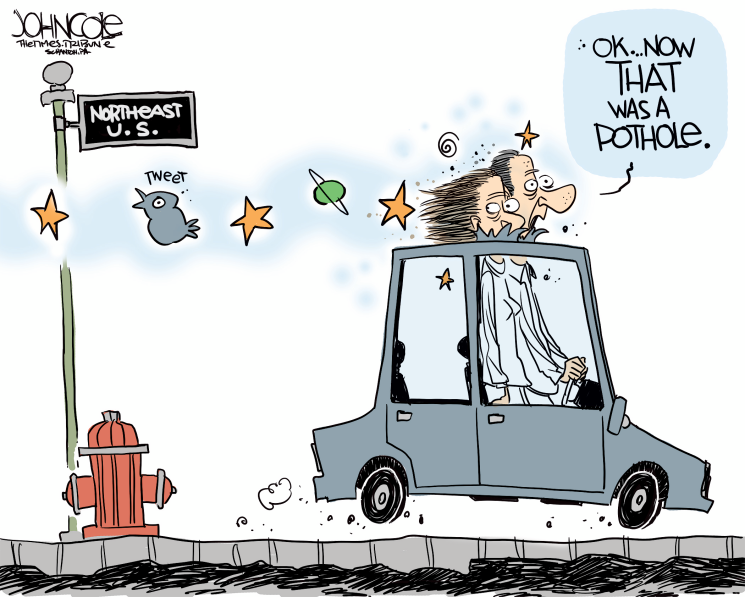
Yes, Pittsburgh’s roads are bad. Some of our potholes are so large that after every thunderstorm, we need to staff them with lifeguards. But transportation’s better in Pittsburgh.

Ever tried getting around in Washington? You can’t pick up milk without making a Mario Andretti foray onto a six-lane speedway or getting lost in a maze of one-way roads that always go the opposite way you want to go.

People are what sets Pittsburgh apart most, however. Friendly, compassionate and concerned for their neighbors, Pittsburghers really do want to solve our country’s many problems and prefer real results over rhetoric and promises.

D.C. has its charms. But take it from someone who’s lived in both places: Pittsburgh – and many other wonderful cities throughout America’s heartland – are filled with smart, sophisticated, wonderful people. And the livability surveys really ought to give us more credit for that.

Copyright 2018 Tom Purcell. Tom Purcell, author of “Misadventures of a 1970’s Childhood,” a humorous memoir available at amazon.com, is a Pittsburgh Tribune-Review humor columnist and is nationally syndicated exclusively by Cagle Cartoons Inc. For info on using this column in your publication or website, contact [email protected] or call (805) 969-2829. Send comments to Tom at [email protected].
Comments Off on D.C. vs Pittsburgh

Wearing Out Longevity’s Welcome

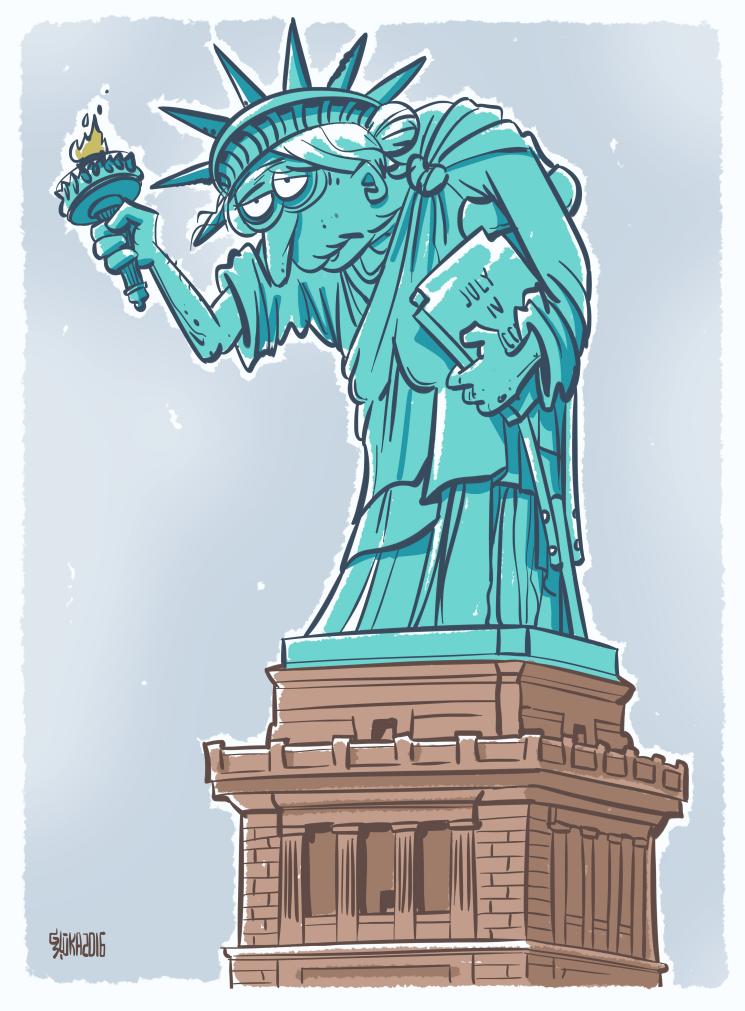
Boy, are Americans getting old.

According to the U.S. Census Bureau, the median age – the age at which half of the population is older and half is younger – hit an all-time high of 38.0 in 2017.

Why is it rising? Because our massive baby-boom generation continues to go geezer, while young moms and dads are having way fewer kids than American parents used to.

What’s more interesting is that the number of Americans who were 100 years or older also hit a record in 2017 – a number that is poised to explode.

According to the World Future Society, we are in the early phases of a superlongevity revolution. Thanks to advances in nanotechnology and cell and gene manipulation, scientists may eventually learn how to keep humans alive for 120 to 500 years.

Though it’s great that Americans are living longer, I’m not sure I’d ever want to live THAT long.

Look, I’m 56, a tail-end baby boomer. If I was confident I’d be vibrant and healthy for another 44 years, I might finally get around to marrying and starting a family!

My parents are of the silent generation. They’re in in their 80s. I’d love for them to live well beyond 100, so that I can enjoy their company at Sunday dinners for another 20 years or more.

But there are downsides to living so long.

Health-care costs are already out of control and the majority of that spending goes to the elderly. Such costs may become unmanageable as our median age keeps climbing.

If we live 100 years or more, how are we going to pay for it? Living is expensive. Are we going to work 50 years, retire, burn through our nest eggs, then spend 20 or 30 years greeting customers at Walmart?

And what of our younger generations, kids who are notorious slackers? Mother to son in year 2075:

“You’re 100 years old! When are you going to move out and get a job?”

Four years shy of 60, I’m already showing signs of fatigue. I don’t know when it started, but, like my elderly father, I groan every time I slowly pull myself out of a chair.

Sure, the “primitive male” part of me thinks I could still handle myself if a bar brawl were to break out – but I’d have to do 30 minutes of jumping jacks before I could even think about participating.

Besides, in my experience, life is largely made up of colds, bills, speeding tickets and people who let you down. These experiences are connected together by a series of mundane tasks. The drudgeries are occasionally interrupted by a wonderful meal, a really good laugh or a romantic evening with a lovely lady.

Then the mundane stuff starts all over again.

I don’t think I want 500 years of that.

At 56, you see, it seems to me that the key to human happiness is not an abundance of a thing, but a lack of it.

Doesn’t pie taste better when we know it’s the last slice? Doesn’t a football game capture our attention more when it’s the last of the season – the one that determines who goes out the winner and who goes out the loser? Isn’t a comedian funnier when he exits the stage BEFORE we want him to go?

Besides, if I were to live to 500, I’d have to endure 111 more presidential elections – a punishment I wouldn’t wish on my worst enemy!

Copyright 2018 Tom Purcell. Tom Purcell, author of “Misadventures of a 1970’s Childhood,” a humorous memoir available at amazon.com, is a Pittsburgh Tribune-Review humor columnist and is nationally syndicated exclusively by Cagle Cartoons Inc. For info on using this column in your publication or website, contact [email protected] or call (805) 969-2829. Send comments to Tom at [email protected].
Comments Off on Wearing Out Longevity’s Welcome