The Best Christmas Gifts Don’t Come from Stores

What’s the best gift you ever received? Whatever it was, it surely wasn’t a material item bought in a store.

An experience, rather than a material good, is the best gift to receive. That’s what University of Toronto professor Cindy Chan and University of California professor Cassie Mogilner discovered in a study they conducted in 2018.

“The reason experiential gifts are more socially connecting is that they tend to be more emotionally evocative,” Chan told PsychCentral. “An experiential gift elicits a strong emotional response when a recipient consumes it – like the fear and awe of a safari adventure, the excitement of a rock concert or the calmness of a spa – and is more intensely emotional than a material possession.”

What’s the best experiential gift you ever received? Whatever it was, it surely wasn’t something that someone bought for you.

Of all the Christmas mornings I’ve enjoyed and the many gifts I’ve been given, I can’t remember a single one of them – except the lime-green Huffy Spyder bike I got when I was 10.

But I vividly remember the wonderful experience of being a child in a big family with parents who put our needs ahead of theirs.

We’d sit around the Christmas tree, taking turns opening our presents, talking and laughing as our dog Jingles rolled around in the torn wrapping paper.

We’d enjoy a big breakfast that my Father made in his cast-iron skillet, talking and laughing more. Then he’d begin pleading with us to “get ready for church so we don’t end up standing in the aisles like we did last year.”

With five sisters and one shower – and the hours my sisters spent blow-drying their long Farah Fawcett hair – we’d be late for church and end up standing in the aisles like we did the prior year.

These are the things I remember. These are the real gifts my parents gave to my sisters and me – the experiential gifts we all hunger for.

So it puzzles me that we put so much time and effort into buying material gifts for loved ones.

It’s especially bizarre to me that people would rush to a store just after Thanksgiving dinner, because the real gift of Thanksgiving is sitting around the table after enjoying the feast, sharing joyful memories of family members no longer with us and talking about everything and nothing and all that’s in between.

My mother and father are in their 80s now. Their good health is the biggest gift my family and I dream of and are praying for this Christmas.

The money I’d otherwise spend on gifts is going to a handful of my favorite charities.

My time is what I must give more of this Christmas. Elderly parents will tell you that all they really want from their children is more time with them.

But giving my parents more of my time is really a gift to me – a wonderful gift I will remember long after they’re no longer here.

Material gifts are great to get. But no material gift can ever compete with an afternoon listening to my parents’ hilarious story of the day they met. That sort of priceless experience is an unending joy – but it’s available, as Christmas ads say, only for a limited time.

Copyright 2019 Tom Purcell. Tom Purcell, author of “Misadventures of a 1970’s Childhood,” a humorous memoir available at amazon.com, is a Pittsburgh Tribune-Review humor columnist and is nationally syndicated exclusively by Cagle Cartoons Inc. For info on using this column in your publication or website, contact [email protected] or call (805) 969-2829. Send comments to Tom at [email protected].

Comments Off on The Best Christmas Gifts Don’t Come from Stores
America, Let’s Talk This Thanksgiving… After the Mashed Potatoes Fly!

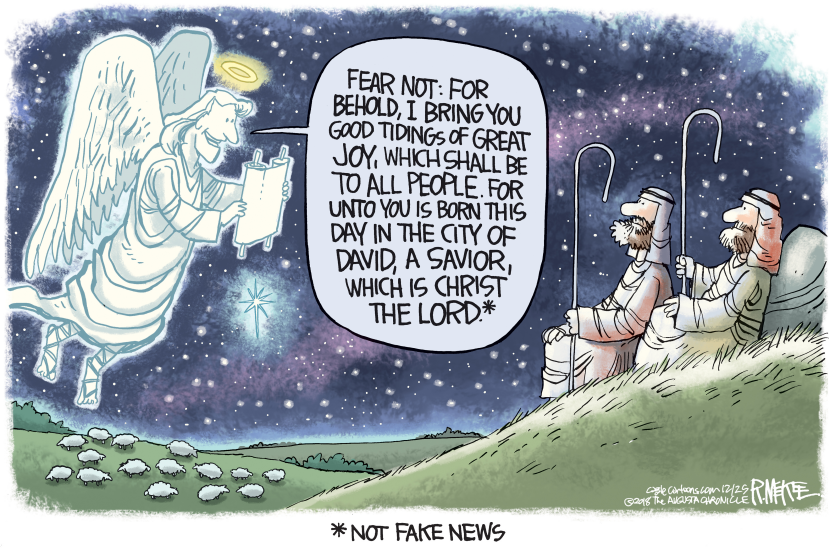
America could use a good food fight this Thanksgiving.

Every day in our country, factions grow and battle lines harden. Americans are spending more time with like-minded people, their “tribes,” and less with people holding differing viewpoints, those “Neanderthals hell-bent on destroying the country.”

Technology has widened our divide. Social media encourage us to befriend those who think like us – and defriend and demonize those who don’t.

When I grew up in the 1970s, America watched ABC, CBS or NBC. Since many homes had just one television set, networks maximized viewership by catering to families. Walter Cronkite, voted “most trusted man in America” by viewers, was at his career’s peak.

Is any TV news journalist as widely trusted today?

Meanwhile, cable TV’s targeting of niche audiences has produced talking-head shows that lather up the left and right with increasingly exaggerated and toxic rhetoric that helps to destroy civil discourse, as shameless producers turn niche viewers into fat paychecks.

I don’t believe Americans are as divided or rigid in our beliefs as we seem. I believe we all want what’s best, but have different ideas for achieving that desired outcome – and we should discuss them.

Here’s something we should discuss: 30 million Americans cannot read or write above a third-grade level.

Also, according to the National Assessment of Educational Progress, 64% of eighth-graders, 82% of black students and 77% of Hispanic students can’t read proficiently.

How will these kids flourish in an economy that demands strong reading and writing skills? Here’s a sobering statistic: 85% of juveniles in the court system are functionally illiterate, according to the National Center for Education Statistics, as are the vast majority of prison inmates.

How can we address this literacy crisis? Education reform? Tax and school-funding reform? More charter schools? School vouchers? Volunteering to tutor kids?

Why aren’t we discussing this issue?

I believe Americans are much more nuanced, thoughtful and well-meaning than we give ourselves credit for. We allow self-serving interests – profit-driven media executives – to pit us against each other.

They sensationalize impeachment, anonymous sources and ever-more-ridiculous hyperbole to profit at the expense of important discussions we should be having to correct so many problems that need to be corrected.

That’s why America needs a good food fight this Thanksgiving.

Look, Thanksgiving is supposed to be a day of coming together and showing gratitude for our many blessings. Regrettably, in our highly agitated state, tensions between left- and right-leaning folks and everyone in between are ruining our holiday meals.

So this year, let the mashed potatoes fly!

It will be impossible to dislike conservative Uncle Mike with gravy dripping from his nose and cranberry sauce in his ear.

It will be impossible to be angered by liberal Aunt Suzy with a dinner roll in her hair and bean casserole splattered all over her turtleneck.

Every food fight in history has concluded with camaraderie and laughter. This one will help us remember we’re all just human beings trying to muddle through our increasingly complex world – and that we must treat those with whom we disagree more fairly.

Hopefully, once we come to our senses, we can have a meaningful discussion about solving our problems – the types of meaningful discussions we are all hungry to have again.

Copyright 2019 Tom Purcell. Tom Purcell, author of “Misadventures of a 1970’s Childhood,” a humorous memoir available at amazon.com, is a Pittsburgh Tribune-Review humor columnist and is nationally syndicated exclusively by Cagle Cartoons Inc. For info on using this column in your publication or website, contact [email protected] or call (805) 969-2829. Send comments to Tom at [email protected].

Comments Off on America, Let’s Talk This Thanksgiving… After the Mashed Potatoes Fly!

Driving An ‘Underwater’ Car Is No Fun

What’s the best car on the road? One that’s paid off.

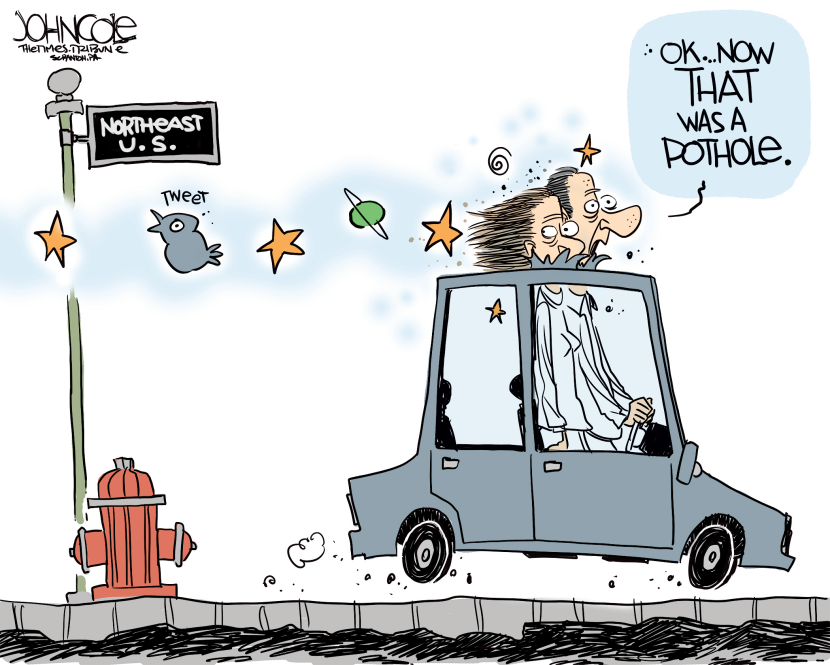
That’s what my father loves to say. Regrettably, too many Americans aren’t heeding his advice. What’s worse is that they’re taking on “underwater” loans that far exceed their cars’ value.

The Wall Street Journal recently featured a 40-year-old electrician who bought a $27,000 Jeep with a $45,000 loan.

How is that possible?

A string of bad luck was part of it. He “replaced one because it had 100,000 miles and another when he went through a divorce, and he changed cars again when his family was expanding.”

Since auto dealerships earn more from financing cars than from selling them, they’re happy to extend “underwater” loans that can take many years to repay – though in those cases, “car owner” probably isn’t the right term for the buyer.

Buyers often trade their cars in before those lengthy loans are paid off, driving into a perpetual state of indebtedness. In 2019, a third of car buyers have taken on “underwater” loans, The Journal says.

It also says rising car prices are another cause of growing debt. I know a few fellows who’ve borrowed $60,000 or more to buy new trucks, which get pricier by the day.

A 5%, seven-year loan on a $60,000 truck costs $850 a month. You can still buy a house for that amount in Pittsburgh!

“Easy lending standards are perpetuating the cycle, with lenders routinely making car loans with low or no down payments that can last seven years or longer,” reports The Journal.

“Easy lending standards”? When has our country encountered that eerie term before?

“Consumers, salespeople and lenders are treating cars a lot like houses during the last financial crisis: by piling on debt to such a degree that it often exceeds the car’s value,” The Journal reports.

Automakers have realized they can charge more for their vehicles if they give buyers, who aren’t very good at math, monthly payments they can swing – even though those vehicles depreciate massively and are “underwater” throughout the loan’s lifespan.

“A record 7 million Americans are now 90 days or more behind on their auto loan payments,” The Washington Post reported in February.

Some observers are starting to use the “bubble” term regarding auto loans, as such debt has grown 75% since 2009, to about $1.26 trillion or about 5.5 percent of GDP, according to a U.S. PIRG report.

Look, I’m a car guy. I’ve owned 27 vehicles. When I was younger, I did my fair share of boneheaded deals, taking on more debt than I should have to drive nice cars. I figure everyone has a right to be foolhardy this way once or twice in a lifetime.

But I’ve learned that paid-off vehicles are for more enjoyable to drive than those the bank still owns – that massive debt on rapidly depreciating automobiles takes the joy out of driving. And that all that auto debt combined with college-loan and credit card debt is doing no favors to our economy.
Thankfully, I finally came to my senses.

I now own a 2008 Toyota 4Runner in mint condition; a super-clean 1992 Chevy S-10 that sits in my father’s garage, waiting to haul furniture or mulch; and a recently acquired cherry 2011 Chrysler 200 convertible, which I’m enjoying the heck out of.

Why are they three of the best vehicles on the road? They’re all paid off!

Copyright 2019 Tom Purcell. Tom Purcell, author of “Misadventures of a 1970’s Childhood,” a humorous memoir available at amazon.com, is a Pittsburgh Tribune-Review humor columnist and is nationally syndicated exclusively by Cagle Cartoons Inc. For info on using this column in your publication or website, contact [email protected] or call (805) 969-2829. Send comments to Tom at [email protected].
Comments Off on Driving An ‘Underwater’ Car Is No Fun

This Nov. 11, Help Stem Tide of Veteran Suicides

The numbers are sobering, but we can do something about them.

The Department of Veterans Affairs’ 2019 National Veteran Suicide Prevention Annual Report says nearly 6,200 veterans took their own lives in 2017 – and more than 6,000 took their lives every year from 2008 to 2017.

“In 2017, the suicide rate for Veterans was 1.5 times the rate for non-Veteran adults, after adjusting for population differences in age and sex,” says the report.

And as with civilians, suicide rates are increasing among veterans.

“Among U.S. adults, the average number of suicides per day rose from 86.6 in 2005 to 124.4 in 2017,” says the report. “These numbers included 15.9 Veteran suicides per day in 2005 and 16.8 in 2017.”

The awfulness of warfare is unimaginable to those who’ve never experienced it. That’s why war should be an absolute last resort – and why thousands of men and women who served are burdened by what they experienced.

Iraq War veteran Danny O’Neel, a speaker on suicide prevention, PTSD and mental health for the Independence Fund, explains his experience in a USA Today column.

“War inflicts permanent psychic scars on survivors,” he writes. “Scrubbing a friend’s flesh out of a Bradley reconnaissance vehicle, packing up the cold clothes of a new dad to ship home to his family, pulling tortured corpses out of a water treatment facility – the trauma from these experiences is deep and lasting.”

Veterans who have seen such horrors may suffer from “moral injury,” which psychiatrist Jonathan Shay identified in veterans in his 1994 book “Achilles in Vietnam.”

Rita Nakashima Brock of the Shay Moral Injury Center and Ann Kansfield, a New York City Fire Department chaplain, explain the concept in USA Today.

“Moral injury is the result of violating core moral foundations by causing or witnessing serious harm or failing to save others,” they write. “It can also occur by being exposed to a great evil, like a terrorist attack, that shakes our foundation. Losing moral grounding challenges people’s identity and meaning systems when they condemn themselves for doing the wrong or inadequate thing, even if there was nothing they could have done.”

Moral injuries burden veterans with immense guilt. Without proper help for the depression that guilt may bring, they may see suicide as their only option – when it surely is not.

And too many veterans think that seeking such help is a sign of weakness – which it surely is not.

If you’re a veteran having such thoughts, contact the Veterans Crisis Line: Call 1-800-273-8255, then press 1 for a VA staff member. Veterans, active-duty military and their families can also text 838255 or visit VeteransCrisisLine.net.

Like or dislike President Trump, in March he issued an executive order, the President’s Roadmap to Empower Veterans and End the National Tragedy of Suicide (PREVENTS). It requires government agencies to collect better research; establish better, more aggressive prevention methods; and collaborate with local-level organizations to get veterans the services they need.

Each of us can help, too. We can volunteer time or give money to a local organization that works tirelessly to prevent veteran suicides.

Next Monday is Veterans Day. That’s a great time to honor our veterans – by doing our small part to tackle the growing issue of veteran suicides.

Copyright 2019 Tom Purcell. Tom Purcell, author of “Misadventures of a 1970’s Childhood,” a humorous memoir available at amazon.com, is a Pittsburgh Tribune-Review humor columnist and is nationally syndicated exclusively by Cagle Cartoons Inc. For info on using this column in your publication or website, contact [email protected] or call (805) 969-2829. Send comments to Tom at [email protected].

Comments Off on This Nov. 11, Help Stem Tide of Veteran Suicides

Halloween Costumes: Free Expression vs. Offense

Everything is offensive now — even Halloween.

In Sandy Springs, Ga., a fellow’s humorous display featured a pumpkin man mooning the street.

“His pants are halfway down, showing his backside which is made up of pumpkins,” reports CBS12.com.

Neighbors complained to their homeowner’s association that the display was offensive, so the fellow altered it.

Which is regrettable.

Halloween is — or used to be, anyhow — a time for stressed-out adults to blow off a little steam and have a little fun.

Long a staple of childhood, Halloween in the past few decades increasingly has been celebrated by adults — for good reason.

Eleven years ago, when Halloween’s popularity among adults was rapidly growing, Robert Thompson, Newhouse Director of the Bleier Center for Television and Popular Culture at Syracuse University, explained why.

“It’s the one day where almost anything goes,” Thompson told me in 2008. “Adults can be a wise guy or do something outrageous they’d never do normally.”

Thompson said adults generally picked costumes that mocked or satirized popular culture. In my opinion, nothing is healthier for a well-functioning society than the ability to freely and heartily mock things we find silly.

Such free expression is under attack in some quarters.

Several publications are pointing out costumes to avoid because they may offend someone.

Good Housekeeping suggests avoiding Holocaust-victim costumes — though for the life of me, I don’t know why anyone would want to sport a costume like that.

But last year, Good Housekeeping says, “several retailers came under fire for selling an ‘Anne Frank’ costume for little girls.”

I scratch my head at the stupidity of my fellow human beings who came up with an Anne Frank costume — but the idiotic retailers who stocked them quickly pulled them off their shelves.

Hitler and Nazi costumes are out. A Marie Claire story mentions the hullabaloo in 2005 over Prince Harry going to a party dressed as a Nazi.

But wasn’t the point of that costume to mock and berate the followers of the evil mastermind who plunged the world into a horrendous war and created the Holocaust? Wasn’t that costume meant to remind us that we must never forget the evil that some humans are capable of, and that we must be ever-vigilant in preventing it from ever happening again?

Any costume displaying blackface is out this year, which is obvious to everyone — except the fools, no doubt, who aspire to political office.

Costumes that play off animal cruelty, eating disorders and mentally illness are out, too — though again, aside from some idiotic retailers, I can’t think of anyone foolish enough to target such subjects.

Zombie costumes are out — if one dresses up as a zombie version of a recently deceased celebrity. Why? Because, says Good Housekeeping, “a dead — or undead, a.k.a. zombie — version brings to mind the phrase ‘too soon.’”

Look: On one hand, it’s good for adults to be mindful enough to avoid offending others with their Halloween costumes.

On the other hand, it’s dangerous to limit free expression in a free and open society.

Satire may not always be pleasant — a bold satirist always risks crossing the line — but it plays an important role.

The free expression of ideas — the freedom of anyone in our society to mock politics and popular culture as they see fit — is the lifeblood of a well-functioning republic.

May the pumpkin man’s mooning commence!

Copyright 2019 Tom Purcell. Tom Purcell, author of “Misadventures of a 1970’s Childhood,” a humorous memoir available at amazon.com, is a Pittsburgh Tribune-Review humor columnist and is nationally syndicated exclusively by Cagle Cartoons Inc. For info on using this column in your publication or website, contact [email protected] or call (805) 969-2829. Send comments to Tom at [email protected].

Comments Off on Halloween Costumes: Free Expression vs. Offense

Red Rover, Red Rover Are Childhood Games Over?

I’m on the fence about this, if you want the truth.

You see, more school districts are banning childhood games that were staples when I was growing up in the 1970s.

Some say dodgeball, kickball, keep-away, tug-of-war, Red Rover and other games are teaching children the wrong lessons.

This past summer, for instance, researchers in Canada argued that dodgeball is a tool of oppression that can unfairly target “weaker” students.

On one hand, I can see the researchers’ point. I was a good athlete, able to hold my own in these games. But the less athletic kids got eliminated early, sometimes by meaner kids who humiliated them by throwing balls off their noggins.

On the other hand, these games helped prepare me for some of life’s unpleasant realities.

Keep-away certainly could be unpleasant. One kid carried the ball and everybody else tried to rip it away from him. It was about individualism; there was no teamwork, no rules, no adults to intervene. It was simply you against everybody else — just like the adult world often is.

Kickball definitely favored the more athletic kids. I loved crushing the ball with my right leg and rounding the bases. But some kids couldn’t kick it out of the infield and surely didn’t enjoy the game as much as I did.

My favorite was dodgeball. We played it during gym class in the winter months. Thirty to 40 kids would line up on either side. Balls were whipped back and forth until the herd was thinned. If you caught a ball thrown at you, or avoided it, you stayed in the game. If somebody caught a ball you threw, or somebody hit you with a ball, you were out.

I was always among the last survivors, but the kid who won the most was Mikey Miller. Quick, agile and cunning, he was nearly impossible to hit. And though he lacked the arm strength to knock you down, he usually figured out a way to catch a ball you whipped at him.

I still remember — with glee — the day I beat him. It was a great victory that filled me with excitement, pride and, dare I say, self-esteem. It won me the other kids’ respect.

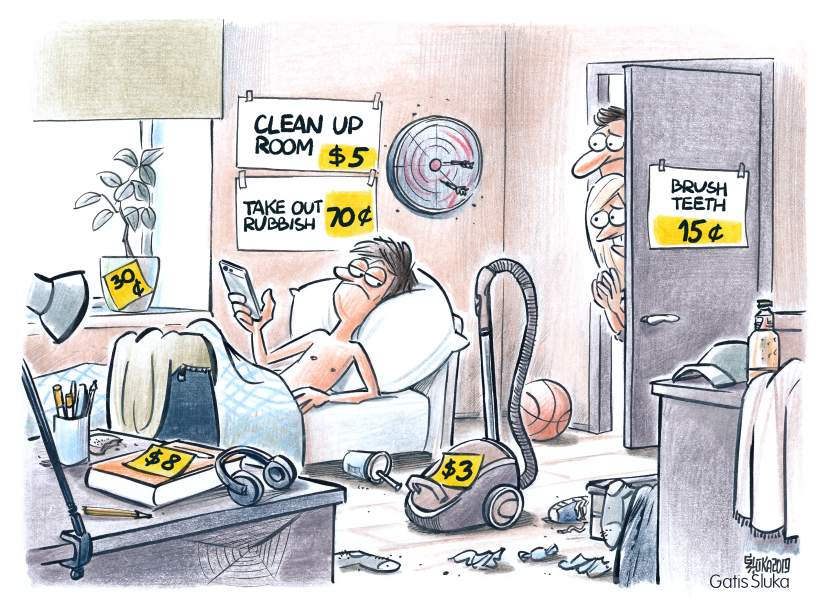
I realize that childhood has changed since the rough-and-tumble 1970s. It’s a good thing that educators are concerned for the well-being of every child. But there’s a fine line between concern and coddling.

Efforts to shield children from every sort of unpleasantness — efforts to ensure that every child gets a trophy, regardless of performance — aren’t doing children any favors when it comes to preparing them for adulthood.

Like it or not, adults occasionally face mean people in the real world. Like it or not, adults have to compete if they wish to succeed in their chosen fields. Like it or not, trophies in the adult world are granted only to people who win.

If you want to ban dodgeball for safety reasons, fair enough. But kickball, tug-of-war and many other traditional childhood games?

To borrow from the ABC “Wide World of Sports” motto of the ’70s: In order to truly experience “the thrill of victory,” it’s helpful to also experience “the agony of defeat.”

Copyright 2019 Tom Purcell. Tom Purcell, author of “Misadventures of a 1970’s Childhood,” a humorous memoir available at amazon.com, is a Pittsburgh Tribune-Review humor columnist and is nationally syndicated exclusively by Cagle Cartoons Inc. For info on using this column in your publication or website, contact [email protected] or call (805) 969-2829. Send comments to Tom at [email protected].
Comments Off on Red Rover, Red Rover Are Childhood Games Over?

Today’s Bullies Are Online, But So Is Help For Them and Their Victims

My sister Kris kicked the tar out of Frankie Leper.

It happened in 1972 after Leper, a notorious neighborhood bully, busted up my handmade go-kart, then shoved me into the mud.

Sure, Leper was a big kid. But as he stood over me, taunting me, Kris tackled him and pounded on him so hard that he blubbered like a baby. That ended his bullying days. He never lived down getting whooped by a girl half his size.

I was lucky to be a kid in the 1970s, in that regard. Bullies have always existed, but in that era of big families, there were always older siblings and neighbors who protected us younger kids.

Bullying victims have it way worse today.

First, they cannot escape the torment – even in the safety of their own homes. Today’s bullying victims carry the torment around in their pockets – on their smartphones. They’re humiliated by bullies in front of many others online – and they have no escape.

“When bullying goes online, that safe refuge is lost,” reports WebWatcher. “The bullies enter the home via computers, tablets, and cell phones. Even if a child chooses to disengage by turning off their internet-connected devices, the bullies can continue sending harassing messages. The next time the child turns on their devices, the attacks are there waiting for them.”

Second, a new class of bully has emerged. Leper used his size to physically bully younger, weaker kids, but the contemporary bully need not be physically dominating. All he or she needs is a mean streak, a sharp tongue and internet access.

Hiding behind a computer screen, contemporary bullies can demonstrate levels of inhumanity and cruelty that they might not be capable of if they were looking a victim in the eyes.

Third, today’s bullying victims are increasingly isolated. The torment they carry around may affect their grades, their sleep and their health. Fortunately, we all can do something to help them, thanks to the PACER National Bullying Prevention Center.

Founded in 2006, PACER is working “to prevent childhood bullying, so that all youth are safe and supported in their schools, communities, and online.”

Each October, PACER conducts National Bullying Prevention Month to elevate the issue and share solutions that can prevent bullying.

In the ’70s, the way to deal with a bully was to stand up to him (or have your sister do so). But because bullying has become more complicated, so must our response to it.

PACER says that when a child is bullying others, parents and educators must take action:

“Children need to understand the impact their behavior has on others and realize the hurt they are causing. With adult guidance, redirecting bullying behavior toward an understanding of differences, as well as the practices of kindness and inclusion, are good strategies for reshaping a child’s behavior.”

Reshaping a young bully’s behavior takes considerable time and effort. To that end, PACER has prepared a library of articles, videos, brochures and many other resources to help educators, parents and anyone else who wishes to address bullying, so that fewer kids will experience it.

Maybe if someone had helped Frankie Leper reshape his bullying ways toward kinder behavior, his childhood wouldn’t have been ruined by my sister’s right hook.

Copyright 2019 Tom Purcell. Tom Purcell, author of “Misadventures of a 1970’s Childhood,” a humorous memoir available at amazon.com, is a Pittsburgh Tribune-Review humor columnist and is nationally syndicated exclusively by Cagle Cartoons Inc. For info on using this column in your publication or website, contact [email protected] or call (805) 969-2829. Send comments to Tom at [email protected].

Comments Off on Today’s Bullies Are Online, But So Is Help For Them and Their Victims

No Escape from Trade Wars’ Effects

The trade wars are hitting me where it hurts.

One of my few respites from these rough-and-tumble times is to sit by an autumn bonfire with good friends, a Leaf and Bean cigar and some fine Scotch whisky.

But, reports Forbes, the U.S. government announced last week a “25% tariff on all single malt Scotch whisky imports, as part of a wider set of tariffs aiming to punish the European Union.”

As of Oct. 18, Scotch whisky – and Parmesan cheese from Italy and olives from France and Spain, tasty goods I also enjoy – will be more expensive.

Regrettably, that means I have to pay attention to government trade actions – which is about as fun as spending hours watching spirits be distilled.

Forbes says the origin of my costly-hooch woes dates back to 2004, when the U.S. got steamed that the E.U. was subsidizing Airbus’ development of its A380 and A350 planes, which made competing harder for America’s Boeing.

To retaliate, the U.S. raised tariffs on the E.U., which caused the E.U. to raise tariffs on, among other things, American bourbon, which led the U.S. to raise its tariff on Scotch whisky.

I’m certainly no expert on tariff diplomacy – I found trying to grasp Economics 101 at Penn State unpleasant – but it seems much like a playground fight among children:

“You’re a meanie!”

“You’re a dodo head!”

“Nuh-huh!

“Yuh-huh!”

Investor’s Business Daily (IBD) explains that tariffs used to be how America paid its bills – until 1913, with the introduction of the income tax (and later, payroll taxes).

The average U.S. tariff then fell until 1930, when – early in the Great Depression – the Smoot-Hawley Tariff Act hiked the average U.S. tariff by about 50%.

This protectionist action spurred retaliation. IBD says “economists generally argue that Smoot-Hawley helped dry up global trade and exacerbated the Great Depression.”

Since then, tariffs had steadily trended lower – until recently. 

“Before Trump took office, half of U.S. industrial imports entered the country duty-free, with no tariff imposed,” IBD says. “In 2016, the average U.S. tariff rate was 1.6% across all products, according to the World Bank. … After Trump’s escalation of tariffs in May 2019, the average U.S. trade-weighted tariff rate stood at about 7.5%, according to a Deutsche Bank calculation.”

China, no stranger to unfair trade tactics, is a primary target.

“In 2018, Trump became the first president to systematically threaten and impose tariffs to try and reshape the flow of trade,” IBD says. “Trump’s stated purpose for new and higher tariffs? Shrink the 2017 U.S. trade deficit of $566 billion, boost U.S. production and increase manufacturing jobs.”

Now we’re in a bona fide trade war – which isn’t going well. The trade deficit is getting worse, not better. Americans are paying more for low-cost imported goods they depend on. And American farmers, who depend on exports to pay their bills, are getting hurt as China retaliates.

It’s a game of “chicken” that’s imposing uncertainty and pain on global markets, including ours.

I don’t know how it’s going to turn out. But I do know these stresses and strains get more troubling by the day.

They’re so troubling that I can’t even escape them by sitting by an autumn bonfire with good friends, a Leaf and Bean cigar and some fine, though ever-more-costly, Scotch whisky.

Copyright 2019 Tom Purcell. Tom Purcell, author of “Misadventures of a 1970’s Childhood,” a humorous memoir available at amazon.com, is a Pittsburgh Tribune-Review humor columnist and is nationally syndicated exclusively by Cagle Cartoons Inc. For info on using this column in your publication or website, contact [email protected] or call (805) 969-2829. Send comments to Tom at [email protected].

Comments Off on No Escape from Trade Wars’ Effects

Our Cursed 2020 Campaign: ‘F-bombs’ Away!

Some presidential candidates, past and present, sure have cursed up a storm.

The Washington Examiner notes Julian Castro said the BSword on HBO, Ohio Rep. Tim Ryan called on Republicans to get their s-wordtogether,Hawaii Rep. Tulsi Gabbard used the b-wordto describe President Trump, and New York Sen. Kirsten Gillibrand told a group of activists that if we are not helping people, we should go the f-wordhome.

Then theres the queen mother of todays cussing campaigners: Beto f-bombORourke.

He has used the f-wordas a noun, verb, adjective, adverb, pronoun, preposition, conjunction, interjection – pretty much everything but a dangling participle, whatever the h-e-double-hockey-sticksthat is.

ORourke has been struggling in the polls since Mayor Pete Trump P.O.dour alliesButtigieg stole his thunder. ORourkes cursing appears to be a ploy for attention, which is all its getting him.

I agree with political observers who cite two reasons for the increasing use of salty language.

Emma Byrne, author of Swearing is Good for You: The Amazing Science of Bad Language,tells Smithsonian there is a science to why we curse. She says peppering our language with dirty words can actually help us gain credibility and establish a sense of camaraderie– if its done properly.

She distinguishes between propositional swearing, which is deliberate and planned, and non-propositional swearing, which can happen when were surprised, or among friends or confidants.

ORourkes swearing comes across as contrived – a sign of weakness from an unserious candidate trying to make headlines.

That brings us to the second reason for politiciansincreasingly salty language: President Trump, who, according to Factba.se transcripts, has cursed publicly at least 87 times since 2017.

The thinking is that Trumps everyday Joecursing has lowered the bar for political discourse, but that other politicians emulating him fail to understand that hes a master of non-propositional swearing, which – at least among his supporters – may actually boost his political status.

When Trump curses, says Byrne, it comes across as a sign of honestyfrom a non-politician who tells it like it is.

Its enough to make a Trump opponent curse.

Trump certainly isnt the first president to use profanities. Time reports that after a Revolutionary War battle, George Washington swore till the leaves shook on the trees.

During the 1948 election, President Truman acquired the nickname Give Em Hell Harry– at a time when helloffended no small number of Americans.

Once his now-infamous tapes went public, President Nixon turned out to be a master of naughty words.

And Lyndon Baines Johnson – perhaps our most gifted presidential user of curse words – had a reputation for verbal obscenity.

In the past, political leaders cussed in private, not in public. Today, though, its not just politicians swearing more – its everyone.

A 2017 study by San Diego State University psychologist Jean M. Twenge showed a dramatic increase in cursing, which she attributed to Americas growing individualism, a cultural system that emphasizes the self more and social rules less.She explained that as social rules fell by the wayside, and people were told to express themselves, swearing became more common.

That doesnt bode well for our cussing politicians. The more that they and everyone else use taboo terms, the less taboo those terms become – and the less impact they have.

If the use of salty language in our increasingly strident political discourse troubles you, heres a key takeaway from the 2020 campaign season:

Were all cursed.

Copyright 2019 Tom Purcell. Tom Purcell, author of “Misadventures of a 1970’s Childhood,” a humorous memoir available at amazon.com, is a Pittsburgh Tribune-Review humor columnist and is nationally syndicated exclusively by Cagle Cartoons Inc. For info on using this column in your publication or website, contact [email protected] or call (805) 969-2829. Send comments to Tom at [email protected].

Comments Off on Our Cursed 2020 Campaign: ‘F-bombs’ Away!

Americans Unite: The Martians Are Coming!

An invasion from outer space might do America some good.

And maybe one’s coming?

In June, Politico reported a top Republican on the House Homeland Security Committee sought details from the Navy about pilots reporting an “unidentified aerial phenomenon” that appeared to defy the laws of physics and aerodynamics.

The same month, CNN reported on classified Navy briefings for U.S. senators, including the vice chair of the Senate Intelligence Committee, that treated those reported Navy encounters as potential threats to pilots, and maybe even to national security.

Last month, Bernie Sanders said that if he’s elected president, he’ll reveal everything the government knows about UFOs and extraterrestrial beings – which might gain him some votes.

All this sets up an incredible opportunity to possibly unify our divided mess of a country.

Our rhetoric is at such a fever pitch that family members, friends, even spouses have quit talking to each other, and relationships are breaking up. American pride, reports Gallup, is at an all-time low since Gallup first measured it in 2001.

It might just take a truly scary foe to bring out our best.

World War II unified Americans to defeat the Axis powers. Americans together staved off the Cold War prospect of nuclear annihilation – and rejoiced when the Berlin Wall came down and the USSR crumbled.

The horrific events of 9/11 dissolved political, cultural and other animosities as millions of Americans united – even congressional Republicans and Democrats held hands and sang “God Bless America.”

An apparently daunting challenge – but one without massive death and destruction – just might reinvigorate our sense of community, civility and togetherness.

Which brings us back to invaders from outer space.

The federal government could borrow billions of dollars more to stage a spectacular re-creation of Orson Welles’ 1938 “War of the Worlds” radio broadcast, which dramatized a Martian invasion of New Jersey – and scared the bejeezus out of millions who believed it was real news.

Of course, this new “War of the Worlds” would use radio, TV, websites and social media to announce “breaking news” of an alien invasion – targeting not New Jersey but today’s high-tech industry, which makes yesterday’s science fiction today’s reality.

“Tech billionaires Bill Gates, Jeff Bezos and Mark Zuckerberg have discarded their human forms to reveal they are crustacean-looking extraterrestrials hell-bent on world domination,” cable news might report.

The media wouldn’t buy it, you say? People are too sophisticated to fall for it?

If only!

First off, if a crustacean-looking ET did try to hide within a human form, it would look pretty much like Gates, or Bezos, or Zuckerberg.

Second, the media would happily report the story 24/7 – once President Trump tweeted that it’s a “fake news” hoax.

Third, at a time when objective, critical thinking is shouted down by emotional groupthink, too many Americans believe pretty much anything that appears in their social media news feeds.

Yes, a new “War of the Worlds” would be an outlandish way to bring us together in these divided times. But would it really be any more outlandish than lower taxes in combination with lots more spending or trillions in promised government dough to pay off college loans for students with degrees in international pantomime theory?

Sooner or later, the hoax would become known. But at least we’d have that feeling of unity again – if only for a while.

And I’d have fun auditioning for – and hopefully playing – the part Orson Welles played so masterfully in 1938.

Copyright 2019 Tom Purcell. Tom Purcell, author of “Misadventures of a 1970’s Childhood,” a humorous memoir available at amazon.com, is a Pittsburgh Tribune-Review humor columnist and is nationally syndicated exclusively by Cagle Cartoons Inc. For info on using this column in your publication or website, contact [email protected] or call (805) 969-2829. Send comments to Tom at [email protected].

Comments Off on Americans Unite: The Martians Are Coming!