The D.C. Disorder That’s Sadder than SAD

Maybe Seasonal Affective Disorder (SAD) is bringing me down – or not.

Overcast winter weather triggers SAD. Lack of exposure to sunlight can cause higher levels of melatonin and lower levels of serotonin in the brain, which can cause depression-like symptoms.

But then again, maybe it’s the news – and not SAD – that’s triggering my listlessness.

According to The Washington Post, the latest Congressional Budget Office estimates show the federal deficit “reached $1 trillion in 2019, for the first time since the Great Recession, and, under current law will average $1.3 trillion through 2030.”

It gets worse: “Federal debt held by the public will grow from 81 percent of gross domestic product to a post-1946 record of 98 percent.”

Didn’t Republicans used to care about this spending stuff? Didn’t President Trump, as candidate Trump, promise to end the deficit in eight years?

This gets me so down, all I want to do is curl up in a blanket and sip hot toddies by a roaring fireplace.

Regardless of who’s president, Democrat or Republican, America has been on a serious spending spree.

Consider: When George W. Bush assumed office, the national debt was $5.7 trillion. He nearly doubled it in eight years to about $11 trillion.

President Obama added nearly $9 trillion to our debt load during his eight years in office.

President Trump is on track to add another $5 trillion to our debt during his first term.

Sure, I get it – partly. Entitlement-program spending continues to grow faster than revenue.

Some blame Republican tax cuts for reducing revenue, though overall tax receipts have increased and are higher than ever.

Spending is higher, too.

Maya MacGuineas, president of the Committee for a Responsible Federal Budget, tells The Hill that more than half of the deficit’s increase lately results from new laws that increase debt forecasts.

All I know is that the debt has jumped from $5.7 trillion in 2000 to more than $22 trillion in only 20 years – which makes me want to escape with a big plate of comfort food, digging into hot meatloaf and mashed potatoes smothered in gravy.

To put the magnitude of federal spending, deficit and debt into perspective, think of a typical family budget.

Say Mom and Dad earn $36,500 this year. That’s not a lot because, as food and housing costs keep going up, mom and dad will spend $47,500 this year to meet their obligations.

To address this year’s $11,000 shortfall, they borrow. Repaying that $11,000 on their small income will be awfully hard. But their situation is far worse than just this year’s shortfall.

Their greater challenge is that they’ve already borrowed $220,000 in prior years – and they keep piling on more debt every day.

How long such a borrowing charade can go on is anyone’s guess. But common sense says the whole thing will come crashing down sooner or later.

This makes me want to take a long winter nap, hoping I’ll awaken to find that it was all just a bad dream.

But it’s not a dream – and SAD is not causing my sadness.

No, it’s ESD – Excessive Spending Disorder – that’s getting me down. And too few Americans seem to care that it is afflicting our politicians in Washington so heavily.

Which makes me even sadder.

Copyright 2020 Tom Purcell. Tom Purcell, author of “Misadventures of a 1970’s Childhood,” a humorous memoir available at amazon.com, is a Pittsburgh Tribune-Review humor columnist and is nationally syndicated exclusively by Cagle Cartoons Inc. For info on using this column in your publication or website, contact [email protected] or call (805) 969-2829. Send comments to Tom at [email protected].

Comments Off on The D.C. Disorder That’s Sadder than SAD

Clarity’s Cost: The $5 Million Comma

Clarity is in short supply across America, but no longer at dairy farms in Maine.

In 2014, you see, drivers for a dairy company in Portland, Maine sued their employer for overtime pay because a state law pertaining to overtime-pay exemptions failed to include the Oxford comma.

What is the Oxford comma?

It’s the final comma in a list of things, Grammarly explains. In Grammarly’s example, the Oxford comma appears after the word “eraser”: “Please bring me a pencil, eraser, and notebook.”

Few use the Oxford comma anymore. Most newspapers, for instance, edit articles according to the Associated Press Stylebook, which does NOT use the Oxford comma.

What’s the big deal? According to some pedantic humorists, proper Oxford-comma use is a huge issue, one that could even save lives.

“Let’s shop, then eat, Grandma” suggests something much less harmful than “Let’s shop, then eat Grandma!”

“Let’s camp, and hunt, Tom” is much less menacing than “Let’s camp, and hunt Tom!”

And “I love cooking my dogs and my family” is much more appalling than “I love cooking, my dogs, and my family.”

Which brings us back to that overtime pay dispute.

According to The New York Times, “Maine law requires time-and-a-half pay for each hour worked after 40 hours, but it carved out exemptions for:

“The canning, processing, preserving, freezing, drying, marketing, storing, packing for shipment or distribution of:

“(1) Agricultural produce;

“(2) Meat and fish products; and

(3) Perishable foods.”

The dispute concerned the words “or distribution of.” The Times reports that since there was no Oxford comma before “or” the “court ruled that it was not clear whether the law exempted the distribution of the three categories that followed, or if it exempted packing for the shipment or distribution of them. Had there been a comma after ‘shipment,’ the meaning would have been clear.”

Had there been an Oxford comma, “distribution of the dairy goods” would have clearly been exempt from overtime pay, but it wasn’t clear.

Thus, the dairy company had to cough up $5 million in overtime pay that it wouldn’t have had to pay had an Oxford comma been properly used.

In any event, this story illustrates the importance of clarity in our laws and government processes. If ambiguity in a state law can cost one company $5 million, what might Americans’ increasingly unclear understanding of our government and political landscape be costing us?

Here are some disturbing findings from Annenberg Institute surveys:

“More than half of Americans (53%) incorrectly think it is accurate to say that immigrants who are here illegally do not have any rights under the U.S. Constitution;

“More than a third of those surveyed (37%) can’t name any of the rights guaranteed under the First Amendment;

“Only 39% can name all three branches of government.”

Ignorance is dangerous to a representative republic. Voters must be well-informed to prevent smooth-talking, self-serving charlatans from attaining and abusing political power.

What’s worse is that social media platforms enable widespread sharing of misinformation. Too many social media users enthusiastically share unvetted “facts” with likeminded friends at the expense of truth and clarity.

The solution to our increasing lack of clarity? Here are two options, one with a comma, one without:

“Wake up, America!” – or “Wake up America!”

Copyright 2019 Tom Purcell. Tom Purcell, author of “Misadventures of a 1970’s Childhood,” a humorous memoir available at amazon.com, is a Pittsburgh Tribune-Review humor columnist and is nationally syndicated exclusively by Cagle Cartoons Inc. For info on using this column in your publication or website, contact [email protected] or call (805) 969-2829. Send comments to Tom at [email protected].
Comments Off on Clarity’s Cost: The $5 Million Comma

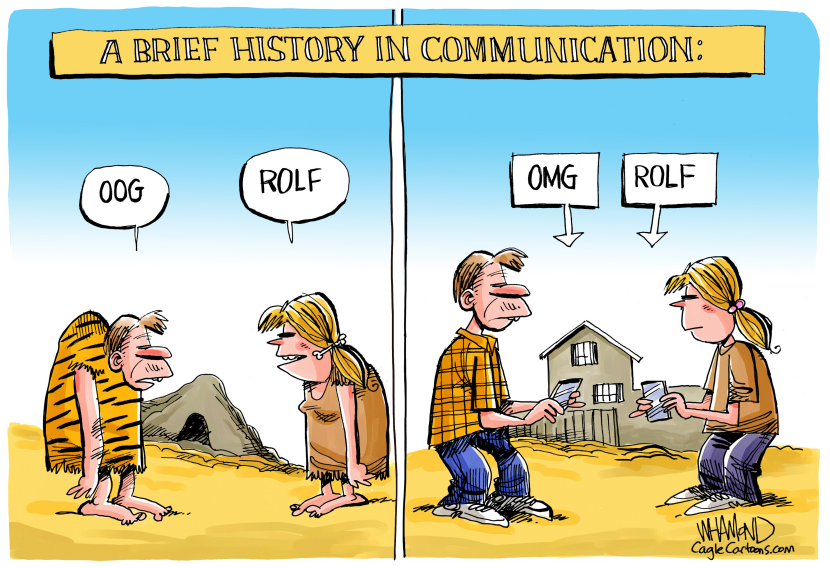
Family Landlines Better than Smartphones for Teens

When my childhood home got a phone call, it was an event.

That was partly because my father, a longtime phone-company employee, installed four brass-belled phones throughout our home. The phones rang so loudly it sounded like crooks were breaking into Fort Knox.

It was also because we were eager to discover who was calling – though I was always disappointed when I answered and it was a young man calling for one of my sisters.

You see, before Caller ID became common in the late 1980s, I was our home’s Caller ID.

“Who is it?” one of my sisters would whisper.

“Bill,” I’d say.

“Tell him I’m not here!”

I lied to dozens of young men, which filled me with anguish, because the brothers of the girls I called did the very same thing to me.

That’s why I read with interest an article in The Atlantic on the negative impact the declining use of landlines is having on family life.

Since today’s family members no longer experience the shared phone as a “space of spontaneous connection for the entire house” – they conduct private communication on their private phones – family interaction and togetherness is declining.

Our landline afforded zero privacy. If I wanted to ask a girl out, I had to use the kitchen phone, as its extra-long cord let me retreat down the basement steps, praying my sisters wouldn’t find out.

But they always did – and picked up one of the other three phones to listen in or say something to embarrass me.

Threatening to use their toothbrushes was the only way I could stop them.

Our old landline certainly promoted spontaneous connection.

On the rare nights my sisters weren’t mad at me for not replacing the toilet paper roll when the toilet paper ran out, we’d sit in the kitchen and they’d egg me on to participate in the lost art of the harmless prank phone call.

“Is Bob there?” I’d ask a friend, knowing Bob, his dad, was at work.

“He’s not home.”

I’d call back and ask again, “Is Bob there?”

“He’s not home!”

Calling back a third time, I’d say, “This is Bob. Do I have any messages?”

My sisters and I would roar with laughter, as though this was the funniest thing we’d ever done.

The kitchen phone was the one we most used and it was our primary source of important family news. My mother’s reaction to whoever was on the line signified a range of emotions from joy to sadness.

We’d sit at the kitchen table, waiting for her to complete the call and share the news that an aunt had given birth or that a close relative had just passed.

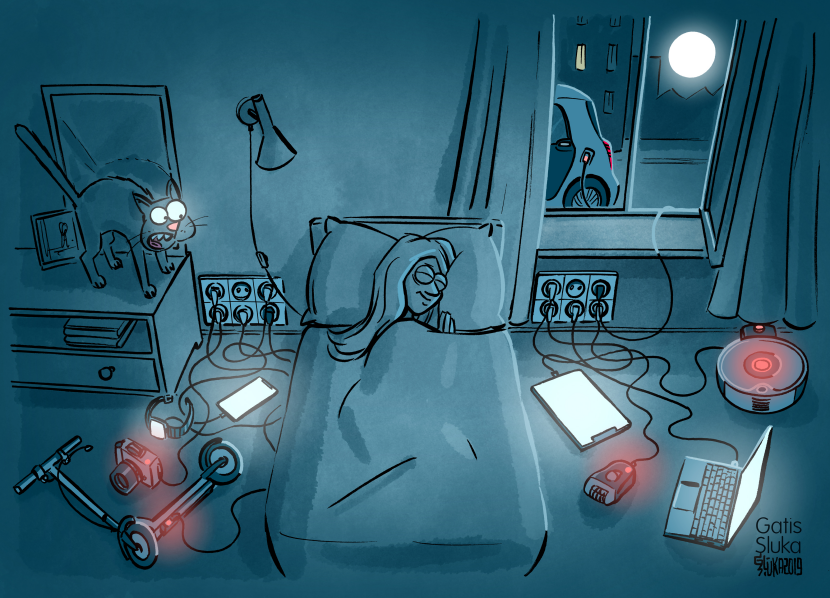
In any event, today’s digitally connected teens spend way too much time on their smartphones isolated in their bedrooms, disengaged from family and face-to-face meetups with friends – a worrisome trend that has grown rapidly since smartphones became widespread.

Psychologist Jean Twenge writes in The Atlantic that the “portrait of iGen teens emerging from the data is one of a lonely, dislocated generation.” Twenge notes that Steve Jobs knew the negative effects and limited his own kids’ smartphone usage. Business Insider reports many tech-elite parents do likewise.

The Atlantic says some parents are maintaining landlines and limiting smartphone use to promote family connectedness. One parent provides her three daughters with a shared, “dumbed down” smartphone that limits privacy.

Who knows, with such common-sense solutions, family togetherness might be strengthened anew by lighthearted prank calls, such as this ’70s classic:

“Is your refrigerator running?”

“Yes.”

“Then you better catch it!”

Copyright 2020 Tom Purcell. Tom Purcell, author of “Misadventures of a 1970’s Childhood,” a humorous memoir available at amazon.com, is a Pittsburgh Tribune-Review humor columnist and is nationally syndicated exclusively by Cagle Cartoons Inc. For info on using this column in your publication or website, contact [email protected] or call (805) 969-2829. Send comments to Tom at [email protected].
Comments Off on Family Landlines Better than Smartphones for Teens

George Washington’s Ignored Example

Have I benefited from nepotism and cronyism? Sure. But at least I feel guilty about it.

Nepotism, says Dictionary.com, is “patronage bestowed or favoritism shown on the basis of family relationship, as in business and politics.”

The concept is alive and well in Washington, D.C.

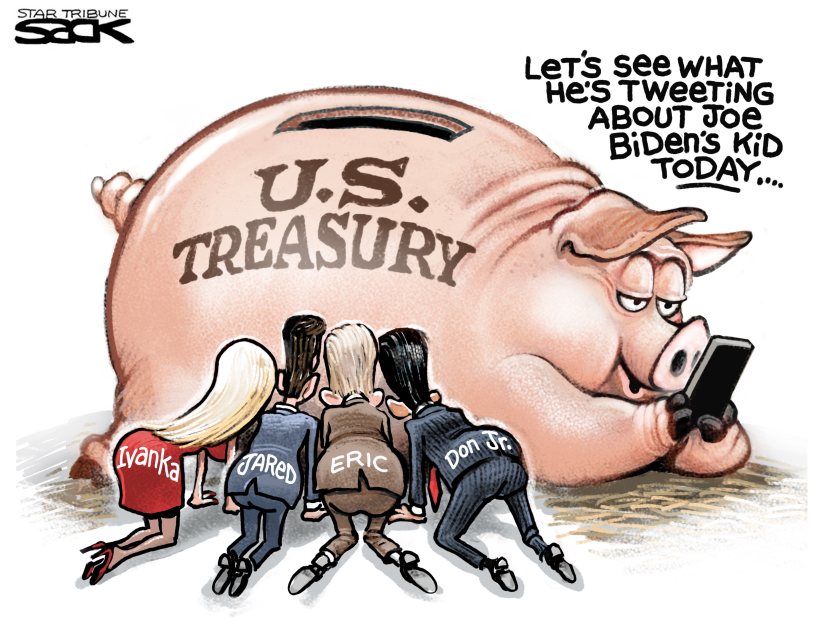
The Hill reports Chelsea Clinton reaped a $9 million stock gain since 2011 by sitting on a corporate board controlled by her mother’s rich friend, Barry Diller.

Corporate board members are supposed to be chosen for experience and skills. Since the 2002 Sarbanes-Oxley corporate reform law, they must meet stringent requirements.

Perhaps Chelsea’s academic achievement and Wall Street work experience meet those requirements. But it’s also true that her mother, who was secretary of State when Chelsea was appointed, is good friends with the media mogul who runs the company that made Chelsea rich.

That’s how things work in Washington, where children of the rich and powerful become rich and powerful because their parents have influence – and it has nothing to do with political party.

The Trump White House is full of family members holding positions of power.

No small number of children of Trump friends and supporters, reports The Daily Beast, have found their way into cushy government jobs and appointments.

If only President Trump and other political leaders followed the example set by our first president.

George Washington was rightly concerned about appointing people to positions of power based on merit, not family connections.

“When American colonists revolted against Great Britain, they were rebelling against a system of government fueled by inherited power and nepotism,” reports Smithsonian Magazine.

Washington knew his actions would set the tone for future presidents.

“He marked out a firm line while still president-elect in the spring of 1789,” the magazine says. “He would ‘discharge the duties of the office with that impartiality and zeal for the public good, which ought never to suffer connections of blood or friendship to intermingle,’ he told a friend.”

Washington told another friend that he “would not be in the remotest degree influenced, in making nominations, by motives arising from the ties of amity or blood.”

Washington’s concern makes me feel guilty about gains I’ve enjoyed that directly resulted from my parents’ nepotism.

They didn’t hold political office, but weren’t without influence and power.

My father worked for “the phone company” – now Verizon – and for many years sometimes “borrowed” its black electrical tape. We came to call it “Purcell duct tape.” We used it for everything: bicycle repairs, sticking fliers on the refrigerator, makeshift bandages, etc.

I benefited personally from more than $100 worth of “free” tape – tape that my family never had to pay for – over two decades.

My mother had influence. Her friendship with one of the St. Germaine Catholic School lunch ladies got me an extra slice, free of charge, on more than one Pizza Friday.

Another good friend of hers approved my VFW Post 6664 membership without the usual, proper vetting process. To make amends, I’ll donate $100 to a local charity and admit what happened to the VFW board.

I’ll do that because I feel guilty about benefiting from nepotism. But our political leaders, increasingly unfamiliar with the concept of shame, will happily continue their nepotism – so long as we let them.-

Copyright 2020 Tom Purcell. Tom Purcell, author of “Misadventures of a 1970’s Childhood,” a humorous memoir available at amazon.com, is a Pittsburgh Tribune-Review humor columnist and is nationally syndicated exclusively by Cagle Cartoons Inc. For info on using this column in your publication or website, contact [email protected] or call (805) 969-2829. Send comments to Tom at [email protected].
Comments Off on George Washington’s Ignored Example

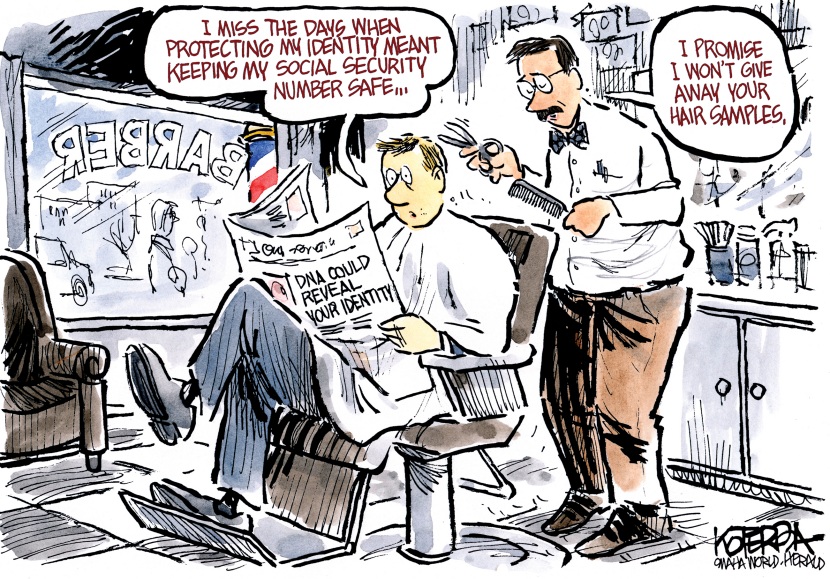
A Cut Above: Update Hairstyle, Update Outlook

My father and I still regret the first and only time I dabbled in the world of high fashion.

According to Yahoo! Lifestyle, retro fashions from the ’60s, ’70s and ’80s are making a comeback this year.

Allthingshair.com reports that 16 throwback hairstyles from the ’70s are “back and better than ever!”

While these playful trends are good for our country – more on that later – I have my misgivings.

Because I’m still upset about the David Cassidy shag haircut my sisters made me get in 1973, when I was 11.

Cassidy, the heartthrob star of TV’s “The Partridge Family,” was all the rage then. Like millions of teenage girls, my sisters had major crushes on him.

They told me I’d be the first kid in St. Germaine School to part my hair down the middle and feather it over my ears. They told me I’d be popular with the girls.

So I did the unthinkable. I pedaled my bike three miles to the unisex hair salon behind Murphy Mart. I set my crumpled bills and coins on the counter.

“Make me look like David Cassidy,” I said to the lady, a smoldering Marlboro Light dangling from her lips.

She clipped, cut, styled and set. She applied goops and sprays. When she turned the chair around so I could see myself in the mirror, I was horrified.

I didn’t look like David Cassidy. I looked like Danny Bonaduce, Cassidy’s TV little brother.

The rest of that day, I hid in my room – until my father demanded I join the family for supper.

I took my seat to his right. He sensed something was off immediately.

Washing his burger down with gulps of Pabst Blue Ribbon, he kept looking at me.

‘What the heck happened to your hair?” he finally said.

“I got it cut.”

“But it’s parted down the middle.”

I nodded.

“Why would anyone part his hair down the middle?!”

I had no answer for him then. But today, psychologists offer interesting insight into fashion’s deeper meaning.

Clothing and style reflect what’s going on in our culture. In a strong economy, dress is more playful, colorful and bold. That’s what current trends suggest – and it’s a positive.

“Clothing affects our mental processes and perceptions which can change our minds and the way we think,” according to research by Karen Pine, a University of Hertfordshire professor.

In her book “Mind What You Wear: The Psychology of Fashion,” Pine “shows how people’s mental processes and perceptions can be primed by clothing, as they internalize the symbolic meaning of their outer layers.”

In other words, playful retro fashion trends just might be beneficial to our national psyche. Can they help us loosen up rigid mental processes and perceptions, and maybe even change how we relate to people with whom we vehemently disagree?

Hey, it’s a small step but it’s worth a shot.

Which brings us back to my David Cassidy haircut. It wasn’t until my mid-20s that I got rid of that long-out-of-fashion style.

I asked for something modern and trendy. The hairdresser cut my hair short and slicked it straight back with greasy goop.

“What the heck happened to your hair?” said my father.

“I got it cut.”

“You look like Eddie Munster!” he said.

Coyright 2020 Tom Purcell. Tom Purcell, author of “Misadventures of a 1970’s Childhood,” a humorous memoir available at amazon.com, is a Pittsburgh Tribune-Review humor columnist and is nationally syndicated exclusively by Cagle Cartoons Inc. For info on using this column in your publication or website, contact [email protected] or call (805) 969-2829. Send comments to Tom at [email protected].
Comments Off on A Cut Above: Update Hairstyle, Update Outlook

Don’t Take Cyber Scammers’ Bait in 2020

One of 2019’s biggest stories will be bigger in 2020: Cyber scams are on the rise.

“As people increasingly conduct business and live their lives online, more and more criminals are leveraging the internet to steal,” reports Forbes’ Stu Sjouwerman.

The dirty rotten scammers continue to evolve, too, targeting businesses, government organizations and individuals alike with increasingly sophisticated schemes.

One is ransomware – malicious software that blocks access to computers until money is paid.

Scammers also send phony “phishing” emails – often spoofing emails from big retailers – with fraudulent links or attachments that, when clicked, give scammers unfettered access to computer users’ data.

Google “ransomware attack” and you’ll see a sizable list of big companies and entire cities that have been completely shut down by scammers.

They also spoof text messages. Apparently from reputable companies, such as banks, these messages trick individuals into revealing passwords or credit card numbers.

Scammers continue to succeed with the good old telephone, too. I received a call this year from a man claiming he was from the Social Security Administration, who told me my account was blocked and he would help me reactivate it.

Aware that Social Security never makes phone calls (unless you’re having a legitimate conversation with it), I knew what the scammer was after: my full name, birthdate, address and Social Security number.

I asked him how he could sleep at night, knowing he was hurting innocent people. He cussed at me and hung up.

The greatest worry about scammers is that elderly people are especially at risk. They’re more trusting of callers from government agencies and more likely to fall for one especially mendacious tax scam.

Using phishing techniques, scammers access data on a taxpayer’s computer, then use that stolen information to file a fraudulent tax return in the taxpayer’s name and have the refund – often larger than is actually owed – deposited into the taxpayer’s actual bank account.

According to Intuit, the scammers then “contact their victims, telling them the money was mistakenly deposited into their accounts and asking them to return it.”

Many victims, fearful of the IRS, readily comply.

According to Pew Research, Americans view cybercrime as their greatest security concern. But what are government agencies doing to combat it?

Not enough.

Americans are often victimized by scammers operating from elsewhere in the world. How can the bad guys be tracked down and forced to make amends?

Nation-states are often behind sophisticated attacks on organizations. Russian-financed scammers are actively targeting our utilities, election systems and other systems.

Creating new laws and agencies to combat cybercrime is a daunting challenge. Cybersecurity bills passed by the U.S. House move slowly through the Senate. Even if the Senate passes them and the president signs them, regulators could take months to draft and implement actual policies. Scammers aren’t bogged down by such bureaucratic processes.

What it comes down to is that every individual must learn to detect and avoid cyber scams. The Department of Homeland Security has helpful info at https://www.dhs.gov/stopthinkconnect-cyber-tips.

Always verify that an email, text or link is legitimate before you click. Always be suspicious – because that’s the only way that cyber scams won’t be an even bigger story in the new year.

Copyright 2019 Tom Purcell. Tom Purcell, author of “Misadventures of a 1970’s Childhood,” a humorous memoir available at amazon.com, is a Pittsburgh Tribune-Review humor columnist and is nationally syndicated exclusively by Cagle Cartoons Inc. For info on using this column in your publication or website, contact [email protected] or call (805) 969-2829. Send comments to Tom at [email protected].

Comments Off on Don’t Take Cyber Scammers’ Bait in 2020

Amid Such a Clatter, Here’s What Really Should Matter

‘Twas the night before Christmas, when all through America, people were angry or delighted, and most uncomplimentary.

Despite it being the time of the year to unite, gather and share good cheer, the president’s impeachment turned the country on its ear.

“High crimes for certain,” his opponents did claim, “because since his election we’ve been taking aim.”

“Not so fast,” did his defenders retort, “’high crimes’ demand the highest bar and your argument fell short.

“He’s an unconventional president,” his defenders continued, “uncouth to be sure, but with good intent.

“The economy is flourishing, which is just what we need, to address other challenges and do so quickly indeed.

“The deficit is massive and requires trimming, our failing health care, roads and schools also demand reckoning.”

“But what of the environment?” his opponents declare. “This president denies it’s an issue and plumb doesn’t care.

“He gets under our skin and makes us wild with rage, we must remove him from office and put him in a cage!

“Our goal is noble, why can’t you see, that we must damage and discredit Trump before 2020.

“If he’s elected again, and we fear he may be, he could appoint a third judge to the Supreme Court judiciary.

“That we cannot allow and never will we agree, to leave elections up to the people in a faltering democracy.”

And so commenced an unpleasant debate, one with no middle, just two sides of irate.

But Christmas and Hanukkah have finally arrived, a time of the year to reappraise.

We’re not so divided as many may think, we are not yet near the brink.

In the history of our incredible republic, you see, we’ve survived far worse controversy.

Let’s not forget our own Civil War, 620,000 Americans died in that awful uproar.

If only the country had heeded the words President Lincoln did speak, during his first inauguration week:

“We are not enemies, but friends,” he read, and warned about high passions straining our bonds of affection as they spread.

He urged us to rise above emotional thinking by every measure, by embracing “the better angels of our nature.”

By failing to listen to what Lincoln said, our young country suffered misery, death and destruction instead.

And though it may appear nobody knows “where to” from here, one principle remains clear.

This democracy is ours and should reflect the will of we the people. If you are not happy with what you are seeing, get to the voting booth promptly.

Call or write your congressperson and pen letters to the editor. Engage, speak out, help us regain a commonsense center.

Renew with your neighbors civil debate, be respectful and inquisitive, not filled with anger and hate.

The holiday season has arrived this year, let’s get back to enjoying and spreading good cheer.

Our country is a continuous work in progress and much needs to be done, but let’s remember our blessings and how to have fun.

We have the power to love or to hate. We choose to be happy or irate.

Let’s unleash our nature’s better angels instead. Merry Christmas, Happy Hanukkah, Happy Holidays are what should be said!

May your homes be happy, your families be swell! May the New Year be your best year — and our country’s as well!

Copyright 2019 Tom Purcell. Tom Purcell, author of “Misadventures of a 1970’s Childhood,” a humorous memoir available at amazon.com, is a Pittsburgh Tribune-Review humor columnist and is nationally syndicated exclusively by Cagle Cartoons Inc. For info on using this column in your publication or website, contact [email protected] or call (805) 969-2829. Send comments to Tom at [email protected].

Comments Off on Amid Such a Clatter, Here’s What Really Should Matter

Why Christmas Nostalgia Is Good for Us

I indulge more deeply in Christmas nostalgia with every passing year, but it turns out that doing so is a good thing.

“Nostalgia,” according to Merriam-Webster, is “a wistful or excessively sentimental yearning for the return to some past period or irrecoverable condition.”

Time is certainly irrecoverable. I wish I’d known, when I was child, that time would go by so incredibly fast – which makes me now long for my past.

I remember vividly one Christmastime Saturday when I was 5 or 6. It was uncharacteristically warm for Pittsburgh – so warm, my mother opened our living room windows, allowing a fresh breeze in.

I sat by those windows, waiting for my hero – my father – to return with our Christmas tree. Trapped in a kid’s time warp, minutes ticked by like hours.

In future years, I’d be his sidekick as we shopped for the perfect tree. But it was too early for that yet.

Eventually, our white Ford station wagon pulled into the driveway, a big, thick evergreen tied to the roof. As my father got out and began untying it, I ran outside to help.

He was in his early 30s then, his hair black as coal. He stood nearly 6-foot-2, a powerful man. In an era when children argued that “my dad can beat up your dad,” my dad could.

I marveled as he set the tree on the living room platform like it was a stick. Then he kissed my mother, as he did every single time he walked through our front door.

This memory still fills me with a deep sense of security. How blessed I have been to be part of a large family, imperfect as it was and still is, with my parents together, doing their best to sacrifice for and love their children.

I re-experience the deep sense of the security they gave my sisters and me when I watch “A Charlie Brown Christmas,” “How the Grinch Stole Christmas!” and “Rudolph the Red-Nosed Reindeer.”

All were huge childhood events, which my family gathered around the television to watch with Snyder of Berlin potato chips and French onion dip, a special treat in our home.

For years, according to Dr. Max Pemberton in the Daily Mail, psychologists warned against such nostalgic indulgence.

But Constantine Sedikides, a Southampton University professor, says they got it wrong. Sedikides, who researches the effects of nostalgia, argues that nostalgia can comfort people, helping them connect and cope with adversity.

Nostalgia, writes Pemberton, can “imbue us with resilience by reminding us that we possess a store of powerful memories and experiences that are deeply intertwined with our identity.”

Scratchy old Christmas albums, luminaria lining the streets, Christmas Eve gatherings with our longtime next-door neighbors the Kriegers, bittersweet memories of so many people no longer here – this is the nostalgia that holds more power over me each Christmas season.

It makes me hold doors open for strangers, give more to those in need, try to be more understanding and gracious toward those with whom I disagree.

These are the benefits of Christmas nostalgia.

May you and your family – and our country as a whole – enjoy an abundance of those benefits this year.

Copyright 2019 Tom Purcell. Tom Purcell, author of “Misadventures of a 1970’s Childhood,” a humorous memoir available at amazon.com, is a Pittsburgh Tribune-Review humor columnist and is nationally syndicated exclusively by Cagle Cartoons Inc. For info on using this column in your publication or website, contact [email protected] or call (805) 969-2829. Send comments to Tom at [email protected].

Comments Off on Why Christmas Nostalgia Is Good for Us

Let It Snow

We could use a good snowstorm right about now.

I love a good dusting of snow. I love how it disrupts our routines and throws everything out of whack.

I lived in Washington, D.C., for nearly eight years. It delighted me how that city went into a panic every time forecasters predicted a few inches.

Not only are school delays common there, but the federal government often announces delays, too. It sometimes shuts down entirely, giving federal employees paid snow days.

Which is a delicious irony.

You see, Washington is full of self-important people who want to micromanage our lives through government programs, but are hopelessly lost when little white flakes fall from the sky.

I can’t think of anything that might disrupt D.C.’s increasingly partisan nastiness than for the self-important to be humbled. It’s hard not to be humble when you’re shoveling your sidewalk so the postal carrier or your neighbors don’t slip and fall.

Perhaps it’s because I live in the heartland – “flyover country” to some Washingtonians – that I love snow.

In Pittsburgh, you see, we know we can’t control the cold and snow, but we can control how we respond to them.

Our kids immediately appear atop the steepest slopes with a variety of sleds, then spend hours letting nature whip them downhill.

Our grownups abandon their typical routines to clear elderly neighbors’ driveways or bring them hot soup. Invigorated by the crisp air and a good sweat, we use this time to catch up with each other while sipping hot coffee.

One of my most memorable snowstorms happened on Christmas Eve 1976. We were celebrating with my mother’s family at my aunt’s house 20 miles from our home. The snow came down suddenly and thickly, and we knew we were facing a slow, potentially dangerous journey home.

I was 14. My sisters Krissy and Kathy, 17 and 19, were eager to strike out on their own. I didn’t know it then, but that would be the last time all five of my sisters and I would ride together to a holiday party.

As we got onto the highway, the roads were already blanketed. It felt like we were in a big sleigh, quietly floating along the hills and valleys of Western Pennsylvania.

My father turned on the radio. Old-time shows were playing. Don Ameche and Frances Langford were performing in “The Bickersons,” a 1940s show in which a married couple got into hilarious arguments.

I remember the wife asking her husband if he’d had breakfast. He said he’d just eaten the oatmeal on the stove. “That isn’t oatmeal,” she said. “I’m wallpapering.”

My sisters, parents, grandmother and I laughed out loud. Later, we asked our grandmother to tell us stories about her childhood and what life was like when families sat around the radio.

It was a perfect night of peace and clarity – one made possible by the snow.

Look, a good snowstorm is a gift from the heavens. It’s intended to puncture our seriousness and self-importance.

As I said, our country could benefit from a good snowstorm right about now.

Copyright 2019 Tom Purcell. Tom Purcell, author of “Misadventures of a 1970’s Childhood,” a humorous memoir available at amazon.com, is a Pittsburgh Tribune-Review humor columnist and is nationally syndicated exclusively by Cagle Cartoons Inc. For info on using this column in your publication or website, contact [email protected] or call (805) 969-2829. Send comments to Tom at [email protected].

Comments Off on Let It Snow

OK, Tail-End Boomer

I don’t blame millennials and Gen Z for mocking baby boomers with the trending “OK boomer” meme.

I’ve had my issues with baby boomers, too.

“OK boomer,” reports dictionary.com, “is a viral internet slang phrase used, often in a humorous or ironic manner, to call out or dismiss out-of-touch or close-minded opinions associated with the baby boomer generation and older people more generally.”

It’s sarcasm used to tell baby boomers that they’re too critical, condescending and dismissive toward younger folks’ anxieties and concerns.

I feel those younger folks’ pain.

Technically, I’m a boomer, born near the tail end of that generation, which began in 1946 and concluded in 1964 – but that 18-year span is far too lengthy to accommodate a single generation.

Sociologist and author Jonathan Pontell argues that Americans born between 1954 and 1965 are actually part of their own Generation Jones.

Boy, is he right. I have little in common with front-end boomers.

When front-end boomers were indulging in drugs and free love, we tail-enders were doing our homework.

While they were traveling the country in VW Beetles and partying at Woodstock, we were doing our chores.

While they dreamed of changing the world, we dreamed of getting collegiate business degrees and good-paying jobs.

Front-enders have criticized, dismissed and condescended to us tail-enders for years.

It’s human nature: Older people always complain that younger people aren’t doing things right.

If you’re young, don’t be so sensitive. Who else do old fogies have to complain about?

I know younger generations worry about their six-figure college loans, climate change and many other issues – I know you blame preceding generations for these woes.

But this tail-ender doesn’t see gloom and doom. Sure, we need to address lots of things, but the truth is there’s never been a better time to be alive – there is evidence that the world is doing better than ever.

Our economy, envy of the world, is expanding.

Technological innovation, already massive, is increasing rapidly. I can’t wait to see the solutions – for disease, poverty, climate change – it will bring in the not-so-distant future.

According to Cafehayek.com, today’s typical middle-class American lives better than billionaire John D. Rockefeller did 100 years ago.

He didn’t have air conditioning, sophisticated medical treatments, safe, fast travel and limitless dining and entertainment options.

He certainly didn’t have social media to create humorous retorts that silence whole generations.

Here’s more to be hopeful about: Bill Gates’ charity reported in 2018 that childhood deaths fell from 12 million in 1990 to 5 million in 2017. More than 90 percent of children now attend primary school. The proportion of people living in extreme poverty declined from one-third in 1990 to one-tenth.

Younger generations have much to look forward to. They’ll do lots of good work with powerful tools. We all should agree on that.

Hey, I’m a tail-end boomer who’s heard plenty from my elders about shortcomings. If you’re young, I hope you’ll take my well-intentioned optimism about your generation in that spirit, rather than dismiss it with a trendy catch-phrase.

But I can understand why you might meet my optimism with a quick “OK tail-end boomer.”

I just hope you’ll be as understanding when your generation one day goes codger and your children’s generation dismisses your generation with a humorous catch-phrase of their own.

Copyright 2019 Tom Purcell. Tom Purcell, author of “Misadventures of a 1970’s Childhood,” a humorous memoir available at amazon.com, is a Pittsburgh Tribune-Review humor columnist and is nationally syndicated exclusively by Cagle Cartoons Inc. For info on using this column in your publication or website, contact [email protected] or call (805) 969-2829. Send comments to Tom at [email protected].

Comments Off on OK, Tail-End Boomer