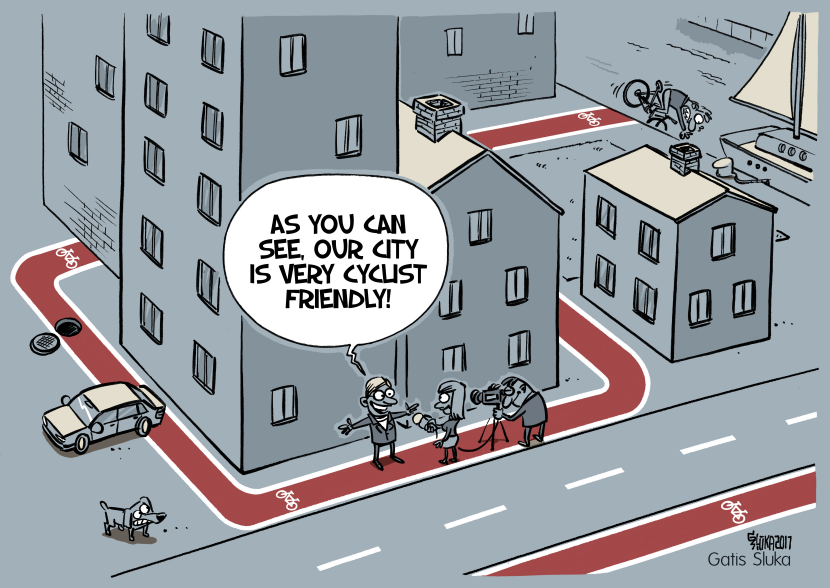
The lost freedom of bike hikes

I dream of recreating some of the epic bike hikes I enjoyed as a kid back in the 1970s.

My used Murray five-speed spyder-bike with the high handlebars only cost 25 bucks but it was one of the coolest bikes of the age.

Man, I loved that bike.

During the long summer days, I rode with a group of kids.

We’d ride for two or three hours in the county park, then make our way to McDonald’s for an orange drink and apple pie, which I paid for by borrowing a handful of coins out of my dad’s penny jar.

It’s funny how I can still taste that hot apple pie some 50 years later, but such is the power of nostalgia.

Most older people — and I’m getting to be one of them — are nostalgic for their childhoods.

Most think their growing-up era was the very best time to be a kid.

But truthfully, the best time ever to be a kid should be right now.

Today’s kids have instant, on-demand access to any electronic entertainment they could possibly want.

They carry around $1,000 smartphones that allow them to instantly access any information or entertainment on any subject under the sun — or purchase any product or service they could possibly want.

But whereas kids today are overwhelmed by the entertainment choices they have — and in some ways are imprisoned by their smartphones — the kids of my era had very few choices and not much money.

We went on long bike hikes because there wasn’t much else to do.

We could play ball, and we did a lot of that.

And we could go swimming — but only if we knew a rich kid whose parents let us swim in their pool.

One thing we could never do was stay in the house all day and watch TV. Our mothers tossed us out of the house every summer morning and told us we’d better not be late for dinner!

Daytime TV in the 1970s wasn’t much of a temptation anyway. There were only three channels and nothing was on that appealed to us — especially the soap operas.

Today we live in a time of so many choices and modern conveniences that our kids are being robbed of passion, ambition and independence — robbed of their childhoods.

The great writer G.K. Chesterton once explained how our limitations are what bring us happiness.

Could you imagine being an artist, he said, who was trying to paint a canvas that was as large as the Moon? Where do you start painting?

You couldn’t, Chesterton explained, because if you are an artist you need to have a frame to work with.

By being boxed into a small rectangular area, you are given a point of reference and perspective. Paradoxically, it is the frame that sets the artist free.

Our kids today are not free.

The truth is, as Psychologist Peter Graves reports in Psychology Today, kids learn and flourish best when they are free to roam with other kids.

But today’s kids, monitored and guided by adults every waking hour, no longer know what it is like to roam freely with other kids.

So, yeah, I’m nostalgic for the bike hikes of my childhood. But it’s mostly because back then we were free to just be kids — which is a freedom today’s kids need most of all.

Copyright 2023 Tom Purcell, distributed exclusively by Cagle Cartoons newspaper syndicate.

Purcell, creator of the infotainment site ThurbersTail.com, which features pet advice he’s learning from his beloved Labrador, Thurber, is a Pittsburgh Tribune-Review humor columnist. Email him at [email protected].

Comments Off on The lost freedom of bike hikes
The American dream is a life without debt

I dream of the day I will be 100% debt free!

I took on debt fairly early in life, when I borrowed money to help cover the cost of my Penn State degree.

That turned out to be a terrific investment — I got a good communications job at a high-tech company right out of college and paid it all back without incident — so that modest debt turned out to be a wise decision.

Debt in and of itself is not a bad thing and often a good thing.

I’ve been lucky to buy a house and a few other properties because of affordable debt. Luckily my credit is solid and I qualified for 3% financing — a bargain that isn’t expected to return any time soon.

In 2020, I borrowed money to buy a new Toyota Tacoma truck. I borrowed about half the value of the truck and almost have it paid off.

Thanks to covid and the many poor decisions our government bodies made in response to it that disrupted the used car market, according to Kelly Blue Book, the truck is worth anywhere from $3,000 to $5,000 more than I paid for it.

Sure, I’ve had some positive experiences in my life with debt — but I’ve had far more unpleasant experiences with it.

Early on in my freelance writing career, I had to borrow money just to meet my April 15 tax obligations.

Nothing is more painful than borrowing credit-card money at high rates to pay off self-employment income taxes that confiscate my earnings at even higher rates.

I share with you my experiences with debt over the years because of a recent study, conducted by OnePoll on behalf of Boyond Finance for National Financial Freedom Day, that finds that the average American has about $54,000 in debt.

“People’s biggest debt hurdles include credit card debt (57%), mortgages (30%), automobile loans (30%) and medical debt (28%),” the survey reports.

Inflation, which spiked to about 8.5% last year and is now 4%, is one of the key driving forces of debt. People have been borrowing just to make ends meet.

Medical debt is also a major issue — our medical system is a financial burden to millions.

I’ll never forget meeting a Home Depot employee one Sunday. We got to chatting and he told me that he had to take on a second job because his teen-age daughter became ill.

He explained that when the government last “reformed” our healthcare system, his company’s medical insurance deductible shot up from $3,000 a year to $9,000 for his family plan.

His daughter’s illness maxed out his deductible two years in a row, putting him $18,000 in the hole.

The Beyond Finance study didn’t get into the $1.5 trillion in student-loan debt that is causing pain to millions who made bad financial decisions — and an extra shot of pain to those who didn’t understand that a president can’t wave a magic wand to make their repayment obligations disappear.

Debt stinks.

Debt makes you do work you don’t like for the money you need to repay it.

Debt can bring you to your knees until it is finally repaid and you are truly free to live a frugal and happy life — a dream, sadly, that too few Americans will ever get to enjoy!

Copyright 2023 Tom Purcell, distributed exclusively by Cagle Cartoons newspaper syndicate.

Purcell, creator of the infotainment site ThurbersTail.com, which features pet advice he’s learning from his beloved Labrador, Thurber, is a Pittsburgh Tribune-Review humor columnist. Email him at [email protected].

Comments Off on The American dream is a life without debt

Dodging increasing crime rates

People are getting so used to increasing crime rates in cities across America, an etiquette is evolving between some muggers and their victims.

I learned about this while I walked with my friend and his wife from a Washington D.C. pub to their home six blocks from the Hill.

“When you get mugged, there are certain rules you must follow,” said my friend’s wife, walking at a fast gait.

“WHEN I get mugged?” I said, trying to keep up with her.

“She’s right,” chimed in my friend. “Muggers are often polite when you follow their instructions, but they get surly when you are rude.”

“How can you be rude to a mugger?”

“Ignoring the mugger is considered rude,” said my friend. “This will give him license to strike you with a blunt object.”

“Huh?” I said.

“Making eye contact is also rude,” said my friend’s wife. “During the mugging transaction, it is only appropriate to look at the mugger’s feet.”

“I guess running would be out of the question?” I said.

“Running is very bad,” said my friend. “This might affect the mugger’s esteem, which is already suffering because he’s probably out of work. This gives him little recourse but to chase you down and club you with a blunt object.”

“OK,” I said. “Then tell me exactly what I should do when we get mugged.”

“You should always make an offering of some kind,” said my friend’s wife. “The mugger must walk away with something of perceived value.”

“Like jewelry or a watch?” I said. My friends laughed.

“You don’t wear jewelry or a watch in this city!” said my friend’s wife. “No, you give up your wallet.”

“But I need my wallet,” I said. “It contains my license, credit cards and other vital information.”

“You don’t hand over your REAL wallet,” said my friend, looking at his wife like I was an idiot. “You give up a dummy wallet. You carry your real wallet in your sock.”

“What if the mugger asks to look in your sock?” I said.

“Muggers never do that,” said my friend’s wife. “They are very busy here. They’re eager to complete their transaction, so they can move on to their next mugging.”

“Can’t you carry mace or a gun?” I said.

“Concealed guns aren’t legal here,” said my friend, laughing. “And if a mugger catches you reaching for the mace, that gives him license to —”

“Strike me with a blunt object,” I said.

“Precisely,” said my friend.

“Can’t you call for a policeman?”

“Ha!” said my friend’s wife. “The police here are more afraid of the criminals than we are! All we know is that robbery has gone up 49% the past year!”

“Our neighborhood crime reports confirm it,” said my friend. “People get mugged right in front of our house pretty much on a daily basis!”

As we approached their house, my friend’s wife sprinted to the door. While she unlocked it, my friend scanned the bushes looking for suspicious movement. We rushed inside and slammed the door shut.

“We made it!” said my friend’s wife.

“That was a close one!” said my friend.

“You two sure know how to prevent getting mugged in this city,” I said. “How long have you lived here now?”

“We moved in last Friday,” said my friend.

Copyright 2023 Tom Purcell, distributed exclusively by Cagle Cartoons newspaper syndicate.

Purcell, creator of the infotainment site ThurbersTail.com, which features pet advice he’s learning from his beloved Labrador, Thurber, is a Pittsburgh Tribune-Review humor columnist. Email him at [email protected].

Comments Off on Dodging increasing crime rates

Puppy’s dad saved by the potty bell

Bringing a puppy home for the first time is not for the faint of heart.

I quickly learned I was not even close to being prepared for the massive disruption my life was about to experience — a disruption that was caused by one of the most basic needs that every creature has.

Puppies “Go” All Day Long

When I say puppies “go” all day long, I’m not just referring to their incredible energy and playfulness.

I am referring to my Lab puppy, Thurber’s, never-ending capacity to dampen my rug at any moment without warning, dozens of times that first day.

Thurber and I weren’t back inside our cozy home more than a few minutes before he crouched down and released a stream of #1 that was larger than most of the tributaries that feed Pittsburgh’s mighty Monongahela River.

I didn’t want to shout and scare him. I read that yelling would only startle him, affect his happy and positive spirit and make him mistrust me. It would make him associate the natural need to go #1 with negative emotions.

After doing some research, I followed some tried-and-true potty-training basics.

First, I established a consistent routine for feeding, bathroom breaks and playtime.

Second, I began taking him outside before he had to go. We went out immediately after he’d wake up in the morning or after naps, during and after playing, and after he ate or drank.

At a minimum I took him outside to the area I wanted him to go at least once every hour. I’d give him ample time to do his business and if he didn’t go, I’d bring him inside and, 60 minutes later, rinse and repeat.

Potty Bells to the Rescue

Though these positive techniques helped reduce wet spots on my rug those first few days, they didn’t stop them entirely.

While searching for a better solution, I learned about the “hanging bell approach” at the American Kennel Club.

You simply hang a bell next to the door that leads outside. The bell should hang low enough for your puppy to hit it with his nose or paw.

Every time you take him outside to go #1, you bump his nose or paw on the bell.

And every time you catch him in the act of going #1 on your rug, you pick him up, bump his nose or paw on the bell, then usher him outside to the patch of grass where you want him to go.

Again, when he does go, praise him lavishly, then give him a treat!

The Approach Worked — Sort of!

Much to my shock and amazement, it only took a few days for Thurber to learn to hit the bell with his nose every time he needed to go #1 or #2.

He’d only experience one or two accidents over the next several months.

However, within a few weeks, Thurber was hitting the potty bells 30 to 40 times a day — at the expense of my work, sleep and general wellbeing.

Why did he hit the bells so much?

Because he rightly concluded that every time he hit the bell, I’d open the door and grant him access to his favorite place: the outside world, which he still loves to sniff and explore.

It was then that I learned another important lesson: If you aren’t training your dog, your dog is training you — and I’m not learning as fast as he would like me to!

Visit Tom and Thurber’s dog-blog (www.ThurbersTail.com) for entertaining stories and videos that feature the budding social-media star, Thurber the Talking Lab!

Copyright 2023 Tom Purcell, distributed exclusively by Cagle Cartoons newspaper syndicate.

Purcell, creator of the infotainment site ThurbersTail.com, which features funny videos and lessons he’s learning from his beloved Labrador, Thurber, is a Pittsburgh Tribune-Review humor columnist. Email him at [email protected].

Comments Off on Puppy’s dad saved by the potty bell

A collaborative way to celebrate July Fourth

The Fourth of July has always held a special power over me.

I love the hot dogs and burgers and my mother’s delicious potato salad.

Mostly, though, I’ve always cherished the great gatherings of family and friends that culminate with spectacular fireworks displays that light up the dark summer sky.

I knew as a kid that on July 4th we were celebrating our many freedoms, which we earned by gaining independence from the British during the Revolutionary War, and which we cemented with the creation of the U.S. Constitution.

As an adult, I know our country was imperfect then, as it is now — that the Declaration of Independence, which spoke so forcefully of individual liberty, was leaving out people who were enslaved.

But I also know that our Constitution got many things right, especially checks and balances to keep each our three branches of government from getting too powerful, and the Bill of Rights, which guarantees the protection of the basic rights average citizens like me continue to enjoy.

Freedom of speech allows me to write this column and criticize my government when I think it is overstepping its bounds (hello, $32 trillion in recklessly borrowed funds).

It’s for all of these reasons that I especially enjoy celebrating the Fourth of July.

According to History.com, in 1776 some Americans — fully displaying the raucous American sense of humor — “celebrated the birth of independence by holding mock funerals for King George III.”

But the first official Fourth of July celebration occurred in Philadelphia in 1777 when Americans fired a cannon 13 times in honor of the original 13 colonies, and also set off 13 fireworks, reports USA Today.

“The Pennsylvania Evening Post reported: ‘at night there was a grand exhibition of fireworks (which began and concluded with thirteen rockets) on the Commons, and the city was beautifully illuminated,’” reports History.com.

In Boston, on the very same night, the Sons of Liberty also set off fireworks, so fireworks have been a central part of our July 4th celebrations ever since.

To me, though, the biggest element of the July 4th celebration is how we have so often come together to overcome our greatest challenges.

The 13 colonies had many differences and disagreements as their delegates worked together to establish the Declaration of Independence.

According to USA Today, Barbara Clark Smith, a curator of political history at the National Museum of American History, notes how extraordinary it was for colonists to find common ground.

“They did find a way to put differences aside and join together to work for a common goal,” she added. “While declaring independence, they also declared interdependence.”

And that is why on July 4, 1776, the Second Continental Congress unanimously approved and adopted the Declaration of Independence.

In that collaborative spirit, I offer an idea.

In addition to the hot dogs, burgers and our family’s uniquely delicious potato salad, on this July 4th why don’t we engage in a civil discussion with friends and family members with whom we may disagree?

Why don’t we try a special exercise in which we identify some of the basic things we agree on?

I’m betting that as we clarify our thinking in a civil manner, we’ll discover we agree far more than we disagree.

Follow this approach and the only fireworks that will go off during your July 4th gathering will be the ones that illuminate the night sky!

Copyright 2023 Tom Purcell, distributed exclusively by Cagle Cartoons newspaper syndicate.

Purcell, creator of the infotainment site ThurbersTail.com, which features pet advice he’s learning from his beloved Labrador, Thurber, is a Pittsburgh Tribune-Review humor columnist. Email him at [email protected].

Comments Off on A collaborative way to celebrate July Fourth

Good luck paying Uncle Sam’s debt

The national debt broke the $32 trillion barrier this week.

It’s a number so huge it’s incomprehensible to the average citizen.

We knew $32 trillion was coming.

It just got here a lot faster than the money experts thought, thanks to the roughly $5 trillion that the feds spent to help people and businesses withstand the many blows inflicted by Covid-19 and lockdowns.

If you are a good citizen who’d like to gift a few bucks to the federal government to help pay down the national debt, you need to know the good news and the bad.

The first bit of good news is that there’s an obscure old government program designed to help you do just that.

In 1961 the Bureau of the Public Debt — part of the Treasury Department — began allowing donations that directly reduce the debt.

According to Title 31, Chapter 31 of the U.S. Code, any citizen is free to give a “gift” to Treasury, under the condition that the money will be used only to pay down the debt.

The second bit of good news, reports MSN, is that in 2022 a number of unknown individuals gifted $1 million to Uncle Sam.

The bad news is, though, is really bad — our debt is at $32 trillion. Broken out into $1 million dollar increments, that is 32 million-million dollars!

Forbes reports that the debt is so large that two of the world’s richest men, Elon Musk and Jeff Bezos, couldn’t put a dent in it.

Their net worth is $340 billion. If all their vast wealth was donated to debt reduction, our debt would go from 32,000 billion dollars to 31,660 billion dollars!

In other words, there really is no point in gifting money to a dead-end cause.

Still, lots of good-hearted Americans have been giving money to Washington for centuries.

According to a fascinating discussion on NPR, the earliest gift dates back to the Madison Administration in 1811, when a random citizen mailed in five dollars.

Though there was not yet any formal program to process such gifts, other citizens kept on sending money in.

In 1843, continues NPR, the government set up a gift fund as a general all-purpose account. People donated checks, bags of pennies and even bags of gold!

Matt Garber, of the Bureau of Fiscal Service, said that in one instance $63 in gold bullion was gifted.

In the 1950s, he continued, “patriotic Americans wanted to help the government pay back the money it had borrowed for war efforts.”

That’s why, in 1961, the government established a special account specifically for the purpose of reducing the national debt.

Though the Bureau keeps no official records on this program, a senior advisor shared some interesting anecdotes with me in 2010.

She said gift-givers generally mail in their checks with no notes attached. Others sign over their tax-refund checks and in 1992 someone gave $3.5 million from their estate.

The record for the largest gift came in 1994 from anonymous donor — $12 million.

As the debt continues to balloon, fewer Americans are gifting money to pay it down.

But who can blame them?

If our debt remained fixed at $32 trillion and we applied the roughly $1 million donated every year to pay down the debt, we’d pay it off in exactly 32 million years!

Copyright 2023 Tom Purcell, distributed exclusively by Cagle Cartoons newspaper syndicate.

Purcell, creator of the infotainment site ThurbersTail.com, which features pet advice he’s learning from his beloved Labrador, Thurber, is a Pittsburgh Tribune-Review humor columnist. Email him at [email protected].

Comments Off on Good luck paying Uncle Sam’s debt

Father’s Day: Lucky to be my father’s son

Modern dads are portrayed as fools in television sitcoms and commercials.

Lucky for me, they are the polar opposite of the loving, strong and decisive father who raised me.

Over the years, as I clogged a toilet with an apple core, shattered a picture window with a baseball and hit a golf ball through a neighbor’s window, he had only one thing to say: “Son of a !!!”

He always fixed the things I broke — once he found his tools, which I was forever losing. He often found them lying in the yard after running over them with a klank of a lawnmower blade, to which he would reply: “Son of a !!!”

When I was a teen, I destroyed more expensive items, such as automobiles. My father made the mistake of purchasing a 1979 Ford Pinto with a powerful six-cylinder motor — I could burn rubber at will.

When he discovered that a right-rear tire only six weeks old was worn to the threads, he had but one response: “Son of a !!!”

I had to mow a lot of lawns to pay him back the money I continually owed him, but he taught me early there are consequences for my actions, and that I must always make things right.

As a young man, I saw it as my duty to butt heads with him — unaware that he saw it as his duty to pound the “stupid” out of me.

He grew up without a father and he remembered the dumb things he did in his youth.

He knew that most any boy is only one or two knuckle-headed decisions away from heading off in a dangerous direction. His job was to keep me in line, a task that was often unpleasant for him.

In high school, I began making a lot of money running a stone-masonry business, and I announced I was going to buy my own car. The unenlightened fellow made me do something unpleasant with the money: save it for college.

I was furious and fought him hard — but grateful years later when I graduated from Penn State with a manageable amount of college-loan debt.

The friction my father caused me, I now know, was also the basis for my respect for him. He gave my sisters and me a fine example of a man to emulate.

He worked hard, yet never allotted himself more than $5 a week to buy a couple cups of hot coffee.

He never complained when he was called to work in the middle of the night.

He taught us the meaning of love, dignity, honesty and kindness — never through words, only through his actions.

My sisters all married good men like him. And nothing filled me with more joy than making him proud of me for working hard and doing my small piece of good for the world.

We lost my dad last year and will be mourning his sizable loss this Father’s Day — as we celebrate our pride in him for sacrificing so much for our mom, who he adored, and his children, who all turned out well because of the way he lived his life.

We’ll especially miss his sense of humor.

A few years after I graduated from college and bought my first nice car, I let him take a drive. He revved the motor, dropped the transmission into gear, then burned rubber all the way up the road.

I had only one thing to say to that: “Son of a !!!”

Copyright 2023 Tom Purcell, distributed exclusively by Cagle Cartoons newspaper syndicate.

Purcell, creator of the infotainment site ThurbersTail.com, which features pet advice he’s learning from his beloved Labrador, Thurber, is a Pittsburgh Tribune-Review humor columnist. Email him at [email protected].

Comments Off on Father’s Day: Lucky to be my father’s son

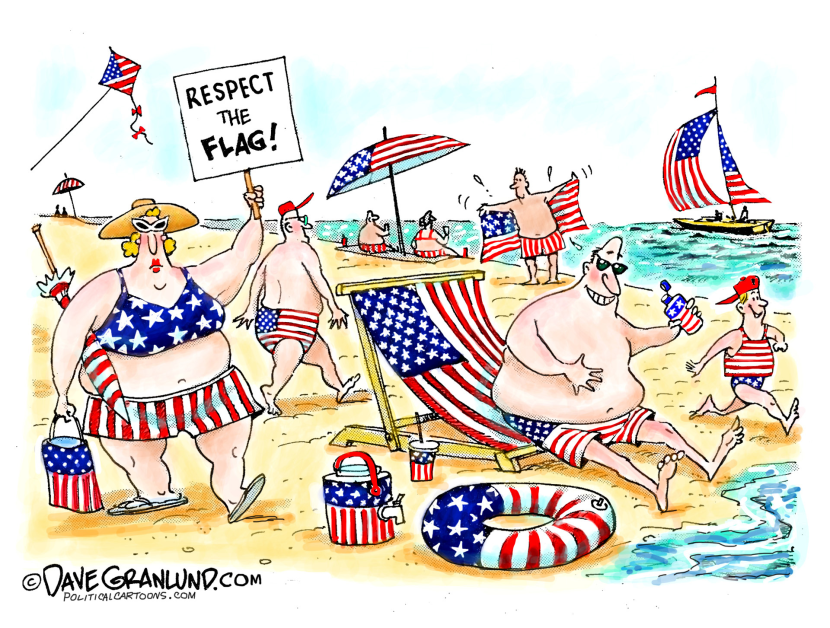
A personal salute to Flag Day

It’s long past time for me to put a flagpole in the center of my front yard — one that holds a large American flag that dances proudly in the summer breeze.

We bought such a flagpole for my father on his 70th birthday, shortly after he and my mother moved into a new house with a stately front yard.

He was proud of his flag — with good reason.

He was born during the Great Depression. As a boy, he was immersed in our country’s great unified effort to defeat mighty foes during World War II.

He was drafted at the tail end of the Korean War and served for two years. When he returned home, America was an optimistic place to raise a family.

He and my mother would have six children. He would work very hard and watch his country, and his family, thrive and prosper beyond his wildest dreams.

Despite his modest Bell Telephone income, he was able to retire just shy of his 60th birthday.

He enjoyed retirement for 30 years — and enjoyed the flagpole we got him for 20 years — before God took him home last year.

Thanks to a uniquely blessed nation that offered unlimited opportunities for individuals to pursue life, liberty and happiness, my father was able to see his children become successful writers, artists, teachers and businesspeople.

Our country has never been perfect and our government requires constant monitoring, improvement and correction.

As we grow older and wiser we begin to understand how easy it is for the young to see only our country’s imperfections and not the many things it has got incredibly right.

The freedom to speak our minds openly is one huge thing we got right — despite recent examples of people admitting they are afraid to express what they think publicly for fear of public retribution.

The first amendment to our Constitution guarantees us the free exercise of religion, a free press, the right to peaceably assemble and express grievances to our government and petition for change — and prevents the government from abridging our right to free speech, even unpleasant speech.

Until 1989, for instance, 48 state governments, as well as the federal government, forbid the desecration or burning of the U.S. flag by protesters, reports Smithsonian Magazine.

These laws were overturned by the Supreme Court in Texas v. Johnson, in which the court agreed that Gregory Lee Johnson’s burning of the flag constituted “symbolic speech” protected under the First Amendment.

More from Smithsonian Magazine:

“If there is a bedrock principle underlying the First Amendment, it is that the government may not prohibit the expression of an idea simply because society finds the idea itself offensive or disagreeable,” wrote Justice William Brennan in the majority opinion.

“The majority, which also included Justices Marshall, Blackmun, Kennedy and Scalia, found that the conviction was inconsistent with Johnson’s First Amendment right to verbal and nonverbal expression.”

A flourishing representative republic continually reexamines itself and corrects its imperfections, and on that score, our country has got more right than wrong.

That is why my father became prouder of his flag — and the great country it represents — with every passing year.

And that is why, this Flag Day, it’s time for me to place my own majestic symbol of America in the center of my stately front yard.

Copyright 2023 Tom Purcell, distributed exclusively by Cagle Cartoons newspaper syndicate.

Purcell, creator of the infotainment site ThurbersTail.com, which features pet advice he’s learning from his beloved Labrador, Thurber, is a Pittsburgh Tribune-Review humor columnist. Email him at [email protected].
Comments Off on A personal salute to Flag Day

Americans rediscover the summer picnic

It’s a positive trend that I hope continues: the resurgence of summer picnics.

According to Mental Floss, the Covid pandemic caused a picnic boom beginning in 2020 that is showing no signs of letting up.

In 2020, with restaurants shuttered and experts telling us the bug didn’t spread so easily in outdoor air, many people, in particular younger people, began picnicking.

I was lucky to grow up only a few miles from a county park that offers 3,000 acres of rolling green hills, walking and biking trails and 63 picnic groves — groves packed with picnickers every summer weekend.

There were lots of reasons to picnic then. Family reunions, church gatherings or neighbors getting together. Schools, companies, unions and other organizations often staged annual picnic events.

The park was so popular that people routinely waited in line for hours one year prior to their event to secure their favorite grove.

On weekends the park was jammed and jumping:

Kids running around, footballs, Frisbees and water balloons flying through the air. While the kids played, the adults talked and laughed and sipped ice-cold beer.

We ate hot dogs and juicy hamburgers and my mom’s sweet potato salad — I can still taste these incredible picnic delicacies and crave them still.

The picnics were tremendous social events that connected people to each other in a million different ways. We laughed and talked all day long and when dusk arrived, nobody was ready to go home.

In a modern world that has separated and isolated us, we need to experience picnic connectedness now more than ever before.

Robert Putnam, author of the acclaimed 1995 book “Bowling Alone,” identified several trends that have been causing a breakdown in social-connectedness over many years.

The rise of the dual-income family, for example, resulted in both parents being exhausted after long days of work, making them less prone to join and support civic groups.

Television and the Internet are also breaking down our connectedness. Putnam said that “time-budget studies in the 1960s showed that the growth in time spent watching television dwarfed all other changes in the way Americans passed their days and nights.”

Social media has made this challenge considerably worse with many people, in particular younger people, spending hours online or chatting with their “friends” while in a room in their home alone.

Before there were 300 TV channels — before smartphones turned us into zombies and air conditioning caused us to shut our windows and doors — people sat out on their porches at night, sipping lemonade and talking with each other.

I enjoyed countless summer nights enjoying the company of my neighborhood friends that way.

Now we spend far too many hours sitting in our cooled homes isolated from our fellow human beings — which is why we are in desperate need of more summer picnics.

But there is hope for us.

Smithsonian reports that interest in picnics has exploded on social media. On Pinterest alone, searches for picnic date ideas have grown by 385 percent since last year.

I just Googled “summer picnic” and was delighted to see picnic activities taking place all over the nation — and lots of ideas to make your picnic fun and your picnic food delicious.

Hey, Covid, you caused us a lot of grief, but I thank you for the summer picnic resurgence. It couldn’t have come at a better time!

Copyright 2023 Tom Purcell, distributed exclusively by Cagle Cartoons newspaper syndicate.

Purcell, creator of the infotainment site ThurbersTail.com, which features pet advice he’s learning from his beloved Labrador, Thurber, is a Pittsburgh Tribune-Review humor columnist. Email him at [email protected].

Comments Off on Americans rediscover the summer picnic

A day to honor our war dead

Every year, polls show that a large number of Americans don’t know why we celebrate Memorial Day.

According to People, a 2020 Onepoll survey found that fewer than half of the 2,000 people surveyed knew that the purpose of Memorial Day was not to honor those who served in the armed forces, but to honor those who gave their lives while they served.

Few Americans are aware that the original reason for Memorial Day dates back to the Civil War.

Originally called Decoration Day, its purpose was to remember the nearly 500,000 soldiers who died during that incredibly bloody conflict.

That large number becomes especially sobering when you realize that the Civil War claimed roughly half of the 1.1 million service members who gave their lives in all of our conflicts, according to the Department of Veteran Affairs and the Department of Defense.

Consider the cost of our other wars:

The American Revolution was a hard-fought battle, but our successful fight for freedom claimed fewer than 1% of the lives of service members than the Civil War claimed — about 6,800 lives.

World War I — the “war to end all wars” — took 120,000 American service members. Regrettably, a lot more war was yet to come.

World War II — what many veterans of the great global conflict called “the Big One” — claimed approximately 405,000 U.S. service members, mostly young people whose lives were just beginning to blossom.

The Korean War, in which my father served, claimed 34,000 U.S. service members — and it’s still not officially over.

The Vietnam War claimed 48,000 U.S. service members — again mostly claiming young lives. The pain and loss of that terrible war lingers for millions of families still.

The long wars in Afghanistan and Iraq cost the lives of nearly 7,000 service members.

It’s a number that would have been higher if not for considerable gains in medical technology that resulted in fewer battlefield deaths.

However, more than 52,000 U.S. service members were wounded in these conflicts and many are still suffering from both physical and mental disabilities — and higher than normal suicide rates.

We must never forget those who gave their lives serving the rest of us. But too many of us are forgetting to do just that.

PBS News Hour offers a partial explanation as to why.

During the Civil War, almost every American family suffered loss. The 500,000 Union and Confederate deaths accounted for about 2% to 2.5% of the total population.

During World War II, according to Census Bureau and Department of Defense data, about 12 percent of the total U.S. population were members of the armed forces — and everyone else at home was making sacrifices to support the war effort.

Today, however, fewer than 1% of our population serves or has served, which makes it easier for most of us to remain aloof from military actions.

But we should be aware. War really is hell and it should be the absolute last resort for our nation to take.

We must hold our political leaders to account and stop them from so willingly getting us into new conflicts that will result in more service members giving the ultimate sacrifice.

So before we focus on our Memorial Day weekend parades and picnics, we must remember to honor those who have given their lives for our country.

And we must never forget the true meaning of Memorial Day.

Copyright 2023 Tom Purcell, distributed exclusively by Cagle Cartoons newspaper syndicate.

Purcell, creator of the infotainment site ThurbersTail.com, which features pet advice he’s learning from his beloved Labrador, Thurber, is a Pittsburgh Tribune-Review humor columnist. Email him at [email protected].

Comments Off on A day to honor our war dead