Dressing Up for Senate success

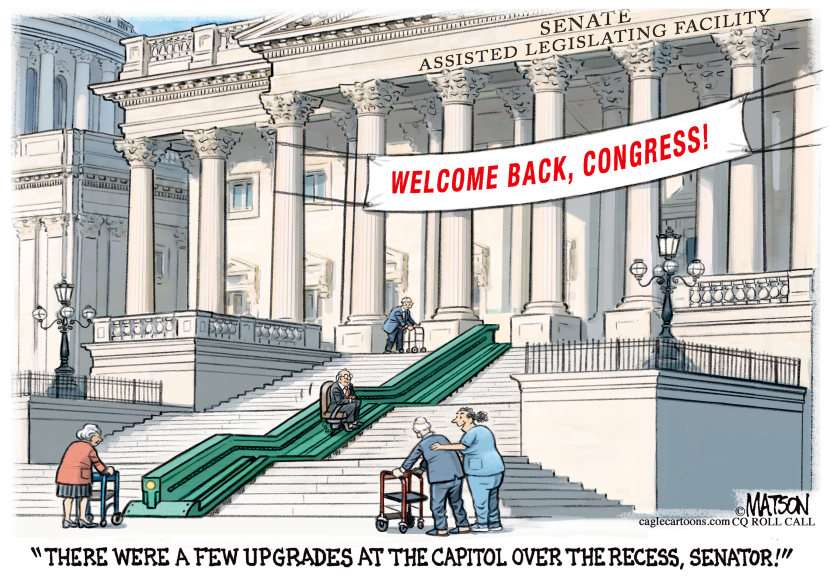
I suppose it was just a matter of time before casual dress hit the U.S. Senate.

Senate Majority Leader Chuck Schumer has told the Senate’s sergeant-at-arms to no longer enforce the hallowed chamber’s informal dress code, which had required senators and their staffers to wear business attire.

Schumer’s directive appears to be tailor-made for Pennsylvania Sen. John Fetterman, who prefers gym shorts and hoodies over the suits and ties male senators have always worn.

When Fetterman first arrived at the Senate, he attempted to wear a suit and tie — but looked as uncomfortable as a kidnap victim constrained by a straitjacket.

After being treated for clinical depression, however, he returned to the Senate in his favorite frump duds.

To paraphrase comedian Dennis Miller, Fetterman’s clothes make him look like the kid who taps the keg at fraternity parties.

As someone who prefers slothful wear over formal attire — running pants, a long-sleeved Pitt Panthers shirt and frayed sandals — I’m sympathetic to Fetterman’s situation.

On one hand, I think the Senate deserves incredible courtesy and respect. It is a tremendous honor to be among 100 of the most accomplished and powerful people on the planet.

Senators must honor their colleagues through their manner, gestures, words and dress — one man’s comfort should never trump one’s duty to show respect to his colleagues and the august institution he represents.

On the other hand, our culture sure has gotten sloppy.

I recently found an old photo of my grandfather at a baseball game in the 1920s. He and the other guys at the game were sporting suits and ties and fedora hats.

Pretty much everyone dressed up in formal clothes when they went to restaurants, movies and Sunday Mass well into the 1970s.

The Atlantic reports that our national shift to casual wear began in the mid-’80s with tech companies in California.

“Restrictive clothing worn for appearances’ sake was inefficient, and Silicon Valley was all about efficiency,” reports the magazine.

Long work hours writing computer code gave way to tech employees dressing down in khaki pants and button-down collar shirts.

Casual Friday soon loosened corporate dress standards across the country, and that evolved into casual day every day.

Now, thanks to covid, we’ve become a country of wrinkled slobs who look like we just crawled out of bed.

Like it or not, we are living in the heyday of frump, and no public figure symbolizes frumpiness more than Fetterman — whose bold stand for slovenliness surely motivated Schumer to abolish informal dress standards for senators.

Schumer may rue the day he made this change, however.

It’s just a matter of time before Mitt Romney interviews witnesses as he still wears last-night’s silk pajama top, Ted Cruz casts votes in cargo shorts, black socks and scuffed wingtips, and Bernie Sanders filibusters in the raggedy white robe given to him as a gift 40 years ago.

Though I’m guilty of frumpism, if I were a senator I’d embrace the old saying “Dress for the job you want.”

I’d wear a crisp suit and tie and make sure my shoes were perfectly polished.

I’d do so for the simple reason that dress is a form of expression and communication — and that “dressing like a senator” will make it easier for my colleagues to respect me and collaborate with me than they would with the kid who taps kegs at frat parties.

Copyright 2023 Tom Purcell, distributed exclusively by Cagle Cartoons newspaper syndicate.

Purcell, creator of the infotainment site ThurbersTail.com, which features pet advice he’s learning from his beloved Labrador, Thurber, is a Pittsburgh Tribune-Review humor columnist. Email him at [email protected].

Comments Off on Dressing Up for Senate success
NFL bets on greed

“Only bet what you can afford to lose.”

That’s the message from the National Football League as its betting-company partners aggressively promote legal betting on pro football games.

For years the NFL was adamantly against betting in sports.

In 2012, reports the New York Post, the league’s commissioner Roger Goodell said: “If gambling is permitted freely on sporting events, normal incidents of the game such as bad snaps, dropped passes, turnovers, penalties, and play calling inevitably will fuel speculation, distrust and accusations of point-shaving or game-fixing.”

He was correct.

Look what happened last week in the NFL’s opening game between Detroit and Kansas City.

One receiver dropped five passes, one of which was intercepted and returned for a touchdown — leading some in the Twittersphere to question if something nefarious was up.

So if gambling creates so much distrust among fans, why did the NFL change its position on betting 180 degrees? Can you spell g-r-e-e-d?

Sports gambling only became possible in 2018 when the U.S. Supreme Court struck down the Professional and Amateur Sports Protection Act, a federal law passed in 1992 that made gambling on sports illegal in all but a few states.

With that law struck down, 37 states made sports betting legal — and gambling exploded.

Whereas legal gambling used to require a trip to Las Vegas or Atlantic city, now it takes only a few moments to bet online using your smartphone anytime from anywhere.

The NFL flip-flopped on its anti-gambling position for the simple reason that gambling on its games would generate a lot of new cash for the league and team owners — never mind Goodell’s warning in 2012, and never mind the increased pain and suffering it would cause gambling addicts.

Two years ago, the NFL signed a $1 billion, five-year deal with its betting company partners.

Gambling jumped 40% in the 2022 season and a record 73.5 million Americans — 60% more than last year — plan to bet on NFL games this season, reports the American Gaming Association.

The American Psychological Association reports that though most people can enjoy betting and gambling as harmless entertainment, up to 2% of people are prone to compulsive gambling addiction.

People with other addictions or psychiatric issues (impulse-control, mood disorders, anxiety, etc.) also are even more likely to become compulsive gamblers.

The APA also reports that the poor are more prone to addiction and that men are twice as likely as women to become addicts — particularly young men, who are betting on sports in rapidly growing numbers.

The Mayo Clinic explains that people become gambling addicts much the same way they become addicted to alcohol and drugs: gambling stimulates the brain’s reward system with a sweet hit of dopamine.

But the “responsible” NFL has gambling addicts’ best interests at heart, right?

Its PR department launched a $6.2 million “responsible betting initiative” to help each gambler understand the risks and “only bet what you can afford to lose.”

But according to Forbes, 45% of bettors acknowledge that already this season they are spending more on NFL games than they can afford to lose.

So when so much money is at stake, who can blame the big-shots at the NFL for flip-flopping on gambling?

Like so many shortsighted people running our organizations and institutions, they don’t seem to care that they’re betting on their own futures — and against ours.

Copyright 2023 Tom Purcell, distributed exclusively by Cagle Cartoons newspaper syndicate.

Purcell, creator of the infotainment site ThurbersTail.com, which features pet advice he’s learning from his beloved Labrador, Thurber, is a Pittsburgh Tribune-Review humor columnist. Email him at [email protected].

Comments Off on NFL bets on greed

Thurber’s Tail: How to survive your sharp-toothed puppy

The bloodshed was everywhere.

It was all over my house, my parent’s house, my neighbors’ houses and splattered at any location in which anyone dared to pet my 9-week-old bundle of joy, Thurber the yellow Labrador.

I was desperate to stop Thurber’s reign of puppy-toothed terror, but how?

Why Are a Puppy’s Teeth So Sharp?

Puppies, like humans, are born without teeth, but by the time they are 2- to 4-weeks old, they start growing “deciduous teeth” — the sharpest blades known to mankind.

In the wild, razor-sharp teeth are needed to help puppies consume meat and soft food.

These teeth also help puppies to develop their jaw muscles and strong biting force, which are also necessities in the wild.

About 28 of these Ginsu-teeth are formed by your puppy’s sixth week. He’ll have about 42 by his 12th week, when his less-treacherous permanent teeth will finally start replacing his deciduous slicers.

Which means you are at risk of random bloodlettings for a good month or so until his permanent teeth come in.

How to Protect Your Flesh?

Your puppy has no intention of harming you with his baby daggers. The reason he attempts to bite and chew your hands, reports thelabradorsite.com, is that it helps him relieve the discomfort he is experiencing during the teething process.

One thing you can do during this time is to use voice commands to begin training your puppy not to bite; always reward him with praise and a small training treat when he complies with your commands.

A second step is to provide dental chews, which can reduce dental pains and give your puppy something else to chew on other than you.

According to Kalmpets.com, frozen carrots and watermelons are tasty treats that can help numb your puppy’s nerves and decrease discomfort. Frozen puppy toys that are durable and safe can have the same effect.

A frozen dishtowel, wrapped around an ice cube, can also reduce pain, but make sure the material is durable enough that your puppy can’t break it apart and digest it.

Corrective Behavior May Help

Though such techniques were helpful with Thurber, they did not stop the biting completely. Desperate, I hired a dog trainer to help me get my puppy under better control.

Her point of view — one that I share — is that most techniques for teaching a dog good behavior should be positive.

However, on rare occasions a corrective action may work best.

To stop him from biting, she placed a rubber “correction” collar on him that had little bumps on the inside of the collar. When he attempted to bite her, thinking he was playing, she gave it a little tug.

Now Thurber was a pup with a lot of energy and rapidly growing muscles. The tug was mild and did not hurt him.

But it was new to him and his response was immediate: he did not like the tug at all and he quickly determined that he better stop the biting to prevent another tug.

I’m not exaggerating here when I tell you after just a few mild tugs — within about a 5-minute period — he never used his sharp teeth to harm anyone again.

Cherish Time with Your Puppy

Looking back, I regret not taking advantage of Thurber’s sharp teeth to make some money.

I could have carried Thurber into a liquor store or bank, while shouting “Give me your money or the puppy makes you bleed!”

In any event, it will seem like an eternity, but by the time your puppy reaches three months of age, his permanent teeth will be in and the little sharp ones will have either fallen out or been harmlessly swallowed.

Be sure to enjoy every moment you can as your puppy blossoms — sharp teeth and all — into a healthy adult, because the transition happens all too fast!

Visit Tom and Thurber’s dog-blog (www.ThurbersTail.com) for entertaining stories and videos that feature the budding social-media star, Thurber the Talking Lab!

Copyright 2023 Tom Purcell, distributed exclusively by Cagle Cartoons newspaper syndicate.

Purcell, creator of the infotainment site ThurbersTail.com, which features funny videos and lessons he’s learning from his beloved Labrador, Thurber, is a Pittsburgh Tribune-Review humor columnist. Email him at [email protected].

Comments Off on Thurber’s Tail: How to survive your sharp-toothed puppy

Jimmy Buffett was a super-spreader of happiness

There’s a reason the name “Jimmy Buffett” elicits immediate joy in the hearts of millions: happiness contagion.

A study conducted by Harvard University and the University of California followed 5,000 people for 20 years to determine if happiness was contagious.

The study’s finding: it most certainly is.

If you smile at a stranger as you hold a door open for him, you transfer a positive, happy energy that he can’t help but enjoy.

Better yet, according to Psychology Today, the study finds that the happiness you just infused in a stranger is shared by him to approximately three others, who in turn share it with others and so on.

Jimmy Buffet, who died Sept. 1 at age 76, was a master of happiness contagion — filling me with joy since I first heard of him at a “Buffet Party” in a Penn State dorm room back in the 1980s.

Buffet said that his audience worked hard all week long and it was his job to give fans two full hours of joy and have fun doing it.

He knew exactly what he was doing as an entertainer.

“It’s pure escapism is all it is,” he told the Republic. “… I think it’s really a part of the human condition that you’ve got to have some fun. You’ve got to get away from whatever you do to make a living or other parts of life that stress you out.”

For someone who portrayed himself as laid back and easy going, he was actually a happy workaholic.

He didn’t start playing guitar until his first year in college at Auburn, then promptly flunked out because he was having so much fun strumming and singing, reports the Atlanta Journal-Constitution.

He eventually graduated in 1969 with a history degree from the University of Southern Mississippi, then bounced around New Orleans and Nashville for a few years.

In 1970, while working as a reporter for Billboard, he got his first record deal — only selling 324 albums, according to the New York Times.

By 1971 he made his way to Key West, Florida, fell promptly in love with the place, moved there and began writing his Caribbean-themed songs.

In 1973 his second record release was a success and the hits began coming — culminating in 1977 with the groundbreaking “Margaritaville,” which is still one of the world’s best-known songs.

But Buffett was just getting started.

A savvy businessman would soon emerge. He took ownership of the Margaritaville brand and built a billion-dollar empire that “includes over 30 hotels and resorts and 150 restaurants, bars, and cafes,” reports Inc.

He also published a half dozen best-selling fiction, non-fiction and children’s books.

Jimmy Buffett makes me feel like a slacker, but his story is a reminder that with a little talent, a little luck and a lot of hard work, amazing things can still be achieved in America.

Better yet, his story reminds us that any of us has the power to spread happiness — something he did on a magnificent scale.

In a modern world in which so many people choose to be smug, snarky, judgmental and divisive — thank you, social media — we can all do our small part to unleash a happiness contagion through our kindness, our smiles and our eagerness to hold the door open for strangers.

Or through one of my favorite methods: Singing “Margaritaville” on Karaoke Night.

Copyright 2023 Tom Purcell, distributed exclusively by Cagle Cartoons newspaper syndicate.

Purcell, creator of the infotainment site ThurbersTail.com, which features pet advice he’s learning from his beloved Labrador, Thurber, is a Pittsburgh Tribune-Review humor columnist. Email him at [email protected].

Comments Off on Jimmy Buffett was a super-spreader of happiness

A smaller home is a happy home

Houses are getting smaller again — which is going to make many Americans happier.

Americans faced with high mortgage rates and a shortage of affordable homes for sale are opting for new, smaller homes that do not have dining rooms, living rooms, spare bedrooms and even bathtubs, reports the Wall Street Journal.

Builders are building smaller homes partly to give cost-constrained buyers a more affordable option.

But it’s mostly because it’s the only way home builders can turn a reasonable profit, thanks to the high cost of construction materials, which have skyrocketed in the past few years.

Home sizes sure have soared since I was a kid in the 1970s.

According to the U.S. Census, in 1972 the average home was 1,660 square feet.

In the 1990s, with the era of the “McMansion” in full swing, no small number of homes exceeded 4,000 square feet — homes so unnecessarily big you need to hail an Uber to get from the living room to the kitchen.

The American home continued to grow until it peaked in 2015 at an average of 2,467 square feet, but now it’s fast heading back to 1972 numbers, which offers some good news.

In my experience, a modest-sized home generates more closeness and happiness among its family members.

The suburban house I grew up in was all of 1,500 square feet. Built in 1964, it was a rectangular four-bedroom box with a red-brick façade on the bottom and white aluminum siding on the top.

It also had only one full bathroom that, by 1973, had to be shared by me, my parents and all five of my sisters!

Thankfully, my parents had just enough money to add a master bedroom and bath on the first floor, which, to them, was Heaven on Earth.

Still, the house was modest in size and it forced the eight of us to live together — there was simply no way to avoid each other.

In those days we couldn’t just take our smart phones to our distant bedrooms and lock the rest of the family out.

During the 34 years my parents lived there the front door was never locked and friends and relatives came and went at all hours.

We had a million birthday parties and family gatherings there. Every emotion under the sun — love, anger, joy, sadness — took place there.

Many nights after dinner my sisters and parents sat packed into our tight little kitchen around a giant table, laughing and sharing stories.

Never once did we feel our home was small.

Interestingly, according to Business Insider, the only reason home sizes continued to grow after the 2008 housing collapse was that many people who had a lot of home equity, good jobs and excellent credit had the financial qualifications to meet stringent lending requirements.

By 2015, however, as younger people who lacked such credentials began buying homes, smaller homes were all they could afford.

And now, with the highest interest rates in years and a shortage of affordable homes on the market, builders are going small.

The Journal cited one builder in South Carolina who said that buyers are happily buying homes between 1,500 and 1,700 square feet.

In my opinion, they will find more happiness in their smaller homes than they ever would in a much larger one.

The modest-sized house I grew up in was a mansion by the measures that really count.

Copyright 2023 Tom Purcell, distributed exclusively by Cagle Cartoons newspaper syndicate.

Purcell, creator of the infotainment site ThurbersTail.com, which features pet advice he’s learning from his beloved Labrador, Thurber, is a Pittsburgh Tribune-Review humor columnist. Email him at [email protected].

Comments Off on A smaller home is a happy home

Dogs and cats also facing tough times

There’s a lot of sad news to go around, but this Vox story really breaks my heart: animal shelters are overflowing with abandoned dogs and cats again.

A few years ago, during COVID isolation, there was a surge of people rescuing pets from shelters to fill their homes with lovable furry creatures.

It was the heyday of abandoned animals finding homes, with more animals leaving shelters than coming in.

As people went back to work, however, some people decided they didn’t have the time or desire to care for a pet and sent it back to the shelter — something they should have thought through before they disrupted the pet’s life.

But there is another force that is driving people to abandon their pets: it has got way too expensive to feed and care for them.

High inflation drove up the cost of pet food 20% year over year — for the simple reason that the ingredients to make pet food were also at record highs, as everything has been the past three years.

The inflation rate is down some in 2023, but the cost of services is not. That includes the cost of having a pet get regular checkups and care at the veterinarian, as well as the proper shots pets need annually.

CNN reports that a high percentage of the abandoned pets have serious medical issues, which can be very costly to treat.

My 2½ year old Labrador, Thurber, is healthy and fit as can be — but when he began having seizures, we discovered he suffers from epilepsy.

That required trips to more than one veterinarian, including a skilled neurologist who specializes in pets, and also some costly lab work.

Fortunately, I have a pet-insurance policy that made the roughly $800 vet bill bearable. Thurber got excellent care and the medication is working perfectly.

However, if I were struggling to feed my children and pay my mortgage and car payment, as many middle-class people are, would I have given my dog to a shelter to hopefully get it the care I could not afford?

The answer is no, never, for me — I’d take a second job or sell my truck first. I’m not kidding when I say if reincarnation was real, my dream would be to come back as my own dog!

But I feel sorry for people who are really struggling to pay their bills right now and the painful decisions they are being forced to make.

I wonder: Are we heading back to the pre-WWII era, when the only people who could enjoy pets were the well-to-do?

Today’s pet-abandonment trend illustrates well what happens in the daily lives of everyday Americans because of the reckless government policies and spending that the Wall Street Journal reports have made the cost of everything, including our ability to care for our pets, unbearable.

But if you have the means and the commitment and love in your heart, remember that wonderful pets are waiting in shelters for you to bring them home — and if you cannot adopt, your donations are always welcome.

If you are in financial straits and your pet needs basic supplies or even costly medical care, the Humane Society and other organizations may be able to offer financial assistance to help you keep your beloved pet in your home.

Now, if you’ll excuse me, my pup is dropping his ball at my feet. It’s time to go outside for some exercise!

Copyright 2023 Tom Purcell, distributed exclusively by Cagle Cartoons newspaper syndicate.

Purcell, creator of the infotainment site ThurbersTail.com, which features pet advice he’s learning from his beloved Labrador, Thurber, is a Pittsburgh Tribune-Review humor columnist. Email him at [email protected].

Comments Off on Dogs and cats also facing tough times

Paying attention pays off

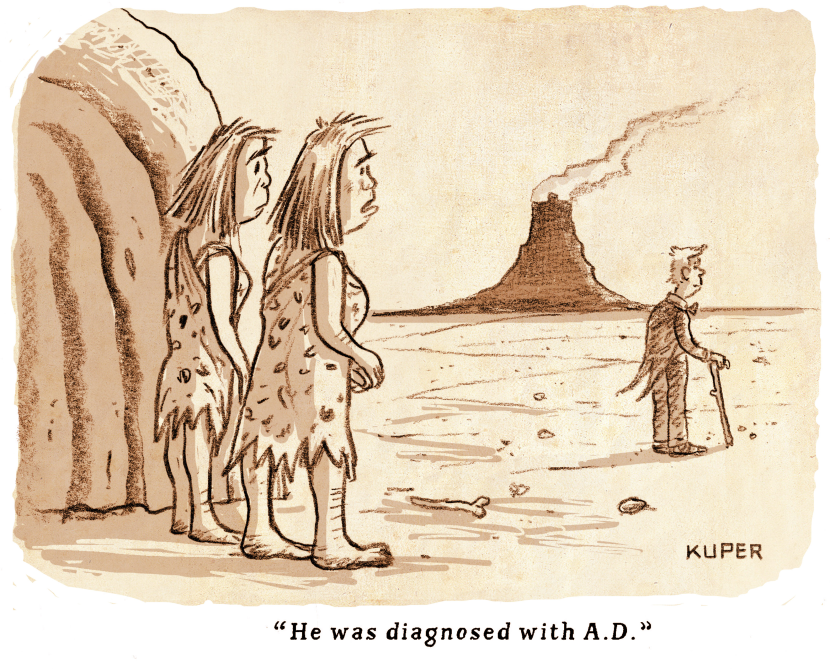
Declining attention spans have reached epidemic levels.

That’s what Adam Brown, co-director of the Center for Attention, Learning and Memory at St. Bonaventure University in New York, tells Time.

That’s certainly the case with me.

As I struggled to write the first three paragraphs of this column, I searched autotrader.com for a new car I don’t need or want; searched Facebook Marketplace for lakefront vacation homes I can’t afford; and visited Amazon.com to order more expensive treats for my Labrador, Thurber.

Like millions of others these days, I’m an easy target for clever companies that use the Internet and social media to lure me away from the tasks I should be focusing on.

The sophisticated algorithms that Facebook and others use are masterful at capturing my full attention by feeding me short video reels on car restorations, real estate investing and the dozens of other things they know I’m interested in.

What’s worse is that I’m a sucker for the dopamine hits I get every time my phone pings and I learn that somebody has “liked” or “subscribed” to one of the humorous “Thurber the Talking Lab” videos I’ve posted on youtube.com/@thurberstail.

The more I jump from focusing on one task to another, the shorter my attention span gets.

Brown tells Time that when you pause to check your phone, your brain has to shift gears to stop what it was doing and move to a new task.

He explains that the more we jump tasks, the more our brain wants to wander to find something new that captures its fancy.

Our declining ability to focus and concentrate not only makes it harder for us to get our daily work done, it is interrupting our ability to think critically about important issues.

Our duty as citizens is to participate in government policy by monitoring our elected officials and holding them to account.

That requires us to sort out the spin that politicians and others feed us from an accurate and truthful understanding of what is actually taking place — which requires concentration and reason.

For too many of us, however, the political “spin” is truthful if it supports our side but a total lie if it criticizes our side.

With more easy access to boundless information than ever before, we have the ability to explore other points of view, but we’re too impatient and distracted to spend any time doing so.

And we become ever more polarized as our politicians become ever more reckless and corrupt.

But there is hope!

Some of the experts tell Time that with a little effort we can renew our attention spans and focus.

If you need to concentrate on a task and your phone keeps interrupting you, turn it off or put it in another room.

If you are trying to finish writing a 70,000-word love story, which I have been struggling to do for some time, move to a writing nook in a spare room in your house and turn off the Internet completely.

I do this for three hours every morning and it is a heavenly way to concentrate deeply — for me, the only way.

Modern life is only going to get more complex and more distracting, but we can overcome these challenges — and for the good of us all, it’s urgent that we do so.

As a bonus, as we restore our attention spans, we’ll hopefully become more patient, thoughtful and civil with each other.

Copyright 2023 Tom Purcell, distributed exclusively by Cagle Cartoons newspaper syndicate.

Purcell, creator of the infotainment site ThurbersTail.com, which features pet advice he’s learning from his beloved Labrador, Thurber, is a Pittsburgh Tribune-Review humor columnist. Email him at [email protected].
Comments Off on Paying attention pays off

The Feds fail to see the light

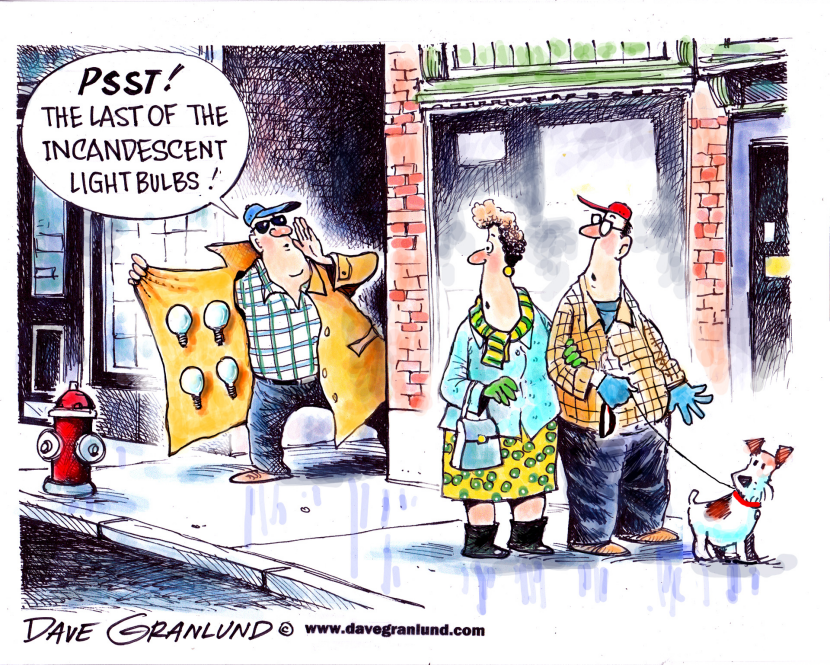
Goodbye, incandescent light bulb.

You had a heck of a run before the government decided you wasted energy and effectively outlawed you out of existence.

The incandescent bulb remains one of the greatest inventions in human history.

By sending an electrical current through a thin filament that resides inside a bulb to keep the oxygen out, light is produced.

Until Edison improved them, the pre-1870 bulbs were finicky, noisy and burned out fast.

He introduced a carbonized-bamboo filament that made the light bulb cheap, bright and able to last up to 1,200 hours.

We’d been pretty much using Edison’s light-bulb technology since 1870, so why did the federal government ban it on Aug. 1?

As electricity passes through the filament in the old bulb, you see, the filament gets white hot and produces light.

But heat is essentially wasted energy.

And since our electric energy comes from power plants, most of which still burn coal to produce it, that means your grandpa’s old incandescent lights bulbs are bad for the environment.

Edison’s once-cherished bulb has been on the endangered species list for years.

In 2007, reports Forbes, President Bush’s Energy Independence and Security Act “called for household light bulbs to have ‘about 25% greater efficiency.’”

Then in 2017 the Obama Administration added two new regulations that effectively would have phased out the making and sale of incandescent bulbs by January 2020.

President Trump gave the incandescent bulb new life by blocking Obama’s regulations, but then the Biden Administration blocked Trump’s block.

Therefore, as of Aug. 1, the incandescent light bulb — with the exception of appliance lights and bug lights — will slowly disappear from our daily lives.

Some conservative people have made a big fuss about the government giving Edison’s light bulb the death penalty, but, if the truth be told, it’s not the end of the world for most people.

Sure, consumers will have fewer choices and will have to spend more up front to buy long-lasting LEDs.

But LED bulbs have improved so much in recent years that half of U.S. households use them, according to the 2020 Residential Energy Consumption Survey.

I stopped using incandescent bulbs for indoor lighting on my own a few years ago. I replaced every bulb in my house with LEDs.

I also replaced the 500-watt halogen spotlights that could bake a turkey with commercial-grade LED spotlights.

It cost plenty to make these changes, but I cut my electric bill in half.

But the point here is, in my case, it was my choice to switch to LEDs, not the federal government’s.

Unfortunately, not being able to choose our light bulbs is just one part of the federal government’s war on appliance choice, according to MSN.

The Biden Administration’s water- and energy-saving zealots are now demanding that dishwashers use about half as much water as they currently use per load — which is how the Clinton Administration wrecked clothes washing machines beginning in 2001.

Mandating stringent efficiency standards for water heaters, furnaces, refrigerators, air conditioners and portable generators — standards that some argue are impossible to meet and that only make appliances work less efficiently — is the worst kind of government meddling.

If you prefer the free market and want geniuses, such as Edison, to come up with new solutions and more efficient products for your kitchen, laundry room and furnace room, as I do, then you’re out of luck.

The primary inventors these days are the busybody Washington bureaucrats dreaming up a spate of ever-nuttier appliance regulations.

Copyright 2023 Tom Purcell, distributed exclusively by Cagle Cartoons newspaper syndicate.

Purcell, creator of the infotainment site ThurbersTail.com, which features pet advice he’s learning from his beloved Labrador, Thurber, is a Pittsburgh Tribune-Review humor columnist. Email him at [email protected].
Comments Off on The Feds fail to see the light

To aliens, human wisdom Is unbelievable

Last week a whistleblower testified before Congress, alleging that federal officials have concealed evidence of unidentified flying objects from the public for decades.

I’m not sure why advanced beings would want to talk to us, but if they came today, I imagine their visit might go something like this:

“Take me to your leader!” the small, gray being with a large, lightbulb-shaped head says to me.

“He taking a nap,” I say. “We’re not sure he’s really in charge, anyhow.”

“Then take me to who is in charge,” says the alien.

“Nobody’s sure about that, either.”

“But I have important questions about your government and your people,” says the alien. “I wish to gather any wisdom that your people can teach me.”

After I stop laughing, I offer to do my best to help the creature understand human nature.

“Explain to me how your government works,” says the alien.

“I’m not sure anyone can fully explain that,” I say, “but I’ll give it a go.”

The alien nods, genuinely curious, and I continue.

“My country’s founders were very distrustful of government because they feared that some wicked humans would pursue government power to enrich themselves and to oppress their enemies. Such tyranny has been a common problem throughout human history.”

“That is a regrettable human trait?” asks the alien.

“For sure,” I say. “That’s why our founders established three branches of government — legislative, executive and judicial — to ensure that no one branch would become too powerful. There are various limits and controls on the powers of each branch, but people in Washington keep trying to get around the concept, anyhow.”

“Can you provide an example?” asks the alien.

“Our president recently tried to use $430 billion in taxpayer funds to relieve college debts held by a key voting bloc. But our Constitution says that only the Congress, not the president, has the ability to appropriate funds. The Supreme Court rightly blocked the president’s scheme.”

“This is a very inefficient form of government,” says the alien.

“It is more inefficient than you can imagine,” I say. “We are a representative republic, which means we the people elect representatives who are supposed to make our government accountable to us.”

“Supposed to?” says the alien.

“Our government has gotten so big, a lot of it doesn’t seem to be accountable to anyone,” I say. “Take the money we spend on our defense. The Washington Examiner says the Pentagon has failed five audits and can only account for 61% of its $3.5 trillion in assets.”

“Oh, my,” says the alien.

“It happens all the time,” I say. “Voters may vote for the legislators who write our laws, but once the laws are passed, they are interpreted by bureaucrats who create and impose all kinds of new costly regulations on our country. Nobody regulates the regulators. How’s that for the wisdom you want my people to teach you?”

“Look,” says the alien, glancing at the device strapped onto his wrist, “it’s been really great talking to you. But your galaxy is one of 2 trillion in existence. There surely has to be more-intelligent life out there than what I’m finding here.”

With that the alien jumps into a shiny round cylinder and disappears into the clouds,

“Come back!” I shout. “I didn’t even begin to tell you how much money human beings love to waste on war!”

Copyright 2023 Tom Purcell, distributed exclusively by Cagle Cartoons newspaper syndicate.

Purcell, creator of the infotainment site ThurbersTail.com, which features pet advice he’s learning from his beloved Labrador, Thurber, is a Pittsburgh Tribune-Review humor columnist. Email him at [email protected].

Comments Off on To aliens, human wisdom Is unbelievable

A/C hasn’t only made life cooler

As a heat wave hits America from coast to coast, it’s hot outside — but cool inside, thanks to the triumph of air conditioning.

For most of human history, there was little people could do to avoid heat.

During the day, it drove people outside of their homes to enjoy the shade of a tree or to take a refreshing dip in a lake or river.

At night, folks in cities slept outside on their porches, roofs and even fire escapes.

When I was a kid in the suburbs of Pittsburgh, few homes had air conditioning.

Our windows were always open with several fans bringing in the cool night air, as we drifted off to sleep comforted by their wobbling sound.

Air conditioning changed everything.

Homes used to have big windows, high ceilings, cross ventilation and large hallways to dissipate heat. This is no longer necessary, and most homes are sealed shut all summer long.

Commercial buildings used to have windows that opened but that isn’t necessary, either.

Today’s glass-plated buildings are designed to keep the light and air out, so that we are oblivious to whatever season it may be.

AC dramatically changed our politics.

Before air conditioning, Washington D.C. was so hot, the halls of Congress were empty from mid-June to September.

Now they can spend lots more time working on — as former New York Times columnist Russell Baker put it — “… the promulgation of more laws, the depredations of lobbyists, the hatching of new schemes for federal expansion and, of course, the cost of maintaining a government running at full blast.”

Without A/C, heat was the great equalizer. The rich suffered just as much as the poor.

All of that changed a little over 100 years ago when Willis Haviland Carrier invented air conditioning.

Department stores and movie houses were among the first to install A/C. Regrettably, the federal government soon followed.

It wasn’t until the 1920s that A/C began making its way into residential homes.

Today, 90% of American homes have air conditioning, which is why tens of millions of young and old folks have been able to safely migrate to steamy places like Florida and the baking deserts of the Southwest.

A/C can literally be a life saver.

Europe’s unbearable 2003 heat wave killed more than 30,000 people. That’s unconscionable at a time when a window A/C unit costs a hundred bucks at any big-box store.

The good news, according to Scientific American, is that by “2050, researchers expect the number of room air conditioners on Earth to quadruple to 4.5 billion, becoming at least as ubiquitous as cell phones are today.”

Here’s even better news: Technology innovation is making A/C units more efficient, less costly and less impactful on the environment.

Consider: A/C requires hydrofluorocarbons (HFCs) to cool the air.

HFC refrigerants are very effective at cooling the air inside our homes, but they are potent greenhouse gases that, as they leak from aging units, are bad for the environment.

An intense competition is under way among A/C manufacturers to replace HFCs with eco-friendly refrigerants and advanced filtration systems.

To further aid this effort, a global coalition of partners has joined hands to launch the Global Cooling Prize, a first-of-its-kind challenge to spur innovation in the A/C industry.

Meanwhile, A/C continues to be one of the greatest inventions to better the lives of millions — maybe the coolest American invention ever.

Copyright 2023 Tom Purcell, distributed exclusively by Cagle Cartoons newspaper syndicate.

Purcell, creator of the infotainment site ThurbersTail.com, which features pet advice he’s learning from his beloved Labrador, Thurber, is a Pittsburgh Tribune-Review humor columnist. Email him at [email protected].

Comments Off on A/C hasn’t only made life cooler