Change Voting Age to 16? Try 80!

San Francisco residents will vote on a measure in November to allow teenagers as young as 16 to vote in local elections.
That’s according to The Hill, which also reports that in recent years, two women in Congress introduced measures to lower the voting age nationwide to 16.

One argument for doing so is that 16-year-olds are permitted to work and therefore must pay taxes – but, unable to vote for political leaders, they have no representation regarding how their tax “contributions” are spent.

Another is that young people should be able to help shape the world that they will run in the not-so-distant future.

Those are fair points. My response: We should raise the voting age to 80.

Youthfulness is wonderful – but not without its challenges where voting is concerned.

In our era of instant mass communication with millions through smartphones, the opportunity for misinformation to spread is incredible.

The younger one is, the more likely one is to take for gospel truth anything that appears in social media news feeds. Clips from hyperbolic cable news programs, which are more interested in ratings than in truthful discussion of our national challenges, are hurting our country. 

In a representative republic, which requires an informed citizenry, the uniformed voter is challenging enough. But the misinformed voter risks giving political power to people who can do a lot of damage with it.

Critical thinking, which college education should teach, appears to be losing ground to uncritical “groupthink.” The younger and more passionate one is, the more one may be at risk of “getting facts wrong” and voting for silver-tongued politicians whose real goals are their own personal and financial gain.

An 80-year-old is much less likely to fall for such nonsense.

At 87, my father reads a print newspaper and does at least one crossword puzzle every day. He reads two or three books a week. His mind is sharp.

He has seen a lot of silver-tongued politicians come and go – and a lot of once-popular ideas do a lot of damage to a lot of people.

He remembers the hopefulness of the War on Poverty, for example. We’ve spent more than $20 trillion on it since the 1960s, and though it has helped millions avoid poverty in terms of food and housing, it has given us too much poverty of the spirit – too many broken families and children with limited opportunities to reach their fullest potential as human beings.

At 87, your bones ache. You find yourself in long conversations about roughage in your diet and good prostate health. You’re in no mood for nonsense. You aren’t easily swayed by the passions of the moment. You don’t feel the need to faint at political rallies – unless you forgot your nutrition drink that morning.

You’ve paid way too many taxes and seen billions wasted on everything from unnecessary wars to pipe-dream programs that enrich lobbyists who get their pals in Congress to fund them more than they have done any good.

You know you may not be here much longer. All you care about is what you can do to make our country’s future better for your children, grandchildren and great-grandchildren. And that is the lens you would use to evaluate candidates and ideas.
We would be better off as a country if our voters did more cranky critical thinking and indulged in less feel-good emotional nonsense.

Bring on the octogenarian voters!

Copyright 2020 Tom Purcell. Tom Purcell, author of “Misadventures of a 1970’s Childhood,” a humorous memoir available at amazon.com, is a Pittsburgh Tribune-Review humor columnist and is nationally syndicated exclusively by Cagle Cartoons Inc. For info on using this column in your publication or website, contact [email protected] or call (805) 969-2829. Send comments to Tom at [email protected].

Comments Off on Change Voting Age to 16? Try 80!

Coronavirus, Divisive Politics Have Autumn Optimism in Short Supply

I made it through the summer of COVID-19 – though I’m thankful that neither I nor any of my family have contracted the novel coronavirus.

I know that the summer doesn’t technically end until Sept. 22, but I got through June, July and August.
It wasn’t easy for me or anyone.

Every Monday, I went on a diet to lose my “covid 19” – as in the 19 pounds I put on during March, April and May – because by every Friday, I slipped back into the bad habits I’d developed during the spring.

What a blur the spring months were. I remember being shuttered in my house all day long, every single day. Thank goodness my consulting contract wasn’t canceled – I’ve been working on a communications project for a medical company – and I was able to keep busy during the day.

But I went stir crazy every night. I took a lot of naps. I watched a lot of movies. I consumed a bit more wine than normal – box wine – which, apparently, lots of others did.

According to USA Today, Americans began consuming inexpensive box wine not by the glass, but by the bucket.

I stumbled through the spring months but I managed to get through them with high hopes for the summer. I hoped warmer weather would help kill, or at least slow, the daggone virus, allowing us to get back to some semblance of normality.

How naive.

After this summer, I’m not sure the normal I’m referring to – when people could disagree with each other’s politics yet remain civil – will ever return.

I remember the awful George Floyd video in late May that resulted in initially peaceful protests. Briefly, America was galvanized. We all wanted better police training and vetting.

Now, riots and lawlessness are nightly occurrences in various cities. Statues are being torn down. Businesses are being burned. Capitalism, the alleged cause of all things wrong in America, is under attack. And many people, myself included, aren’t clear how initially peaceful protests morphed into what’s happening now.

Our politics get nastier by the day. People get into other people’s faces over the political candidates they support. They interrupt restaurant diners. They pull down political posters on private property.
Come on, America! That’s not who we are.

It’s no wonder, according to a recent Cato Institute survey, that 62% of Americans are afraid to share their political views. What a shame that in our country, which champions free speech as one of our most important and valued rights, millions of citizens are afraid to exercise it.

Meanwhile, old COVID-19 chugs along. I didn’t think America could get more divided – but, again, I am awfully naive.

People who argue that we overreacted to COVID-19 are slugging it out on social media with people who say the second wave is going to be plenty worse.

“Unfriending” has become the No. 1 activity on Facebook, to be sure.

All I know is that I somehow endured the spring of COVID-19, then I somehow got through the summer of COVID-19.

The way things are going, though, the autumn of COVID-19 is looking to offer more of the same.
I’m already on my way to the grocery store to stock up on a few boxes of pink zinfandel.

Copyright 2020 Tom Purcell. Tom Purcell, author of “Misadventures of a 1970’s Childhood,” a humorous memoir available at amazon.com, is a Pittsburgh Tribune-Review humor columnist and is nationally syndicated exclusively by Cagle Cartoons Inc. For info on using this column in your publication or website, contact [email protected] or call (805) 969-2829. Send comments to Tom at [email protected].

Comments Off on Coronavirus, Divisive Politics Have Autumn Optimism in Short Supply

Census 2020: Accurate Count Essential

I hope we get it right.

Data collection for the 2020 U.S. Census ends soon. This census, the 22nd in U.S. history, has faced its share of challenges and controversies.

The goal of the census has remained the same throughout its 230-year history: to count every person living in the United States.

The Constitution requires the federal government to do so every 10 years. The population count determines the number of U.S. House seats each state will have – which can become highly political.

When a state gains or loses seats, the party in power sometimes redraws congressional districts in hopes of making it impossible for the other party to win. That’s why census results are so important to politicians.

The census also determines how much federal funding your neighborhood will receive. The more people counted in a region, the more money that region will receive for roads, bridges and other government programs.

From the start, this census has faced no small number of controversies and challenges.

“From cybersecurity issues to administrative problems to a legal drama over a possible citizenship question, there are plenty of reasons to worry about the decennial head count,” noted The Atlantic in July 2018.

Cybersecurity certainly is a concern. This is the very first census that allows answering questions online – which may put respondents and their data at risk of cyberattack, particularly amid COVID-19, which has brought thousands of scammers out of the woodwork.

Wired reported in 2019 that “experts fear the (census) bureau is opening itself up to a range of new risks, from basic functionality and connectivity failures to cybersecurity threats and disinformation campaigns.”

Disinformation in the era of social media? I’m shocked.

To stay secure, remember that the Census Bureau will never ask for your full Social Security number, or your bank account or credit card numbers, or for money or donations – but scammers pretending to be from the bureau will.

Ten questions ask about respondents’ name, sex, age, race, telephone number and whether they own or rent. There are no questions about religion, whether one is a legal resident or whether one has a Social Security number.

When the Trump administration proposed adding a citizenship question, opponents cried foul. They said the question would intimidate noncitizens into not responding, which would result in undercounts in districts with many noncitizens. The administration eventually dropped that idea.

Here’s the latest battle, according to Roll Call: “Under pressure from the Trump administration to end the count early, the (Census) agency will conclude all enumeration efforts on Sept. 30, and then comb through data before wrapping up the whole process by Dec. 31 – half the time the agency originally anticipated after delaying its initial schedule because of the pandemic.”

Trump opponents say this could cause undercounting in minority communities. The administration says modern technologies and efficiencies enable an accurate count and meeting its statutory deadline of Dec. 31, 2020.

In an era when everything is hopelessly political and political opponents loathe and distrust each other, one thing really matters.

It’s essential that we get our census data right.

Copyright 2020 Tom Purcell. Tom Purcell, author of “Misadventures of a 1970’s Childhood,” a humorous memoir available at amazon.com, is a Pittsburgh Tribune-Review humor columnist and is nationally syndicated exclusively by Cagle Cartoons Inc. For info on using this column in your publication or website, contact [email protected] or call (805) 969-2829. Send comments to Tom at [email protected].


Comments Off on Census 2020: Accurate Count Essential

Join COVID-19 Homebuying Rush, Develop Common Sense

American home ownership is soaring, which is good for all of us.

Home sales slowed during the early months of covid-19, as millions of Americans stayed inside. In the past few months, however, with interest rates at historic lows, homes have been selling at a record pace, USA Today reports.

As Americans flee dense urban areas, they’re looking for room to spread out – what we call “distancing” these days – and big yards for their kids to play in.

I can’t wait for millions of erstwhile renters to become homeowners just like me.

The Journal of the Center for Real Estate Studies reports homeowners enjoy long-term social and financial benefits. Their children do better in school. Homeowners are more likely to participate in community and civic activities and vote than are renters. They experience health benefits and, for most, a sense of well-being.

“More recent studies have found that the wealth building effect of homeownership and the sense of control it provides to homeowners in a stable housing market affect homeowners’ mental and physical health in a positive way,” according to The Journal’s 2017 study.

But, in my opinion, the greatest benefit of owning a home is that it forces you to embrace common sense.

Common sense, as defined by Merriam-Webster, is “sound and prudent judgment based on a simple perception of the situation or facts.” Regrettably, common sense isn’t so common anymore, but home ownership is a fantastic way for people to master it.

No sooner do you make your first mortgage payment than you begin wondering if the popularity of socialist policies you were taught in school might make your future payments harder.

Higher income taxes would leave you less money for future payments. The economy, if hobbled by restrictive policies – Google “Venezuela” – would produce fewer jobs, affording you less opportunity for a better job to continue paying your mortgage and improving your home.

You’re certainly going to need a “rainy day fund” when you own a home. In fact, your home knows when you create one – and exactly how much you have in it.

You see, every home has a sadistic sense of humor and will do something – say, explode its terra cotta sewage line on Thanksgiving morning – that causes you to create new curse words but, most of all, forces you to become ever more sensible.

You’ll become suspicious of smooth-talking politicians who promise all kinds of freebies without explaining how they’ll pay for them. You’ll realize that you, a hard-working, homeowning taxpayer, will foot the bill. You’ll realize you’re being bamboozled.

That will make you irritable and your irritability will make you pay closer attention and demand answers. If every voter had the sensibility you now have, imagine how much better our representatives – our whole government – would be.

Imagine how much better the country would be if every American had “sound and prudent judgment based on a simple perception of the situation or facts.”

Be cautious buying your first home, however. Low rates and high demand have prices rising fast. Be sure you’re making a sound decision, as MarketWatch covers.

The best way to do that? Ask a homeowner for advice.

©2020 Tom Purcell. Tom Purcell, author of “Misadventures of a 1970’s Childhood,” a humorous memoir available at amazon.com, is a Pittsburgh Tribune-Review humor columnist and is nationally syndicated exclusively by Cagle Cartoons Inc. For info on using this column in your publication or website, contact [email protected] or call (805) 969-2829. Send comments to Tom at [email protected].

Comments Off on Join COVID-19 Homebuying Rush, Develop Common Sense

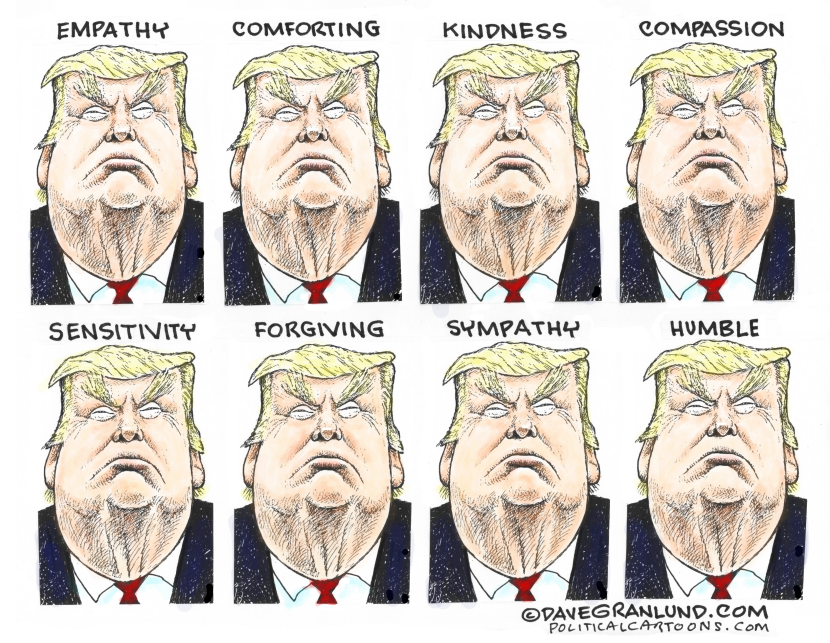
The Vanishing Art of Empathy

Joe Biden reminded the world what grace looks like.

Robert Trump, President Trump’s younger brother, died Saturday. In response, Biden tweeted:

“Mr. President, Jill and I are sad to learn of your younger brother Robert’s passing. I know the tremendous pain of losing a loved one – and I know how important family is in moments like these. I hope you know that our prayers are with you all.”

Biden’s grace reminds us that despite how heated political rhetoric can be, we’re all human in the end – and when tragedy and death occur, we must set our differences aside and celebrate our common humanity. We must demonstrate our empathy.

Regrettably, empathy is on the decline for many.

Just minutes after Robert Trump’s death, some Donald Trump opponents showed the opposite of compassion by tweeting that “the wrong Trump died.”

“Almost immediately after news of his death was released, tweets calling for the US President’s death were posted using the hashtag #wrongtrump, which quickly became the number four trending topic on Twitter,” reports the Advertiser.

Such class.

Politics tends to bring out the worst in us. President Trump, no stranger to vitriolic tweets, brings out the worst in a lot of people.

But empathy’s decline preceded Trump’s presidency. It’s been declining for years.

Dr. Helen Riess, author of “The Empathy Effect,” says empathy’s decline has to do with social media.

A Street Roots report on her book says “many of the neurological keys to feeling empathy are missing from the exchange” when we communicate through texts, email and social media posts.

Communicating electronically, not face to face, there’s no eye contact, and no paying attention to body language and facial expressions.

Without such visual emotional cues, Riess says, we’re left with words on a screen, leading to detachment, emotional indifference – and, we are all noticing more, some very nasty tweets.

“Interviews with internet trolls are shocking in that they reveal these online agitators don’t tend to view their victims as real people,” she writes.

An increasing number of people treat those they disagree with this way – which contributes to the decline of the civil discourse our country needs to address sizable problems.

Luckily, I live in Pittsburgh, where empathy is common. We hold doors open for strangers, wave other motorists in front of us, and stop our cars to help with roadside breakdowns.

But even in Pittsburgh, like the rest of the country, some people are getting ruder and meaner as online empathy wanes.

Viewing political opponents as inhuman, even evil, you may feel you have license to shout at – or even assault – them.

Aren’t we seeing more news stories about people assaulted for wearing the “wrong” baseball cap or supporting the “wrong” political idea?

Though Riess says empathy is being blunted, she emphasizes to Forbes that it can be learned.

That takes a conscious effort. We need to get out from behind our electronic devices and engage in person (harder in the covid-19 era, but important). We need to set politics aside now and then to celebrate our common humanity.

Just as Joe Biden did with his classy tweet to President Trump.

Copyright 2020 Tom Purcell. Tom Purcell, author of “Misadventures of a 1970’s Childhood,” a humorous memoir available at amazon.com, is a Pittsburgh Tribune-Review humor columnist and is nationally syndicated exclusively by Cagle Cartoons Inc. For info on using this column in your publication or website, contact [email protected] or call (805) 969-2829. Send comments to Tom at [email protected].
Comments Off on The Vanishing Art of Empathy

The Longer We’re Isolated, the Less Productive We Get

COVID-19 is getting old – particularly for employees who’ve been working from home for months.

That’s the finding of a Wall Street Journal article, “Companies Start to Think Remote Work Isn’t So Great After All.”

Early on, when millions stopped commuting and started working from home, many companies saw good results. Work was getting done. Most employees enjoyed it. Companies saw an opportunity to reduce future office overhead costs by making remote work part of their long-term strategy.

But that was before cracks began to emerge in the work-from-home model.

According to The Journal, initiatives now take longer. Hiring and integrating new staff is harder. Employees aren’t bonding or growing with each other. Efforts to collaborate online are going flat.

One CEO puts his finger on the problem: It’s “vital to have individuals in a room and see physique language and skim indicators that don’t come by means of a display screen.”

He’s exactly correct. Humans are social animals. We’re at our best when we collaborate face to face. Communication theorist Nick Morgan explains why in Forbes:

“(W)e share mirror neurons that allow us to match each other’s emotions unconsciously and immediately. We leak emotions to each other. We anticipate and mirror each other’s movements when we’re in sympathy or agreement with one another – when we’re on the same side. And we can mirror each other’s brain activity when we’re engaged in storytelling and listening – both halves of the communication conundrum.”

As a freelance writer, working from home for years, I find myself climbing the walls many days. Too much home-office isolation makes getting things done harder.

Though online meetings are helpful, I long for face-to-face interaction. The best ideas come from in-person brainstorming – as one person jots ideas on a whiteboard and others shout out concepts. You just can’t do that well in online meetings.

Furthermore, I’ve worked for clients I never met in person. Such relationships are never as rich as those in which I’m able to meet and work with clients in their offices over time.

In any event, as companies rediscover human nature’s limitations – that employees isolated at home aren’t as productive or as engaged with colleagues – they shed light on a growing problem in our society: Increasingly isolated inside our homes, particularly due to the virus, more people are interacting solely through social media and other online platforms.

And these detached means by which we now communicate enable our growing incivility.

This era of smartphones and social media – of nasty tweets and Facebook insults – is making rudeness, reports Psychology Today, “our new normal.”

The magazine cites research, published in the journal Computers in Human Behavior, that finds technology-enabled anonymity and “a lack of eye-contact” are chief contributors to our growing incivility.

This prolonged virus is getting old, for sure, and our patience is running thin. But I hope we will learn from the lessons it’s teaching us.

I long for a time when pubs are fully operational and we can discuss politics civilly and with open minds over pints of Guinness, with renewed hope that we’ll figure out how to maintain our humanity and civility in our increasingly nutty world when this virus is finally behind us.

Copyright 2020 Tom Purcell. Tom Purcell, author of “Misadventures of a 1970’s Childhood,” a humorous memoir available at amazon.com, is a Pittsburgh Tribune-Review humor columnist and is nationally syndicated exclusively by Cagle Cartoons Inc. For info on using this column in your publication or website, contact [email protected] or call (805) 969-2829. Send comments to Tom at [email protected].

Comments Off on The Longer We’re Isolated, the Less Productive We Get

America Means Freedom To Them

A friend of mine can’t for the life of him understand why some Americans are clamoring to replace capitalism with socialism.

Born in Vietnam, he was a young boy when he and his family barely escaped that communist nation amid gunfire.

America welcomed his family among thousands of Vietnamese refugees. His father, now in his 90s, sees his children living his vision of the American dream: they’re educated, with good jobs and flourishing families.

My friend said all that he and his family ever wanted was the freedom to rise or fall on their own merits – the freedom he was denied in his native country.

I met a number of people like my Vietnamese friend while living in the Washington, D.C., region for nearly 10 years.

My landlord there and his family barely survived civil war in Lebanon. We became friends and he told me his story.

His father had two successful businesses in Beirut until civil war broke out. The family lost everything and was stuck in a bombed-out apartment building for more than four years.

In 1977, I was a carefree teen in a Pittsburgh suburb. He was dragging dead bodies into the street and setting them on fire – the only way to get rid of the horrible stench.

Eventually, his father scraped enough money together to get the family to Cyprus. A few years later, they arrived in America and settled in Alexandria, Va. He and his siblings – who only a few years before were destined to become lawyers and doctors – took jobs as busboys, dishwashers and hotel cleaners.

They saved until they had enough money to open a bakery, which is flourishing still, affording them the means to live their version of the American dream.

I learned of another immigrant story in Alexandria, about a fellow who made it to America from Vietnam. Speaking no English, he worked as a janitor for a fellow immigrant who’d managed to purchase and run a handful of fast food restaurants.

The fellow learned English. He became a cook and server, then an assistant manager, then the head manager. He saved. Last I heard, he owned three Taco Bells and was living in a nice home in suburban Alexandria.

Two of my favorite people in Alexandria ran Pat’s Market, a small convenience store – brothers born and raised in India. The older brother had been a professor at a technical college, but when he and his wife married, they wanted better opportunities for their children. So he emigrated to America.

Unable to secure teaching work in Alexandria, he become a cook, busboy and janitor. He saved and brought his wife over. They saved more and brought his four siblings over, as well as his mother and father.

Eventually, they saved enough to purchase the market, as well as a motel. When I last spoke with them, both brothers beamed as they told me they had children in medical school.

There’s one thing all these wonderful immigrants have in common: They love America, because they love the freedom that allowed them to pursue happiness.

I wish native-born Americans eager to hand their freedom over to a socialist form of government could spend some time with them.

Millions of immigrants know how precious and volatile freedom can be – and why we Americans should be vigilant safeguarding it.

Copyright 2020 Tom Purcell. Tom Purcell, author of “Misadventures of a 1970’s Childhood,” a humorous memoir available at amazon.com, is a Pittsburgh Tribune-Review humor columnist and is nationally syndicated exclusively by Cagle Cartoons Inc. For info on using this column in your publication or website, contact [email protected] or call (805) 969-2829. Send comments to Tom at [email protected].

Comments Off on America Means Freedom To Them

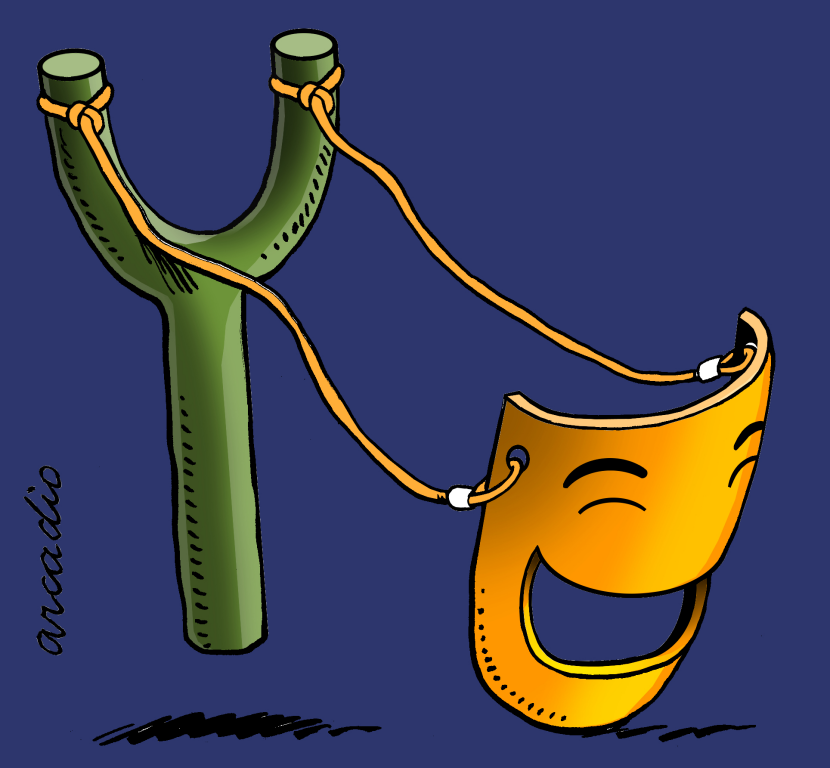
Laughter Really Is the Best Medicine

I missed it again. So did the rest of America.

July 1’s unofficial International Joke Day came and went without fanfare.

That’s regrettable, because we could all use a good belly laugh right now — which gave me an idea.
The other day, after hearing more doom-and-gloom news while driving, I said to the Apple CarPlay app on my truck’s stereo, “Hey, Siri, tell me a joke.”

Siri, Apple’s voice-activated digital assistant, replied, “My cat ate a ball of yarn. She gave birth to mittens.”

That’s an awfully corny joke — but I laughed so hard, I accidentally steered my truck onto some roadside gravel.

When you laugh like that, it’s impossible to be angry — or to dwell on whatever personal or business challenge may hang over your head

A belly laugh is an antidote to the self-seriousness that’s one of the greatest afflictions of modern times. And with a pandemic killing thousands and crippling the economy, plus protests and social unrest, we need belly laughs more than ever. One psychologist suggests practicing laughing with a friend because “utter seriousness can drive us to despair.”

Social media gives everyone a platform to share thoughts, which is good. But some self-serious people get awfully huffy with others who disagree with or challenge their thinking. They’re so serious and so certain that those who disagree with them are wrong, even evil, that they demonize their detractors.

They don’t try to converse, debate or understand differing viewpoints. “OK, boomer” and “OK, Karen” memes offer cases in point.

Humor and laughter, wonderfully infectious, keep us from falling into the trap of self-seriousness, promoting goodwill, thoughtfulness and civility. “Humor is an elixir, a tonic that is good for mind and spirt,” says an executive coach.

Laughter’s power is incredible — and that power lasts.

One of my favorite family stories dates to the early 1950s. Freddy, my dad’s uncle on his mother’s side — a real character — had a neighbor who was among the first in their area to buy a VW Beetle. Behind the neighbor’s endless boasting about his Beetle’s terrific gas mileage was conceit — essentially, “I’m smarter than you, which is why I’m getting way better gas mileage than you!”

Freddy began sneaking next door at night to fill the VW’s gas tank. As he did so, his neighbor’s boasts grew louder and more tiresome — the guy was ready to call the Guinness World Records people, as his VW clearly was getting more miles per gallon than any other Beetle on Earth.

After a month, Freddy continued sneaking next door. But now he siphoned gas from the Beetle’s tank — to the point where the neighbor thought his VW was getting worse gas mileage than any other Beetle on Earth.

We’re still laughing at the braggart neighbor who suddenly stopped bragging.

There’s more evidence of the power of laughter. More than 60 years ago, my mother first heard this joke, which she vividly remembers, and still laughs at:

A lady who’d been grocery shopping was walking to her car when she tripped and dropped a paper bag and two eggs fell out of the carton and broke onto the pavement. She was so upset that she started crying. A drunk walked up, surveyed the situation, and told her, “Don’t worry, lady. It wouldn’t have lived anyway. Its eyes are too far apart.”

We all need to laugh more. It really is the best medicine for our current ails.

Copyright 2020 Tom Purcell. Tom Purcell, author of “Misadventures of a 1970’s Childhood,” a humorous memoir available at amazon.com, is a Pittsburgh Tribune-Review humor columnist and is nationally syndicated exclusively by Cagle Cartoons Inc. For info on using this column in your publication or website, contact [email protected] or call (805) 969-2829. Send comments to Tom at [email protected].
Comments Off on Laughter Really Is the Best Medicine

Perpetual Anger No Help Amid Pandemic

Good grief: Apparently, America has yet to move past the anger phase regarding COVID-19.

In 1969, you see, Elisabeth Kübler-Ross described five stages of grief: denial, anger, bargaining, depression and acceptance.

According to Fast Company, researchers from Singapore, China, Australia and Switzerland analyzed more than 20 million Twitter posts from 7 million users in 170 countries to gauge people’s state of mind regarding the coronavirus.

Using keywords such as “Wuhan” and “corona,” they found “sky-high levels of fear” worldwide as COVID-19 emerged because “people were fearful of the virus and shortages of testing and masks.”

Then came anger: “first xenophobia, and then outrage around isolation and stay-at-home ordinances, the expression of which frequently involved colorful cursing.”

Months later, as much of the world returns to some semblance of normal, America remains stuck in the anger phase.

Why?

Because, it seems to me, news reports remind us daily that we should remain in a high state of terror as the virus continues its spread; because some government leaders keep arbitrarily changing COVID-19 rules, requirements and restrictions; and because millions of livelihoods have been decimated and it’s anybody’s guess how this is going to play out for their future.

I place myself in the “grumpy” phase because my country continues not responding well to the situation.

Rather than unite to defeat this common challenge, we are more divided than ever.

Some of us are still in the denial stage. Cocky, self-anointed experts pontificated well before useful data came in that the novel coronavirus is not much different than the regular flu, which impacts the old and weak every year, and that shutting down our economy to contain it was insane.

But as National Geographic reports, “the latest best estimates show that COVID-19 is around 50 to 100 times more lethal than the seasonal flu, on average.”

On the other end of the spectrum are those who’ve way too willingly “accepted” every restriction placed on our freedoms by bumbling political leaders who seem to enjoy their absolute power a little bit too absolutely.

The truth, as always, is somewhere in between these extremes, but we aren’t having much luck locating it. In the midst of a presidential campaign, misinformation and finger-pointing are making the situation worse, not better – and we continue not rising to this unique challenge.

I’m grumpy, because I feel like I’m stuck in the middle of this chaos.

I usually mind my own business in public, but I found myself agitated by a young man at a store who made zero effort to wear a mask. I’ve read the debates about such masks’ effectiveness, but I wear one because it’s a small sacrifice to make in an unusual time.

If that young guy gets COVID-19, he’s unlikely to suffer lasting damage. But what if he gives it to an elderly customer who is?

Likewise, I’m agitated by tattletales calling government hotlines, eagerly reporting people and establishments who aren’t following restrictions to a “T” – just as I am by people in such establishments, such as pubs, making zero effort to distance and not spread the disease.

Come on, America! We can do better than this.

Surely, we can protect those most at risk, even as we reopen an economy that cannot sustain continuous, massive disruption for much longer. Surely, we can agree on a nuanced, sensible risk-minimal approach that balances risk against economic disaster.

If we can’t figure out a basic, effective path forward, God help us in navigating larger challenges headed our way.

Good grief!

Copyright 2020 Tom Purcell. Tom Purcell, author of “Misadventures of a 1970’s Childhood,” a humorous memoir available at amazon.com, is a Pittsburgh Tribune-Review humor columnist and is nationally syndicated exclusively by Cagle Cartoons Inc. For info on using this column in your publication or website, contact [email protected] or call (805) 969-2829. Send comments to Tom at [email protected].

Comments Off on Perpetual Anger No Help Amid Pandemic

Amid Pandemic, Take Pen in Hand

I can’t recall the last time I wrote or received a handwritten letter – but it’s time to send such letters again.

The reasons why the handwritten letter died are obvious: e-mail, text messaging and cellphones. With how quick those innovations make whipping off a note, why would anybody take an hour to hand-write one?

But how much better off might we be if we started sending such letters again?

I’ve kept every handwritten letter I ever got, in boxes in my attic. One Saturday in 2000, when I was moving from Pittsburgh to Washington, D.C., organizing and storing stuff soured my mood.

Until I stumbled upon a handwritten letter I’d received in 1985.

It was from a fellow I’d gone to Penn State with, who’d become an editor in Bangor, Maine. As I read it that Saturday in 2000, it took me back 15 years – to exactly who I was at age 24. I laughed out loud reading it.

I also found a stack of pink envelopes from two ladies, Bonnie and Tracey, who attended the same college as my friend Griff. An anonymous letter he had them send me during our freshman year in 1980 led to a robust correspondence, and I dated Bonnie for a spell after we graduated. Rereading those letters that Saturday in 2000, I laughed so hard that tears tumbled down my face.

The handwritten letter is personal and deeply satisfying in ways that electronic communication will never be. Email, no matter how well crafted, simply isn’t memorable.

Consider a letter my grandfather handwrote on Nov. 28, 1928.

With great eloquence, he consoled his best friend’s wife on the loss of her mother. He wrote that letter when he was 25 – nine years before my father’s birth. My grandfather died when my father was only 3. That letter is among the most cherished items I have from a grandfather I never got to meet.

Now, during the COVID-19 pandemic, the handwritten letter has begun a comeback. Miss Manners and others encourage writing to thank the many people battling the virus on the front lines.

They also suggest writing to elderly nursing-home residents and others who’ve been isolated and shut in for months – because simple kindness and compassion can benefit both writer and recipient in these unusual times.

Could the handwritten letter help us address deeper challenges, too? Instead of posting strident snark on social media, why not take time to think things through and explain your viewpoint to a movement leader, a mayor or anyone else unaccustomed to receiving thoughtful, heartfelt letters?

Writing by hand calms the thinking process. It brings out our better angels. It helps convey clarity and bring understanding to complex matters.

I’ll bet writing by hand would help letters’ senders and recipients alike begin to realize they have more in common than not – that our communities are not as divided as we may think. Most simply have different ideas for achieving the outcomes we all desire.

We won’t know until we try. So, pick up a ballpoint pen and write some “thank you” cards to people who’ve sacrificed for all of us during the pandemic. Then write some memorable, uplifting letters to folks who’ve suffered in isolation for months.

That’s a good start, anyhow.

Copyright 2020 Tom Purcell. Tom Purcell, author of “Misadventures of a 1970’s Childhood,” a humorous memoir available at amazon.com, is a Pittsburgh Tribune-Review humor columnist and is nationally syndicated exclusively by Cagle Cartoons Inc. For info on using this column in your publication or website, contact [email protected] or call (805) 969-2829. Send comments to Tom at [email protected].

Comments Off on Amid Pandemic, Take Pen in Hand