The End of the Handshake? 

After more than a year of strict COVID mandates, my state has triumphantly reopened.

But, some argue, we better think twice before we offer a celebratory handshake.

On Memorial Day, Pennsylvania began allowing restaurants, stores, sporting events, schools and other organizations to once again operate at 100% capacity.

However, some are telling us it would be best if certain activities, such as our greeting rituals, never go back to normal.

In April 2020, Dr. Anthony Fauci, director of the National Institute of Allergy and Infectious Diseases, said that as our country opens back up, some behaviors, such as the handshake, must change.

“When you gradually come back, you don’t jump into it with both feet,” Fauci told podcast host Kate Linebaugh on The Journal. “You say, what are the things you could still do and still approach normal? One of them is absolute compulsive hand-washing. The other is you don’t ever shake anybody’s hands.”

Fauci explained that an end to the handshake would prevent the spread of germs and “probably would decrease instances of influenza dramatically in this country.”

From a purely antiseptic standpoint, Fauci is correct.

According to a report from the Centers for Disease Control and Prevention , Americans aren’t very good at killing germs by properly washing their hands with hot soap and water.

But if we give up our handshake ritual entirely, what else might we be giving up?

Paleoanthropologist Ella Al-Shamahi, author of “The Handshake: A Gripping History,” tells MSN that the handshake is “rooted in our DNA.”

“The handshake is one of the gold standards of human connection and that is why we see it so much all over the world,” she says.

Before COVID, business magazines stressed the importance of a proper handshake to make a good impression on others.

A 2011 Huffington Post article titled “The Power of a Handshake: How Touch Sustains Personal and Business Relationships” explains how the power of touch sustains personal and business relationships.

It cites University of Iowa research that found that the handshake is rooted “in the age old need to connect with other people.”

The handshake is “a first step toward affiliation: the building of a bond with another person.”

It is “the foundation of trade with others.”

The article further explains that our feelings about someone else, and the pleasure we feel in cooperating, all begin with a handshake.

That surely has been my experience.

When someone greets me with a cold, clammy handshake and a weak grip, my impression of that person is not positive.

When someone’s grip is too tight and he or she looks me in the eyes too eagerly, my impression is that he or she is trying too hard and lacks confidence.

Then there is the individual whose grip is just firm enough — whose eye contact is perfectly natural and confident — who begins building in me an immediate sense of well-being and trust.

Quite simply, despite the risks, the handshake has long been a powerful form of human communication.

Ironically, as the world opens back up — and the handshake ritual is discouraged — National Handshake Day is just three weeks away.

Celebrated the fourth Thursday of every June since 2005, it pays homage to the multi-generational ritual of using the handshake to reach out and welcome others and offer a gesture of friendship, peace and forgiveness.

Goodness knows we could use more friendship, peace and forgiveness in these divisive times.

How much harder will it be to cultivate all three in a world in which the handshake is no longer welcome?

Copyright 2021 Tom Purcell, distributed exclusively by Cagle Cartoons newspaper syndicate.

Tom Purcell is an author and humor columnist for the Pittsburgh Tribune-Review. Email him at [email protected].

Comments Off on The End of the Handshake? 

Saving Our Elders from the Dirty Rotten Scammers

I just got another scam phone call from someone pretending to be from the Social Security Administration, and my blood is boiling.

When I answered my phone — from the 480 Area Code in Arizona far away from Pittsburgh — a recording said, “Your Social Security number has been compromised. Stay on the line and an agent will be right with you.”

When the agent, speaking in broken English, asked for my name and address, I got even madder.

Why?

First, having done cybersecurity assessment and communications work the past few years, I knew that the Social Security Administration will never call me or anyone — unless you’re having an ongoing discussion with a legitimate government employee.

Second, another telltale sign that it was a scam was that the scammers had no idea what my name or address was.
Third, I knew that elderly Americans are more likely to fall for such an obvious phone scam.

For example, my heart broke recently when I read about a 79-year-old Pittsburgh woman who got taken in by scammers.

According to this Triblive article, she received a phone call in June 2019 from a person who identified himself as an agent with the U.S. Drug Enforcement Agency.

The “agent” told her that her identity had been stolen and that she was inadvertently involved in an international drug trafficking and money laundering scheme.

The dirty rat then persuaded her to wire massive sums of her life savings to a second fake DEA agent or “she would be investigated by the DEA and would lose her Social Security number.”

According to the lawsuit that the victim has filed against her bank for not questioning her about her huge transfers, she was taken for $4.3 million.

Look, we all have to step up our understanding of the growing risk of cyber-scammers — and we need to help our elders learn how to protect themselves from rapidly increasing threats.

The FBI reports that since many older Americans have large nest eggs and homes that are paid off, they are ripe targets.

Many elderly persons who are friendly and trusting — and wary of being rude to anyone who calls on the phone — are especially at risk in our era of smartphones, email and social media.

They are victims of identity theft, charity fraud, health care scams, “You’ve won” scams and government-imposter scams of every kind.

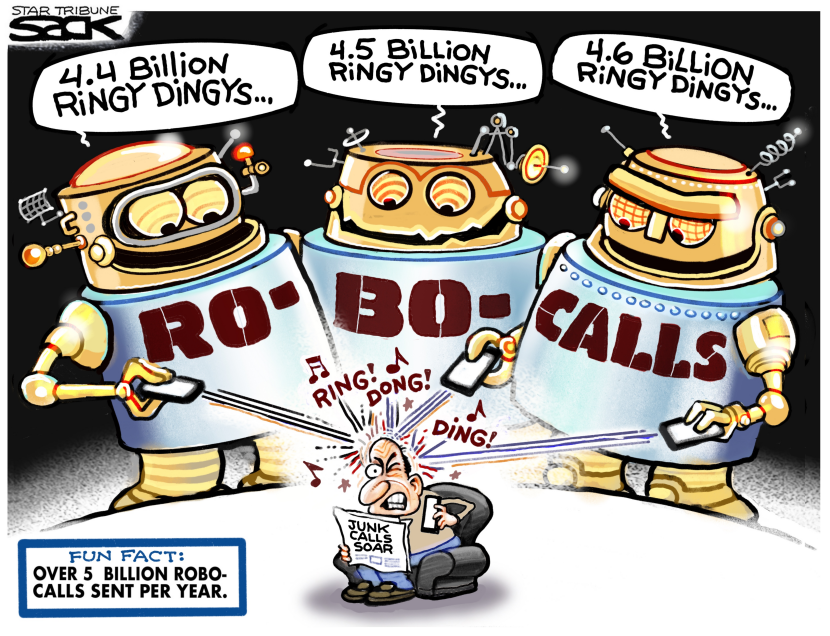
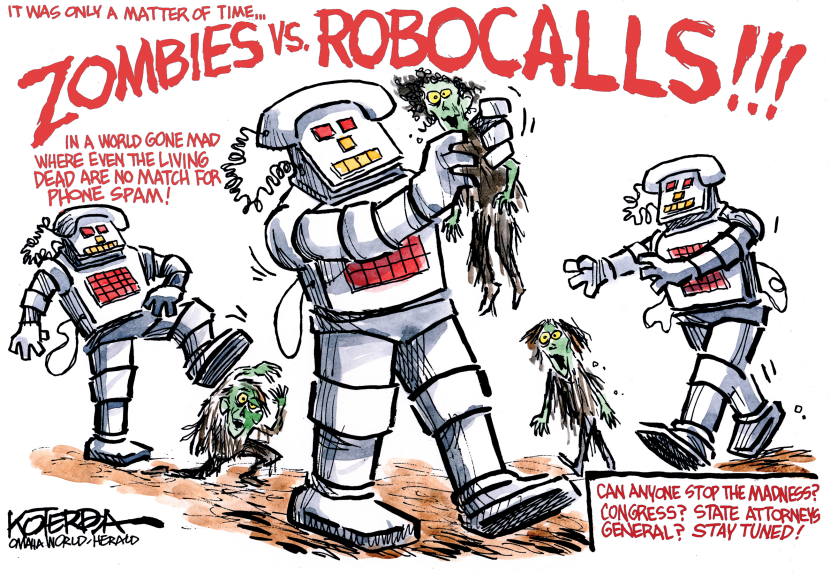
Scammers use fraudulent smartphone texts, spoofed emails that appear to be from people you trust, or robocalls and other phone scams using spoofed phone numbers.

I called back the 480-area-code number that had called me with the Social Security scam. It was the number for a construction firm in Arizona.

The scammers were able to spoof that legitimate phone number, as they do millions of other numbers, to fool their victims.

Helpful resources are available to help all of us learn to better identify scams and, most important, to help us protect our vulnerable elderly family members and friends:

The U.S. Federal Bureau of Investigations offers useful tips on how to stop scammers who prey on the elderly dead in their tracks.

So does the Cybersecurity Information and Security Agency.

This brochure offers useful cybersecurity information to older Americans.

And the U.S. Federal Trade Commission’s Pass It On Campaign enlists people 65 and older in an effort to recognize and report fraud and other scams.

All these Websites can help us make sure our elders are alert to the dirty tricks of the rotten scammers and know how to avoid them.

Copyright 2021 Tom Purcell, distributed exclusively by Cagle Cartoons newspaper syndicate.

Tom Purcell is an author and humor columnist for the Pittsburgh Tribune-Review. Email him at [email protected].
Comments Off on Saving Our Elders from the Dirty Rotten Scammers

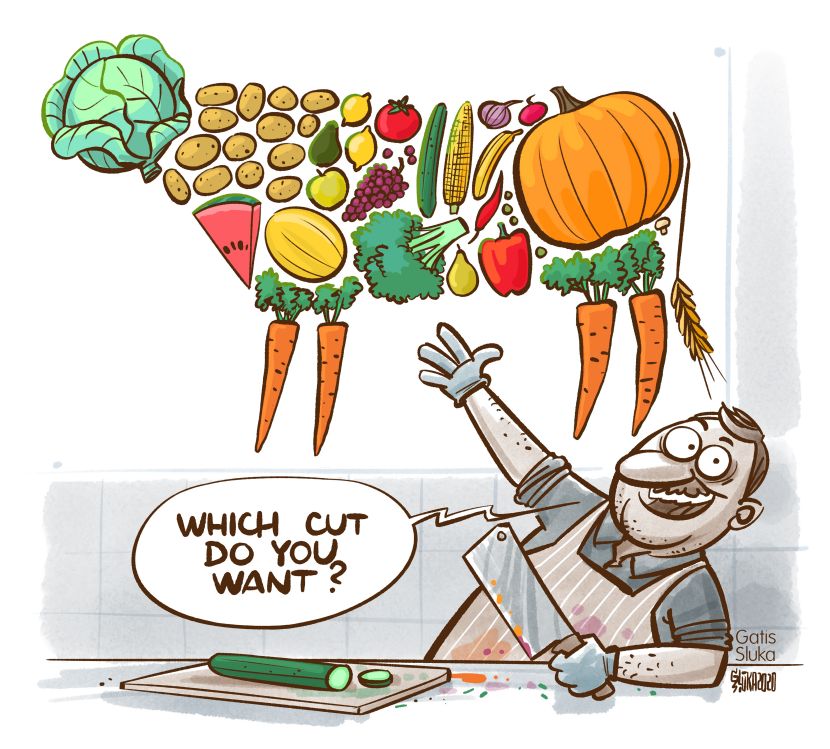
My Beef With Beef

There are few things I enjoy more than grilling up tasty steaks for a group of close friends, but red meat isn’t going to be on the menu this summer.

The cost of beef is higher than ever.

According to Bloomberg, “Food inflation has been inching up for months, driven by soaring commodity costs, costlier transportation and challenges securing labor.”

“Inching up” is putting it lightly.

“Soaring” would be a more accurate description — thanks to COVID disruptions and the crippling government lockdown policies enacted because of them.

Restaurant Business explains that in the early months of COVID, restaurants, the largest buyers of beef, shut down – slashing demand.

If that wasn’t bad enough, says Restaurant Business, the virus spread among workers in Midwest meatpacking plants and forced them to shut down or drastically cut production in 2020.

So why are beef prices soaring in 2021 as restaurants open and life slowly begins to get back to normal?

Along with the law of supply and demand, you can thank generous government unemployment policies.

Butchering is a labor-intensive process — but this year meatpacking plants have been unable to fill thousands of job vacancies because, in many places, the combination of state and federal unemployment payments makes not working more appealing for many than working.

Since packing plants can’t fill thousands of job vacancies, they can’t process enough meat to meet the growing demand.
And since packing plants are buying less meat, cattle producers are slaughtering fewer cattle.

As growing demand for beef collided with reduced supply this spring, prices soared — and they’re likely to keep going up, according to Jason Cheplic, the third-generation owner of my favorite local butcher shop, Cheplic Packing, Inc.

“In the 60 years we’ve been in business, beef prices have never been higher,” says Cheplic. “Pre-COVID we ran a boneless Choice ribeye special for $9.99 a pound. To cover our payroll and business costs, we must now charge $13.29 a pound — at profit margins that are lower than they’ve ever been.”

That’s a 40 percent price increase in a little over one year — and Cheplic’s price for ribeye is still far better than what chain supermarkets are charging.

One local Pittsburgh chain is charging $15.99 a pound for the same cut of meat.

What this means is that weekend grill and barbecue aficionados like me are experiencing some serious pain in our pocketbooks — and stomachs.

With the summer just ahead and life slowly beginning to return to normal, I was looking forward to hosting many evening barbecues.

Before COVID, there were few things I enjoyed hearing more than the words, “Oh, my, Tom, this juicy ribeye steak is as tender as butter!”

But this year, I hope to at least hear, “Tom, this is the most delicious budget burger meat I have ever had!”

Or: “Tom, these low-cost chicken thighs are the tastiest really cheap food you’ve ever made!”

And possibly: “Tom, this meat is delicious, but why does it have an impression from a Goodyear tire tread?”

Hey, nothing but the best for my friends!

In any event, industry experts are predicting that beef prices are going to get plenty worse before they get better.

Until they come back to Earth, we weekend grill masters will have to get extra creative to keep our barbecue parties rolling along.
By the way, I was kidding about barbecuing road kill.

Copyright 2021 Tom Purcell, distributed exclusively by Cagle Cartoons newspaper syndicate.

Tom Purcell is an author and humor columnist for the Pittsburgh Tribune-Review. Email him at [email protected].
Comments Off on My Beef With Beef

Fighting Off Cyberscammers

Everyone is at risk of being scammed now.

The recent ransomware attack on Colonial Pipeline was a wakeup call for everyone in America.

Ransomware is malicious software that cyberscammers use to encrypt a company’s or individual’s data and block access to it until a hefty sum of money is paid.

Google the words “ransomware attack” and you’ll see a sizable list of big companies and entire cities that have been completely shut down by increasingly sophisticated scammers.

But it isn’t just businesses and government agencies that are at risk.

In the digital world we all live in, cyberscammers are working overtime to come up with ever-more-clever schemes to defraud us.

As I was writing this column, my email queue pinged.

I opened Outlook and saw a special credit-card offer from my bank — except that it wasn’t from my bank. It was from an Internet address that had nothing to do with my bank.

“Click here to apply” is what the email urged me to do. I didn’t click it, of course, because this is a common tactic that scammers use to gain access to your computer.

By clicking the link, I would have downloaded a malicious code onto my computer that would have given cyberscammers the ability to root around, hoping to find login and password details to gain access to my banking or credit card accounts — and take me to the cleaners!

Here’s another recent cyberscammer attack that happened to an elderly family member.

She hired a paving company to resurface her driveway. We checked the company out and it came highly recommended by several customers.

The paving company emailed her a copy of the contract, asking her to complete it, scan it and return it. The terms were simple: no payment until the job was completed to her satisfaction.

But the next day, “the paver” sent her another email request:

“Please send a 50% deposit and kindly snap the check and send to my email.”

I knew this was a scam right away. The telltale words were “kindly snap.”

The term “kindly” is a word cyberscammers commonly use. The word “snap” is awkward, and awkwardness is another telltale sign of a scam email.

It turned out that the paving company owner’s email account had been hacked and that the scammer had contacted several other customers hoping to pull the same scam.

How did the cyberscammers breach the company’s computer? The owner may have clicked on malicious code in a fake email from his bank or some other institution he trusted.

Or he may have made the mistake of creating an email password based on his telephone number, address or birth date — details a cyberscammer could easily guess.

The key takeaway from this scam is that all of us are now under attack every moment of every day.

Regrettably, we now need to be suspicious of every email, text and phone call we receive.

We especially need to protect elderly family members and friends who are far too trusting in an untrustworthy era.

There are steps everyone needs to take to stop cyberscammers.

The federal Cybersecurity and Infrastructure Security Agency offers basic cyber tips that we can begin today.

CISA offers additional tips to protect older Americans.

Everyone is at risk of being scammed now — and everyone needs to know how to fight back.

©2021 Tom Purcell. Tom Purcell, author of “Misadventures of a 1970’s Childhood,” a humorous memoir available at amazon.com, is a Pittsburgh Tribune-Review humor columnist and is nationally syndicated exclusively by Cagle Cartoons Inc. For info on using this column in your publication or website, contact [email protected] or call (805) 969-2829. Send comments to Tom at [email protected].

Comments Off on Fighting Off Cyberscammers

Why Adults Should Play in the Woods

The retired science teacher jumped up from his hiding spot in his garden and grabbed my arm before I could escape.

It happened in the mid-1970s when I was playing a game we neighborhood kids invented called “Fugitive.”

Each summer night 15 or 20 of us would participate. Whoever drew the short straw was assigned to be the guard at the base camp.

Everyone else scattered into the woods. The goal was to touch a tree in the heart of the base camp before the guard could identify you.

We hid behind hills and rocks and crawled on our knees and bellies in the dirt and grass hoping to avoid detection.

That’s exactly what I was doing near old man Miller’s garden, unaware he’d been lying in wait for the lousy kids he accused of trampling his garden plants.

Mr. Miller demanded I take him home to my parents so he could lodge a complaint, so, unable to escape his firm grip, that’s what I did.

That old memory came back to me as I read about yet another study that found that because children are not getting enough exposure to “green spaces” or nature, they appear more likely to develop things like attention deficit hyperactivity disorder (ADHD).

As any mother knows, this is scientific confirmation of the obvious.

For many years – until our kids’ minds and bodies became captives of the Digital Age – childhood play meant spending the summer in the woods climbing trees and building forts.

We were never bored or “hyperactive” because we were constantly outside stimulating our minds and imaginations and nurturing every one of the senses we use to navigate and understand the world.

“We don’t yet know why it happens,” says Richard Louv, author of “Last Child in the Woods,” “but when all five of a child’s senses come alive, a child is at an optimum state of learning. Creativity and cognitive functioning go way up.”

Woods explains that if kids can’t unleash their senses in nature, they lose their sense of being rooted in the world.
Rooted in the world?

That reminds me of terms that are not used much anymore, such as “down to earth,” which Merriam-Webster defines as “demure, humble and unpretentious” and “earthy,” which Merriam defines as “plain and simple in style.”

The origin of these terms is not clear, but being in the woods certainly teaches one to be humble and unpretentious.

Unfortunately, though, as Americans have moved from the countryside to large metros, millions of us have lost any sensual connection with the woods and nature.

As a country we need to get back to the woods more as adults. We need to go camping and wake up on a chilly, dewy morning agitated by the lack of urban comforts.

We need to be humbled and brought back to our “common senses” by the sounds, views, smells and demands of nature – so that maybe we can avoid some of the pretension and smugness that is negatively impacting our public discourse and bringing us so much government nonsense.

Incidentally, the night old man Miller brought me home, I thought I was in big trouble.

But my parents laughed at the old man’s angry pretentiousness as soon as he left. It was the first time in my childhood they didn’t side with an adult over me.

Lucky for me, both of my parents are down to earth!

Copyright 2021 Tom Purcell. Tom Purcell, author of “Misadventures of a 1970’s Childhood,” a humorous memoir available at amazon.com, is a Pittsburgh Tribune-Review humor columnist and is nationally syndicated exclusively by Cagle Cartoons Inc. For info on using this column in your publication or website, contact [email protected] or call (805) 969-2829. Send comments to Tom at [email protected].

Comments Off on Why Adults Should Play in the Woods

A Mother’s Comfort

Scientific American describes my mother to a T.

An article titled “The Incredible Importance of Mothers,” by social scientist Melanie Tannenbaum, lays out the argument that a mother’s comfort – not just meeting basic needs, such as providing food and shelter – is essential to the development and wellbeing of children.

Tannenbaum cites the work of social scientist John Bowlby, who in the 1950s “determined that our attachment to parental figures (in particular, he argued, to mothers) plays a huge, critical role in our ability to learn, grow, and develop healthy adult relationships.”

She also cites the work of psychologist Harry Harlow, who was strongly influenced by Bowlby’s attachment theory. Harlow believed that we humans have a core motivation for love and affection as children and that a mother’s comfort is what develops our sense of security – which is the key to living a happy, productive and well-adjusted life.

I have many fond memories of being comforted by my mother.

I’m the third child and only boy in a family of six children, so there was a lot of competition for my mother’s attention.

But I vividly remember one warm, sunny spring day while my two older sisters were at school and I got to have my mother all to myself.

I must have been four at the time and she was pregnant with my sister, Lisa.

As I played with my red wagon, which I loved, she was whistling as she tended to the flowers in the backyard.

She was happy by nature and loved to whistle – a skill she learned from her father and passed down to me.

I remember being completely content because she was nearby, comforting me with her sunny presence, as I was left free to roam and explore the art of playing.

I was very lucky to grow up as I did at a time when even a large family could get by on one income.

This allowed my mother to stay home, live her dream of having a big family and devote her entire life to caring for and comforting her children.

Her extended family is still blessed daily by her comforting skills.

She has 17 grandchildren and nine great-grandchildren and her home is a wonderland to each of them – a place of unconditional love and laughter.

At her 80th birthday party four years ago, all of her family members shared stories about how her nurturing and love had touched their lives in a video masterfully edited by one of my nephews.

It was eye-opening – and at times laugh-out-loud funny – to see the profound and varied impact she has had on each of us.

I’m extremely blessed to still have my mother in my life – still comforting me when the challenges and setbacks of life affect me.

She still cheers me on when the risks that I take in business – risks I’m able to take because of the deep sense of security she and my father gave me – blossom into success.

Since the beginning of time, the love and comfort of mothers has been the key to all things great and good in the world – the very best gift a mother can give to her child.

I hope and pray every child can be as comforted as my mother still comforts me.

Happy Mother’s Day!

©2021 Tom Purcell. Tom Purcell, author of “Misadventures of a 1970’s Childhood,” a humorous memoir available at amazon.com, is a Pittsburgh Tribune-Review humor columnist and is nationally syndicated exclusively by Cagle Cartoons Inc. For info on using this column in your publication or website, contact [email protected] or call (805) 969-2829. Send comments to Tom at [email protected].

Comments Off on A Mother’s Comfort

A Hunger for Normalcy

My recent trip to Florida was glorious for one simple reason: it was normal.

You see, I had been hungering for a friendly social gathering for months – any gathering involving family, friends, business colleagues or old classmates would do.

I had been hungering for the simple ability to freely assemble with my fellow humans, as I did routinely before COVID struck.

My family is still smarting over the loss of our Thanksgiving feast. For the first time in six decades, my parents’ house wasn’t packed full of 30 to 40 people.

My holiday dinner last fall involved me showing up with Thanksgiving takeout for four.

We did count our many blessings. We were all healthy and well. But it was surreal to be in such an empty house eating processed turkey and stuffing.

This spring, as the COVID vaccines are being rolled out, our family gatherings began to approach normalcy.

My mother and father were able to host a modest Easter event attended mainly by family members who had got their COVID shots.

All of us were thankful to finally be able to enjoy some semblance of social “normality” again.

But it wasn’t until I flew to Florida recently to visit a few high school pals that I was reminded of how enjoyable our pre-COVID lives were.

My first trip anywhere since February of 2020, Florida gave me a taste of the basic freedoms many of us have been missing for two reasons:

First, before I flew to Pensacola, I had received both COVID vaccine shots.

Second, Florida Governor Ron DeSantis had eased many COVID restrictions in his state long ago.

For instance, in Florida masks are not required by law. Schools have been open for in-person learning since last August.

Restaurants and bars have been operating at 100 percent capacity since September. And the beaches were never closed.

Unlike my state, Pennsylvania, life in Florida was already semi-normal before the vaccines arrived.

Given his anti-lockdown sentiments, it’s not surprising that DeSantis thinks the messaging on vaccines from our public health experts has been “horrific” – and backwards.

“The messaging should be, get a vaccine because it’s good for you to do it,” he says. “It works. You’re not going to have to be doing anything abnormal. You can live your life….”

DeSantis says that the “get-back-to-normal” message is muddled when you tell people after they’ve got the vaccine that they still have to wear masks, social distance and avoid social gatherings larger than a bridge club.

Whether you agree or disagree with DeSantis, you have to admit that he’s correct when he says the official messaging on vaccines has been confusing – and still is.

According to Business Insider, just two weeks ago Dr. Fauci said “it’s important for all Americans – both vaccinated and unvaccinated – to continue avoiding crowds and socially distancing until we know for sure that vaccinated people don’t spread the virus.”

I’m glad I’m not Governor of Florida. I’m certainly glad I don’t have his and Dr. Fauci’s responsibilities.

I don’t know when – or, at this point, if – our lives will ever get back to some semblance of normalcy.

All I know is that for a few days I was able to sit outside in the warm Florida sun enjoying live music – and enjoying the simple freedom to gather and converse in a way I hope we’ll all be free and safe to do again soon.

Copyright 2021 Tom Purcell. Tom Purcell, author of “Misadventures of a 1970’s Childhood,” a humorous memoir available at amazon.com, is a Pittsburgh Tribune-Review humor columnist and is nationally syndicated exclusively by Cagle Cartoons Inc. For info on using this column in your publication or website, contact [email protected] or call (805) 969-2829. Send comments to Tom at [email protected].

Comments Off on A Hunger for Normalcy

The High Price of a Modest Roof

The cost of construction materials has gone through the roof – if you can still afford a roof, which isn’t very affordable right now.

All I wanted to do was build a modest roof over my modest deck at my modest house.

But a year of government pandemic policies and the law of unintended consequences have foiled my little dream by driving up the price of lumber.

According to Fortune, the costs of items like plywood and 2x4s increased 193 percent since last spring 2020 and are not done spiking yet.

Thanks to a perfect storm created by the COVID pandemic, two things conspired to drive up the price of lumber.

First, strict government lockdowns and public health restrictions at sawmills slowed down production and limited supply.

Second, America’s vast army of weekend do-it-yourselfers was isolated at home for months with lots of spare time to finally tackle their DIY construction projects.

Making things worse, Fortune says, record low interest rates and a historically tight inventory of existing housing drove up demand for new houses – and therefore lumber.

According to Business Insider, the National Association of Home Builders (NAHB) found that higher lumber prices have raised the price of an average new family home by nearly $25,000 since last April.

That’s no big deal, according to the fat cats at Goldman Sachs, because interest rates are so low that the cost to finance the higher borrowing for your new McMansion is still relatively affordable.

But higher lumber prices are a big deal if all you want to do is build a modest porch roof over your deck.

I could have had it built last spring for about $8,000.

But with a ½-inch 4×8-foot sheet of plywood costing nearly $60 at Lowe’s, it’s anyone’s guess what my roof might cost me now.

And that’s if I can get a busy contractor to come over to give me an estimate.

My failure to anticipate the current spike in lumber prices is nothing new.

I’ve never had much luck foreseeing national trends caused by well-meaning but predictably harmful government policies.

In 2001, before the 9/11 tragedy, I nearly bought a half-duplex for $165,000 just outside of Old Town, Alexandria, Va.

The owner was eager to sell – there were no lines of people outbidding each other yet. But I wasn’t sure if I’d be staying in the D.C. area, so I passed.

I had no idea that the Federal Reserve would soon be slashing interest rates and pumping an unimaginable amount of dough into the economy to stave off recession.

I also had no idea that qualifications for mortgage loans would be lowered and overly aggressive mortgage firms would use interest-only gimmicks and all kinds of accounting tricks to qualify anyone with a pulse for a $400,000 loan.

Boy, did all that easy money cause housing prices to soar in the 2000s.

In 2005, a duplex in Alexandria nearly identical to the one I nearly bought in 2001 sold for $465,000 – an increase of $300,000 in only four years!

Of course, that real estate bubble famously popped in the Great Recession of 2008.

Some smart people saw that coming, sold their houses and cashed in their profits, but I, of course, wasn’t one of them.

I’m just not good at predicting the future. I’m just a guy who can’t bring himself to pay ridiculous premium fees to build a lousy porch roof.

Copyright 2021 Tom Purcell. Tom Purcell, author of “Misadventures of a 1970’s Childhood,” a humorous memoir available at amazon.com, is a Pittsburgh Tribune-Review humor columnist and is nationally syndicated exclusively by Cagle Cartoons Inc. For info on using this column in your publication or website, contact [email protected] or call (805) 969-2829. Send comments to Tom at [email protected].

Comments Off on The High Price of a Modest Roof

The Value of Organized Religion to a Representative Republic

Fewer Americans are attending traditional church services. Fewer are attending Catholic schools, too.

According to Gallup, the number of Americans who belong to a church, synagogue or mosque continued to decline last year, dropping below 50 percent for the first time in Gallup’s eight-decade trend.

And thanks to the COVID pandemic, ABC News says enrollment in Catholic schools has seen the largest single-year decline in at least five decades.

I’m not sure what this rapid secularization of America means for our future.

But I do admit I wish more of today’s children could experience the memorable upbringing I enjoyed growing up in a Catholic family.

Growing up Catholic in the 1970s meant going to a Catholic school.

Unlike too many schools today, in which some teachers fear their students, it was a time when we students of St. Germaine Catholic School feared the sisters.

The sisters ran their classrooms in a structured, orderly manner, and they took guff from no kid.

The floors were so clean, you could eat off of them. The blackboards had a brighter sheen than a Cadillac fender.

And our desks, which were subject to frequent and unannounced inspections, were expected to be organized at all times.

Our precious egos, fragile feelings and self-esteem were not part of the Church’s teaching plan. Either we got with the sisters’ program or we got into big trouble.

There was no daydreaming, talking, joking or doodling. It was expected that each student would put forth his or her best effort.

Anything short of excellence was grounds for severe punishment, which included everything from a call home to mom to a whack on the hand from Sister Mary Brass Knuckle’s ruler.

Every day the sisters taught us to embrace the virtues – prudence, temperance and courage – and to fend off the seven deadly sins: pride, envy, gluttony, lust, anger, greed and sloth (activities I like to save for the weekend!).

When they weren’t pounding moral values into us, they worked us hard in math, science, reading and writing – the basic skills necessary for thriving as an adult.

I know this harsh approach to educating children is considered outdated and quasi-barbaric today.

But, I dare say, I think the lessons the sisters and my religion taught me are beneficial to a representative republic like ours – a sentiment shared by one of our country’s wisest founders, Benjamin Franklin.

I’m re-reading his autobiography and delight in his common-sense approach to government.

Franklin said that true religion and good morals are the only solid foundations of public liberty and happiness.

As he put it, “Only a virtuous people are capable of freedom. As nations become corrupt and vicious, they have more need of masters.”

Franklin didn’t often participate in church services himself, but he saw the benefits to society of citizens doing their best to practice and live virtuous lives and to demand virtue in their government leaders.

I’m not saying that you have to embrace a traditional religion to be virtuous or to understand the meaning and purpose of life.

But half a century later I can still see the value and order that religion has imparted on our republic throughout our history.

And I still have a lot of laughs when my old St. Germaine pals and I swap stories about our close encounters with Sister Mary Brass Knuckle’s dreaded ruler.

Copyright 2021 Tom Purcell. Tom Purcell, author of “Misadventures of a 1970’s Childhood,” a humorous memoir available at amazon.com, is a Pittsburgh Tribune-Review humor columnist and is nationally syndicated exclusively by Cagle Cartoons Inc. For info on using this column in your publication or website, contact [email protected] or call (805) 969-2829. Send comments to Tom at [email protected].

Comments Off on The Value of Organized Religion to a Representative Republic

Baseball Strikes Out on Politics

You can’t escape politics anywhere now – not even in America’s once great pastime, baseball.

A “pastime,” according to the Merriam-Webster dictionary, is “something that amuses and serves to make time pass agreeably.”
Boy, did the Pittsburgh Pirates accomplish that for me most of my early life.

Pirates radio broadcasts on KDKA were background music throughout Western Pennsylvania when I grew up in the ‘70s and baseball was weaved happily and deeply into the fabric our young lives.

In the summer I heard the voice of Pirates play-by-play man Bob Prince echoing from half a dozen porch radios in my neighborhood.

I loved hearing my dad and Uncle Mike talk about the Pirates improbable World Series victory over the Yankees in 1960.

I remember the warm, sunny autumn of 1971, when I spent hours listening to a small transistor radio as the Pirates won the World Series again.

Though the Pirates have been underwhelming in recent decades, my high school friends – all of us sharing a happy connection to baseball – have made it a point each year to enjoy a reunion or two at PNC Park.

A hot dog, an ice-cold beer and the camaraderie of life-long friends always offered a welcome respite to the stresses and strains of our daily, middle-aged lives.

But such an escape is no longer possible because of people who insist on injecting their political demands into every moment of our waking lives – including baseball.

In a healthy representative republic in which hardball politics is played by both major parties, it’s essential for both winners and losers of elections to accept the final results as legitimate.

Unfortunately, as we all know, that didn’t happen the past two presidential elections – particularly the Trump-Biden race in which most states relaxed their voting rules in response to COVID-19 health concerns.

The point is that the integrity of the vote is essential to a well-functioning republic. Regardless if your candidate wins or loses, it is essential we all trust that the election tally is accurate.

To that end, many Republican-controlled states like Georgia are revisiting their post-COVID election laws. Its new voting integrity rules, written and passed by a Republican legislature, now require mail-in ballots to be validated by an I.D.

Though it’s a measure Americans overwhelmingly agree with and support, requiring a voter to show I.D. has become a major controversy in our highly-divided and increasingly uncivil political discourse.

Some Democrat opponents of Georgia’s new voting rules, including President Biden, have argued that the changes were an effort by Republicans to suppress black votes and return to the days of Jim Crow.

Some, including the president, went so far as to mischaracterize some of the changes, according to The Washington Post.

The partisan debate over Georgia’s new voting laws quickly shifted outside of the sphere of politics when Major League Baseball decided to pick sides.

MLB decided to punish the state of Georgia by moving this year’s scheduled All-Star Game from Atlanta to another state, which has set off a bunch of new nasty political arguments.

Baseball was once a welcome escape – an oasis from the rough and tumble of politics. But no more.

The deadly virus of partisan politics – which seems to have infected our every waking moment – has made it nearly impossible “to be amused and pass one’s time agreeably” even at a baseball game.

We can describe our once great pastime by borrowing a saying from my boyhood play-by-play man Bob Prince:

“You can kiss it goodbye!”

Copyright 2021 Tom Purcell. Tom Purcell, author of “Misadventures of a 1970’s Childhood,” a humorous memoir available at amazon.com, is a Pittsburgh Tribune-Review humor columnist and is nationally syndicated exclusively by Cagle Cartoons Inc. For info on using this column in your publication or website, contact [email protected] or call (805) 969-2829. Send comments to Tom at [email protected].

Comments Off on Baseball Strikes Out on Politics