One Debate Down, Two More to Endure

That’s over, and not a second too soon.

Who won? Who cares? If you can find a winner somewhere in that mess, “Ah Salud!” as the Italians say.

There was Trump, festooned in his presidential uniform, hair helmet included, and Biden, looking like a cross between my Welsh Corgi and a ghost in Disneyworld’s Haunted Mansion.

I confess, I tuned into the first presidential debate for two reasons – one of which was merely macabre curiosity, the other a sense of responsibility as an American voter.

But this was a debate only in the academic sense. There were two candidates on stage and a moderator. That was about it. Otherwise, it was a bar fight at 2 a.m. after a few too many.

Poor Chris Wallace, who was given the impossible job of bouncer, should have taken the two of them by their respective collars and thrown them into the alley.

In the end, we learned nothing.

The morning after, I tried to explain the 90-minute spectacle to a class of journalism students, all of whom will be voting for the first time this election. But I wanted to hear from them first.

“What did you think of last night’s debate?” I asked.

A long pause. Some of them looked at me as if they’ve just seen a dead body for the first time. Then a young woman chimed in.

“I hadn’t been to the circus since I was about 8, but this was pretty close,” she said.

“I turned it off after about 30 minutes. I couldn’t take all the yelling,” said a student who works on the school newspaper.

Who could blame her? The name calling, the interrupting, the raised voices talking over one another.

“It gave me a headache,” she said. Me too.

We talk often in class about the need for civil discourse, fairness and respect, not only in journalism but in our day-to-day activities and conversations. And here, in front of the watching world were two men, each in their seventies, vying for the unofficial title of “Leader of the Free World,” yet utterly incapable of having an honest, civil exchange of ideas.

It was interesting after the fact watching partisans on both sides attempt to declare a winner. What does winning even look like? Is the winner the one who talks louder? Then it’s Trump. If all victory requires is being someone other than Donald Trump and staying awake for the full 90 minutes, then I suppose Biden won.

Talk about a low bar. Even by modern political standards, which are well south of Antarctica, this was a fiasco.

My expectations were not high but I expected more. Neither candidate effectively articulated a plan for dealing with the issues of today, much less a vision for tomorrow.

So, what’s the point?

It’s a fair question. Pollsters will tell you voters’ minds are already made up and debates rarely move the needle. Do we still need a public demonstration of political sausage making?

If you look at a presidential debate strictly as a television event, I suppose it would fit the “Reality TV” category where you find other gems, such as Tiger King and Doomsday Preppers.

I will allow for the possibility that my debate standards are too high. These are politicians, after all. Perhaps a bare-knuckle slugfest is the best we can expect.

Last year, you might remember, Biden challenged Trump to a push-up contest. He was joking, although with Biden you’re never quite sure. Nevertheless, I think it’s a fine idea.

A winner-take-all “Feats of Strength” on a lighted stage, featuring two senior citizens running for president. Who would win?

America. Yes, America.

Copyright 2020 Rich Manieri, distributed by Cagle Cartoons newspaper syndicate.

Rich Manieri is a Philadelphia-born journalist and author. He is currently a professor of journalism at Asbury University in Kentucky. You can reach him at [email protected].

Comments Off on One Debate Down, Two More to Endure

Supreme Court Controversy is a Bipartisan Effort

“You don’t like a particular policy or a particular president? Then argue for your position. Go out there and win an election.”

Sounds like something President Donald Trump would say – unhelpful, divisive, perhaps even incendiary. Typical Trump, really.

But Trump didn’t say it. It was President Barack Obama in 2013, during a debate about the debt ceiling. In 2010, during the health care summit, Obama reminded Republican Sen. John McCain, that “the election’s over.”

Elections do, indeed, have consequences, one of which is an elected president gets to nominate Supreme Court justices.

Ruth Bader Ginsberg dying before Trump left the White House was the Democrats’ worst nightmare. Well, almost. The worst is Trump winning a second term, which will trigger a level of apoplexy so seismic that the tectonic plates might reshuffle like a deck of cards.

There’s nothing new or precedent-shattering about a president nominating a Supreme Court justice in an election year or during a lame-duck session. It’s happened 29 times and in 17 of those cases, when the president’s party held the senate, the nominee was confirmed.

Trump is well within his rights to nominate a justice to replace Ginsburg, as was Obama when he nominated Merrick Garland to succeed Antonin Scalia who died suddenly in 2016, prior to the election. The problem for Obama was that he had to try to get Garland through the Republican-controlled Senate, which is why Obama nominated the moderate Garland. But Senate Republicans refused to give Garland a hearing. Why? Because they were under no obligation to do so. To be clear, Garland deserved a hearing.

Still, practically speaking, the current hysteria, hand-wringing and charges of hypocrisy by Democrats over Trump’s “timing” are meaningless, as is what Senate Majority Leader Mitch McConnell said in 2016.

“We think the important principle in the middle of this presidential year is that the American people need to weigh in and decide who’s going to make this decision,” McConnell said. “Not this lame duck president on the way out the door, but the next president.”

There’s no real precedent for the timing of replacing a Supreme Court justice, only the unwritten “Thurmond Rule” which said that the senate should stop processing nominees to the federal judiciary in an election year. It’s ironic that Democrats are now waving the informal rule around like a battle flag, considering its namesake, Strom Thurmond, the late South Carolina Republican, would likely make the top 10 of any Democrat’s all-time enemies list.

Had Democrats controlled the Senate in 2016, Garland would currently be sitting on the Supreme Court. If Democrats controlled the Senate today, Trump’s nominee – even the living judicial equivalent of Mister Rogers or Mother Theresa – would have zero chance of confirmation.

Democrats are understandably infuriated, but their anger, if we’re all being honest, really has nothing to do with timing. It doesn’t even have anything to do with Trump’s nominee. But it has everything to do with their visceral loathing of Trump.

Should the Republicans push through a replacement for Ginsburg, some Democrats have threatened to add to the number of justices on the Supreme Court – and “pack” the court — should they regain control of the White House and Senate. This would, of course, politicize the court even further, which is the point. This is about politics, after all.

Neither side should be laying claim to any moral high ground here. But I must admit, righteous indignation from politicians – Republican or Democrat – is precious.

“Mitch McConnell set the precedent,” Sen. Ed Markey (D-Mass.) tweeted Friday. “No Supreme Court vacancies filled in an election year. If he violates it, when Democrats control the Senate in the next Congress, we must abolish the filibuster and expand the Supreme Court.”

Indeed, there’s no better basis upon which to make decisions on behalf of the American people than spite, proving, yet again, that Congress earns every bit of its 21% approval rating.

More than anything, this is discouraging, especially for naive idealists who desperately want to believe that the Supreme Court is the last vestige of the republic to remain unpolluted by partisanship.

Worse yet, this will be an ugly, bareknuckle fight to the finish, in front of the entire world. And if the Democrats respond by attempting, again, to impeach Trump, as House Speaker Nancy Pelosi has said is on the table, the ideological chasm that currently divides our country will only grow wider.

Yes, it promises to be a cringeworthy spectacle, perhaps the worst. Unfortunately, only the latest in a regrettable series.

Copyright 2020 Rich Manieri, distributed by Cagle Cartoons newspaper syndicate.

Rich Manieri is a Philadelphia-born journalist and author. He is currently a professor of journalism at Asbury University in Kentucky. You can reach him at [email protected].

Comments Off on Supreme Court Controversy is a Bipartisan Effort

Masks and Other Academic Adjustments in a COVID-19 World

Relax. This is not a column on the efficacy of wearing masks. Who has the energy anymore?

I’m wearing one in case it prevents me or someone else from getting sick. That’s pretty much it. If it turns out that it didn’t do any good, so be it. Unless my fogged up glasses cause me to misstep and fall down a mineshaft, I will have lost nothing.

I’m more interested in the implications of the acceptance of mask wearing in public places as a cultural norm.

I confess – sometimes I forget. In my 56 years on Earth, I’ve never worn a mask in public. Now, I’m getting used to wearing a mask everywhere I go. It’s not a seamless transition. Thus, I’ve had to endure some sideways glances from pious neighbors and fellow shoppers who act as if I’ve just given Winnie the Pooh a wedgie.

It’s not easy to find a mask that fits my head. The elastic straps pull on my ears, so I look like a house-elf. I’ve tried the kind that tie in the back of my head but that seems like work. I finally settled on a black one with straps that would fit a hippo.

On the campus where I teach, virtually everyone is wearing a mask. I have a difficult time hearing students in class and the larger the room, the worse it is. The bigger problem is I can’t see faces. Wearing a mask obscures the features. I don’t like it. It’s as if we’re all partially anonymous, isolated, hiding in plain sight. There’s a reason why outlaws wore masks when they robbed the stagecoach.

“But, if it saves lives,” the refrain goes. Who am I to argue?

I am a little confused by the general lack of consistency. I was so desperate to watch a football game on Saturday I landed on Army vs. Middle Tennessee State. I have no affiliation whatsoever with either program. I did notice the coaches were all wearing masks on the sidelines. The players, of course, were not.

In our school district in Kentucky, high school football practice continues unabated. But school itself remains closed. Classes are online-only until at least Oct. 12. I’m not picking on football. I love football. I’m just wondering why we’re playing football if our kids haven’t been in school since March.

I’ve been around enough teenagers in my life to know that online education is no substitute for in-person learning, though I wish I had purchased a few shares of Zoom stock last year. Of course, I hadn’t heard of Zoom before March so I was a little behind the curve.

Kids, teenagers in particular, need to get their rear ends out of bed, take a shower, put on clothes, show up on time and pay attention. It’s about developing good work habits.
In high school, I had a history teacher who told us, “You might not remember much American history but, by jiminy, you’re going to learn how to be on time.”

He was right on both counts. I don’t remember much of what he taught but I can still see him, standing outside the door of the classroom, audibly counting down the seconds before the start of class.

I realize online learning has a place. It’s a valuable tool. But there is a perceived lack of accountability baked into remote instruction. I can’t tell you how many students during my Zoom sessions last spring awoke minutes before the beginning of class and “attended” the session supine, under a blanket, if they awoke at all. It’s difficult to engage in the middle of a REM cycle. I had one student who stayed on screen well after class ended, though he had turned off his camera. I stayed on too because I wanted to see if he had a question. Then I heard something that sounded like a lawn mower in the distance. He was snoring. I wanted to believe his snooze had nothing to do with my lecture but I allowed for the possibility. It wouldn’t have been the first time. I didn’t have the heart to wake him.

I’d like to believe we’ll return to a time when masks, social distancing and distance learning will no longer be a requirement. If a student wants to sleep in class, then he can do it in person, just like I did.

Copyright 2020 Rich Manieri, distributed by Cagle Cartoons newspaper syndicate.

Rich Manieri is a Philadelphia-born journalist and author. He is currently a professor of journalism at Asbury University in Kentucky. You can reach him at [email protected].

Comments Off on Masks and Other Academic Adjustments in a COVID-19 World

Trump Needs to Stay on Message. Biden Needs to Stay Quiet.

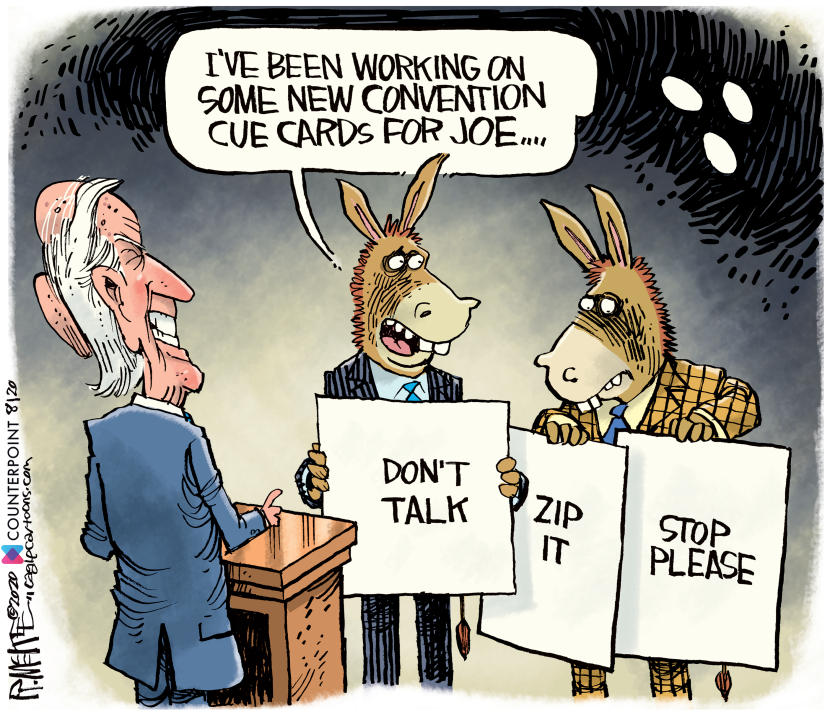
It has become increasingly clear that Joe Biden’s best chance to win the presidency is to remain firmly planted on his basement sectional with limited contact with the outside world for the duration. In fact, if I were running Biden’s campaign, I’d fit the former vice president with a shock collar and run an invisible fence around the perimeter of his basement.

If it works from my Great Dane, it can work for Biden.

The problem with Biden is the more of him you have, the less you want – sort of like caviar. The first bite, “Interesting,” the second, “I don’t know if I like this,” the third, “I think this has gone bad.”

Biden has been given a gift of sorts – chaos. What he mostly needs to do now is stay out of the way, literally and figuratively. President Trump didn’t create COVID-19, didn’t kill 177,000 Americans as some Democrats have charged, nor did he inspire anarchists to take to the streets and occupy sections of American cities, vandalize public property, defund local police departments and topple statues. But it is ultimately his responsibility to reassure the country and restore order. Neither will be easy.

So, for Biden, adopting the George Costanza blueprint for success – “My presence in that office can only hurt my chances” – seems like the way to proceed. Sure, he can do a few interviews for a sympathetic media perfectly content to lob him softballs, but there’s really no need to increase his exposure to daylight at this point.

However – and Democrats beware – Biden has been poking his head out of the turtle shell a bit more lately.

Over the weekend, Biden told ABC’s David Muir that he would lockdown the country this winter if faced with a combination of COVID-19 and flu cases.

In a recent interview with rapper Cardi B, who’s now a journalist (Who isn’t?), Biden offered a couple of juicy nuggets, including the notion that he could offer everyone free college without raising taxes while, at the same time, raising taxes.

“The way we can pay for all of this is doing practical things, like making sure that everybody has to pay their fair share,” he said.

Biden provided some clarity on his tax plan over the weekend. He told Muir that he plans to raise taxes on everyone earning more than $400,000 per year and that wealthy Americans and corporations should pay their “fair share.”

There are those two words again, the most dangerous in the liberal lexicon. There’s no objective standard to determine someone’s “fair share” so it will be applied subjectively, to whomever is deemed – I assume by Biden and the Democrats – too successful.

For Trump’s part, he has to face his predicament and stay on message; remind voters of the campaign promises on which he has made good – deregulation and the appointment of judges, to name a couple. Whether you agree with what he’s done is another issue.

Trump’s approval rating has recently ticked up in key swing states, though polls still show him trailing Biden. Four years ago, Trump campaigned his way, despite criticism from those in his own party. He did want he wanted. He tweeted, he insulted the media, he basked in his own sense of wonderfulness. In the end, he could always say, “I’m president and you’re not. I won doing it my way. All the naysayers were wrong.” In the end, he was right.

But this is not 2016. He’s the president now. He owns the chaos. That’s just the way it is for any president, fair or not. Four years ago, Trump was a novelty, an alternative to both the status quo and the thoroughly unlikable Hillary Clinton. Not anymore. If Trump employs his 2016 strategy this time around, he’ll lose.

What can he do differently? First, he can avoid tweeting nonsense and focus on the issues of the day.

I know Trump views Twitter as a way to circumvent an adversarial media and deliver his message directly to the American people. He’s not wrong, but the incendiary nature of his tweets is a distraction and ultimately fodder for his political opponents and the press.

In 2016, Trump ran an “us vs. them” campaign with the “them” being the establishment, the D.C. swamp, the liberal media and an opponent who represented all of the above. The boundaries were clearly defined. His “Make America Great Again” slogan made sense against Clinton’s lackluster and ambiguous “Stronger Together” message.

But a lot has happened in four years, and if Team Trump doesn’t come up with something that inspires hope and confidence, he’ll be in serious trouble in November.

There’s a reason Biden has remained in his basement. He’s winning and until the gap begins to close, he hasn’t a reason to go anywhere.

Copyright 2020 Rich Manieri, distributed by Cagle Cartoons newspaper syndicate.

Rich Manieri is a Philadelphia-born journalist and author. He is currently a professor of journalism at Asbury University in Kentucky. You can reach him at [email protected].
Comments Off on Trump Needs to Stay on Message. Biden Needs to Stay Quiet.

Sports Have Been Hard To Watch During the Pandemic

American sports are in trouble. At least if I am, in any way, a representation of a typical fan.

I grew up in Philadelphia where following all four major teams is part of one’s DNA. As I sit here, I can name, without prompting, every member of the 1980 Phillies starting lineup. And the 1977 team – 1976 too. I once won a Philly sports trivia contest where my savant-like recall stupefied the quizmaster to the point where he assumed I had to be cheating.

I once paid a guy to cut down a tree that was blocking my southern exposure so I could pay another guy to put up a satellite dish so I could watch the Eagles on Sunday.

I’ve bought every sports package available so I could follow Philadelphia teams wherever I happened to be living, and I’ve moved around quite a bit.

I listen to sports radio incessantly.

My friend, an Eagles’ season ticket holder since 1972, calls me before and after every game for predictions and postgame analysis.

I’m that guy. And I’m not just a spectator. I coach high school lacrosse. I do the play-by-play for my university’s basketball games.

Given my history, you would think after a five-month, COVID-19 sports hiatus I would have rushed back and embraced my teams and their sports as if they were a shipwrecked friend I presumed dead long ago.

And yet, there I was the other day, watching a basketball game for the first time since March and I couldn’t summon the energy to care. I tried baseball. Same thing. I’m not sure why.

Maybe there’s a certain fakeness in watching spectator sports being played in empty stadiums and arenas. Sports, at least for fans, is a shared experience. Those of us watching on TV are living vicariously through the people in the seats. Remove them and the whole thing – from the cardboard cutouts to the pumped-in crowd noise – seems fraudulent.

Maybe it’s the infiltration of politics and virtue signaling into what has always been a pleasant diversion from both. There is something spectacularly ironic about an NBA player who makes tens of millions of dollars per annum and feels compelled to wear “EQUALITY” instead of his name on the back of his jersey. Clearly, based on the tenor of the coverage, ESPN, the NBA and its surrogates are wagging their collective finger at me. They don’t know anything about me but they continue to tap my credit card to renew my subscription.

Maybe I’ve simply learned to live without sports.

Maybe, given everything unfolding in the country, it’s just not that important anymore.

I’ve been a sports fan since I was 6 years old, when my father took me to my first Eagles game at Franklin Field in Philadelphia. I’ve hung in there through strikes, lockouts, decades of losing, colossal disappointments and epoch-shattering collapses.

Everyone once in a while, after an especially difficult Eagles loss, I would say to my friend – the season ticket holder – “I don’t know if I can do this anymore.”

“Oh, you’ll be back,” he would say. And he was right. The next Sunday, there I was for another three hours of hand wringing.

In Philadelphia, we always come back for more. We always get back up. That’s part of our character, our charm. That’s why there’s a Rocky statue in front of the art museum.

But now? I might be down for the count.

In a recent commentary about the state of the NFL, columnist and historian Victor Davis Hanson writes that the league is in trouble like never before.

“If the multibillion-dollar NFL decides that multimillionaire players have no obligation to stand to honor a collective national anthem, and that there will be separate anthems and politicized uniforms, then millions of Americans will quietly shrug and change the channel,” Hanson writes.

The NFL and, to a lesser extent, the other leagues, have always been able to count on the resilience of their fans. But at what point do fans run out of patience or worse, just lose interest? I never thought it was possible.

Of course, these days, many things have come to pass that I never thought possible.

Copyright 2020 Rich Manieri, distributed by Cagle Cartoons newspaper syndicate.

Rich Manieri is a Philadelphia-born journalist and author. He is currently a professor of journalism at Asbury University in Kentucky. You can reach him at [email protected].

Comments Off on Sports Have Been Hard To Watch During the Pandemic

Truth Is Relative When It Comes To ‘Mostly Peaceful’ Protests

Are the riots in major cities around the country really happening?

It’s a question that should only require a simple “yes” or “no” answer, but in an age when relativism prevails and even gender is a state a mind, there are no simple questions. There are, however, a lot of dumb answers.

A preponderance of the evidence, including video, tells me the violence is real. In Portland, for example, the Department of Homeland security has chronicled 50 consecutive nights of lawlessness.

Still, when cornered by a TV producer a few days ago, House Judiciary Committee Chairman Jerry Nadler (D-NY) called the rioting “a myth.” If he’s right, he’s uncovered the greatest conspiracy since Neil Armstrong jumped off a couch in front of a green screen in his basement and snookered the entire world into thinking he had actually landed on the moon.

It appears that Nadler himself is more than one small step removed from reality. There he was again Tuesday, this time presiding over a Capitol Hill hearing featuring Attorney General William Barr and Nadler still feigning denial that violence is actually occurring in Portland and elsewhere.

The hearing itself, assuming it really happened, was mostly a waste of time. The Democrats had been clamoring for weeks for Barr to appear. When he showed up, they accused, insulted, interrupted and made an embarrassing hash of the whole thing. For his part, Barr held up fine. The Democrats on the committee, Nadler especially, looked silly. They should have just put Barr in a dunk tank. At least that would have had some entertainment value. Although the way the Dems were pitching, they wouldn’t have hit the target once.

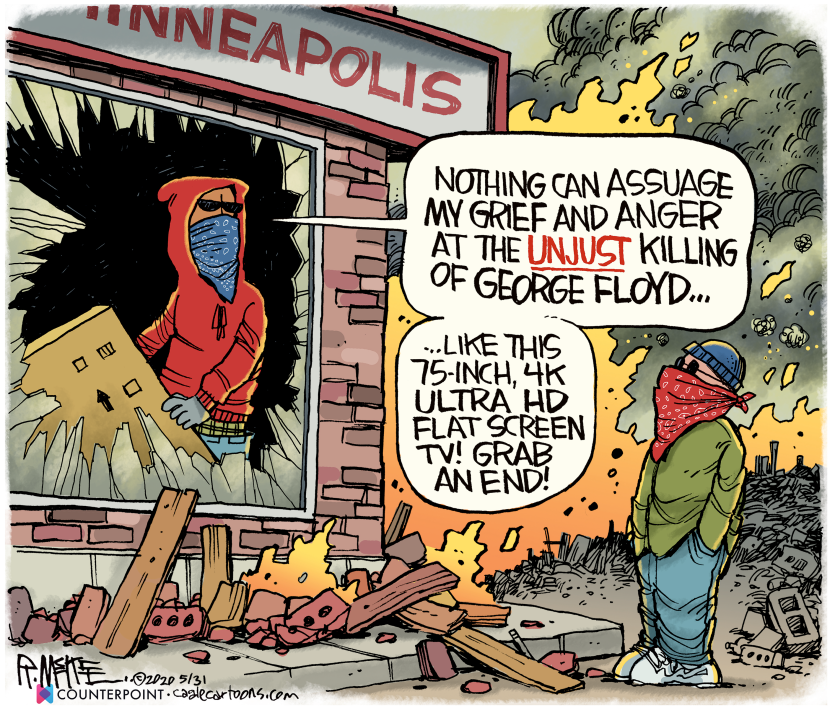
Nadler and his ilk continue to trot out the mantra that the protests around the country have been “mostly peaceful.” I suppose if you break it down to strictly a mathematical equation, that might be true. If a protest lasts for five hours and only one of those hours includes violence then, yes, the protest is mostly peaceful.

If you follow such logic, the Allies’ month or so in the Ardennes forest in 1944 was mostly peaceful, expect when they were being pummeled by German artillery. I’ve never heard a veteran of the Battle of the Bulge say, “Yeah, you know, it was mostly peaceful except for the shooting.”

We seem to have crossed some weird threshold in this country to place where things are only as real or fake as we want them to be. And our elected representatives and the media have helped get us there. Narratives are set in stone. Any event that supports the narrative will be covered and overcovered. If there is no event, we’ll invent one. On the other hand, any story that detracts from the narrative is downplayed or ignored. Compare what Fox News and CNN are covering and how they’re covering it on any given day.

I’m old enough to remember a time when if you watched all three evening network news broadcasts – when there were only three – you’d see mainly the same stories. Now, not only don’t you see the same stories, each outlet seems as if it’s operating in its own parallel universe.

This is not a partisan argument. At least it shouldn’t be. I think most Americans – at least those who write to me, Republicans and Democrats alike – just want to know what’s really going on. They want honesty. They want objectivity. That’s probably too much to expect from politicians. The media, however, have no excuse.

When journalists decide they are either part of “the resistance” or advocates for an individual or cause, truth is the primary casualty.

In a recent article in National Review, Michael Brendan Dougherty points out that “nearly half the days of June featured a New York Times news story employing that phrase “largely peaceful” to describe the protests that sprung up in response to George Floyd’s death, even as cities across the country saw rioting unlike almost anything since the late 1960s.”

Why? Why would the Times go out of its way to characterize the protests as mostly peaceful, even though they were overshadowed by violence? As Dougherty writes, “another critical democratic institution decided it would be more fun and emotionally satisfying to fail than to perform the function with which the public entrusts it.”

If only he were wrong.

I happen to believe in objective truth and, above everything else, journalism is supposed to be a pursuit of truth. “Quid est veritas?” as Pontius Pilate asked Jesus of Nazareth. “What is truth?”

Scholars and theologians have pondered and parsed this question for centuries. The answer, 2,000 years ago, was really very simple. It still is.

Copyright 2020 Rich Manieri, distributed by Cagle Cartoons newspaper syndicate.

Rich Manieri is a Philadelphia-born journalist and author. He is currently a professor of journalism at Asbury University in Kentucky. You can reach him at [email protected].
Comments Off on Truth Is Relative When It Comes To ‘Mostly Peaceful’ Protests

The Alarming Absence Of Outrage Over Anti-Semitism

I’ve come up with a list of historical figures you want to avoid quoting in a public forum, at least outside of an academic context. Mind you, the list is neither official nor in numeric order. To name a few – Judas Iscariot, Marquis de Sade, Mussolini, Ted Bundy, Stalin and, of course, the Bohemian corporal himself, Adolph Hitler.

It’s difficult to justify a quote from Hitler. “He did some good things,” or “At least he was an animal lover” doesn’t quite cut it. He loved animals so much that he gave his beloved German Shepherd, Blondi, a cyanide capsule just to make sure the poison would work on his wife before the Red Army showed up.

Not that DeSean Jackson and his pal Stephen Jackson know much about Hitler, much less about his dog.

DeSean remains in the employ of the NFL’s Philadelphia Eagles. Stephen is a former NBA basketball player.

Last week, DeSean posted vile, anti-Semitic quotes attributed to Hitler (wrongly, as it turned out, though he didn’t know that) on his Instagram page.

“[The Jews] will extort America,” the post read in part. “Their plan for world domination won’t work…” There’s more but not worth the effort to type.

In a separate post, DeSean lauded noted anti-Semite Louis Farrakhan.

Enter Stephen, who took to social media to defend DeSean. Stephen posted, among other things, that DeSean was “speaking the truth” and “I don’t know nothing about Hitler and I could give a [expletive] about Hitler!”

DeSean apologized three times for the posts. Unfortunately, each subsequent apology seemed more insincere than the last. Stephen walked back his comments then bafflingly doubled down on them.

I have a suggestion for the Jacksons, especially Stephen. Schindler’s List is currently available on Netflix. Check it out. You’ll learn enough about Hitler and the Third Reich to feel compelled never to mention either again.

The Eagles, whose owner and general manager happen to be Jewish, called DeSean’s posts “appalling” and “offensive.” They announced that he will not be released but fined, though we don’t know how much. Whatever it is, he probably won’t miss it.

But instead of blowback and expressions of outrage over Jackson’s posts from his teammates, other NFL players, including those who plan to kneel during the national anthem, the sports world at large, the media punditry and the so-called “woke” movement, we’ve heard mostly crickets.

For non-football, fans, Jackson is not a nobody in professional football. He’s a prominent player in the NFL and has been one of the league’s top deep threats for a decade. You can’t blame the silence on a low profile.

One would think, especially in today’s environment, that attributing anti-Semitic vitriol to Hitler on your social media page would unleash a torrent of criticism, along with calls for your ouster and exile. Nope.

Help me understand, and we don’t even have to look beyond professional football.

The NFL’s Washington Redskins have finally capitulated to activist pressure and will change their name and logo. New Orleans Saints quarterback Drew Brees was lambasted by his own teammates for saying he didn’t agree with kneeling during the Star Spangled Banner. Brees eventually apologized, probably to avoid a team mutiny.

But anti-Semitism? Meh.

In the scope of history, the Holocaust didn’t happen that long ago. Survivors and their stories are still with us. Do we not owe it to them and the millions of others who were exterminated by the Nazis to condemn such hatred? What about the handful of Jewish players in the NFL, or Jewish fans?

And don’t misunderstand. I’m not advocating that DeSean Jackson be fired. I don’t know what’s in his heart and I believe in grace and forgiveness. At the very least, he certainly needs to be educated.

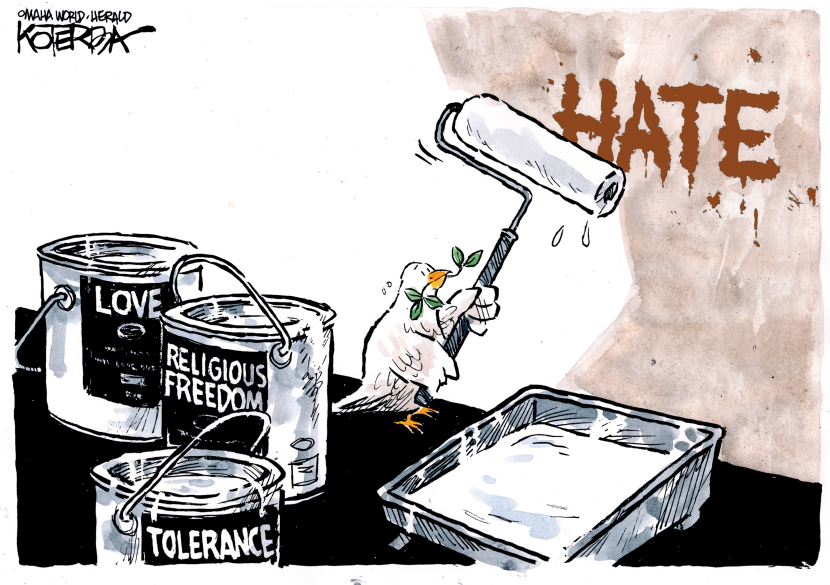
But the broader message here – the only one we can read from the reaction, or lack of, to the Jackson posts – is that only certain types of racism are worthy of our condemnation. You’d have to be willfully oblivious or just plain daft to see this any other way.

If we’re really serious about fighting racism in this country, politics and the ongoing temptation to find equivalency need to be extracted from the battle. If we believe that racism is an evil, a sin against man and God – as Martin Luther King did – then we can’t deem any kind of racism more or less acceptable than any other.

That’s if we’re serious.

Copyright 2020 Rich Manieri, distributed by Cagle Cartoons newspaper syndicate.

Rich Manieri is a Philadelphia-born journalist and author. He is currently a professor of journalism at Asbury University in Kentucky. You can reach him at [email protected].
Comments Off on The Alarming Absence Of Outrage Over Anti-Semitism

Defund Police Movements Miss The Big Picture

In case you missed it, 106 people were shot in Chicago last weekend. That’s not a typo – 106.

If mainstream news organizations still covered the news, instead of only the news that serves or refutes an agenda, we might have heard more.

Of the 106 people shot, 14 – including a 3-year-old boy – were killed.

When asked about the catalysts for such violence, Chicago police Superintendent David Brown boiled it down – “gangs, guns and drugs.”

And then, amid the national cacophony of calls to defund and/or abolish local police departments, overhaul the criminal justice system, release criminals from prison, and the establishment of police-free zones by anarchists in big cities, the superintendent said something really interesting.

“There are too many violent offenders not in jail, or on electronic monitoring, which no one is really monitoring,” Brown said, according to the Chicago Tribune. “We need violent felons to stay in jail longer and we need improvements to the home monitoring system.”

It sounds as if the last thing law enforcement in Chicago needs is fewer resources. And despite efforts by a sympathetic media and others to explain away what “defund” the police really means, Chicago’s mayor seems to understand.

“When you talk about defunding, you’re talking about getting rid of officers,” Lori Lightfoot, Chicago’s first black female mayor, told the New York Times.

In September, Lightfoot, a Democrat, told Edward McClelland, of Chicago Magazine, that “we’ve got to stop treating black and brown folks like they’re expendable. A militarized response to the violence isn’t what people want, and more to the point, it’s not effective.”

Earlier this month, as McClelland wrote, Lightfoot called in the National Guard to deal with rioting and looting following the death of George Floyd in Minneapolis.

It’s easy to speak out against a militarized response, until your city is on fire.

In the same interview with the Times, Lightfoot said there is a “cultural dysfunction” within the Chicago police department. But even she realizes taking officers off the street will do nothing to curb the city’s epidemic of violent crime.

When it comes to law enforcement, trying to do more with less is never a sound strategy.

Reform is necessary. Bad cops need to be weeded out and not shielded by unions. Better engagement is needed between local police departments and minority communities. Cops are not social workers, nor should we expect them to be. But policing will never be an exact science.

Police officers are not robots. They’re doing a job most of us would never dream of doing. Mistakes will be made. And I’m not in any way suggesting that what happened to George Floyd was a mistake. The video speaks for itself.

But it’s very easy to ask, after the fact, “Why did you have to shoot him?” “Couldn’t you have just shot him in the leg?” Real life isn’t an episode of “Starsky and Hutch.”

In real life, the decision to use force is made in fractions of seconds. Sometimes, suspects are armed, sometimes they’re not. Often, you don’t know.

On May 28, at 12:15 p.m., Officer Nate Lyday, of the Ogden, Utah, police department, responded to a domestic violence call. A woman told a 911 dispatcher her husband was trying to kill her. When Lyday and a probation officer reached the house, the suspect, a 53-year-old man, was sitting on the front porch. The suspect was uncooperative, according to investigators, and after a brief discussion, went back into the house, slamming the door behind him.

The police chief said Lyday didn’t see a weapon in the suspect’s hand when he went inside. As Lyday moved toward the front door, the suspect began firing through the door, hitting Lyday. The 24-year-old officer, with just 15 months on the job, died a short time later. He was getting ready to celebrate his fifth wedding anniversary.

This story is important because it’s not particularly unusual. It’s the sort of thing police officers face every day, in Ogden, Chicago, Washington D.C. and New York, which wants to reduce its police budget by $1 billion even though murders increased 79% in May.

There’s a conspicuous and baffling absence of outrage over what happened last weekend in Chicago. And outside of Ogden, very few know the story of Nate Lyday. We would do well to remember both, before we proceed headlong into reforms that result in de-policing.

Only civilization itself is riding on the outcome.

Copyright 2020 Rich Manieri, distributed by Cagle Cartoons newspaper syndicate.

Rich Manieri is a Philadelphia-born journalist and author. He is currently a professor of journalism at Asbury University in Kentucky. You can reach him at [email protected].

Comments Off on Defund Police Movements Miss The Big Picture

Without Empathy, Discussions About Racism And Policing Will Lead Nowhere

We’ve all seen the video. There’s simply no justification for Minneapolis police officer Derek Chauvin doing what he did to George Floyd.

I’ve worked with law enforcement officers – federal, state and local – throughout my career. The overwhelming majority are simply trying to do their duty under difficult circumstances. It’s a dangerous job. So far this year, 22 law enforcement officers in the U.S. have been killed “feloniously,” according to FBI crime statistics. Last year, 48 were killed. Most of the officers killed were shot by gun-wielding suspects. In 2018, according to the FBI, there were 58,866 assaults against law enforcement officers.

It’s a tough job where you have to make life-and-death decisions in fractions of seconds, only to be second-guessed by armchair analysts. There are some 800,000 sworn law enforcement officers in this country. There are bound to be a handful of bad actors among them.

In no way does this excuse what happened to Floyd. Why did Chauvin do it? We don’t know. Was he motivated by racism? We don’t know that, either. All we really know is that Chauvin is white and Floyd was black. Chauvin will have his day in court.

Chauvin’s actions are an affront to all honest, hard-working cops. He and other officers who use unnecessary force are catalysts of suspicion and mistrust. They divide rather than unify.

In the same way, those who sowed mayhem and chaos in cities across America only diverted attention away from legitimate protest, not to mention from Floyd himself, and have made it just about impossible to engage in productive discussions to ensure that what happened to Floyd never happens again.

And now, for an encore, progressives are pushing to defund (“dismantle” in the case of Minneapolis) local police departments.

This is what happens in a world of extremes. The advancing of agendas always supersedes the desire for reconciliation.

Let me just pause here to ask an obvious question. How does fewer cops on the streets or redistributing law enforcement funding help anyone, including people of color?

CNN’s Alisyn Camerota asked Minneapolis City Council president Lisa Bender, who wants to “dismantle” the city’s police department, what a citizen is supposed to do if someone is breaking into her house and there’s no police force.

“For those of us for whom the system is working, I think we need to step back and imagine what it would feel like to already live in that reality where calling the police may mean more harm is done.”

The worst thing about this sort of nonsense is it distracts all of us and diverts our attention from legitimate issues and productive discourse.

In January, on Martin Luther King Day, Archbishop Jose Gomez of Los Angeles called racism “a sin that denies the truth about God and his creation.” King himself called racism “a cancerous disease that prevents us from realizing the sublime principles of our Judeo-Christian tradition.” William Wilberforce, who led the movement to abolish slavery in Europe in the 18th century, viewed his work as his Christian duty.

“God Almighty has set before me two Great Objects,” Wilberforce said, “the suppression of the slave trade and the reformation of manners.”

Discrimination, racism and oppression deny an individual his personhood as created by God. Thus, people like Wilberforce believed slavery was a crime not only against man but against God Himself.

A serious pursuit of justice requires calling out evil. It does not require extremist rhetoric and behavior.

Those engaged in peaceful protests over Floyd’s death don’t want to be seen as rioters and looters, setting fires and stealing TVs. That would be unfair. It’s equally unfair to suggest that Derek Chauvin is representative of all police officers. Unfair and untrue.

I’m a white male of European descent and therefore don’t feel qualified to lecture anyone on the struggles of African Americans in the U.S. I do think of my students of color, some of whom have shared with me what it’s like to be the “only” in so many situations. I can listen, but I simply can’t relate. Nor should I pretend that I can.

What all of us can do is seek empathy, for people of color, for their struggle and yes, for dedicated law enforcement officers, whose main goal every night is to live through their shift. The “us” versus “them” approach in the name of justice, advanced by the Al Sharptons of the world, will get us nowhere.

Unless empathy and reason prevail, the middle ground of compromise and understanding we seek – assuming we’re really interested in finding it – will remain unreachable. That would be the greatest injustice of all.

Copyright 2020 Rich Manieri, distributed by Cagle Cartoons newspaper syndicate.

Rich Manieri is a Philadelphia-born journalist and author. He is currently a professor of journalism at Asbury University in Kentucky. You can reach him at [email protected].

Comments Off on Without Empathy, Discussions About Racism And Policing Will Lead Nowhere

If Only We Would Tame Our Tongues

I stopped long ago reading comments under news articles and opinion pieces. Not because I don’t believe readers should have the opportunity to comment, but mostly because nothing about what is posted is helpful or constructive. In fact, much of it is nasty and vile.

For the same reason, I’m not on Twitter anymore. Not because I don’t recognize social media as a valuable tool for marketing or disseminating important information, but because it has become a forum for misinformation, slander and hate. And I know very well that I have it within me to become part of the problem.

How we speak to each other reveals much about ourselves. The Bible, as relevant on the topic today as it was 2000 years ago, contains dozens of verses about taming the tongue.

“It is not what goes into the mouth that defiles a person, but what comes out of the mouth; this defiles a person,” Jesus said, as he rebuked the Pharisees as recorded in Matthew’s gospel.

I thought a lot about that verse in the last few days as I watched the Twitter barbs fly. President Trump has been advancing debunked conspiracy theories about former Republican congressman and current MSNBC host Joe Scarborough. Trump continues to suggest, without any evidence whatsoever, that Scarborough might have had something to do with the death of a staffer who worked in his Florida congressional office in 2001.

Comedian Kathy Griffin tweeted on Wednesday that Trump should self-inject an air-filled syringe, which would “do the trick.”

Neither Trump nor Griffin has apologized. In fact, each has doubled down with Trump calling the staffer’s death a “cold case” (it was ruled an accident) and Griffin tweeting that she is well aware that an injection of air into the veins could be fatal.

Griffin’s profane, angry tweets are not unexpected, given that her stance as a Trump-hater is the only thing keeping her relevant on the national landscape. However, this president, any president, should be above spewing unfounded conspiracy theories about people he doesn’t like. Even conservative news outlets have taken Trump to task.

“Mr. Trump rightly denounces the lies spread about him in the Steele dossier, yet here he is trafficking in the same sort of trash,” wrote the Wall Street Journal editorial board.

And, in case you missed it, CNN’s Anderson Cooper and House Speaker Nancy Pelosi called the president fat.

The issue of our current discourse, political and otherwise, goes well beyond the latest round of unfortunate tweets and comments.

What happened to civility and respect? Blaming the president is nothing more than a “He started it!” schoolyard argument. We’re all complicit, myself included. Twitter and other social media platforms aren’t so much forums to share what is on our minds as much as they are indications of what is lurking in our hearts.

I’m not wagging my finger at anyone. I receive a fair amount of angry emails and I will confess that my first inclination is to fire back a response that will get my adversary in checkmate. Victory, after all, is much more satisfying, at least for a while, than reconciliation.

In his book Mere Christianity, C.S. Lewis addresses this aspect of the human condition.
“If there are rats in the cellar you are most likely to see them if you go in very suddenly. But the suddenness does not create the rats: it only prevents them from hiding,” Lewis writes. “In the same way the suddenness of the provocation does not make me an ill-tempered man; it only shows me what an ill-tempered man I am.”

My first step toward becoming a Christian was to acknowledge my predicament – my own sinful nature. As Lewis points out, Christianity is not reading what Christ said and trying to carry it out. Rather, it is the total interference of Christ in your life which changes you from the inside out and makes obedience to God possible, not as a means to salvation but as evidence of it.

I say this in relation to discourse because whatever small role I might play in the conversation, my faith is what restrains me, and what keeps me from becoming part of the problem.

We hear a lot about the need for more kindness, compassion and empathy. Simply trying to be nicer to one another isn’t going to get us far.

For all of us, the real solution begins with admitting there’s a problem in the first place.

Copyright 2020 Rich Manieri, distributed by Cagle Cartoons newspaper syndicate.

Rich Manieri is a Philadelphia-born journalist and author. He is currently a professor of journalism at Asbury University in Kentucky. You can reach him at [email protected].

Comments Off on If Only We Would Tame Our Tongues