Paul Ryan’s Final Betrayal

In what may be the most defiant lame duck plot in recent history, outgoing House Speaker Paul Ryan has, mostly under the radar, put forward a plan to make thousands of U.S. jobs available to Irish nationals.

Illegal immigration is rarely associated with the Irish, but some have been living in the United States unlawfully for more than 30 years, and they have an active lobbying arm. Ryan isn’t the first House Speaker promote an Irish amnesty. His predecessor, John Boehner, also floated the idea to a Dublin audience. On November 28, Ryan’s H.R. 7164, which would add Ireland to the E-3 nonimmigrant visa program, passed the House on a cowardly voice vote.

Ryan has consistently been one of the House GOP’s most strident anti-American/pro-overseas worker advocates. Two years ago, Ryan heartily endorsed what became known as the “any willing worker” program which essentially proposed that whenever an employer had a gap in his staffing requirements, he could, instead of raising wages to attract American workers, tap into the worldwide immigrant labor pool.

Under Ryan’s bill, an estimated 5,000 annual employment authorization documents, renewable every two years in perpetuity, would be available to Irish college graduates, a scheme similar to President George W. Bush’s 2005 gift of 10,500 E-3 work permits to Australians. U.S. Citizenship and Immigration Services defines the E-3 as a visa for “specialty occupation professionals,” although in practice some existing visa holders perform routine job functions. Since E-3 spouses also are work authorized, the actual total of eventual Irish job candidates will exceed the advertised 5,000.

The last thing recent U.S. college graduates and existing American workers need is more foreign-born competition in the form of white-collar visa holders. The investment bank Goldman Sachs estimates that about 1 million H-1–visa recipients work domestically at jobs that normally would be filled by U.S. college graduates. Other visas that authorize U.S. employment and displace Americans include the L designed for intracompany transfers, the J for foreign nationals in the Student and Exchange Visitor Program, the O for exceptional talent, and the TN for Canadian and Mexican North American Free Trade Agreement professionals.

When all the other employment-based visas listed above are added to Goldman’s 1 million H-1Bs, the aggregate total of foreign-born workers in the U.S. approaches 1.5 million.

Good news and bad news. The good: For Ryan’s proposal to become law, the U.S. Senate must support it 100 percent. That’s possible, but highly improbable. The instant one senator tells Majority Leader Mitch McConnell that he’s opposed, the bill dies.

The bad: Outside of the Irish and big business lobbies, there is little national support for such a jobs giveaway. Ryan’s maneuver is craven politics at its worst, and represents a shining example of why outgoing Congresses should not be allowed to vote on legislation during the lame duck session.

Wisconsin, where soon-to-be banking industry lobbyist Ryan was born and has served in the state’s First District since 1999, has 85 colleges and universities whose thousands of graduates will enter a competitive labor market. Ryan’s first obligation is to Wisconsinites and other Americans with U.S. college degrees, not Irish nationals.

Joe Guzzardi is a Progressives for Immigration Reform analyst who has written about immigration for more than 30 years. Contact him at [email protected].

Comments Off on Paul Ryan’s Final Betrayal

As Deadline Nears, Trump Keeps Banging Head Against the Wall

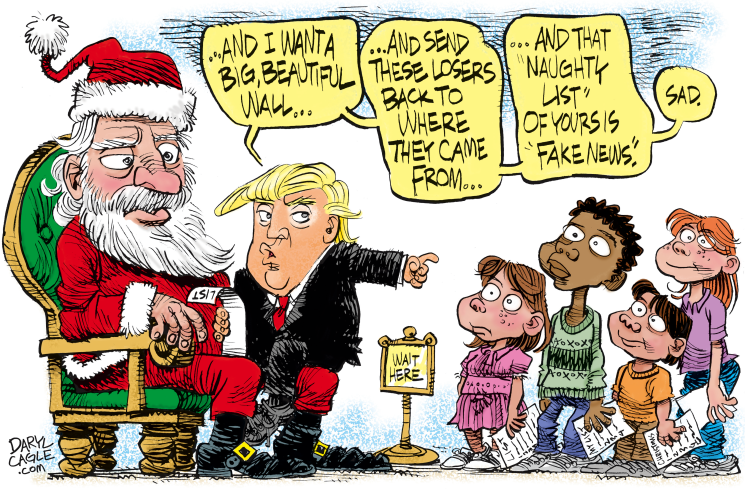
The din emanating from Congress these days is decidedly not in the Christmas spirit. The White House confrontation that pitted President Trump against his arch-enemies – Senator Chuck Schumer and soon-to-be House Majority Leader Nancy Pelosi – stopped short of an all-out brawl, but offered zero encouragement that all parties were on the verge of a compromise on anything, least of all a Southwest border wall or legislative solutions to asylum loopholes.

With the December 21 deadline to fund the Department of Homeland Security looming, President Trump’s demand for $5 billion for wall construction versus the offer from Schumer and Pelosi to provide about $1.5 billion is the hang up. The $1.5 billion is like mere bus fare in today’s spend-crazy Congress.

Immigration analysts are puzzled by why President Trump insists on tackling the toughest item on his agenda, the wall, when other deterrents to illegal immigration are more immediately within reach, namely E-Verify.

President Trump’s signature issue has always been to build a wall to dramatically slow illegal immigration, and thus remove the jobs magnet from the unlawful entry equation. In 1981, the Select Commission on Immigration and Refugee Policy concluded all studies indicated that illegal aliens are attracted to this country by U.S. employment opportunities. Yet, nearly four decades later, Congress has consistently refused to act in American workers’ best interests. Once, not that long ago, even Schumer saw the E-Verify light. Schumer in 2009: “… a biometric-based employer verification system with tough enforcement and auditing is necessary to significantly diminish the job magnet that attracts illegal aliens to the United States… ”

E-Verify has a disappointing history. Even though every congressional staffer is processed through E-Verify and all federal contractors are required to use it, stand-alone bills for the program that passed the House Judiciary Committee never reached the floor for a full vote. More than 750,000 employers use E-Verify at more than 2.4 million hiring sites.

Congress is also dismissive of other E-Verify benefits. Identity theft via falsified I-9 forms would be reduced, and unscrupulous employers would no longer have an unfair wage advantage over business owners and operators who are unfairly penalized when they hire and pay the going rate to citizens and lawfully present immigrants. In national polling among likely voters, a whopping 78 percent favor mandatory E-Verify.

The White House strategy behind selling E-Verify should be simple: Members of Congress who don’t support E-Verify send the clear message to their constituents that they’re okay with illegal immigrants in the workplace, while millions of Americans are unemployed or under-employed.

A Pew Research Center report showed that illegal immigrants work in the construction, production, service and transportation industries, all areas in which many unemployed Americans would work. Schumer, Pelosi et al can argue, persuasively to some, that a wall would be ineffective. But no one, whether he be President Trump’s friend or foe, can claim that E-Verify doesn’t protect American workers.

President Trump’s goal should be to back E-Verify critics into a corner to see what defense they could mount against preferring that jobs, especially low-skilled positions, go to illegal immigrants instead of America’s most vulnerable – minorities, the poor and the under-educated.

Joe Guzzardi is a Progressives for Immigration Reform analyst who has written about immigration for more than 30 years. Contact him at [email protected].
Comments Off on As Deadline Nears, Trump Keeps Banging Head Against the Wall

Lackluster November Jobs Report Bodes Poorly for 2019

An unspectacular Bureau of Labor Statistics November report casts doubt on the health of the job market in 2019. The economy added 155,000 jobs, fewer than Wall Street projected, but not few enough to affect the 49-year low 3.7 percent unemployment rate.

In short, with workers’ average hourly earnings increasing over the year by 3.1 percent, the November report was not bad, but far from spectacular. As has been the case for months, many of the jobs are part-time and in low-paying service sectors that have no health care or other benefits.

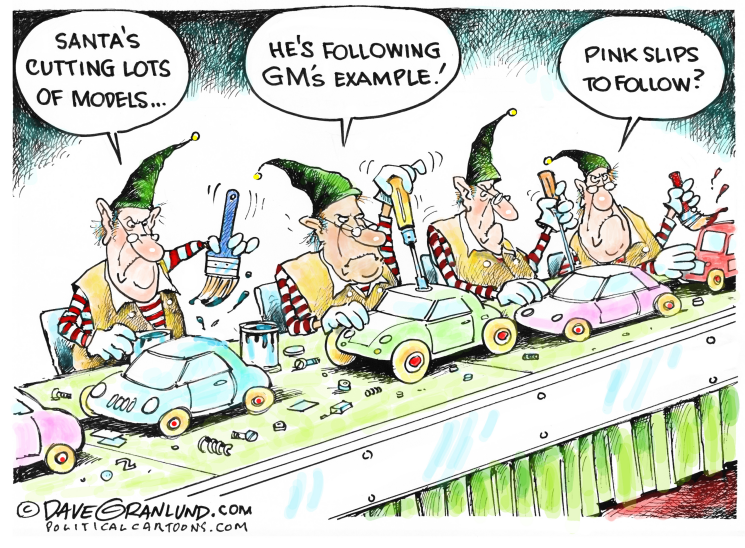
Bankrate.com senior economic analyst Mark Hamrick told CNBC that nervous-about-their-status workers should evaluate future job opportunities, or the lack of them, in light of workplace advancements in automation. Hamrick pointed to General Motors, which made headline news when it announced plans to cut more than 14,000 jobs next year, noting the layoffs don’t reflect business failings, but rather the auto industry’s greater reliance on automation in a changing industry.

An interesting counter-argument claims that artificial intelligence creates jobs, and that mass automation/human worker displacement would mean that consumer markets would shrink to levels unacceptable to corporate America. Therefore, the argument concludes, big business will avoid extended mass layoffs since, in the end, it hurts their revenue stream.

But others point to over-immigration as the primary job loss culprit. Annually adding about 1 million work-authorized lawful permanent residents into the labor pool, plus another 750,000 employment-based visa holders like H-1Bs and L-1As issued to high- and low-skilled workers, has unnecessarily created unending, stiff job competition. Employers have gotten ultra-savvy, and shamelessly bold, about breaking immigration laws since they know being caught and getting penalized is a long shot. For example, the auto industry abused the B-1/B-2 visa to bring in Eastern Europeans as plant employees even though the visa specifically forbids employment.

Skeptics pose reasonable questions about the short- and long-term wisdom of immigration’s auto-pilot nature. Every year, regardless, more than a million people arrive. Congress only evaluates immigration levels in terms of increasing them, never reducing. Even today, during the lame duck session, three GOP senators and one GOP U.S. House representative have put forward a proposal to double the low-skill H-2–visa from 66,000 per year to 132,000. Read another way, that’s potentially 132,000 jobs that low-skilled Americans won’t have a shot at.

Another job killer is outsourcing – sending U.S. jobs abroad to India, China and the Philippines, among other locations. IBM employs more workers in India than in the U.S. In New York, once a manufacturing giant, the state’s working base has been moved to China. At least 183,500 good-paying factory jobs have been lost since 2000. Nationwide, New York ranks behind California and Texas in the most-quality-jobs-lost category. Analysts cite China’s unfair trade practices and $31 billion trade surplus with the U.S. for the 3.4 million mostly middle-class American jobs wiped out between 2001 and 2017. According to an Economic Policy Institute report, every state and congressional district suffered job losses.

In his January New York Times story, Angus Deaton wrote that, by global standards, there are “5.3 million Americans who are absolutely poor.” Immigration doesn’t help those 5.3 million people or the many millions more that live below the poverty line. Across the country, the black unemployment rate is at least twice the white rate, and in the District of Columbia, the rate is 12.4 percent.

The annual immigrant intake should reflect domestic economic and societal conditions. More immigration doesn’t help the 5.3 million absolutely poor or unemployed Black Americans. But since Congress refuses to engage in an intelligent immigration discussion that includes evaluating how increased immigration harms American workers, the U.S. will get more immigration in 2019, and each year thereafter for the foreseeable future.

Joe Guzzardi is a Progressives for Immigration Reform analyst who has written about immigration for more than 30 years. Contact him at [email protected].
Comments Off on Lackluster November Jobs Report Bodes Poorly for 2019

Babe Ruth: From Shirt Maker to Medal of Freedom Winner

To hear Babe Ruth tell his story, he was the best shirt maker that the St. Mary’s Industrial School for Boys ever had. Ruth’s parents, very poor, petitioned the Baltimore courts to proclaim him incorrigible which qualified him to attend St. Mary’s. Little George, as Ruth was called, had been a petty thief and a beer drinker since he was a six-year-old.

St. Mary’s was a reform school, as they were called in the old days, and the boys had daily tasks. Ruth’s assignment was in the tailor’s shop where he learned how to sew. The Babe took to his responsibilities with impressive diligence. Later in his life, Ruth said that once in a rare while a pitcher might fool him with a curve ball, but no one could deceive him about a shirt’s quality.

The other skill that Ruth mastered while at St. Mary’s during the early 1900s was how to hit a baseball, a talent that paid off handsomely. Ruth said that he considered himself a born hitter, but he dazzled at pitching too. By 1914, Ruth was with the Boston Red Sox, dominating on the mound. In six years, Ruth posted an 89-46 record with 105 complete games, and a 2.19 average annual ERA. Then, the Red Sox sold Ruth to the New York Yankees where he pitched a little, 5-0 during five seasons, but slugged a lot during his 15 seasons with the Bronx Bombers: .349 BA, .711 slugging, 655 HRs, 1,978 RBIs.

Ruth’s 22-year career had dozens of highlights that include his participation in seven World Series championships, his 1927 record-breaking 60 homers, his 1932 World Series home run, that he called, as legend has it, against the Chicago Cubs, and his 1936 induction into the first Hall of Fame class.

When Chicago Herald-Tribune sportswriter John Carmichael asked Ruth what his greatest baseball moment was, the Bambino never hesitated – his called homer. Cubs pitcher Charlie Root, a grizzled, no-nonsense veteran, hotly disputes that Ruth pointed his finger to a distant outfield fence. Root said that every National League player knew that if Ruth tried to showboat him, the next pitch would be in his ear.

But Ruth insisted, and said that doubters could check with Cubs’ catcher Gabby Hartnett. If Root grooved one, Ruth told Hartnett: “I’ll hit it over the fence again.” Ruth had hit a three-run shot in the first inning. Reflecting on the improbable homer prediction, Ruth told Carmichael: “Gosh, that was a great feeling. Yes sir, you can feel it in your hands when you really lay wood on one.”

Despite his stellar baseball career, Ruth would most likely treasure his posthumously awarded Medal of Freedom above all else. More than his titanic homers and his pitching skills that in at least one season exceeded Walter Johnson’s, Ruth was famous for his spontaneous trips to children’s hospitals, orphanages, helping down-and-out Americans get through the Great Depression, his readiness to autograph anything put before him, and his willingness to play alongside blacks, unusual during the era.

Last month, President Donald Trump gave the Medal of Freedom, the nation’s highest civilian award to Ruth’s grandson Tom Stevens who accepted it on behalf of the family. Ruth would have gotten a good belly laugh out of being part of the same 2018 recipient class as another American icon, Elvis.

Stevens posed the question of the day when he asked, “What the heck took so long?” President Trump said that once he realized Ruth had never been honored, he moved quickly to right the oversight.

Other baseball Medal of Freedom honorees include Joe DiMaggio, Jackie Robinson, Ted Williams, Ernie Banks, Hank Aaron, Roberto Clemente, Stan Musial and Frank Robinson. Not that Ruth would ever say it, but on the field, his star shone brighter than all others.

Joe Guzzardi is a member of the Society of American Baseball Research and the Internet Baseball Writers Association of America. Contact him at [email protected].

Comments Off on Babe Ruth: From Shirt Maker to Medal of Freedom Winner

Bush 41, Hero to Many also Ushered in Cheap Labor Era

Bush 41, Hero to Many, also Ushered in Cheap Labor Era

Few Americans have lived such a blessed life as George H. W. Bush. He is remembered as a great family man, married to Barbara for 73 years, a World War II hero who flew 58 combat missions which earned him the Distinguished Flying Cross, and a Yale University baseball star who played in the first College World Series.

Professionally, Bush was a U.S. Representative, Central Intelligence Agency director, U.S. Ambassador to the United Nations, Vice President under Ronald Reagan and the nation’s 41st president elected in 1988, serving one term.

But despite his impressive resume, during his one White House term, Bush signed immigration legislation that led to decades of American worker displacement that continues today at breakneck speed. Some analysts point to the Immigration and Nationality Act of 1965 and the 1986 Immigration Reform and Control Act as the major contributors to the dismantling of an immigration system intended to benefit Americans.

While those two acts accelerated unsustainable immigration levels, Bush’s signature on the Immigration Act of 1990 further increased immigration, created the diversity lottery, added new employment-based visas and granted work permits to a new migrant category, temporary protected status (TPS) holders, which dealt severe and enduring blows to Americans’ job security. Abruptly, American workers were forced to compete with a growing overseas labor pool that had reached U.S. shores.

Among the new visas created in the 1990 bill was what’s become the most notorious, the H-1B, originally created for specialty occupations, but which has come to dominate in the high tech industry. Also created was the H-2A for agriculture and the H-2–for low-skilled non-ag. During the nearly four decades since Bush signed the 1990 act, H and other employment-bases visas have left a documented history of fraud, abuse and American worker displacement.

When Bush signed S. 358, he said that the bill would maintain the U.S.’s “historic commitment to family reunification by increasing the number of immigrant visas allocated on the basis of family ties,” and acknowledged that it “dramatically increases the number of immigrants.” In his post-signing speech, Bush predicted a wave of exceptionally talented people including “scientists, engineers and educators.”

While some truly talented have entered, low-skilled, cheap labor workers, including H-1B, H-2A and H-2B, vastly outnumbered them. The abundant presence of low-skilled labor benefits employers who constantly lobby hard to increase visa totals. During the current congressional lame duck session, a GOP congressional group hopes to increase the annual H-2–visa cap from 66,000 to 132,000, evidence that the Bush-endorsed visa expansion only increases, with no end in sight.

In recent years, the federal government has issued record numbers of visas and green cards to low-wage immigrants which places a heavy burden on U.S. workers, taxpayers and community resources. Those who unfairly bear the economic brunt of the steady inflow of work-authorized immigrants are the already present lawful permanent residents and America’s minority workers, especially blacks and Hispanics.

Bush’s legacy has many successes, but he failed on immigration. American workers are still paying the price for Bush’s immigration miscalculation.

Joe Guzzardi is a Progressives for Immigration Reform analyst who has written about immigration for more than 30 years. Contact him at [email protected].
Comments Off on Bush 41, Hero to Many also Ushered in Cheap Labor Era

The Displacement of Tech Workers Continues Unabated

Optional Practical Training (OPT), a temporary employment program for foreign undergraduate and grad students on F-1 visas, is the vehicle that corporate America, and more specifically the IT industry, uses to circumvent the 85,000 H-1–visa cap and to deny jobs to or displace U.S. tech workers. Its usage has reached an all-time high.

Recently, the Institute of International Education, an organization that, according to its website, believes education transcends borders, reported that during the 2017-2018 academic year, OPT permits hit a record 203,462. Read another way, 203,462 U.S. workers have either lost their jobs, as employers like Disney, McDonald’s, New York Life, Google, Amazon, etc. ad infinitum, either replace American workers or don’t even provide them the opportunity to apply for open positions.

As a final indignity, qualified but displaced Americans are routinely forced to train their overseas replacements or lose their severance packages. Consequently, for decades now, those on H-1–visas and OPT participants have helped transform Silicon Valley’s tech workforce so that today only 29 percent are U.S. citizens. Remember that “practical training” means holding a job.

Since 2008 and measured through percentage growth, OPT dominates foreign-born work authorization categories with a 400 percent increase for science, technology, engineering and math graduates since 2008. Through OPT, some foreign STEM students who initially had a 12-month limit on their work permits can now remain in the U.S. for up to 42 months. Fundamentally, what began as a seemingly innocent student visa that allowed employment under certain conditions has morphed into potentially a 3-1/2 year permission slip to remain in the U.S. after graduation.

Opinions about the controversial OPT program are, predictably, at polar extremes. As if by rote, Marie Royce, assistant Secretary of State for educational and cultural affairs, told The Mercury News, “We need people who can find solutions that keep us secure and make us more prosperous,” suggesting that foreign students are more qualified than Americans to contribute to U.S. security and prosperity.

While OPT advocates like Royce, many of her governmental peers and industry captains claim that the imported workers make invaluable contributions, their true appeal is that they’re a cheap labor source. Regardless of what their starting salaries may be, overseas employees don’t contribute to Social Security or Medicare which represents about a 16 percent discount versus hiring a U.S. citizen.

Ten years ago, lawyer John Miano, a former tech programmer with 30 years of on-the-job experience, an acknowledged expert on foreign labor’s deleterious effects on domestic workers, co-author of H-1–expose “Sold Out” and contributor to the pro-America U.S. Tech Workers website, filed a lawsuit against the Department of Homeland Security for exceeding its authority when it approved OPT. Miano hopes that the lawsuit, should it ever end, will reinstate the original one-year OPT limit.

OPT offers a window into how immigration processes have been mangled to fit foreign nationals’ agenda. In the Immigration and Nationality Act of 1952, there was no authorization for aliens on student visas to be employed at all. The next year, new regulations authorized aliens to work in student visa status as an internship-like situation and limited to what was required for specific training. In 1964, more new regulations from the Justice Department addressed “practical training,” but did not address if this could occur post-graduation, and there was no reference to providing aliens work status on the student visas.

Then in 1977 certain aliens were given the ability to work after graduation. More changes continued until OPT was created in 1992. And since then, more adjustments have been mad so that today work authorization for up to the aforementioned 42 months has been extended to foreign students.

In a sign of the times, today lawsuits must be filed to protect U.S. tech workers against OPT, a program that Congress never approved and was never posted for public notice or comment. The legal battle to restore OPT to its original format has been locked in an endless ten-year slog. U.S. tech workers, therefore, shouldn’t expect relief anytime soon from OPT job dislocation.

, –

Joe Guzzardi is a Progressives for Immigration Reform analyst who has written about immigration for more than 30 years. Contact him at [email protected].

Comments Off on The Displacement of Tech Workers Continues Unabated

Caravan Nears U.S., Meets Mexican Resistance

The Central American caravan has conclusively proven three things. First, the migrants are economic migrants, and therefore don’t qualify for asylum. Second, despite offers from the Mexican government to grant them safe haven, their goal is to reach the United States where they expect that affirmative benefits will be more generous. Third, the consensus among most Mexicans in an area where part of the caravan has arrived matches the often-skeptical sentiment in the U.S. toward offering services to foreign nationals when so many locals are hurting.

Mexico is a sovereign nation, and its citizens, especially its working and unemployed, are mostly united in feeling that their country cannot accommodate more people without harming, to various degrees, its own.

As of mid-November, about 1,000 people who broke away from the original caravan have reached Tijuana where Mayor Juan Manuel Gastelum called the influx a “tsunami.” Thousands more could soon follow as the majority of the larger caravan arrives, and all plan to request asylum.

President-elect Andre Copyright s Manuel Lopez Obrador’s incoming government vowed to provide jobs and visas to the Central Americans. Mexico has generously offered asylum in the form of temporary identification documents, work permits and education for children. In other words, migrants fleeing Central American countries and claiming fear of persecution need not travel further than Mexico to find safe haven. Mexico’s proposal not only protects those seeking safety, it also helps the U.S. reduce its significant asylum fraud level. Immigration judges who hear actual cases overwhelmingly deny asylum claims. From 2011 to 2016, the denial rates were: Mexico, 89 percent; El Salvador, 82.9 percent; Honduras, 80.3 percent and Guatemala, 77.2 percent.

But similar to the U.S., Mexico’s natives question asylum offers to foreign nationals. As one woman told Reuters, “We also need help,” inferring that the more the Mexican government focuses on helping Central Americans, the less will remain for her and her family.

Should the migrants successfully enter the U.S. and receive employment authorization, they’ll compete with Americans and already present lawful residents for jobs. An expanded labor pool is particularly hurtful to the U.S.’s vulnerable, underemployed minorities. Many of the unsuspecting migrants with less than a high school education will be subject to devastating labor and wage exploitation. Illegal immigrants make up an estimated 5 percent of the U.S. labor force, and are therefore subject to criminal labor abuse. Moreover, immigration is projected to drive growth in the U.S. labor pool through at least 2035.

A final underreported fact regarding the caravan: the sending countries – Honduras, El Salvador and Guatemala – are relatively high-fertility nations. Their presence, their as yet unborn children, their existing children and the family members that they will eventually petition when they become citizens will have an adverse effect on efforts to stabilize U.S. population. The Pew Research Center estimates that the U.S. is projected to grow to 441 million in 2065 from today’s 329 million, and that 88 percent of the future increase is linked to future immigrants and their descendants.

Efforts to deter the caravan should be interpreted as measures intended to help struggling Americans, and in the best interests of future generations but not reflective of an anti-immigrant sentiment, a charge leveled too often without basis.

Joe Guzzardi is a Progressives for Immigration Reform analyst who has written about immigration for more than 30 years. Contact him at [email protected].

Comments Off on Caravan Nears U.S., Meets Mexican Resistance

California’s Leaders Didn’t Learn From Past Deadly Wildfires

For California natives like me, the wildfires are a real gut punch. As of this writing, the wildfires are the deadliest in the state’s history with at least 58 fatalities, and hundreds unaccounted for. More than 10,000 buildings are gone, and more than 230,000 acres have burned.

In the now obliterated community of Paradise, several fleeing locals couldn’t outrun the flames and burned to death in their cars. As one survivor said, the scene was “exactly like any apocalyptic movie” she had ever seen. The fires have been devastating for 10,000 horses, house pets and wildlife. Los Angeles County Animal Care & Control said about 700 animals, including 550 horses, nine cows and at least one tortoise, are now in the agency’s care.

Thousand Oaks, which just suffered a mass shooting and 12 deaths, is coping with the Camp Fire, 35 percent contained as of November 14. It has moved south, nearing other outlying Los Angeles suburbs. Cal Fire Chief Ken Pimlott ominously predicted the week could bring more ruin to Southern California, particularly San Diego, Riverside and San Bernardino counties.

The California that I grew up in during the 1950s is gone forever, replaced by an overcrowded, sprawling state that makes expeditious wildfire control nearly impossible. I left in 2008 when I could no longer abide California’s paralyzing traffic, relentless development and the never-ending urban sprawl. California was unrecognizable to me.

Lessons that California’s leaders should have learned from past fatal wildfires haven’t sunk in. Wildfires are difficult to control, but slower growth could minimize destruction.

California’s exploding population has created an insatiable housing demand. The state which had roughly a 10 million population when I was a youth is now home to nearly 40 million residents, and demographers anticipate 50 million by 2050.

The new populace spawned what’s called “Wild-Land Urban Interface” or inter-mix, low density housing built on hillsides amidst highly flammable vegetation. Last year, Cal Fire Battalion Chief Jonathan Cox called increasingly popular inter-mix construction a “recipe for disaster.”

Cox explained that areas in California that 20 years ago would have been undeveloped are today inter-mix communities. The vast inter-mix square acreage plus the frequency and intensity of fires turn homes into tinderboxes, and makes access for rescue crews difficult.

Fire codes require inter-mix housing have fire-resistant roofs, noncombustible siding and 100 feet of clearance between vegetation and structures. Still, Cox said, fighting tactics for vegetation fires and for structure fires are fundamentally different. The challenge becomes greater when fires are on slopes and hills.

California’s leaders, outgoing Jerry Brown, Governor-Elect Gavin Newsom, Senators Dianne Feinstein and Kamala Harris, remain 100 percent committed to more growth, and to more building to accommodate that growth.

Last year, Brown signed 15 bills that will accelerate development. While the legislation is designed to ease the affordable housing shortage and not necessarily written for inter-mix construction, some of the bills eliminate public hearings and environmental impact studies. Wherever open spaces can be found, Sacramento wants to see building. During his campaign, Newsom advocated for more housing development, the last thing California needs.

California life has become so untenable for so many that moving out will be an increasingly attractive option – one way that California’s population could finally stabilize.

Joe Guzzardi is a Progressives for Immigration Reform analyst who has written about immigration for more than 30 years. Contact him at [email protected].

Comments Off on California’s Leaders Didn’t Learn From Past Deadly Wildfires

After Midterms, Tech Workers Still Friendless in Congress

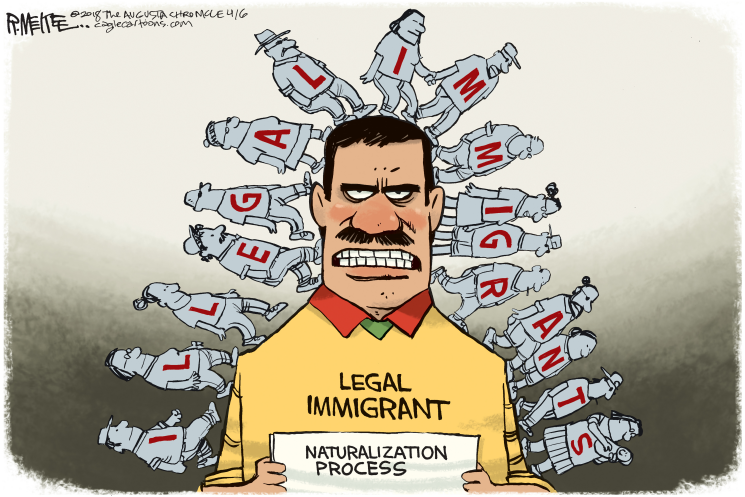
In Kansas’ Third District, IT has a strong presence with Microsoft, Google and Amazon. Over time, since taking office in 2011, the district’s soon-to-be former representative, Kevin Yoder, fell in love with the H-1–employment-based visa.

This year Yoder sponsored H.R. 392 which would have removed country caps, or limits, on potential green card holders. Getting rid of county caps favors India and China, creates an endless stream of permanent competition for American science, technology, engineering and math (STEM) workers, and puts pressure on Congress to raise the overall H-1–85,000 visa cap so that workers from other countries might get green cards.

The Third District in Kansas has unemployed or underemployed IT workers who apparently either didn’t show up to vote for Republican Yoder or spitefully voted for the winning Democrat, Sharice Davids. Roughly 44 percent of people in Yoder’s district age 25 or older earned college degrees, and many may worry that more employment visas mean fewer jobs for them, especially well-paid jobs.

Yoder is gone. But Davids will be yet another roadblock to passing pro-American worker legislation, assuming such a bill would ever reach Congress. Davids wants to fix immigration, code for issuing more work permits. Given 30 years of losing ground to foreign-born workers, American tech workers are increasingly resigned to taking matters into their own hands to seek redress.

Recently, a class action lawsuit was filed on behalf of about 1,000 former Tata workers, all non-South Asians and mostly U.S. citizens. Daniel Kotchen, the plaintiffs’ lawyer, alleges that Tata gave assignments to Indian expatriates and Indian nationals who hold H-1–visas. Kotchen’s firm also is suing six other outsourcing firms on the same discrimination grounds.

According to court records, Kotchen told the jury Tata fired 12.6 percent of its non-South Asian workers in the U.S., but less than 1 percent of its South Asian employees. In what would be damning evidence, Kotchen plans to show statistical proof that there is less than a one in a billion chance that race and national origin are not part of Tata termination decisions. Tata’s U.S. workforce is 80 percent South Asian. Kotchen also claimed that Tata employees who report discrimination are threatened with retaliation, most likely dismissal.

A decision on the Tata case is expected later this month.

In the meantime, for American tech workers, business will reflect the predictable anti-American worker attitude, the same attitude that has prevailed for many years now. And as the 116th Congress convenes in January 2019, the total number of those elected who actually represent Americans and American workers remains small.

Joe Guzzardi is a member of the Society for American Baseball Research and the American Internet Baseball Writers Association. Contact him at [email protected].
Comments Off on After Midterms, Tech Workers Still Friendless in Congress

John Glenn: Ted Williams Batted 1.000 for America

This summer on a swing through Boston, I took the Fenway Park tour. Along the way, our guide pointed out the retired Red Sox numbers hanging over the grandstands: No. 1 Bobby Doerr, No. 6 Johnny Pesky, No. 8 Yaz and others that included David Ortiz, Pedro Martinez, Jim Rice and Carlton Fisk, even though he played more years for the Chicago White Sox than the Bosox.

When the guide announced No. 9 Ted Williams, I broke out in spontaneous applause, but absolutely no one joined me. Immediately, the reality struck me. Williams’ prestigious batting feats live on, but his gutsy service as a U.S. Marine Corp fighter pilot who flew 39 missions during World War II and the Korean War with a stint as Major John Glenn’s wingman – the events that prompted my respectful ovation – are long forgotten. The Kid, a two-time Triple Crown winner, the last .400 hitter and possibly the most prodigious hitter for average and power, lives on. But as America’s fearless defender, Captain Ted Williams’ memory has faded among all except baseball historians.

Let Williams’ pilot buddies describe his flying skills. In 1952, after heavy enemy fire hit Williams’ F-9 Panther, his aircraft was ablaze, and the hydraulics and radio were gone. But worried that broken legs would end his baseball days, Williams refused to parachute to safety. Instead, Williams made a spectacular daredevil belly landing. Anxiously awaiting Williams near the runway, his combat pilot friend Lieutenant Colonel Jerry Coleman, the slick fielding New York Yankees World Series champion’s second baseman and later San Diego Padres announcer who flew 120 missions in World War II and Korea, kidded Williams that he landed a lot faster than he ran the bases. Despite his close brush with death, Williams took off on another mission at 8:08 the next morning.

Before he died in 2002, astronaut, former U.S. Senator and senior citizen Glenn, who returned to space at age 77, said that Williams was an “excellent pilot” who may have batted .400 for the Red Sox, but “he hit one thousand as a U.S. Marine.” And Williams, perhaps unknowingly, acknowledged Glenn’s praise when he said that of all his baseball accomplishments – the 19 All-Star Games and two-time MVP awards that he garnered – the honor which he most valued was being Captain Ted Williams.

The great “what if” among the baseball bugs’ hot stove league discussions often centers on what Williams’ lifetime batting achievements would have been had he not lost five prime-time years during World War II and Korea. Williams stands in baseball’s record books as having finished his career with a .344 average, 2,654 hits, 521 home runs and 1,839 RBI. Sabermetricians calculate that had Williams played during his five years serving in wartime, his career totals would have been .342 with 3,452 hits, 663 home runs and 2,380 RBI.

Opinions about who baseball’s greatest hitter is always include Williams, Babe Ruth, Lou Gehrig and Jimmie Foxx. But getting on base is what baseball is about, and in that category Williams has no equal. In .482 or nearly half his at bats, Williams successfully got on base or touched home.

But somehow, Williams, the great American defender, is rarely discussed, an oversight that puzzled Coleman. Late in his life, Coleman commented that Williams and he knew one thing for sure. America was and always will be bigger and more important than baseball.

, –

Joe Guzzardi is a member of the Society for American Baseball Research and the American Internet Baseball Writers Association. Contact him at [email protected].
Comments Off on John Glenn: Ted Williams Batted 1.000 for America