Pence’s Missed Opportunities

When Joe Biden chose California Sen. Kamala Harris as his running mate, he went against tradition.

Typically, a presidential nominee selects an individual who will help him win a swing state. In 2020, that might have been Minnesota Sen. Amy Klobuchar. Minnesota went for Hillary Clinton in 2016, but only by a narrow margin, and President Donald Trump thinks he can prevail in the state in 2020.

Instead, previously committed to adding a woman of color to his ticket, Biden strangely went with Harris, who represents the Titanic that’s California. Formerly the Golden State of orange groves and opportunity, today’s California is a picture of income inequality. It’s a “sanctuary” state for illegal aliens, few citizens dare walk its filthy streets populated by homeless people, and it’s plagued by rolling blackouts and wildfires.

Harris has the most liberal voting record in the Senate – further left than socialist Sen. Bernie Sanders. She performed miserably in the nationwide presidential primaries, and dropped out early when it became obvious she couldn’t win even her home state. Harris couldn’t persuade Democratic fundraisers to contribute to her obviously flailing cause.

Nevertheless, Biden cast his lot with Harris, and there she was Tuesday night in Salt Lake City, dodging softball questions thrown her way by left-leaning moderator Susan Page, USA Today’s Washington, D.C., bureau chief. The debate was an exercise in obfuscation. But in a post-debate Fox News wrap-up, Democratic analyst Donna Brazile said that Harris, like all women, want to be judged on her record. That Brazile appears as a television commentator or even has the nerve to appear in public is unfathomable when her record is reviewed. Remember that Brazile, who described herself as a Democratic National Committee operative, admitted feeding 2016 debate questions to Hillary Clinton.

Let’s take Brazile’s advice and judge Harris on her record. In the pandemic era, with about 30 million Americans unemployed or under-employed, jobs are a paramount issue to voters. Yet, Harris has consistently sided with Big Tech and Wall Street, and is firmly aligned with the Chamber of Commerce to oppress American workers.

“Oppress” may seem overly harsh, but the affinity of Silicon Valley and Wall Street for candidate Harris confirms the point. The New York Times wrote that Harris is “a VP that big business can back,” noting that “Silicon Valley is happy about seeing a familiar face.”

In her very brief senate career, Harris voted for higher immigration levels more than 50 times. More immigration results in more employment-authorized workers. Because many of those new and pliable workers will accept lower wages, if the Biden-Harris ticket prevails, Americans risk stagnant wages or worse, job displacement, and a reversal of wage gains made during the Trump administration. These are terrible outcomes for African-American and other minorities whom Harris claims to defend. Under Trump, minority wage growth has outstripped white wage increases.

In 2017, Harris voted to increase the cap that allows businesses to import cheap nonagricultural labor, and thereby denies American minorities and others an opportunity to compete for the jobs they need to support their families. Another disastrous immigration bill that Harris cosponsored is the Fairness for High-Skilled Immigrants Act of 2019. This legislation would end the traditional 7 percent country caps for employment-based visas, and help ensure that future visas are awarded to mostly Indian and Chinese nationals, blocking other diverse nationals from obtaining an employment visa.

Harris also cosponsored the “Keep STEM Talent Act of 2019,” a bill that would exempt from numerical limitations foreign nationals with master’s degrees or higher in science, technology, engineering and math from U.S. institutions who have an employment offer. STEM, never congressionally approved, is ruinous for U.S. tech graduates who have seen tens of thousands of jobs for which they’re qualified go to overseas students. But, hours before the debate, in an action that should help the president’s campaign, the Department of Labor announced a long overdue, interim final rule that will protect U.S. tech workers and their wages from rampant H-1B visa fraud and STEM abuse.

Harris has an equally anti-American worker voting record on asylum reduction, border and interior enforcement, and amnesty entitlements, all of which will ultimately lead to employment authorization for migrants, their spouses and their adult children.

Assuming a second Biden-Trump debate occurs, when the topic turns to jobs, the president should emphatically connect the dots between more immigration, which Biden and Harris endorse, and fewer American low- and high-skilled jobs.

Joe Guzzardi is a Progressives for Immigration Reform analyst who has written about immigration for more than 30 years. Contact him at [email protected].

Comments Off on Pence’s Missed Opportunities

One Important Issue Overlooked During the First Debate

After the first presidential debate mercifully ended, Fox News analyst and moderator Chris Wallace called the free-for-all “interesting.” A better word is ugly.

Challenger Joe Biden sunk to calling President Trump names: “liar,” “racist,” “clown” and resorted to an unprecedented presidential political insult, “Will you shut up, man.” As for Trump, in some viewers’ opinions, he came off as unpresidential. Add Wallace’s scolding, hectoring performance into the mix, and the result is three losers. The hour and a half verbal brawl made a good case for canceling future debates which would end once and for all the undignified circus-like atmosphere that benefits no one, least of all voters.

If Trump is indeed trailing in the polls, assuming surveys taken by the never-Trump ABC and Washington Post are credible, then he needs to ratchet up his game. One of the top priorities among American voters is jobs, and to make his case Trump should revert to the issue that won him the White House in 2016: immigration and its detrimental effect on U.S. employment.

During today’s pandemic, about 30 million people are unemployed or under-employed. And this year, as per usual, about 4 million high school graduates will enter the labor market to look for jobs. The establishment media and moderator Wallace’s unasked question is whether the existing immigration policy – 2 million immigrants legally authorized to work in the U.S. – is fair to those millions of unemployed Americans or those hopeful teens. The answer is obviously no. Yet the mainstream media and office-seeking politicians from coast-to-coast consistently refuse to enter the immigration fray.

Although Trump has come up short on many of his 2016 immigration promises, he’s given every indication that he understands the importance of hiring Americans as his 2017 “Buy American, Hire American” Executive Order proved. Biden’s website and his statements during the Democratic primaries indicate that he would expand immigration and, therefore, create higher immigrant employment that would make it tougher for job-searching Americans.

Biden’s immigration vision is radical. Among his anti-American worker proposals are to a) increase the high-skilled employment visa totals even though unemployment is high in those sectors, b) preserve the fraud-ridden diversity visa lottery, a process that randomly selects 50,000 limited-skills immigrants each year that will compete for employment with struggling minorities, c) grant cities the authorization to sponsor new immigrants, a cheap labor bonanza and d) increase refugee admissions 700 percent.

First and foremost, however, Biden wants to grant amnesty – and permanent work authorization – to the roughly 12 million illegal immigrants currently residing in the U.S. The 12 million new lawful permanent residents would eventually petition their family members which, at an average of 3.5 petitions per immigrant, means 42 million more people.

Biden is proposing a wide-ranging makeover of the U.S. immigration system. But Biden should heed a cautionary note from his former boss, and a fellow immigration advocate. President Barack Obama was specifically critical about immigration policies that went too far left, and suggested that adopting a policy to decriminalize illegal immigration, as Biden’s running mate Kamala Harris has vowed, is an error.

“You go survey the average Democrat and they still think there’s such a thing as a border, and if you don’t speak to those values, then you may be in for a rude shock,” Obama once said. “The average American doesn’t think we have to completely tear down the system and remake it.”

For his part, Trump needs to put his central issue – immigration – to the forefront. The president can point to his ultimate successes in prevailing on immigration issues that the courts challenged, namely imposing travel restrictions on aliens from nations with ties to terrorism, finalizing agreements with Mexico and other Central American nations to deter illegal immigrants intending to defraud U.S. asylum policies, and dramatically lowering refugee admissions.

Trump’s achievements mean fewer work permits, and more American job opportunities. And that’s at least worth mentioning during the second debate.

Joe Guzzardi is a Progressives for Immigration Reform analyst who has written about immigration for more than 30 years. Contact him at [email protected].


Comments Off on One Important Issue Overlooked During the First Debate

Deep State Subverts American Workers Again

Once again, the Deep State has set out to undermine President Trump. And in the process, career bureaucrats and entrenched Capitol Hill never-Trumpers are attempting to put the skids to U.S. tech workers.

The issue, as per usual, is well-paying, white-collar jobs that Department of Homeland Security and Department of State want to give away to foreign nationals.

As first reported by Breitbart’s Neil Munro, DHS and State have concocted a complex scheme that would, unless President Trump intervenes to scotch the plan, result in 400,000 work permits being issued to foreign nationals. Jumping for joy are bottom-feeding immigration lawyers (who will profit obscenely from paperwork pushing), cheap labor-addicted corporations and immigration expansionists, for whom too much is never enough.

The toxic brew that Capitol Hill subversives have cooked up is a blend of DHS and State Department fancy footwork that will displace qualified, experienced U.S. tech workers and block recent U.S. college graduates from getting jobs at prestigious corporations. Munro estimates that each year about 800,000 college graduates with degrees in skilled occupations in health care, engineering, business, math, science, software or architecture are poised to enter the labor market.

The State Department will dole out the first batch of Green Cards to 120,000 foreign nationals. Those individuals will receive the unused family reunification visas that the COVID-19 virus put on hold. Remember that President Trump’s intention was to slow immigration during the pandemic. State’s action flies in President Trump’s face.

At the same time, DHS officials have started the process to give backlogged Indian and Chinese nationals up to 300,000 employment authorization documents. The nationals would receive a so-called Green Card Lite that will nevertheless eventually lead to permanent residency and citizenship.

A Green Card Lite provides legal status to an uncapped number of foreign nationals and their families. The Indian worker population in the U.S. is about 1 million, a total that has certainly sent a nearly equal number of U.S. tech workers to the unemployment line. Because their fates are tied to their employers’ approval, H-1B employees are indentured servants or, as the Immigration Reform Law Institute’s John Miano refers to them, “bonded” servants.

Moreover, once those workers become lawful permanent residents, they can petition spouses and children to join them. Princeton University researchers found that an average of 3.5 people per each new petition. That would allow today’s 1 million Indian workers to eventually swell the U.S. population by 3.5 million as the petitioners’ families come to America.

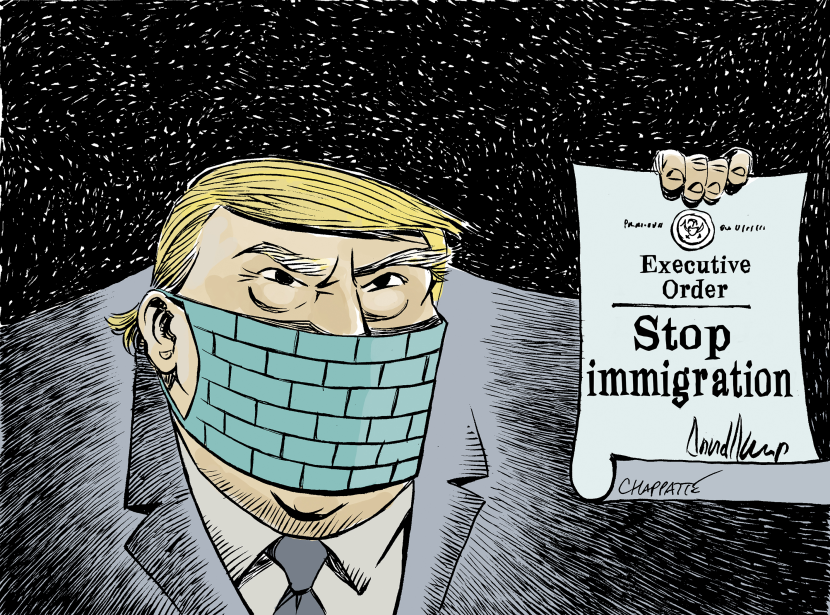
For more than 30 years under both Republican and Democratic administrations, protecting U.S. tech workers’ jobs has been a straight uphill climb. When President Trump signed his “Buy American, Hire American” Executive Order, U.S. workers’ hopes rose cautiously. But after a 30-year history of setbacks at corporate giants like Disney, Caterpillar, Facebook and Amazon, caution was the appropriate sentiment as DHS and State have demonstrated in their most recent stealth assault on American workers.

Since the egregious, decades-old U.S. tech workers’ undermining could once be charted through federal databases, in 2014 the government changed its policy, and authorized the destruction of H-1B records after five years have elapsed. In a notice the Labor Department posted, it wrote that paper or electronic Labor Condition Application records “are temporary records and subject to destruction.”

The new policy came under harsh attack from then-responsible reporters, researchers and academics. Lindsay Lowell, Georgetown policy studies director at the Institute for the Study of International Migration, said that throwing away government data is “willful stupidity,” and “an anathema to the pursuit of knowledge….” Other critics called erasing key information related to American job displacement a clumsy coverup that attempts to whitewash Congress’ willingness to sell out U.S. workers.

President Trump can – much as he did when he successfully intervened after the Tennessee Valley Authority attempted to displace its skilled IT workers – bring the Deep State’s treacherous plot to a screeching halt. But for the president, distractions abound. There’s the Senate Judiciary Committee hearings on Supreme Court nominee Amy Coney Barrett and the November 3 general election, looming about a month away.

For President Trump, the risks of inaction could cost him vitally needed votes of young professionals, plus the votes of millions who supported his pro-America 2016 campaign.

Joe Guzzardi is a Progressives for Immigration Reform analyst who has written about immigration for more than 30 years. Contact him at [email protected].
 

Comments Off on Deep State Subverts American Workers Again

Play Ball: When the Mt. Rushmore Nine Took the Field

From the 400 carvers who created the magnificent Mt. Rushmore National Memorial emerged a fine baseball nine. The Mount Rushmore Keystones competed in South Dakota’s amateur league, and once went all the way to the state’s playoffs.

Baseball was important to the workers. New carvers were often selected based on their diamond skills. And, needless to say, after a day on Mt. Rushmore, the carvers, drillers and winchmen enjoyed the diversion that baseball provided. In the 1930s, the Mt. Rushmore crew earned 50 cents an hour if their jobs were at the mountain’s base, but carvers could make up to $1.25 an hour. During the Depression era, Mt. Rushmore jobs were coveted.

In his book, “Mt. Rushmore Q & A,” Don “Nick” Clifford, a key player, wrote that from age seven he helped support his family. Clifford hauled water to coal miners, delivered newspapers, milked cows, managed a pool hall and helped his Mom with her custodian’s duties at the Keystone School. But Clifford also found time to “play baseball every day, rain or shine.”

Clifford explained the important link between baseball and Mt. Rushmore. Clifford wrote that Lincoln Borglum, Mt. Rushmore architect and sculptor Gutzon Borglum’s son, was a great baseball fan and wanted his workers to have a team. In 1938 and 1939, Borglum sought out experienced players, and since Clifford was a former member of the Rapid City Junior League team, he was among those selected. A pitcher and an outfielder, Clifford said that he completed all the games he started, and that his philosophy was to “throw as hard as he could.”

Nicknamed the Keystones, the club went up against other South Dakota small towns that fielded teams. In 1938, the Mt. Rushmore nine couldn’t afford uniforms, and local baseball beat writers dismissed them as “…harmless and a permanent occupant of the cellar….” Yet, after the Keystoners drubbed the local Dohertys 6-1, those same critics ate their words and wrote that the upstarts “grew fangs overnight,” and “ambushed” their unsuspecting rivals.

From that moment on, Clifford said, the team was on its way to greater heights. By 1939, the team had uniforms that read on the front “Rushmore Memorial.” Their warm-up sweaters featured images of presidents George Washington, Thomas Jefferson and Abraham Lincoln. The fourth president, Teddy Roosevelt, had not yet been added to the monument.

The Keystones represented themselves proudly in the Aberdeen-hosted state tournament. The Associated Press described Rushmore’s first win before eventually bowing out – a 2-0 ten inning squeaker – “a thriller.” Crawford drove in the two winning runs. But as the Mt. Rushmore project reached completion, the players drifted away to find other employment. No more games were played. A baseball signed by most of the 1939 team and other Keystone memorabilia are displayed at the Mt. Rushmore Lincoln Borglum Visitor’s Center.

Aberdeen has a rich baseball history. In the early 19th century, South Dakota saw a surge in baseball’s popularity. On one of his many barnstorming tours, in 1922, Babe Ruth visited Deadwood to play an exhibition game. Post-World War II, 448 minor league clubs played in 59 nationwide leagues. One was the Northern League that included four South Dakota teams – the Sioux Falls Canaries, the Huron Cubs, the Watertown Expos and the successful Aberdeen Pheasants.

Established in 1946 by Aberdeen businessmen known as the “Founding Fathers,” the Pheasants’ major league affiliates were the St. Louis Browns who, in 1954, moved to Baltimore to become the Orioles. The Pheasants’ sent 26 future stars to the big leagues. Among the most recognizable are Don Larsen, the New York Yankees’ perfect World Series game hurler and his teammate “Bullet” Bob Turley, the 1958 Cy Young Award winner. Others include two Orioles Hall of Famers: pitcher Jim Palmer, manager Earl Weaver, and the Birds’ slick fielding shortstop Mark Belanger, not in the HOF but a 1976 All-Star. The 1964 Pheasants, managed by Cal Ripken, Sr. and assisted by batboy Cal Ripken, Jr., are considered the best-ever Northern League team.

By 1971, the Pheasants and the Northern League disbanded, a fate that awaits about 40 minor league teams in 2021 when Major League Baseball will slash its affiliations from 160 teams to 120. The countless fans in small communities like Aberdeen are plum out of luck.

Last year Clifford, the last living Mt. Rushmore worker, passed away at age 98 in his beloved Rapid City.

To purchase “Mt. Rushmore Q & A,” and to learn much more about the baseball team and the monument, contact the Mt. Rushmore Society at [email protected].

Joe Guzzardi is a Society for American Baseball Research and Internet Baseball Writers Association member. Contact him at [email protected].

Comments Off on Play Ball: When the Mt. Rushmore Nine Took the Field

More Americans = Less Wilderness

For decades, federal immigration laws have been a hot-button issue. Nearly 55 years ago, on October 3, President Lyndon Johnson signed the Immigration and Nationality Act of 1965. Although few could have imagined it at the time, the ensuing decades would be rife with contentious debates about immigration and its impact on U.S. society. Both expansionists and those who favor less immigration make compelling arguments.

But, because the agenda-less U.S. Census Bureau’s Current Population Survey provides irrefutable data, few dispute immigration’s effect on population growth. Expansionists prefer not to talk about the link between immigration and population growth, but they dare not challenge it. In February, the Census Bureau projected that within the next four decades, about 75 million more people will live in the U.S., a total population of more than 400 million, up from the nation’s current 330 million. The Bureau attributes more than 85 percent of the 75 million increase to immigration, and births to immigrants.

Yet expansionists keep proposing illogical arguments for more people. In California, the Victorville Daily Press published an op-ed written by Mario Lopez that advocated for more immigration. Keep in mind that California is besieged with affordable housing shortages, a growing homeless count, raging wildfires, water shortages, and the nation’s worst income inequality rate. In Victorville specifically, 23 percent of the city’s 122,400 predominantly Hispanic residents live in poverty, and only 55 percent are in the civilian labor force. Lopez should explain how a larger immigrant population will help his neighbors find jobs that will enable them to climb out of poverty.

Pro-growth arguments more ill-conceived than Lopez’s have recently appeared in mainstream publications. Jennifer Wright, political editor at-large for Harper’s Bazaar, inferred that the U.S. should have a more generous immigration policy because the globe’s 7.8 billion people could fit into Texas. Wright’s preposterous theory might be true technically, assuming that people are willing to live on top of each other, but because of insufficient water, food and inadequate sanitation, most would be dead within a short period. Ditto for plants and animals.

Environmentalists, however, hammer home the reality – the U.S. cannot have high immigration levels while protecting its national resources or its residents’ quality of life.

Author Dave Foreman, founder of Rewilding Earth, expressed the risks of high immigration to the U.S. and its environment in his concise formula: More Immigration = More Americans = Less Wilderness.

Foreman’s message is somber, but important. Unequivocally, Foreman blames humans and their “breathtaking population boom” for the what he calls the unprecedented mass extinction of plants and animals. As one of hundreds of examples, consider North Carolina Natural Heritage Program’s Wesley Knapp, one of 16 expert botanists whose findings the international journal, “Conservation Biology,” published.

Knapp’s team found that most of the 65 documented plant extinctions occurred in the western U.S., a region that botanists rarely explore and which has been relentlessly developed over the last three decades. Because many extinctions likely occurred before scientists explored the area, it is extremely likely the 65 documented extinctions vastly underestimate the actual numbers of plant species that have been lost.

Achieving sustainability becomes more elusive daily, and the U.S. is running out of time. A study from the Center for American Progress titled “How Much Nature Should America Keep?” found that “The U.S. has lost the equivalent of nine Grand Canyon national parks, or 24 million acres (9,712,455.41 hectares) of natural area, between 2001 and 2017 due to agriculture, energy development, housing sprawl and other human factors….”

Sensible immigration totals must be all Americans’ goal, not a cause for political divide. Policies that limit immigration to sustainable levels aren’t anti-immigrant. In fact, existing lawfully present immigrants would be a primary beneficiary of less immigration.

Years ago physicist and sustainability champion Al Bartlett posed a question that today’s expansionists should answer:

“Can you think of any problem in any area of human endeavor on any scale, from microscopic to global, whose long-term solution is in any demonstrable way aided, assisted, or advanced by further increases in population, locally, nationally, or globally?”

Expansionists and proponents of reduced immigration should be willing to enter into a respectful dialogue that seeks the answer to Bartlett’s important query.

Joe Guzzardi writes for the Washington, D.C.-based Progressives for Immigration Reform. A newspaper columnist for 30 years, Joe writes about immigration and related social issues. Contact him at [email protected].

Comments Off on More Americans = Less Wilderness

Juan Williams: Black Jobs Don’t Matter

With less than two months until Election Day 2020, more and more news stories are focused on the pivotal African-American vote.

In a New York Times op-ed written by Fox News contributor Juan Williams, the author boldly wrote that “the black vote now defines American politics.” Williams’ commentary went on to provide a long list of reasons that Black Americans should support challenger Joe Biden over incumbent President Donald Trump.

Boiled down, Williams contends that African-Americans dislike President Trump because they perceive him as a racist. He believes that four more years of President Trump would be bad for Black and Latino Americans. As Williams wrote, “Black Americans have had enough,” and for them defeating Trump is “personal.” Fox News viewers know that Williams can barely contain his disdain for President Trump.

On one count, Williams is spot on. The Black vote, which is 12 percent of the national electorate, could determine whether President Trump remains in the White House or whether Biden achieves his five-decade long dream of ascending to the U.S. presidency.

Trump hopes to capture more than the 8 percent of the Black vote he received in 2016. The president’s 2020 reelection campaign created Black Voices for Trump, a program designed to increase African-American voter turnout and help him garner 15 to 20 percent of the Black bloc. Expect to hear Trump tout his pre-COVID-19 success that helped drive Black unemployment to a record low 5.5 percent last year.

Had Williams in his 2,100-word column added fact to his opinion, he could have concluded that a Biden presidency would be disastrous for African-Americans and other minorities. Biden proposes, through expanded immigration, to increase the work-authorized population by more than 15 million people.

In short, Biden wants to grant amnesty to roughly 11 million unlawfully present aliens, provide an easier entry path for asylees and refugees, protect from deportation deferred action for childhood arrivals and their families, maintain the diversity lottery, texpand employment-based visa categories for both low- and high-skilled workers, tdilute border and interior enforcement and defend temporary protected status recipients.

Biden’s immigration platform means millions of employment-authorized persons will enter the labor pool to compete for American jobs – not Williams’ well-paid, elitist jobs, but the type of employment that helps lower-skilled, less-educated minorities begin their ascent to the middle class.
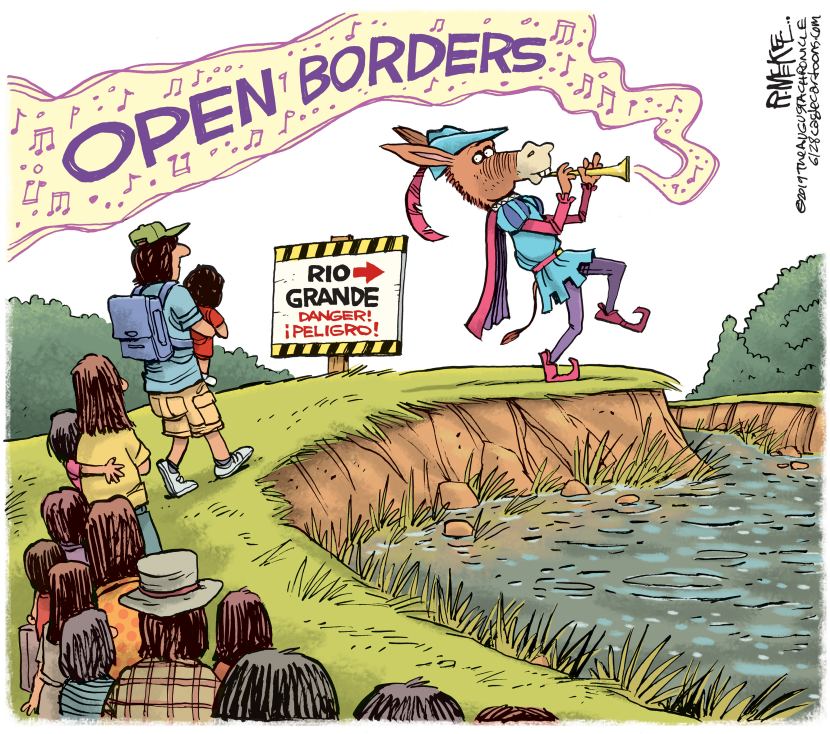
Williams is typical of mainstream media reporters who refuse to connect the dots between immigration and work authorization, which impedes upward mobility for minorities. The media has powerful allies that also favor waves of new employment-authorized immigrants, even though they contribute to Black workers’ unemployment. The 55-member strong Congressional Black Caucus is united in its immigration advocacy, and votes accordingly.

A Biden presidency and the mass immigration that would accompany it will derail the economic recovery that blue-collar workers are just now enjoying. A recent Bloomberg report found staffing firms in key U.S. cities are offering bonuses of up to $5 an hour to bolster the existing $12 an hour wage. Jobs posted with a wage scale of $12 – $14 an hour went wanting, but $17-hour positions were eagerly snapped up. Trump’s tighter immigration policies have contributed to higher wages.

T. Willard Fair, the Urban League of Greater Miami’s chief executive officer, spoke the tough, honest talk that the Black Congressional Congress should heed. Fair once told the Miami Herald that amnesty for illegal workers is more than a slap in the faces of Black Americans; it’s an economic disaster that weakens African-Americans’ political empowerment. And in his congressional testimony, Fair said the interests of Black Americans are clear: “no amnesty, no guest workers, enforce the immigration law.”

History proves that Fair is right. The low-immigration, tight labor market years from 1924 to 1965 spawned impressive wage gains for all Americans. As the “Journal of Economic Literature” confirmed, white males’ real incomes expanded two-and-one-half-fold between 1940 and 1980, but for Black men, those same incomes quadrupled, and closed the economic gap between the races.

Black Americans must listen to a true and fearless voice like Fair’s to help them reach the long-elusive economic stability that they deserve.

Joe Guzzardi writes for the Washington, D.C.-based Progressives for Immigration Reform. A newspaper columnist for 30 years, Joe writes about immigration and related social issues. Contact him at [email protected].
Comments Off on Juan Williams: Black Jobs Don’t Matter

Tom Seaver and Baseball’s Altered Game

Baseball fans will be a long-time mourning Tom Seaver’s passing. “Tom Terrific” was an icon like Willie Mays, Mickey Mantle and Ted Williams who, for those who watched them play, will forever treasure the experience.

Baseball analyst Bill James argues that Seaver ranks among baseball’s best-ever pitchers, equal to or better than Walter Johnson, Christy Mathewson or Bob Feller. More important when lamenting Seaver’s death, however, is to remember his character. When the National Baseball Hall of Fame announced Seaver’s death, it referred to his dignity, sportsmanship, integrity and wisdom, qualities too-infrequently found in famous athletes.

Since Seaver’s stellar 1969 season when he led the “Miracle Mets” to a World Series victory, baseball has undergone transformative changes: three more expansion rounds, divisional realignment, radically altered on-the-field game execution philosophy, foolish rule changes and several added layers of post-season play.

One of the most dramatic shifts is the demographic composition in the player rosters from mostly native-born Americans to roughly 30 percent foreign nationals. On Seaver’s 1969 Mets, the 25-man roster was 100 percent U.S.-born, which included five African-Americans. The 2020 Mets Opening Day roster includes nine foreign nationals, a mix of Cubans, Dominicans and Venezuelans, but no African Americans. In 2019, only 68 African-American players appeared on opening-day rosters, injured lists and restricted lists. During the same year, rosters listed 251 international players.

Fans wonder how, over a half century, foreign nationals displaced about 30 percent of American-born players. They question why such prestigious, generously paid jobs go, virtually by default, to international players.

Therein hangs a tale.

The short answer is the State Department’s willingness to issue a variety of nonimmigrant visas that enable international players to freely enter the U.S. The most commonly used is the P-1, which remains valid for the duration of players’ contracts, often for multiple years. Since 2006, even minor league players are P-1 qualified; before 2006, players received an H-2B visa, which meant they had to return home when the season ended. Unlike the H-2B, the P-1 has no numerical cap, so owners can no longer grouse about visa snafus that strand their international players.

The backstory is that MLB franchise owners, who preside over a $10.7 billion industry, have business models identical to Microsoft, Apple and AT&T: hire cheap labor, and maximize profits. Caribbean players are cheaper to sign – period! Dick Balderson, former Seattle Mariners general manager, once said that in the impoverished Dominican Republic, even a modest signing bonus represents a small fortune. Team owners can sign 20 penurious Dominicans, also incentivized by the prospect of coming to the U.S. legally, for the same cost as four Americans.

To hone Dominicans’ skills, all 30 MLB franchises have development camps run by professional coaches and trainers. Owners scuttled plans to start similar camps in Venezuela when the political climate became too unstable. Not a single similar MLB-maintained academy exists in the U.S.

Instead of inking foreign nationals, owners could choose from an abundance of solid domestic players. The annual College World Series puts their talents on display. Yet, wrote author Ryan McGee in his book, “The Road to Omaha,” for most college players, the CWS is the last organized baseball game they ever participate in.

Playing in the major league has to rate among the world’s best jobs. The starting, average and the highest salaries are, respectively, $565,000, $4.4 million and Los Angeles Angels’ Center Fielder Mike Trout’s bank-busting $35.5 million, a one-year installment on his $426.5 million 12-year contract.

The international players are talented, and perhaps deserving of their place on an MLB roster. But, to repeat, playing MLB baseball is a job (although never considered such among its devotees).

Talented U.S. players should get priority for playing in the big leagues, and making the riches that follow.

Joe Guzzardi writes for the Washington, D.C.-based Progressives for Immigration Reform. A newspaper columnist for 30 years, Joe writes about immigration and related social issues. Contact him at [email protected].

Comments Off on Tom Seaver and Baseball’s Altered Game

On Labor Day, Protect U.S. Workers

Labor Day kicks off the final stretch toward the Election Day showdown between incumbent President Donald Trump and the Democratic challenger, former Vice President Joe Biden.

After months of COVID-19-related layoffs, furloughs, outright firings, permanent closing of many small businesses and bankruptcy filings by major corporations, restoring jobs will be among the top issues on the candidates’ agendas.

Many of Trump’s talking points are a mirror image of his successful 2016 platform: to prioritize American jobs, wages and security; to establish new immigration controls to boost wages, to ensure that available jobs are offered to Americans first and to curb foreign workers’ uncontrolled admission and thereby protect the economic well-being of already present lawful immigrants.

If re-elected, Trump promises to, among his other goals and under the banner of “fighting for you,” create ten million new jobs and, as he did in 2016, “prohibit American companies from replacing United States citizens with lower-cost foreign workers.” But during his four years in office, the president got mixed-to-poor grades on ending American corporations’ cheap labor addiction.

On the positive side, within the last two months, Trump intervened in the Tennessee Valley Authority’s plan to displace its American employees with H-1B visa workers. Hundreds of American jobs were saved. But, on the negative side, during his first term, Trump has been unable – or perhaps unwilling – to keep other globalist corporations like Amazon, Google and Deloitte Consulting from tapping into the vast cheap labor pool.

Another related and alarming development: last week, Trump moved to promote Chad Wolf, acting Secretary of the Department of Homeland Security, to the position. From the perspective of U.S. tech workers, Wolf’s resume is troublesome. Before joining the White House, Wolf worked for the National Association of Software and Service Companies, a lobbying group that promotes outsourcing and offshoring of U.S. tech jobs to India.

In more disappointing news for unemployed and under-employed Americans, the State Department gutted Trump’s June executive order that paused several employment-based visa categories until December 31. President Trump’s base hailed his action as a positive intervention on struggling American workers’ behalf. But the State Department, in an advisory written in the vaguest imaginable language, will admit entry to foreign nationals that it deems – without having to provide a scintilla of evidence – essential to “the immediate and continued economic recovery of the U.S.” Deep State bureaucrats negated Trump’s order, and opened the door for foreign nationals to take jobs that Americans deserve.

Also contributing to Trump’s lukewarm immigration grade is his refusal to promote E-Verify, the federal program that confirms an individual’s legal privilege to work in the U.S. Analysts are in near unanimous agreement that E-Verify represents a more effective deterrent to illegal entry and hiring than a Southwest border wall. President Trump may have forgotten that winning an election only gave him possession of the ball; he still needed to score touchdowns.

Candidate Biden’s positions vis-a-vis immigration would, in the aggregate, provide work authorization to millions. Most obviously, Biden’s support for an amnesty that would be granted to more than 10 million illegal aliens would correspondingly expand the labor pool by that total. Biden also favors more visas for low- and high-skilled workers.

The economy has failed too many Americans. The Bureau of Labor Statistics reported a 10.2 percent unemployment rate in July. That doesn’t include the millions of workers who want but cannot find full-time jobs. African-Americans as well as other minorities, the less-educated and lower-skilled Americans can’t begin their climb toward the middle-class as long as they are unfairly and unnecessarily forced to compete with cheaper overseas labor.

Whether Trump or Biden wins in November, putting American workers first should be the first and foremost goal of either.

Joe Guzzardi writes for the Washington, D.C.-based Progressives for Immigration Reform. A newspaper columnist for 30 years, Joe writes about immigration and related social issues. Contact him at [email protected].

Comments Off on On Labor Day, Protect U.S. Workers

Minor League Baseball, a Vanishing American Tradition

For millions of amateur and minor league baseball (MiLB) fans, the 2020 season was a bust. Not only did COVID-19 wipe out most all the scheduled games, 2020 may be the end of the line for many teams. Reports abound that more than 40 minor league teams are on the ropes, and in 2021 they may be gone forever. The Chattanooga Lookouts, the Erie Seawolves and the State College (Pennsylvania) Spikes are among the established teams on MLB’s endangered list.

Sports Illustrated sent a survey to 68 MiLB teams and interviewed 21 front-office executives to evaluate how they view their ball clubs’ futures. No one is optimistic. Several Triple A and Double A franchises, MiLB’s highest levels, reported that they may need to file for bankruptcy. To the disappointment of the struggling MiLB teams, their MLB affiliates haven’t bothered to telephone to offer encouragement. MLB is a $10.7 billion industry, but is willing to let franchises that lose money sink. That’s today’s corporate model – get rid of dead wood, and let the chips fall where they may.

But MLB has taken an exceptionally narrow view of MiLB’s importance. Erie, Chattanooga, State College and other teams facing the axe provide affordable entertainment to their local small-town communities. The teams also make jobs available that provide a measure of hope to often-struggling residents. For more than a century, fans have turned out to support their favorite ball clubs and their youthful prospects striving to get to the big show. But for the first time in MiLB history, baseball wasn’t played, employment opportunities disappeared, and fans were abandoned.

MiLB’s golden era ran from the early 20th century though 1949, when 464 teams in 49 leagues from coast-to-coast drew 42 million fans. Outstanding players dotted minor league rosters: Willie Mays wowed them in Minneapolis for the Millersm Joe DiMaggio played for his hometown San Francisco Seals and Mickey Mantle was the brightest star on the Joplin (Missouri) Miners.

Bands often played pre-game, and families picnicked outside the ballpark before the first pitch. Instead of hiding in the clubhouse, players mingled with fans, signed autographs happily, and after a particularly satisfying win, hoisted some rooters high into the air to share the spontaneous post-game euphoria. But eventually television, and then major league expansion, ended that simpler time.

Sacramento Rivercats’ president Jeff Savage, whose team has won three Triple A championships and five Pacific Coast League titles in their 21-year existence, laid off 30 of his team’s 65 full-time workers in late April and must find a way to continue paying off the bonds that built a $46 million, privately owned stadium in 2000. Instead of kicking off what Savage expected to be another banner Rivercats’ year, he slashed salaries and told 500 seasonal employees that they likely wouldn’t have jobs this season.
Savage summed up his plight: “You can’t sleep at night, knowing some of the things you’ll have to do to survive. It’s sort of unthinkable that we’re in this position.”

COVID also KO’d the well-known and beloved Cape Cod Baseball League, a New England fixture since 1865. As Dan Crowley explains in his book, “Baseball on Cape Cod,” the warm summer weather and high-quality baseball played by skilled college boys has attracted fans in growing numbers since 1880. The league has produced outstanding Hall of Famers that include: Pie Traynor, Pittsburgh Pirates third baseman; Red Rolfe, New York Yankees, an infielder and later Yale University’s baseball coach; Carlton Fisk, Boston Red Sox and Chicago White Sox catcher, and Frank Thomas, the White Sox long-time designated hitter.

The last page of Crowley’s book shows why fans’ devotion to the MiLB is unyielding. Pictured are two youngsters watching a Cape Cod Baseball League game in progress. Their t-shirts read: “Cape League IS Baseball” and “100% Pure Baseball.” In recent years, MLB’s greedy ownership, its contentious politics, and the overpaid, delicate, injury-prone players have contaminated the big league baseball.

“Pure Baseball,” as the t-shirt says, should never be allowed to vanish.

Joe Guzzardi is a Society for American Baseball Research and an Internet Baseball Writers Association member. Contact him at [email protected].

Comments Off on Minor League Baseball, a Vanishing American Tradition

Overpopulation Sparks California Wildfires

California is once again in the news.

As always, bad news puts the state’s latest crisis above the daily newspaper’s fold. Instead of stories about homelessness throughout the state, particularly acute in San Francisco and Los Angeles, or Gov. Gavin Newsom’s mandated COVID-19 shutdown that affects most of California, this time the headlines screech about a searing heat wave, dangerous lighting strikes and destructive wildfires. Add rolling blackouts to the mix, and the brew is treacherous.

The latest California report is grim. Even as more than 13,000 firefighters battle to contain the roaring blazes headed in multiple directions, no end is in sight. Cal Fire representative Steve Kaufmann confirmed that by mid-August, approximately 12,000 lightning strikes started 585 fires in California that torched 1.1 million acres, and forced thousands to flee their homes. At least seven have died.

For decades, wildfires have endangered Californians and their property. Not surprisingly, the nation’s most populous state has the most wildfires, and is at the most extreme risk for future fires and property damage. California needs to act immediately to diminish the continued threats that wildfires represent.

The first step is for federal and state leadership to acknowledge that California simply has too many people that consume too many resources. Unmanaged development in California, and the population growth that goes with it, has been non-stop for decades. Ten of California’s most destructive wildfires have occurred in the past decade, a pattern consistent with the state’s population growth.

Consider that, in 2020, California’s population of 40 million people represents a doubling from 20 million in the 1970s. Gradually, people in search of housing spread out and find or build homes in more sparsely populated areas. Those previously unoccupied wilderness areas are more susceptible to wildfires. Once the fires begin in remote regions, they’re harder for firefighters to access.

The Leventhal Center for Advanced Urbanism, a Massachusetts Institute of Technology division, estimates that at least 25 percent of Californians now live in what the center calls fire-prone locations. Jon Keeley, a U.S. Geological Survey research scientist, said that population growth makes wildfires more deadly, and more likely: “More people on the landscape means more opportunity for a fire during one of these wind events.” The National Park Service agreed that too many people is the leading cause of wildfires, noting that 85 percent are caused by humans.

Sacramento has actively worked against slower, more prudent growth. In 2017, then-Gov. Jerry Brown signed 15 bills that eased new home construction. Brown touted the new legislation as an important step to end California’s affordable housing crisis. But Brown neglected to note the inevitability that a significant portion of new homes would be constructed in areas not environmentally suitable for housing.

A Proceedings of the National Academy of Sciences analysis confirmed that development in wildfire-prone regions has dramatically increased. The report found that between 1990 and 2015 home construction within the perimeter of recent wildfires increased from 177,000 to 286,000. More development to accommodate an exploding population is, at best, a fleeting, band-aid solution that kicks the real problem – too many people – down the road.

By 2050, California’s population will exceed an unsustainable 50 million, a 25 percent increase from the current level. Try to imagine the apocalyptic vision of a California with 10 million more people, all of whom will need housing, water, electrical power, transportation and education.

As a general rule, late night television doesn’t provide viewers fountains of wisdom. But last year, comedian/activist Bill Maher said that “there are just too many of us” and advocated for a lower population and reduced resource consumption. Maher correctly concluded, “We don’t need smaller carbon footprints – we need less feet.”

Joe Guzzardi writes for the Washington, D.C.-based Progressives for Immigration Reform. A newspaper columnist for 30 years, Joe writes about immigration and related social issues. Contact him at [email protected].

Comments Off on Overpopulation Sparks California Wildfires