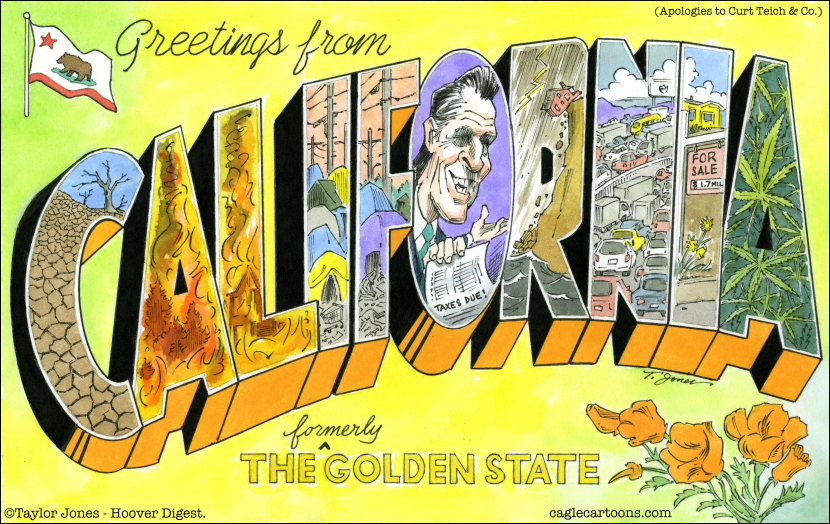
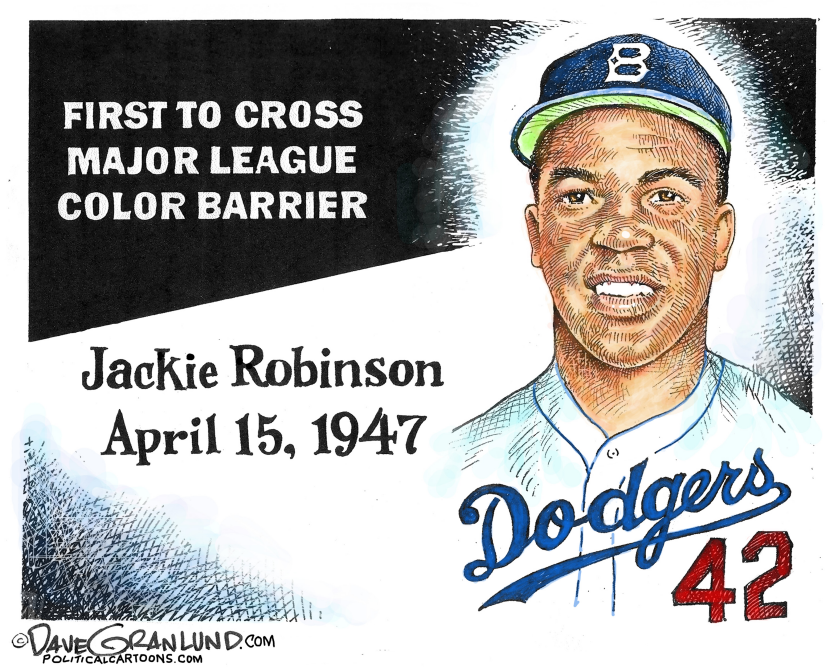
On Rosh Hashanah, a WWII hero and Hall of Fame slugger

Simply put, Hank Greenberg is the most prodigious Jewish Major League Baseball slugger ever.

Greenberg’s .313 career batting average, two MVP awards and four AL home run and RBI titles earned the 12-year Detroit Tigers’ first baseman a Hall of Fame plaque in 1956 as the first Jew to enter Cooperstown. Had Greenberg not lost the entire 1942-1944 seasons, about 2,000 at bats missed during his peak performance years, Hank’s totals would have been loftier.

Few sacrificed a larger percentage of their careers to serve and protect their country than Greenberg. Hank played for nine and a half seasons, and was in uniform for four and a half years. Had Greenberg played during those war years, Sabermetrics indicates that he would have ended his career with 525 homers and 550 RBIs, instead of 331 and 1,274.

Greenberg always excelled athletically. At the Bronx’s James Madison High School, the 6’4” Greenberg dominated in baseball, basketball and soccer. After a year at New York University, in 1929 Greenberg signed with the Tigers for $9,000. Hank quickly worked his way through the minors with stops in Hartford, Evansville and Beaumont.

By September 1930, Greenberg was up for a cup of coffee with the Tigers, then hit .301 in his 1931 rookie season. By 1935, he was the American League’s MVP, helping steer the Tigers to the World Series title. In 1938, Greenberg’s 58 home runs were just two shy of Babe Ruth’s then-record. Greenberg achieved his diamond feats even though once outside the heavily Jewish Bronx, he was targeted for anti-Semitic, Jew-baiting slurs. Few were more vociferous than Detroit’s Henry Ford who blamed Jews for problems in the U.S. and Europe.

Throughout his career, Greenberg played baseball on the Sabbath, but never on the High Holy Days, Rosh Hashanah and Yom Kippur. But in 1934, with the Tigers clinging to a narrow lead over the surging New York Yankees, a crucial game fell on Rosh Hashanah. Torn between his faith and his teammates, Greenberg, after consulting a rabbi, chose to play. Hank socked two homers to lead the Tigers to a 2-1 victory.

While Greenberg may have been conflicted about playing ball on High Holy Days, he had no reservations about enlisting to defend his country. In his book “Baseball in Wartime,” Gary Bedingfield wrote that after Greenberg was drafted in 1941, he was honorably discharged when Congress released servicemen age 28 years and older. After Pearl Harbor, Sergeant Greenberg volunteered to join the U.S. Army Air Corps. “We are in trouble,” Greenberg told The Sporting News, “and there is only one thing for me to do – return to the service.” Greenberg predicted, incorrectly, that his enlistment meant the end of his baseball days, and that he was leaving the game with a “pang.” Assigned to the first Boeing B-29 Superfortresses’ group to go overseas, Greenberg spent 1944 flying in the India-China-Burma theater.

On July 1, 1945, Greenberg returned to Detroit’s starting lineup, and before 47,729 fans, homered to lead the Tigers over the Philadelphia A’s, 9-5. Greenberg’s presence in the daily lineup propelled the Tigers to a come-from-behind A.L. pennant. Greenberg kept on slugging. In 1946, he led the league with 44 home runs and 127 RBIs. After a contract dispute, Greenberg spent his final 1947 season with the Pittsburgh Pirates. After his retirement, Greenberg inexplicably fell short for Hall of Fame induction for nine consecutive years until Cooperstown elected him in 1956.

In 1986, at age 75, Greenberg, an American patriot, baseball superstar and inspiration to Christians and Jews alike, died from liver cancer. Before Greenberg passed, he wrote his wife Mary Jo a love letter that he stored in a safe deposit box for her to read after his death. When Mary Jo gathered the emotional strength to open Hank’s letter, she read his words of thankfulness to God that for 25 years he had been blessed with her devoted companionship, and of his gratitude for his Detroit Tigers’ heyday.

Greenberg left Mary Jo this message: “Shed no tear for me…I’ve had a wonderful life, filled with personal success, and good health.”

Copyright 2022 Joe Guzzardi, distributed by Cagle Cartoons newspaper syndicate.

Joe Guzzardi is a Progressives for Immigration Reform analyst who has written about immigration for more than 30 years. Contact him at [email protected].

Comments Off on On Rosh Hashanah, a WWII hero and Hall of Fame slugger

What the law says about governors and migrants

Hillary Clinton, Yale Law School ’73, said on MSNBC that sending 50 illegal immigrants to Martha’s Vineyard was “literally human trafficking” by Florida Gov. Ron DeSantis, Harvard Law School, ‘05. The MSNBC co-host, Joe Scarborough, University of Florida School of Law ‘90, accused DeSantis of using innocent people as political pawns.

Texas Sen. Ted Cruz, Harvard Law School ‘95, suggested that DeSantis and fellow Texan Gov. Greg Abbott, Vanderbilt University Law School, ’84, should send more migrants to blue cities and states. Cruz, pointing to the millions of illegal immigrants that the administration has admitted, bussed and flown around the nation, called President Joe Biden, Syracuse University School of Law ’68, “the biggest human trafficker on the face of the planet.” Biden demanded that the governors stop their “un-American” political stunts.

Clinton, Scarborough and Biden have support from like-minded lawyers. Professors from Notre Dame, Georgetown and other universities, along with civil rights advocates, came down hard on DeSantis and Abbott. The harshest criticism came from Calif. Gov. Gavin Newsom who requested that the Department of Justice open an investigation into the Martha’s Vineyard flights on charges that the migrants were “kidnapped.”

Move along, nothing to see here, just angry lawyers going after each other hammer and tongs. The voting public, however, is grappling with a contradiction. If the Biden administration can order Customs and Border Patrol to put thousands of aliens on buses and planes to send them throughout the interior of the United States, then the same flexibility should apply to the governors, assuming, of course, that the migrants agree to be flown to Martha’s Vineyard or driven to Washington, D.C. or New York.

Jonathan Turley, George Washington University law professor, provided his perspective. Turley wrote that to call transporting aliens kidnapping is “to take a flight from one’s legal senses.” On his blog, Turley stated that human trafficking, a legal term, is altogether different than moving humans in traffic. The governors’ actions aren’t an attempt to put humans, through fraud, coercion or force, into peonage, involuntary servitude or sex slavery. In conclusion, Turley wrote that many objections could be made to the governors’ transport programs, but not kidnapping and human trafficking.

The tensions between the states and the cities are just beginning. DeSantis promised to fly more migrants to other sanctuary cities, but not necessarily Martha’s Vineyard. That way, DeSantis explained, the sanctuaries can “put their money where their mouth is.” A possible 2024 presidential candidate, DeSantis may sense that while some American voters support immigration, they object to Biden-style open borders.

Political expediency is at play in Texas, too. Abbott is up for re-election in November, and he’s counting on removing illegal immigrants as integral to his victory. The border invasion is expensive. As part of its $4 billion Operation Lone Star program, Texas has installed more than 42 miles of concertina wire along its Southern border near Eagle Pass and Del Rio, two communities through which millions have passed.

A potential roadblock – a boulder, really – may stand in the governors’ way. In a statement, the Boston nonprofit, Lawyers for Civil Rights, promised to investigate “the inhumane manner in which they [the Martha’s Vineyard migrants] were shipped across the country, to determine the responsible parties, whether state or federal criminal laws against human trafficking and kidnapping were violated, and what other legal remedies are available.”

Even though no evidence exists that the migrants were treated inhumanely, and as Turley warned, trafficking and kidnapping are specious charges, Lawyers for Civil Rights will press on. The legal advocates hope to gather pro bono attorneys, immigration experts, law enforcement and social services providers.

If that’s not enough, Deputy Attorney General Lisa Monaco confirmed that the Department of Justice is reviewing inquiries like Newsom’s calling for an investigation. The DOJ’s involvement, inevitable in the Biden administration, especially if the governors escalate, would be the end of the line for the governors’ strategy to give sanctuary cities a tiny taste of their own medicine. Not a single voice among the many urged border enforcement.

Copyright 2022 Joe Guzzardi, distributed by Cagle Cartoons newspaper syndicate.

Joe Guzzardi is a Progressives for Immigration Reform analyst who has written about immigration for more than 30 years. Contact him at [email protected].

Comments Off on What the law says about governors and migrants

How the Yankees almost stole an NFL legend

The National Football League has started its second century as the gridiron world’s highest achievable professional level. Formed in 1920 as the American Professional Football Association, it rebranded itself in 1922 as the NFL.

Going back to the American Professional Football Association’s birth, George Halas was football’s most prominent and creative head coach. Moreover, had George Herman “Babe” Ruth not been slamming baseballs into outer space, Halas might have been the New York Yankees’ regular right fielder.

Halas’ success as a head coach began in 1921 when he led the Chicago Staleys to a 10-7 victory over the Buffalo All-Americans in an end-of-season league championship contest. For the next half-century, Halas was a player, head coach, owner and front office executive. Most well-known for leading the Chicago Bears, the “Monsters of the Midway,” to eight NFL titles, Halas also took credit for renaming his team. Halas had a close personal relationship with Chicago Cubs owner Philip Wrigley. In rebranding the Staleys, Halas concluded that since football players are much bigger than baseball’s Cubs, they must be “Bears.”

But Halas’ long run as an NFL icon may never have happened – or would have been delayed by a decade or so – if he had won a New York Yankees’ starting outfield slot.

The Yankees had been following Halas’ baseball career since his junior year at the University of Illinois. A three major sports star, Halas played end on the football team, could shoot a basketball and starred on the baseball team, where he hit for average, knew his way around the basepaths, and excelled in the outfield. Halas hit .350 during his sophomore season, good enough to impress Yankees’ scout Bob Connery, who invited him to join the Yankees at spring training. Halas declined, but promised to keep in touch after he earned his university engineering degree. Then, World War I intervened, and Halas enlisted in the Navy.

Discharged after the war, Halas honored his pledge to Connery, signing with the Yankees for a $500 bonus and a $400 monthly salary. Earlier, Illinois awarded Halas his diploma as a tribute for his war service. His college education completed, in the spring of 1919, Halas reported to the Yankees where he made an immediate impression. The New York Times scouting report: “He is swift afoot and is a heady and proficient base runner. He covers a lot of ground in the outfield, and best of all he is a world of enthusiasm for the game.”

But from the outset, Halas had cursed luck. In a spring training game, batting against the Brooklyn Dodgers Hall of Famer Rube Marquard, Halas, trying to stretch a double into a triple, injured his hip sliding hard into third, which put him out of commission for the season’s first few months. As Halas recalled: “That slide was the beginning of the end of my baseball career.” Halas’ bum hip slowly healed. In May 1919, he led off against the Philadelphia A’s and connected for his first hit, one of only two singles in his brief MLB career. In 22 at-bats, Halas hit .091 and was demoted to the AAA St. Paul Saints. By 1920, Ruth, a blossoming superstar, was a Yankee, and Halas was embroiled in a contract dispute with the Saints. Halas then accepted an offer from the A.E. Staley Co. to form football’s best semi-pro team.

Halas lived a rich and rewarding life. Not only did Halas co-create the NFL, but he also compiled a .671 professional coaching record and was named an All-Pro end. He served in World Wars I and II, earned the rank of Captain and was awarded a Bronze Star. With his unique T-formation, Halas’ 1940 Bears trounced the Washington Redskins 73-0 in history’s most lopsided NFL Championship game. And, however briefly, Halas proudly wore a Yankees’ uniform.

In 1983, at age 88, “Papa Bear,” as Halas was lovingly called, died after a brief battle with pancreatic cancer, one of his few losing fights.

Copyright 2022 Joe Guzzardi, distributed by Cagle Cartoons newspaper syndicate.

Joe Guzzardi is a Society for American Baseball Research and Internet Baseball Writers’ Association member. Contact him at [email protected].

Comments Off on How the Yankees almost stole an NFL legend

Before Serena Williams, there was Althea Gibson

Althea Gibson represents to Black professional tennis players what Jackie Robinson is to Black athletes in Major League Baseball.

Gibson, a 1950s era player, pioneered the way for Arthur Ashe, Zina Garrison and the Williams sisters, Venus and Serena. The difference between Gibson and Robinson is that most Americans instantly recognize Jackie’s name, while only a handful of septuagenarians who followed tennis decades ago remember Gibson.

In 1950, Gibson broke the tennis color barrier when she became the first Black player to compete in New York’s national tennis championship, now called the U.S. Open.

Gibson’s family migrated from South Carolina to Harlem in 1929. For Althea to become the world’s Number One ranked women’s tennis player 20 years later seemed improbable, but turned into reality.

In her early years, Gibson, a lanky six-footer, passed her time fighting with street gangs and shoplifting. Her father, a garage worker, wanted Althea to become a professional boxer. But Althea took to basketball and ping-pong. After she won the city’s paddle tennis championship at age 10, a Police Athletic League supervisor bought her two used tennis racquets. From that moment on, Gibson’s tennis career, although still limited to the Black circuit, took off. Althea joined the Cosmopolitan Club, a local black tennis club where the most prosperous Harlem residents played. Gibson soon beat all comers. The impressed club members sent Althea on the nationwide, all-Black American Tennis Association tour.

By 1947, at age 20, Gibson won her first American Tennis Association title and went on to win 10 national championships, a still-standing record. By the end of the 1950s, Althea had collected 11 Grand Slam titles, including multiple championships at Wimbledon, the U.S. Open and the French Open, where, in 1956, she won titles in singles and doubles. After winning the 1957 Wimbledon title, New York City honored Gibson with a Broadway ticker-tape parade, an event normally reserved for international dignitaries and World Series winners.

After Gibson retired from tennis, she launched into golf, and in 1964 became the first Black woman to join the Ladies Professional Golf Association. Gibson played 171 events between 1963 and 1977, but never won a title. Although she was one of the LPGA’s top 50 money winners for five years, over the course of her golf career, she earned a meager $19,250.25. But, as she did in tennis, Gibson opened doors for Black female golfers like Shasta Averyhardt, Sadena Parks, Mariah Stackhouse, Cheyenne Woods and Ginger Howard. When she learned about Gibson’s groundbreaking LPGA involvement, Howard said that “breaking those barriers” (golf and tennis were played almost exclusively by wealthy whites) was “a huge step.”

Had Gibson played in today’s era alongside Williams, she would have earned vast wealth and Hollywood-like fame. Forbes placed Williams’ net worth at $260 million, and Serena, who has more than a dozen corporate partners, is even more successful off the court where she’s grossed more than $340 million. Today, Williams’ primary focus is Serena Ventures which has $111 million invested in 60 seed companies.

Gibson, on the other hand, was born poor and lived in poverty most of her life. Before she died in near-bankruptcy in 2003, her finances were so dire that fellow champion Billie Jean King helped her pay off her debts. During Gibson’s tennis heyday, prize money was not awarded, and she had no corporate endorsements. After her playing days ended, Gibson struggled to make ends meet by touring with the Harlem Globetrotters, representing a national baking company and giving tennis lessons.

But Gibson is finally getting her due. In 2019, a statue honoring her was unveiled outside Arthur Ashe Stadium. In Harlem, a street has been renamed Althea Gibson Way, and the U.S. Mint may soon produce a 25-cent piece with Gibson’s image.

Remembering Althea, Billie Jean said that she “always felt connected to her and thankful and grateful for what she’s done for people of color and me.”

Copyright 2022 Joe Guzzardi, distributed by Cagle Cartoons newspaper syndicate.

Joe Guzzardi is a Society for American Baseball Research and Internet Baseball Writers’ Association member. Contact him at [email protected].

Comments Off on Before Serena Williams, there was Althea Gibson

Labor Day victory for minor league ballplayers

Midway during the Major League Baseball owners’ lockout of its players, I promised myself that I was done.

No more universal DH, ghost runner, launch angles, tender limbs, watered down Hall of Fame standards and – most of all – no more haggling between the billionaire owners, the multimillionaire players and meddlesome, anti-baseball Commissioner Rob Manfred. I pledged not to watch or listen to one-third of any inning of any 2022 game.

Unlike more important self-help vows I’ve made, I stuck to my pledge – no small feat for a fan whose summers for the last seven decades have included daily baseball doses.

But another constant disappointment is the principal reason I’ve steadfastly refused to contribute one thin dime to baseball – its years-long miserly, shameful treatment of minor league players. Advocates for Minor Leaguers crunched numbers and found that the median annual salary for a minor league player today is $12,000. The federal poverty level is $12,800, and the 2021 average MLB franchise has a $1.9 billion value.

MLB team owners pay their minor hopefuls a standard $400 weekly salary at the Complex League level, $500 per week in Single-A, $600 per week in Double-A and $700 per week in Triple-A. Players are paid only during the regular season and playoffs, despite being required to perform year-round in off-the-field duties. Minor leaguers, whose numbers were slashed when Manfred mandated that 42 teams be eliminated, make an annual salary of between $4,800 and $15,400. Weekly payments for entry-level minor leaguers are less than what minimum-wage workers earn in some states for a 40-hour workweek.

Unlike major-leaguers, minor leaguers don’t draw checks until their first regular season game. Professional baseball is specifically exempted from federal labor protections. However, teams still are subject to state wage laws which owners routinely ignored. Instead, owners contended that players should be classified as short-term seasonal apprentices similar to farm laborers, a specious argument that a federal judge rejected.

Harry Marino, who played four minor league seasons and is now the executive director at Advocates for Minor Leaguers, said: “Guys struggle with housing, nutrition and making ends meet on a fundamental level. The system is outdated, exploitative and needs to change.”

Last year, one viral video showed how nearly a dozen St. Louis Cardinals Double-A affiliate Springfield players were forced to sleep on the floor of a hotel banquet room while on the road.

In 2014, three retired minor league players filed a lawsuit which claimed violations of the federal Fair Labor Standards Act, as well as abuses of state minimum wage and overtime requirements. Eight years later, MLB agreed in court to pay minor leaguers $185 million to settle. An early guesstimate is that as many as 23,000 players could share the money with an average payment to each of $5,000 to $5,500. MLB grudgingly told the court that it approves of the settlement.

Garrett Broshuis, the players’ lead lawyer and a one-time minor league pitcher, called the settlement a “monumental step” toward “fair and just” compensation for the players. Broshuis continued: “I’ve seen first-hand the financial struggle players face while earning poverty-level wages – or no wages at all – in pursuit of their major league dream.”

The minor leaguers’ court win is a refreshing victory for the good guys against the stuffed-pockets, Scrooge McDuck-type tycoons content to let their prospects subsist on a bologna sandwich and sleep on the floor while they eat wagyu beef aboard chartered jets.

Good baseball is everywhere – high school, college, Little and Pony Leagues, and the Independent League. Fans shouldn’t support the MLB tightwads, and can find better, more enjoyable baseball outlets close to home.

Copyright 2022 Joe Guzzardi, distributed by Cagle Cartoons newspaper syndicate.

Joe Guzzardi is a Society for American Baseball Research and Internet Baseball Writers’ Association member. Contact him at [email protected].

Comments Off on Labor Day victory for minor league ballplayers

Biden agenda excludes ‘equity’ for Black workers

On his first day in office, President Biden signed an executive order to advance racial equity and to support underserved communities, an admirable goal, and one that most Americans share.

Unfortunately for residents of those struggling communities, many of them African-American, on the same day, Biden signed several other executive orders that fundamentally changed how the new administration would deal with immigration. Those executive orders sent a message around the world that amnesty is on the table, and enforcement, for the most part, was off the table.

Although few could foresee how impossible to carry out Biden’s equity agenda would become once his immigration executive orders were implemented, the results are clear now. The huge influx of illegal immigrants at the border – an anticipated 2.1 million this year – legally admitted Ukrainian and Afghan evacuees, and more than 1 million legal immigrants admitted every year on autopilot have made employment conditions tough for underserved black Americans to find employment or to move up from their entry-level jobs into well-paid middle-class positions.

No president genuinely concerned about equity and black Americans’ futures could open the Southwest border and reward foreign nationals who have willfully and knowingly violated U.S. immigration laws with work authorization.

Since Biden took office through July 2022, about 4.9 million illegal immigrants, including about 900,000 gotaways, have crossed the border and entered the interior. For those among the 4.9 million who are working age, which the Bureau of Labor Statistics defines as 18 to 64, many if not most will receive work permission. Evacuees and legal immigrants also receive employment documents. Those who don’t could enter the underground economy, always fertile ground for unscrupulous employers.

But the purposely porous border isn’t the only culprit that suppresses Black, Hispanic and other minority workers from moving up in the social strata. The Biden White House allows unnecessary employment-based visas to persist. Dozens of visa categories displace or put at a disadvantage Americans seeking low- and high-skilled jobs in the areas of leisure, landscaping, forestry, technology and medical science. Neither the donor class nor whomever occupies the White House blinks when talented, experienced Americans lose their jobs and have to train their foreign-born replacements. Deeply-in-debt university graduates are behind the eight ball when they’re forced to compete with cheaper overseas labor.

The donor class wins, U.S. workers lose.

But the uncomfortable truth is that establishment Washington prefers foreign-born workers. Writing in Newsweek, Pamela Denise Long, a descendants of U.S. slaves advocate, asked why black dreams don’t matter. “Are descendants of U.S. slaves not supposed to notice how we and our countrymen are negatively affected by yet another bastardization of ‘social justice’?”

In her opinion article, Long wrote that “the immigration industrial complex built up around legal and illegal migration has abandoned what is patriotic and pro-American.” She references the 2010 Commission on Civil Rights report which found that the abundance of overseas workers expands the labor market, which eventually led to a 40 percent decline in employed low-skilled, native-born black men. Long called the Biden administration’s policies “the most expansive federal giveaway to legal and illegal migrants since President Reagan’s amnesty of 1986.”

Although Newsweek categorized Long’s essay as opinion, she wrote undeniable truths about the devastating effect that persistent high legal immigration and unchecked illegal immigration have on American workers, especially those with only a high school diploma or less. Long’s essay concluded with this admonition: “By supporting brain drain policies [importing foreign workers], Democrats, and officials who are Republican in name only are traitors against the American people. We see you!”

In his book, “Back of the Hiring Line,” author Roy Beck titled his final chapter, “Prioritize Descendants of Slavery?” Beck concluded that the most helpful immigration policy for non-college educated blacks will also be the correct immigration policy for other vulnerable Americans, including recently arrived legal immigrants.

To put all Americans on a path to greater wealth, mass immigration must be dramatically reduced.

Copyright 2022 Joe Guzzardi, distributed by Cagle Cartoons newspaper syndicate.

Joe Guzzardi is a Progressives for Immigration Reform analyst who has written about immigration for more than 30 years. Contact him at [email protected].

Comments Off on Biden agenda excludes ‘equity’ for Black workers

Kenny Washington: Football’s forgotten Black pioneer

The multi-billion-dollar NCAA football business begins again on August 27 when 13 games will be nationally televised. Three PAC-12 schools are on the richest list: University of Southern California, University of Washington and the University of Oregon.

Not all the preseason headlines, however, involve speculation about which teams might reach the 2023 National Championship Game. UCLA and USC stunned the football world when they announced that, in 2024, they’ll leave the Pac-12. But since UCLA didn’t advise the University of California’s Board of Regents, which includes Gov. Gavin Newsom, the Bruins’ grandiose plan could be scuttled. The Board doesn’t affect USC, a private institution.

Once, back in the PAC-8 days when the pre-season buzz in Southern California was about football’s star players, and not TV billions, no player thrilled fans more than Los Angeles Lincoln High School dynamo and UCLA superstar Kenny Washington. During the 1930s and 1940s, Washington was the Los Angeles area’s most popular athlete. When Washington first donned a UCLA uniform, college football had only 25 black players nationwide; the UCLA campus was 3 percent black.

In his new book, “Walking Alone, the Untold Journey of Football Pioneer Kenny Washington,” Dan Taylor chronicles the tale of a groundbreaking black football star who could have been, had he so chosen, the first to break baseball’s color line. Jackie Robinson, Washington’s UCLA baseball and football teammate, readily acknowledged that Washington was his superior on the diamond.

Instead of breaking baseball’s black player ban, in 1946 Washington became the first African-American player in 13 years to join an NFL roster, the Los Angeles Rams. On the field, Washington withstood endless taunting and racist slurs, so ugly that he refused to play in games held in the south. His opponents blatantly fouled him, but referees refused to penalize the rule-breakers.

Washington’s pro-football debut was inauspicious. Playing in the Los Angeles Memorial Coliseum in 96-degree heat against the Philadelphia Eagles and before 30,000 excited fans – the Rams had just relocated from Cleveland – Washington entered the game when Hall of Fame quarterback Bob Waterfield left in the second half. Most of Washington’s passes sailed over receivers’ heads. His coach moved Washington to running back where his stats improved. In his first game at tailback, Washington was, despite knee injuries sustained earlier in his career, the Rams’ leading rusher against the Detroit Lions.

After the 1946 season ended, speculation abounded that Washington, encouraged by Robinson, would leave the Rams to pursue a baseball career with the Brooklyn Dodgers. When Dodgers’ manager Leo Durocher passed on him because “his knee was on the bum,” Washington returned to the Rams, this time with more success. Through his first four 1947 games, Washington scored four touchdowns and had a 7.5 yards per carry average.

In 1948, Washington took another strong stand against bigotry. After its Hawaii training camp disbanded, the Rams headed to Dallas, Texas, a Jim Crow state, to play in an annual exhibition game. Washington refused to play. Eventually, Rams owner Dan Reeves worked out an agreement with the games’ organizers that would pave the way for Kenny and future blacks to play in the Dallas game. Washington played and became the first black to appear in Texas professional football.

Early in the 1948 season, Washington, beset by injuries, announced his football retirement. In previous off-seasons, Washington had starred in black films, and he opted to return to Hollywood. He also had another shot at baseball, a near miss.

Polyarteritis, a heart and lung disease, took Washington, only 51, in 1971. In 1957, speaking on behalf of the NAACP’s Fight for Freedom Fund, Robinson spoke about his friend Washington, calling him “the greatest.” Author Taylor concluded that Washington was a football trailblazer who helped the NFL reintegrate.

Copyright 2022 Joe Guzzardi, distributed by Cagle Cartoons newspaper syndicate.

Joe Guzzardi is a Society for American Baseball Research and Internet Baseball Writers’ Association member. Contact him at [email protected].

Comments Off on Kenny Washington: Football’s forgotten Black pioneer

Biden’s latest jobs report only tells half the tale

The July Bureau of Labor Statistics report was a blockbuster.

The economy created 528,000 jobs, and unemployment dipped to 3.5 percent, well ahead of Dow Jones’ 258,000 new jobs and 3.6 percent unemployment estimates. Wage growth also rose; average hourly earnings increased 0.5 percent for the month and 5.2 percent year-over-year, higher than, respectively, the .03 percent and 4.9 percent Wall Street estimates. A .05 percent increase, however, keeps consumers getting poorer as inflation last month proceeded at an 8.5 percent rate.

But no federal government report merits more skepticism than this monthly jobs report. If the jobs market were truly booming, then the labor participation rate should be climbing. Instead, the participation rate is falling.

The number of Americans not in the labor force, those who neither have a job nor are seeking employment, climbed past the 100 million mark again in July, hitting 100,051,000, a 239,000 increase from June. From May to June, the previous 2022 reporting period, Americans detached from the labor force increased 510,000. The July report showed that labor participation was 62.1 percent.

A Congressional Budget Office analysis found that a lower labor force participation rate is associated with lower gross domestic product and lower tax revenues, with larger federal outlays because people who are not in the labor force are more likely to enroll in certain federal benefit programs.

A deeper dig into the July statistics found that leisure and hospitality led the way in job gains with 96,000, although the industry is still 1.2 million workers shy of its pre-pandemic level. Professional and business services were second with 89,000. Health care added 70,000 positions, and government payrolls grew 57,000. Goods-producing industries also posted solid gains, with construction up 32,000, and manufacturing adding 30,000. Despite repeated alarm bells sounded by Walmart, Target and other big box stores that consumer demand is weak, retail jobs increased by 22,000.

Superficially, the job growth looks encouraging. But the wages that those jobs pay can’t support a household of four, or perhaps not even the individual worker. Leisure and hospitality workers, which the Bureau of Labor Statistics classifies as cooks, bartenders, waiters, hotel housekeepers and food preparation supervisors, earn an average of about $30,000. Professional and business services earn $40/hour; health care, $29,000; goods producing industries, $30,000, and retail workers, $29,000.

In order for blue-collar workers to advance into the middle-class lifestyle, they need the labor market to get tighter, a challenge since the border is open. Temporary guest worker programs are expanding and legal immigrants receive lifetime valid employment authorization.

During the Biden administration, nearly 2.5 million border crossers have entered the U.S. Biden’s intention is to give most, if not all, parole status that includes work permission. Over the last 15 years, the State Department has issued millions of guest worker visas to foreign citizens who perform blue- and white-collar jobs. In fiscal 2022, the U.S. will accept 2.1 million lifetime work-authorized legal immigrants, a record number, that will swell the labor pool.

To help U.S. workers, the labor market should be tight. Fewer immigrants would push wages higher and move Americans up the economic ladder. People would become more productive and less welfare dependent.

When Congress returns after Labor Day, campaigning for the mid-term elections will begin in earnest. Most of the politicians will promise to elevate the electorate’s lifestyles. But few will mention the important role that reduced immigration would play in boosting wages.

Copyright 2022 Joe Guzzardi, distributed by Cagle Cartoons newspaper syndicate.

Joe Guzzardi is a Progressives for Immigration Reform analyst who has written about immigration for more than 30 years. Contact him at [email protected].

Comments Off on Biden’s latest jobs report only tells half the tale

Gavin Newsom? Dems better look before leaping

Despite Washington, D.C.’s August heat and humidity – perfect vacation weather – the nation’s capital is immersed in politics.

A thorny two-part question consumes political insiders. The first part asks whether President Biden should run for re-election in 2024. And if the answer is no, the consensus response among nervous Democrats, the follow-up question is who’s the best candidate to replace him?

Apprehensive Democrats want Biden to step aside gracefully, but the president’s choice may be to go for a second term. Biden has repeatedly said that he’ll run because his party wants him to. Time will tell whether Democrats convert their cautiously anti-Biden rhetoric into action by launching primary challenges.

Since 1980, serious Republican and Democratic presidential challengers have failed – Ronald Reagan vs. Gerald Ford, Ted Kennedy vs. Jimmy Carter and Pat Buchanan vs. George H.W. Bush. The most important takeaway from the failed primary efforts is that incumbents Ford, Carter and Bush #41 lost their general elections. Unless Biden voluntarily retires, the only course left open to Democrats is to force him out, an ugly scene that would hurt the party.

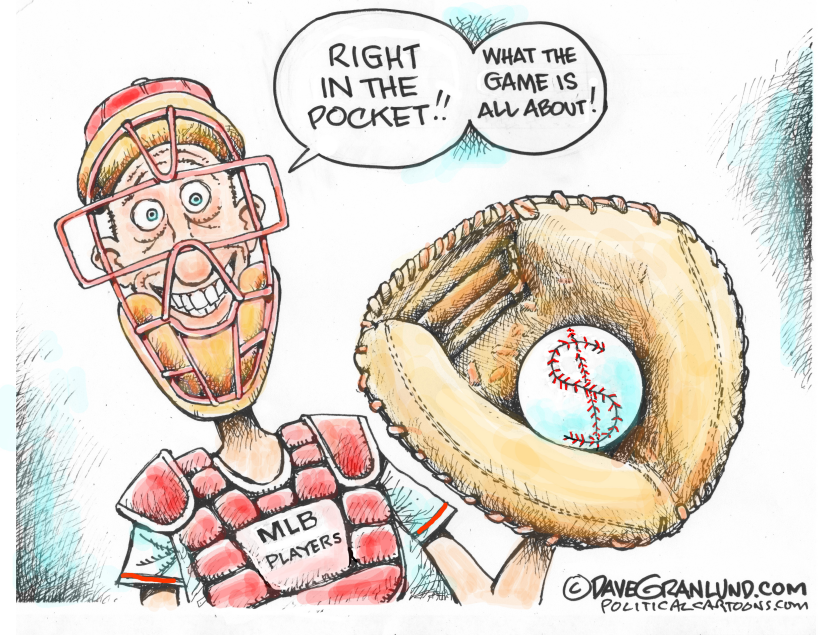
Assuming the party either puts Biden out to pasture or he bows out graciously, who will replace him? As of today, the polls have identified California Gov. Gavin Newsom as the leading candidate, predictably outpacing Vice President Kamala Harris. But before Democrats rush to embrace Newsom, they’d be well advised to vet him vis-à-vis the national electorate.

If voters are tired of privileged, elitist government, then the multimillionaire Newsom, who cavorts with billionaires, will have a hard time appealing to the working class. Billionaires were the major donors to Newsom’s gubernatorial campaigns.

More important than Newsom’s donor base, however, are his politics. Democratic National Committee Chair Jaime Harrison should ask Newson for a preview of his campaign platform. For sure, Newsom’s stump speeches won’t include lines like this: “With your vote, I can convert America into 49 more California’s.”

Typically, candidates for high office point to their successes, and run on those accomplishments. In Newsom’s case, his feats fall into the negative column. For starters, California has the country’s lowest literacy rate. Only one in four Californians over age 15 can read and understand a simple sentence. Newsom’s open border’s advocacy contributes to sanctuary state California where 220 languages are spoken, and 44 percent of residents speak a language other than English at home. Seven million Californians cannot speak English well.

Math isn’t much better. About 40 percent of California’s public school students are proficient, but that pathetic ratio is explained away because math has been designated as racist, and its study is now based on critical race theory. And nothing is Golden about the state’s income and sales taxes, which rank with the nation’s highest.

Newsom also ordered the first statewide COVID lockdown. Three protestors on a San Diego beach were arrested for violating Newsom’s stay-at-home edict.

In addition, California is third in per capita homelessness, behind Hawaii and New York. Median rent is $1,600 monthly, and homes sell for a median $538,500. Violent crime has spiked so high that the annual crime data’s publication is well overdue.

In fairness, though, Newsom’s candidacy would have, from the DNC’s perspective, an upside. Billionaires’ deep pocket donations and Silicon Valley’s censorship would be in play. Newsom would start out with 74 electoral votes in his back pocket, California, Oregon and Washington, and another 49 leaning his way, Illinois and New York. Conditions in Illinois and New York, however, are changing fast – so quickly that Biden is underwater in both states.

Weary from Newsom’s gubernatorial failures, Californians are fleeing the state, which should warn presidential voters that, if nominated, the slick, coiffed Hollywood darling is the wrong choice to replace Biden in the White House.

Copyright 2022 Joe Guzzardi, distributed by Cagle Cartoons newspaper syndicate.

Joe Guzzardi is a Progressives for Immigration Reform analyst who has written about immigration for more than 30 years. Contact him at [email protected].
Comments Off on Gavin Newsom? Dems better look before leaping

With wife’s guiding hand, Jackie Robinson Museum set to open

After a 14-year delay, the Jackie Robinson Museum will finally open to the public in New York City on September 5.

For baseball fans, the 20,000 square foot museum will offer interactive exhibits including one of Ebbets Field, 4,500 rare artifacts, and other displays that evoke Robinson’s baseball and civil rights activist experiences. The Jackie Robinson Foundation, founded in 1975 by Jackie’s wife Rachel, will oversee the museum.

Every year, Jackie’s heroic tale is told nationwide in classrooms, and he’s had schools, parkways, streets and apartment houses named in his honor. While Jackie’s story as Major League Baseball’s first black player is well known even to non-fans, Rachel’s biography is equally compelling and inspiring. Her life serves as a universal example for young women who want to succeed.

On July 19, 2022, Rachel Annetta Isum Robinson celebrated her 100th birthday; she was only 50 when Jackie died from a heart attack brought on by acute diabetes.

Writing in the Society for American Baseball Research, journalist Ralph Carhart told of Rachel’s early upbringing in Los Angeles. Her mother Zellee took Rachel to violin lessons, museums and the Exposition Park Rose Garden. Rachel attended the acclaimed Manual Arts High School, which included among its notable alumni three-time Oscar winner Frank Capra and California Governor Goodwin Knight. Zellee and her husband Charles provided Rachel with opportunities that paved her way to accomplishment.

Rachel enrolled in UCLA where she met Jackie, but sparks didn’t fly. Rachel thought the popular Bruins football star was “cocky, conceited and self-centered.” Eventually, however, Rachel’s opinion softened, and on their first formal date, Jackie took her to the Bruins football homecoming dinner, an affair at the exclusive Biltmore Hotel.

While Jackiewas serving in the U.S. Army, Rachel studied at the U.C. San Francisco School of Nursing, and worked eight-hour shifts in hospital wards. After graduating and earning the Florence Nightingale Award for excellence in nursing, Rachel and Jackie married in Los Angeles in 1946, and the couple had Jackie, Jr. in November. Two other children followed, Sharon in 1950, and David in 1952.

Rachel later earned an M.S. degree in psychiatric nursing from New York University, became a Yale University Assistant Professor of nursing, a researcher at the Albert Einstein College of Medicine, and directed the Connecticut Mental Health Center.

On April 15, 1947, Rachel was at Ebbets Field with Jackie, Jr., to watch her husband make history. Rachel later commented on how much Jackie’s elevation from the Triple-A Montreal Royals to the Brooklyn Dodgers meant to “Black America, and how much we symbolized its hunger for opportunity and its determination to make dreams long deferred possible.”

After Jackiedied at age 52 in 1972, Rachel immediately took over as the protector of her husband’s legacy. Within weeks of his death, Rachel resigned from Yale and managed Jack’s various financial interests. One of Jackie’s dreams was to start a construction company that built affordable housing for underserved families. Although Rachel didn’t have adequate funding to pursue that project, she founded the Jack Robinson Development Corporation. Working with the Halpern Building Corporation, the JRDC built and managed more than 1,300 units of low- and moderate-income housing in New York City and Yonkers. Rachel supervised the property managers’ training.

Since the Jackie Robinson Foundation’s inception nearly half a century ago, Rachel has received 12 honorary doctorates, including one from her alma mater, New York University. Her first alma mater presented her with the UCLA Medal in 2009, the university’s highest honor. In 2017, Rachel was given the Buck O’Neil Lifetime Achievement Award from the Baseball Hall of Fame and Museum, presented every three years to a person who enhances baseball’s positive image in society.

In 2020, Rachel and daughter Sharon moved to Delray Beach, Fla. where she’ll continue to provide a guiding hand to the museum curators and to promote Jackie’s legacy to all who visit, old fans and new.

Copyright 2022 Joe Guzzardi, distributed by Cagle Cartoons newspaper syndicate.

Joe Guzzardi is a Society for American Baseball Research and Internet Baseball Writers’ Association member. Contact him at [email protected].

Comments Off on With wife’s guiding hand, Jackie Robinson Museum set to open