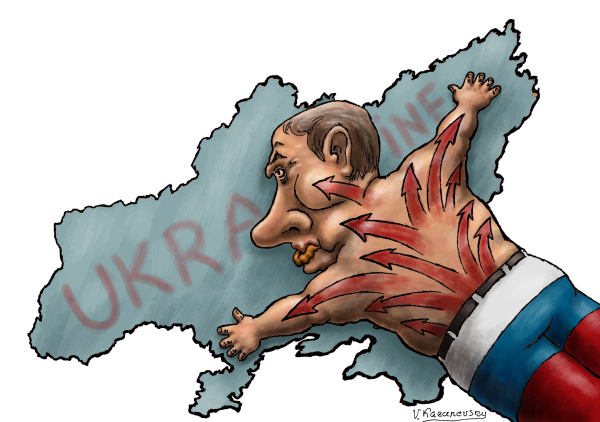
Top 10 cartoons of the week

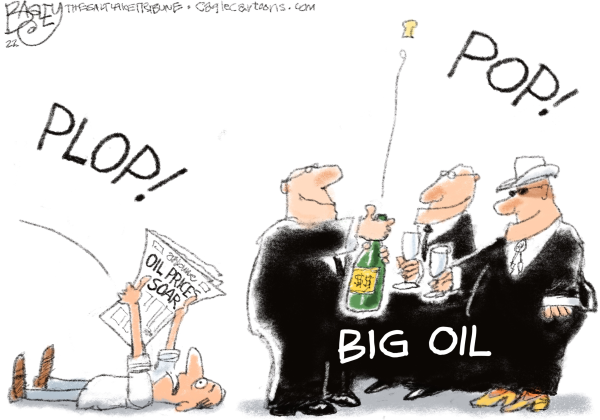
Editors prefer cartoons about high gas prices and inflation, but a few more cartoons about the war in Ukraine crept into our Top Ten list of the most reprinted cartoons of the week.

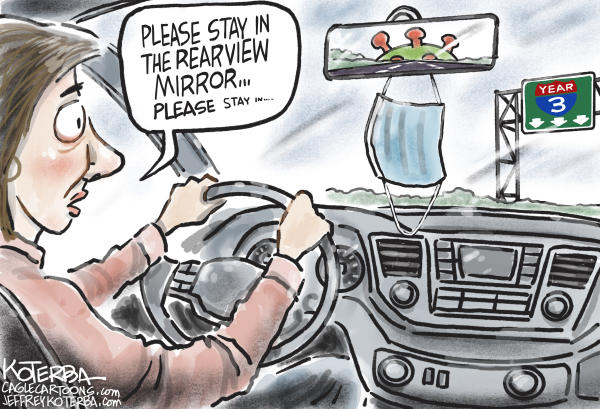
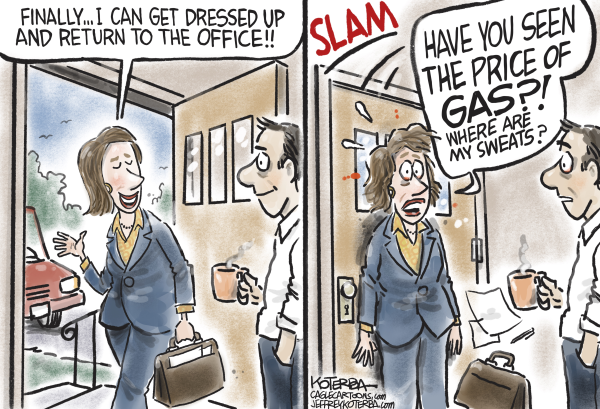
The most popular is actually No. 2, a rearview mirror COVID cartoon by Jeff Koterba, which straddled two weeks so it didn’t hit No. 1, but it was reprinted in over 250 newspapers – that’s a lot.

At Cagle.com, we’ve been syndicating editorial cartoons for over twenty years, and we’ve amassed an archive of over 250,000 cartoons. Every few years there’s a spike in gas prices and these are the cartoons editors want to publish, so I looked back over two decades for some oldies that might look fresh today.

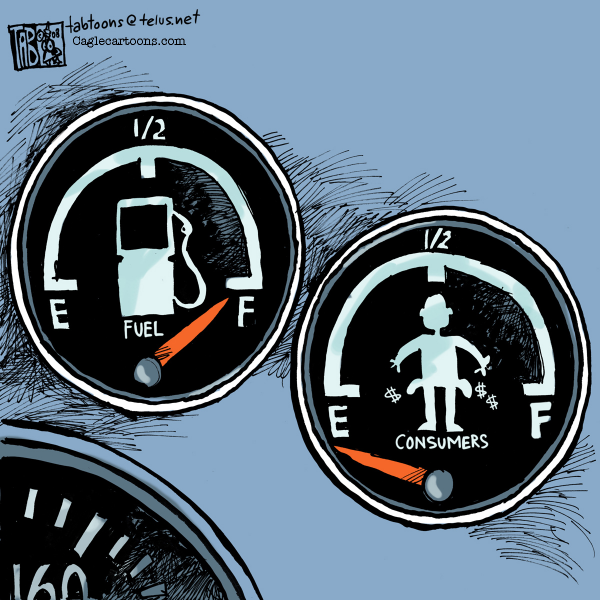
I found some great high gas price cartoons by Tab, a great, retired, Canadian cartoonist who used to draw for the Calgary Sun. I sent these to newspapers looking as fresh and new as they did 17 years ago. That’s one of Tab’s gas price cartoons at No. 9, and editors liked all of Tab’s cartoons.

High gas prices never get old.

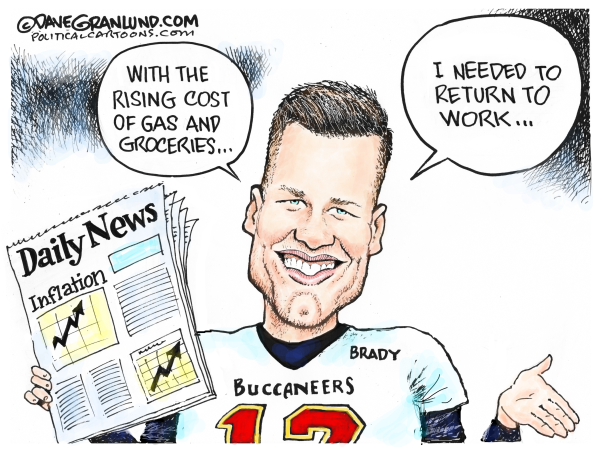
#1. Dave Granlund, Cagle.com

[download cartoon]

#2. Jeff Koterba, Cagle.com

[download cartoon]

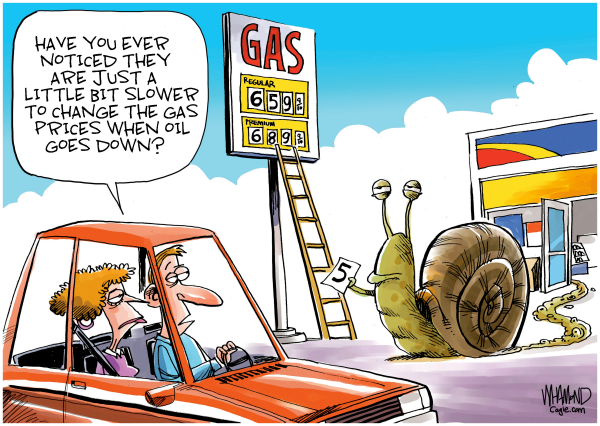
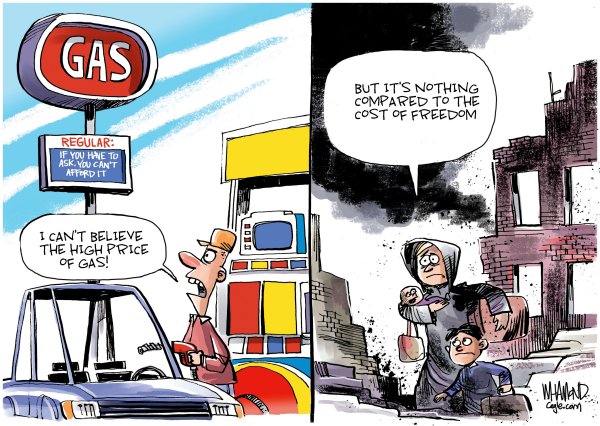
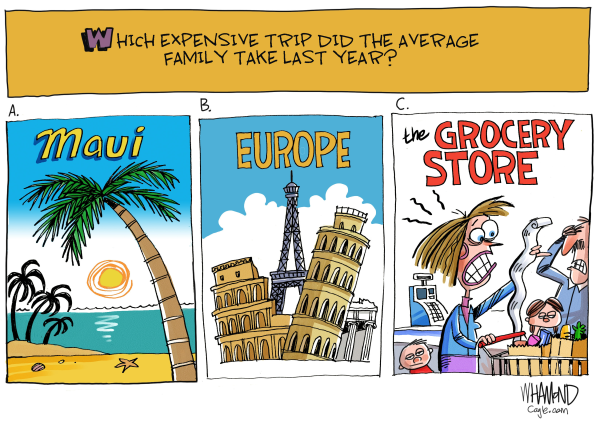
#3. Dave Whamond, Cagle.com

[download cartoon]

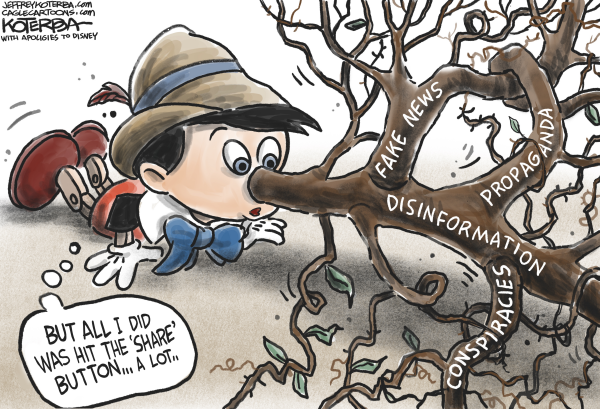
#4. Jeff Koterba, Cagle.com

[download cartoon]

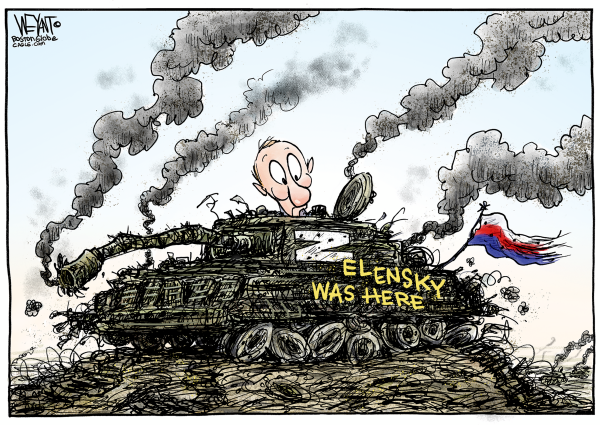
#5. Christopher Weyant, Boston Globe

[download cartoon]

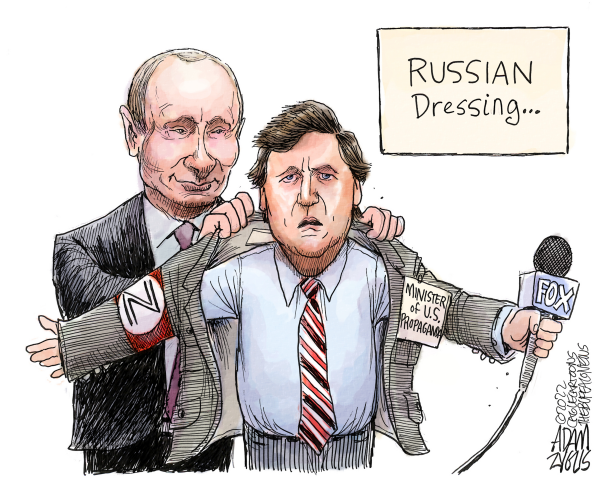
#6. Adam Zyglis, Buffalo News

[download cartoon]

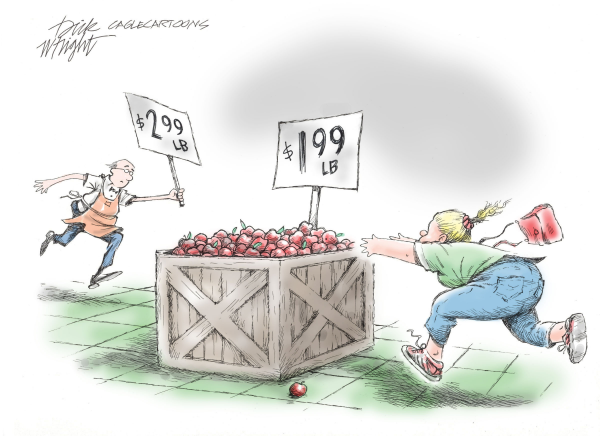
#7. Dick Wright, Cagle.com

[download cartoon]

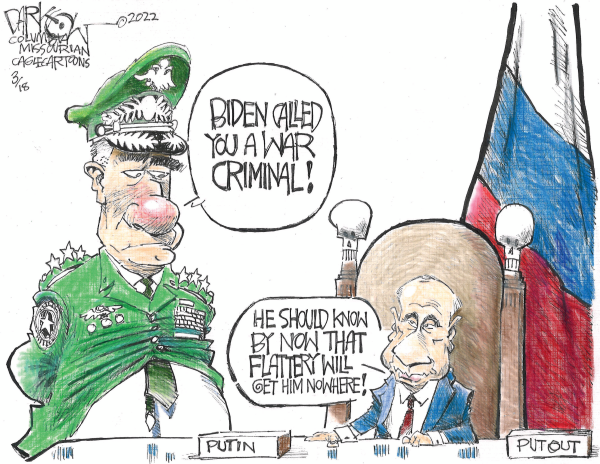
#8. John Darkow, Columbia Missourian

[download cartoon]

#9. Tab, Cagle.com

[download cartoon]

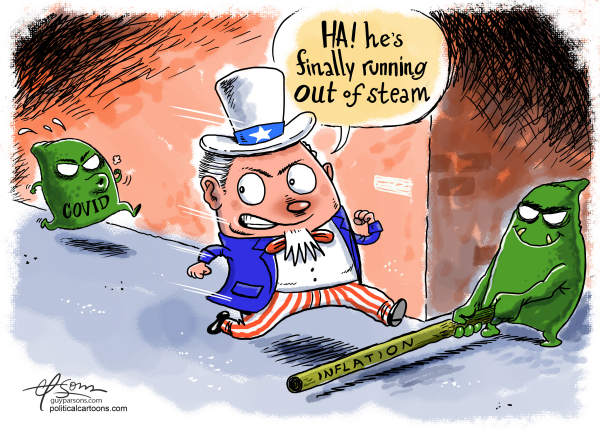
#10 . Guy Parsons, Cagle.com

[download cartoon]

Daryl Cagle is the publisher of Cagle.com and owner of Cagle Cartoons, Inc, a syndicate that distributes editorial cartoons and columns to over 700 newspapers. See Daryl’s blog at: DarylCagle.com. See all of the cartoons at Cagle.com.

Comments Off on Top 10 cartoons of the week

Top 10 cartoons of the week

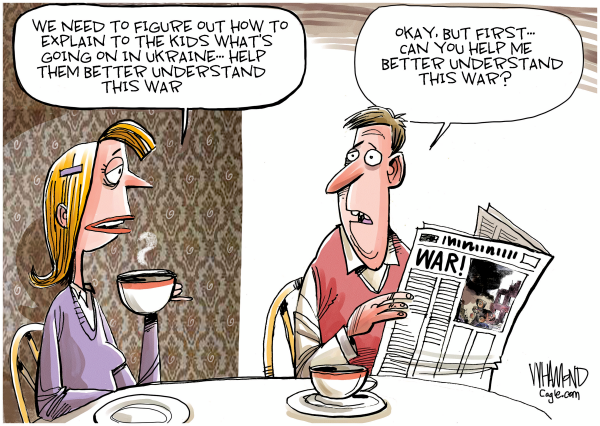
In a week when the war in Ukraine was dominating the news and cartoonists were stepping up to draw great wartime cartoons, newspaper editors were focused on softer, domestic concerns.

Here are the cartoons that most editors chose to print for the week ending Wednesday, March 16.  Congratulations to cartoonist Bob Englehart, who drew the most popular cartoon of the week by far, and to Dave Whamond, who had three cartoons in the top ten!

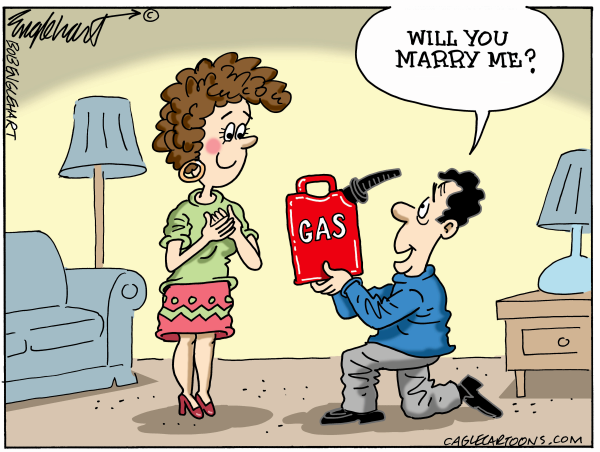
#1. Bob Englehart of Cagle.com 

[download cartoon]

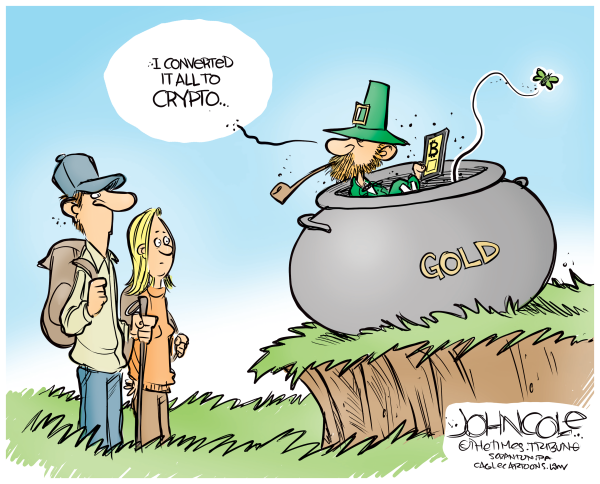
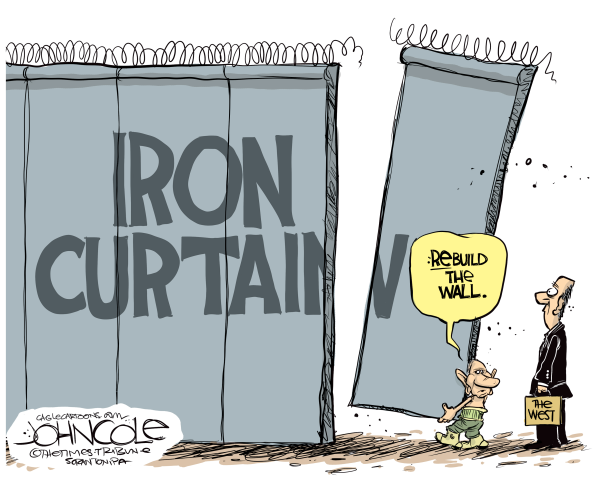
#2. John Cole of the Scranton Times-Tribune

[download cartoon]

#3. Jeff Koterba of Cagle.com

[download cartoon]

#4. Dave Whamond of Cagle.com

[download cartoon]

#5. Jeff Koterba of Cagle.com

[download cartoon]

#6. John Cole of the Times-Tribune

[download cartoon]

#7. Dave Whamond of Cagle.com

[download cartoon]

#8. Dave Granlund of Cagle.com

[download cartoon]

#9. Dave Whamond of Cagle.com

[download cartoon]

#10. Pat Bagley of the Salt Lake Tribune

[download cartoon]

Daryl Cagle is the publisher of Cagle.com and owner of Cagle Cartoons, Inc, a syndicate that distributes editorial cartoons and columns to over 700 newspapers. See Daryl’s blog at: DarylCagle.com. See all of the cartoons at Cagle.com.

Comments Off on Top 10 cartoons of the week

Cartoons from the war in Ukraine

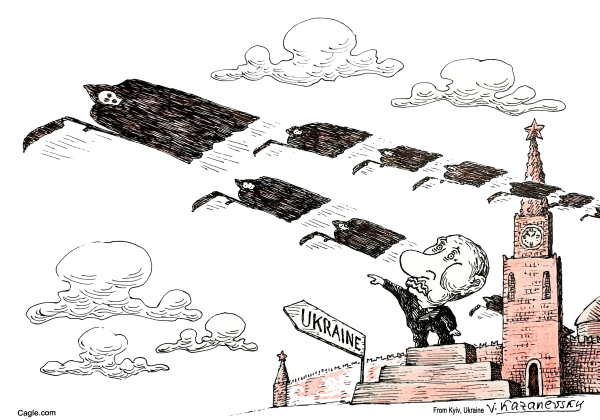
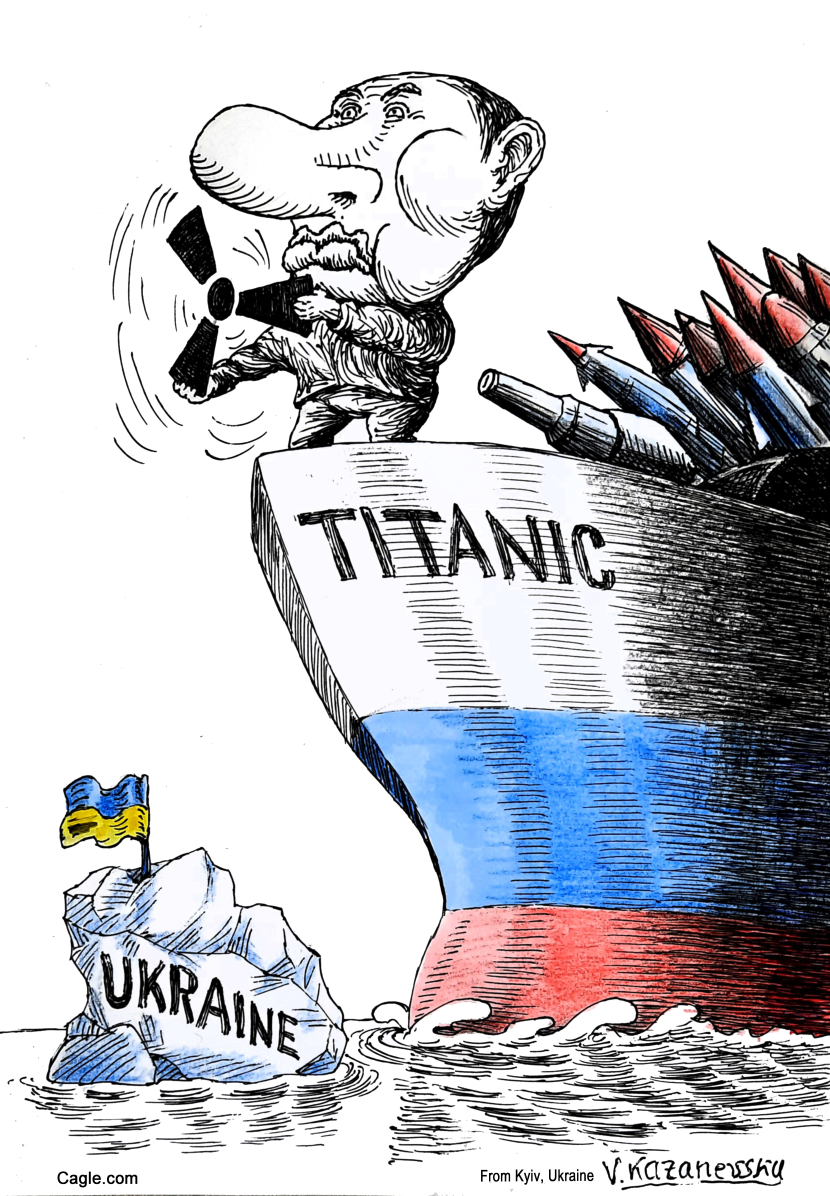
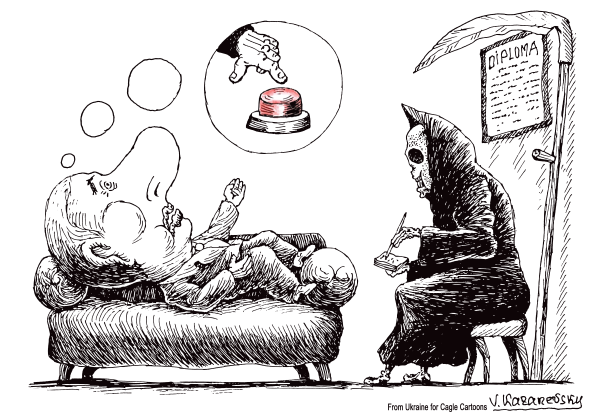
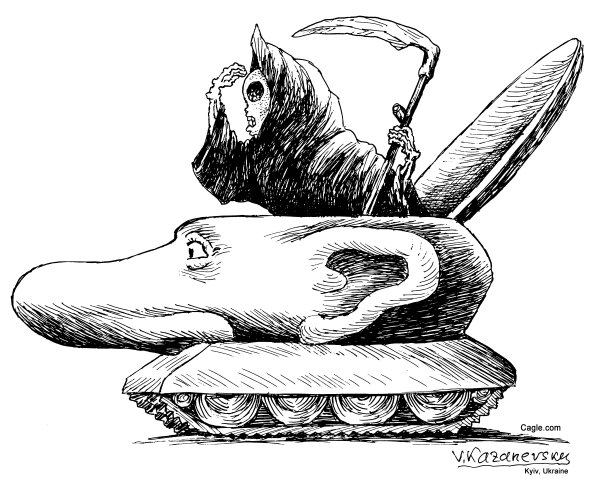
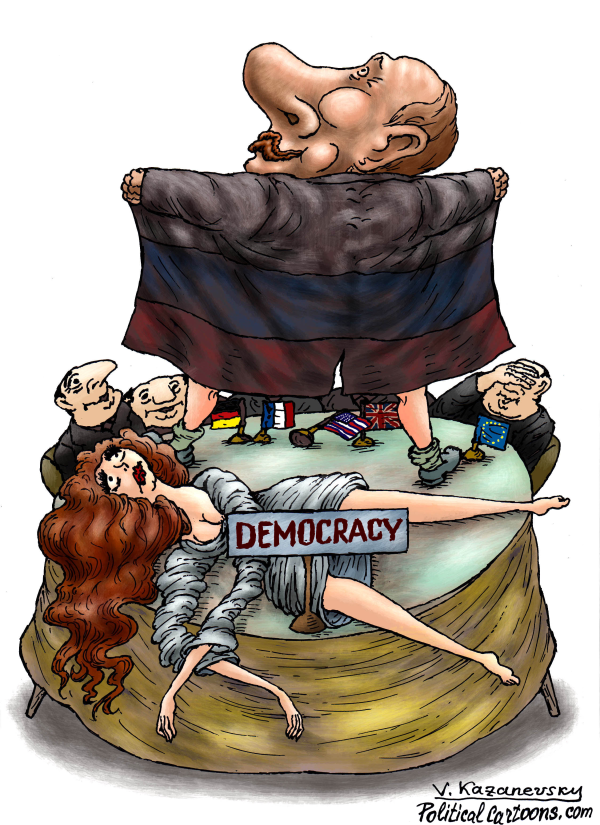
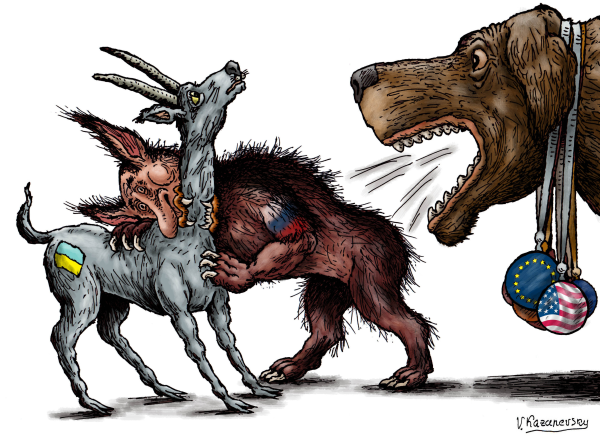
My friend Vladimir Kazanevsky is Ukraine’s top editorial cartoonist. The Russian bombing has forced Vlad and his wife to flee from their home and studio in Kyiv.

I run a small business that distributes Vlad’s work to newspapers around the world. Vlad is continuing to email new cartoons to me from his cell phone, as the colorful, painterly cartoons he used to do from his studio have turned to simpler line drawings while he’s on the move, as a refugee.

In a recent email, Vlad writes, “Many thanks to our foreign partners and friends from many countries. Cartoon art is a strong weapon in fighting for peace. Many thanks to the cartoonists from all over the world who help to open eyes to Putin’s terrorist regime.”

Here is a collection of cartoons that my brilliant, cartoonist friend Vlad has emailed to me in recent days.

[Download cartoon]

[Download cartoon]

[Download cartoon]

[Download cartoon]

[Download cartoon]

[Download cartoon]

[Download cartoon]

Daryl Cagle is an editorial cartoonist. See his work at Cagle.com. He also runs the CagleCartoons.com newspaper syndicate. Email him at [email protected].

Comments Off on Cartoons from the war in Ukraine

Big Tech, Right Wing Media and Cartoonist Logic

While the mainstream media is rightfully focused on the second impeachment of President Trump and the assault on the Capitol, right wing media is obsessed with “Freedom of Speech.”

Right wing outlets are calling for action against the “censorship” of conservatives by big, liberal, tech companies after Twitter, Facebook and other social media sites banned President Trump, taking away his preferred megaphone. The radical social media platform Parler was shut down after Amazon refused to continue hosting the site.

I run a newspaper syndicate for editorial cartoons and columns. Half of America’s daily, paid-circulation newspapers subscribe to my service, which features about 75 political cartoonists and ten columnists. Sometimes I choose to “kill” a cartoon or column that I think is inappropriate, which often leads to an angry response from the creator about censorship and First Amendment rights. I always remind them that I have First Amendment rights too, and I can choose to syndicate whatever I want.

I also hear from cartoonists whom I don’t syndicate, demanding to be on my Web site as some kind of entitlement, claiming that I’m violating their rights by refusing to allow their voice to be heard. I also hear from cartoonists in nations with no press freedom about how their government censors their cartoons; they claim this is “just the same as in America” because there are editors here who kill cartoons, too.

Cartoonists don’t seem to understand that our First Amendment rights of free speech and a free press are protections only against censorship by the government, and they don’t give cartoonists a right to be reprinted in any publication or a right to avoid editors. Cartoonists don’t have the right to be syndicated, or to be reprinted in newspapers, and no one has the First Amendment right to force Twitter or Facebook to post their rants.

If I syndicate anything that violates the rights of third parties, I can be sued. Potential liability encourages people to act responsibly. President Trump wants to strike back at social media companies by repealing “Section 230,” which generally protects these companies from liability for third party content, treating the social media sites more like telephone companies that aren’t held responsible for what people say on their telephones.

Defenders of Section 230 argue that big tech can’t be expected to police the billions of posts on their sites. This is nonsense.

Social media sites may not be liable for user posts that libel or incite violence, but they are liable for copyright infringement, and there are millions of posts that violate copyrights, especially involving cartoons. Congress imposed rules on big tech in the “Digital Millennium Copyright Act” (DMCA) that created a procedure for copyright holders to demand that a hosting company remove infringing content within a short time period, and if they don’t, the hosting company can be sued.

As a cartoonist and syndicate guy, I’ve filed hundreds of these “DMCA notices,” and in every case the hosting company has followed the procedure properly and responded to take down the content before their deadline. Some people complain about abuses of the DMCA system, but the system works, and it proves that tech companies can comply with millions of demands from injured third parties.

Why should tech companies have liability protections for some kinds of third party content (libel or incitement to violence) and not for others (copyright infringement)? Big tech can and should be liable for any harm they do.

The Section 230 protections for big social media companies should be repealed. But that’s not really what conservatives want, because removing these protections will make the tech companies act even more responsibly, prompting them to remove even more voices from the far right.

Calls to repeal Section 230 have been diminishing as conservatives begin to see this irony, replaced by calls for big tech monopolies to be broken up, replaced by condemnations of “censorship,” and replaced by demands for “Free Speech” that use the same goofy logic I hear from cartoonists.

Daryl Cagle is an editorial cartoonist and columnist; see his work at DarylCagle.com. Daryl runs the CagleCartoons.com newspaper syndicate distributing editorial cartoons to more than half of America’s daily, paid-circulation newspapers, including the paper you are reading now. Comments to Daryl may be sent to [email protected].

Comments Off on Big Tech, Right Wing Media and Cartoonist Logic

My Friend Was Arrested For Drawing a Cartoon

My friend, Emad Hajjaj, was arrested on Wednesday in his home country of Jordan. His crime? Drawing a political cartoon.

Hajjaj has been charged with the “cybercrime” of “insulting an Arab country” and faces significant time in prison (reports differ between five and 10 years of hard labor) for drawing an “offensive” cartoon criticizing Crown Prince Mohammed bin Zayed of the United Arab Emirates. Hajjaj, who draws for the Al-Araby newspaper in London, was arrested five hours after posting the cartoon to the newspaper’s web site.

I run a newspaper syndicate (CagleCartoons.com) that has distributed Emad’s work to over half of America’s daily, paid-circulation newspapers for the past fifteen years. Emad is a dear friend of mine and of cartoonists around the globe. We’ve had a great time traveling together to exotic, cartooning destinations. Since Emad is everyone’s friend in our tight-knit, global community of editorial cartoonists, his arrest comes as a quite a shock in our small world.

Jordan is a close ally of the United States and has a long history of press freedom – until this year. According to the International Press Institute, “As part of its efforts to limit the spread of Covid-19, the government declared a state of emergency in March 2020, introducing a 1992 Defense Law that gave authorities sweeping powers to impose curfews, close businesses – and gag the press. At least 13 journalists have been arrested and summoned for questioning by security forces since the pandemic began.”

Emad’s cartoon depicts Crown Prince Mohammed bin Zayed, commonly called “MBZ,” holding an Israeli dove that has spit on his face, with the spittle in the shape of a U.S. F-35 fighter jet. The U.S. recently brokered a treaty between Israel and the UAE, and in a possibly related deal the U.S. agreed to sell advanced F-35 jets to the UAE. Israel is opposing the sale, arguing that Israel’s defense advantage in the region would be compromised if UAE gets the jets. Hajjaj’s drawing shows that Israel has embarrassed MBZ by blocking the sale after the UAE agreed to the peace deal. Emad drew this spat as spit.

According to Al-Araby, Hajjaj was referred to the “notorious State Security Court” by the attorney general in Amman, Jordan’s capital. The SSC has jurisdiction over crimes involving drugs, explosives, weapons and high treason, but Al-Araby reports the court has been increasingly used to put peaceful protesters and government critics on trial.

“The country’s infamous 2015 cybercrimes law was widely criticized by rights groups, who say it is a pretext to crack down on any individual who criticizes the government,” the newspaper reported. “Amendments added to the law in 2018 also made the distribution of articles considered slanderous punishable with a prison sentence.”

Hajjaj is being held in jail pending the conclusion of an investigation. After that, he may face charges and many years of jail time. He has been transferred to the notorious “Salt Prison” outside of Amman.

No one should go to prison for drawing a cartoon – especially in a nation that claims to have a free press; especially in a nation that is an ally of the United States; especially now, when our troubled world needs fairness and press freedoms more than ever.

Emad must be freed, and must be free to draw cartoons without threats from a newly repressive regime.

Daryl Cagle is an editorial cartoonist and columnist; see his work at DarylCagle.com.Daryl runs the CagleCartoons.com newspaper syndicate distributing editorial cartoons to more than half of America’s daily, paid-circulation newspapers, including the paper you are reading now.Comments to Daryl may be sent to [email protected].

Comments Off on My Friend Was Arrested For Drawing a Cartoon

Raw Police Nerves, a Texas School District and a Cartoon

There has been an interesting, testy confrontation at a school district in Texas about a recent cartoon by Arizona Daily Star Cartoonist David Fitzsimmons.

The cartoon depicts white oppressors over the years, ranging from a slave trader to a member of the Klu Klux Klan, kneeling on the neck of a Black man, who is saying, “I can’t breathe.” The final drawing shows the infamous image of a Minneapolis police officer kneeling on George Floyd’s neck.

My syndicate, Cagle Cartoons, distributes Fitzsimmons’ cartoons to over half of America’s daily, paid-circulation newspapers. That includes the Fort Worth Star-Telegram, not far from the Wylie Independent School District. A teacher posted the cartoon on the school’s web site as part of an assignment for 8th grade students.

Testy police were quick to denounce the cartoon. In a letter to the school district, National Fraternal Order of Police Vice President Joe Gamaldi demanded an apology from the district for posting the “abhorrent and disturbing” cartoon.

“We are willing to sit down with anyone and have a fact-based conversation about our profession, but divisiveness like your teachers showed does nothing to move that conversation forward,” Gamaldi wrote.

The thin-skinned school district responded by removing the assignment and issuing an apology.

The apology isn’t enough for Texas Gov. Greg Abbott, who has called for the teacher to be fired and for the Texas Education Agency to investigate.

“This cartoon was my response to the cold-blooded murder of George Floyd by the Minneapolis Police officer, Fitzsimmons responded, pointing out it “diagrams the historic roots of our systemic racism.”

“I’m impressed the National Fraternal Order of Police is directing its fury at an illustration revealing how our present horrors are mere echoes of our cruel past,” Fitzsimmons added. “Perhaps it requires too much moral courage, or honest clear-eyed reflection, for the National Fraternal Order of Police to funnel their fury at the few racist police officers who disgrace their oath and their badges by disproportionately murdering African Americans.”

The interpretation of an editorial cartoon is part of state mandated AP History testing in 8th and 11th grade throughout America. Some of Fitzsimmons’ biggest clients are the test preparation organizations, like Pearson Education, that license his editorial cartoons for these tests.

It’s the role of 8th grade teachers to both prepare students for these tests and to prepare them to evaluate controversies in the news by exposing them to different points of view about the issues of the day. There’s no better way to do that than through editorial cartoons. Fitzsimmons’ cartoons are widely used in middle and high school curriculums, not only in the U.S., but around the world. He is among the most republished editorial cartoonists in the country, and this cartoon in particular was widely reprinted in newspapers.

Cartoons about issues that don’t evoke passionate views on both sides of an issue don’t provide valuable lessons. The school district is teaching the wrong lesson by removing Fitzsimmon’s cartoon and apologizing.

I give the teacher who used this cartoon as a teaching tool an “A” for her assignment. The timid school district, the National Fraternal Order of Police, and Texas Gov. Greg Abbott get an “F”.

Daryl Cagle is an editorial cartoonist and columnist; see his work at DarylCagle.com. Daryl runs the CagleCartoons.com newspaper syndicate distributing editorial cartoons to more than half of America’s daily, paid-circulation newspapers, including the paper you are reading now. Comments to Daryl may be sent to [email protected].

Comments Off on Raw Police Nerves, a Texas School District and a Cartoon

Comparing Pandemics in a Cartoon

I’m an editorial cartoonist. Back in March I drew a cartoon infographic comparing the size of major pandemics through recorded history. March seems like a long time ago. Lots of readers emailed me suggesting I should update the cartoon to reflect the growing COVID-19 death count – so I did that.

In response, I got angry mail from liberal readers who thought I was making the Trump administration’s arguments by minimizing the tiny COVID-19 monster as a “small” concern, like “the flu.” That wasn’t my intention. I was just interested in how the pandemics actually compared.

I thought about drawing another cartoon comparing COVID-19 with the most common causes of death in the world. The most recent stats I could find were from the World Health Organization in 2016, where COVID-19 would come in just behind malaria, suicide and HIV/AIDS, and would have double the death total of homicide and malnutrition. But it would still be a tiny speck compared to cardiovascular disease and cancer, so it isn’t easy to draw. Also, there are no easy, round, spikey monsters that represent suicide, malnutrition, homicide and heart disease.

Some readers thought I didn’t minimize COVID-19 enough; they point out that a more important measurement is the percentage of the world’s population that died in each pandemic. The population of the world has grown exponentially in past centuries, making the Bubonic Plague tower over all the other pandemics, with an estimated 200 million dead in a world that had close to 400 million people during the 1300s.

Small Pox killed an estimated 56 million people in the 1500s, out of a total population estimated between 425 million and 550 million.

The Spanish Flu killed an estimated 40 to 50 million people around 1918 and 1919, when the world population was between 1.8 and 2 billion.

The United Nations estimates the planet’s current population is about 7.8 billion people. If I adjusted the sizes of the spikey, round monsters in the cartoon to account for the estimated world population, the biggest pandemic monsters would be even bigger, and the smallest monsters would be even tinier specks. It would be impossible to draw that cartoon.

It is tough being a cartoonist in a pandemic.

Daryl Cagle is an editorial cartoonist and columnist; see his work at DarylCagle.com. Daryl runs the CagleCartoons.com newspaper syndicate distributing editorial cartoons to more than half of America’s daily, paid-circulation newspapers, including the paper you are reading now. Comments to Daryl may be sent to [email protected].

Comments Off on Comparing Pandemics in a Cartoon

Cartoons that Newspaper Editors Like … and Don’t Like

Newspaper editorial cartoonists love to draw president Trump! We make Trump fat. We give Trump a crazy, long, red tie, a bright, orange face and a grand swoop of yellow hair. Trump appears in editorial cartoons more than any other president, or anything else, has ever appeared in cartoons before. Just as Trump dominates the news on TV every night, he dominates political cartoons.

Our problem is that newspaper editors don’t like to publish drawings of Trump.

I’m a cartoonist who runs a newspaper “syndicate” that distributes the work of about sixty of the top cartoonists from around the world to newspaper editorial page editors. Close to half of America’s approximately 1,400 daily, paid-circulation newspapers subscribe to my “package” service at CagleCartoons.com, where editors can pick what they like from a collection of up to twenty different cartoons on a single day. We have a broad range of political cartoons, reflecting a spectrum of content from liberal to conservative, across a range of issues, and editors are free to choose from any of it, with each cartoon presented in the same way. Subscribing editors choose to download high-resolution images of the latest cartoons to print in their papers, and I track the statistics of what the editors choose to download.

Since our our subscribing editors represent a very large and fairly random sampling of newspapers, I can safely project that the trends we see in editors’ choices are representative of all American newspapers, including those that subscribe to our competitors who offer a similar range of editorial cartoons in their syndicate packages. I don’t think anyone has ever tracked statistics like this before, and what the stats reveal about editors is surprising.

The most surprising thing the statistics reveal is that editors simply don’t want political cartoons that depict Trump. Sometimes, when Trump makes lots of news, the majority of the editorial cartoonists draw the president and editors still avoid the Trump cartoons.

I post a collection of the Top Ten most reprinted cartoons of the week, every week on my blog at DarylCagle.com. 20% of our cartoons get 80% of the reprints, and the Top Ten cartoons are by far the most reprinted. The last time a drawing of Trump made our Top Ten list was in March; it was a drawing I did of a tiny Trump who is oblivious to a giant wave of coronavirus that was about to hit him.

The last cartoon depicting president Trump, that made our Top Ten cartoons of the week, was this one I drew of Trump and a looming COVID 19 wave, back in March.

Most newspapers are small, rural or suburban newspapers in conservative areas; big city papers tend to be the liberal ones. Most cartoonists are liberal, and the conventional wisdom among cartoonists has been that conservative cartoonists are more widely reprinted because there are few conservative cartoonists and most, small and red state papers want conservative cartoons; recent stats show that this is all wrong. Even though we hear from conservative editors who complain that there aren’t enough conservative cartoons, editors from both liberal and conservative regions tend to select the same cartoons – funny cartoons about newsy topics that express little or no opinion. In fact, the more strongly an opinion is expressed in a cartoon, either liberal or conservative, the less likely editors are to choose to reprint the cartoon.

Editorial cartoonists have their own, macho culture. We like to draw strong cartoons that hit readers over the head with our point of view. We draw out of passion. We’re certainly not in the business for the money, so the choices editors make are very frustrating for us. Some strong metaphors can almost guarantee that a cartoon won’t be reprinted, no matter what the point the metaphor is used to make. Cartoonists, especially foreign cartoonists, like to draw blood in cartoons to represent terrible violence, they like images of the Ku Klux Klan to represent racism, and drawings of Hitler to depict a murdering, fascist tyrant; these cartoons rarely get reprinted.

This “back to school” cartoon I drew made #1 on our Top Ten list one week. This is typical of the type of cartoons editors prefer now.

American editors don’t like cartoons from foreign countries at all; conversely, foreign editors don’t like reprinting American cartoonists. The idea that cartoons are a “universal language” is a canard; editorial cartoons stop at national borders. Unless there is a huge foreign story involving America overseas, American editors don’t choose to reprint cartoons about foreign events even by American cartoonists.

New events find their way onto the Top Ten. We’ve had some cartoons on the Black Lives Matter protests and racist monuments show up on our Top Ten recently, but not as many as I’d like to see. There were many more images of Trump in cartoons that got ink in the early days of the administration.

What do editors like? Lately they like cartoons about the pandemic, with cartoons about families coping with shortages, masks, back to school, social distancing and sports topping the list. In normal times, editors prefer cartoons that comment on popular culture, celebrity schadenfreude, modern family dynamics, struggles with technology, the workplace and new trends.

The timid choices that newspaper editors make are disturbing enough to bring a tear to the eye of the Statue of Liberty.

Daryl Cagle is an editorial cartoonist and columnist; see his work at DarylCagle.com. Daryl runs the CagleCartoons.com newspaper syndicate distributing editorial cartoons to more than half of America’s daily, paid-circulation newspapers, including the paper you are reading now. Comments to Daryl may be sent to [email protected].

Comments Off on Cartoons that Newspaper Editors Like … and Don’t Like

Tearing Down Saint Serra Statues in California

My new cartoon depicts the bear on the California flag pulling down a statue of Father Junípero Serra, the controversial Catholic saint who oversaw the opening of nine missions in colonial California.

Serra participated in the Spanish Inquisition and enslaved native Americans, imprisoning them at his missions. Statues of Serra have been vandalized recently as many protests toppling statues commemorating racist historical figures have swept the nation, and the world, in the wake of George Floyd’s killing while in Minneapolis police custody. Last week two Serra statues were toppled, in Los Angeles and San Francisco.

The California bear is something of an “everyman” character. I like seeing the movement to purge symbols honoring racist historical figures. Perhaps it is a bit of wishful thinking on my part to see California’s “everyman” tearing down Serra since there is quite a bit of support for defending the many Serra statues that dot our state like a pox.

President Donald Trump is using an executive order to boost penalties for defacing racist historical monuments. My depiction of the California flag is more a symbol of hope that these protests succeed than a depiction of today’s reality.

The statue is based on one located in San Juan Capistrano that was relocated recently to protect it from protesters. I lifted Serra’s robe a bit so that I could get some Saddam Hussein action going with his ankles.

When I was in third grade, I was required to build a model of a California mission and I was taught a false, fairy-tale story about Padre Serra. Thirty years later my kids went through the same thing in school.

California students have been required to build those models and have been fed a whitewashed version of history for many decades. That may be changing now as the protests continue. Maybe our “everyman” state bear will finally see those Serra statues taken down legally.

Daryl Cagle is an editorial cartoonist and columnist; see his work at DarylCagle.com. Daryl runs the CagleCartoons.com newspaper syndicate distributing editorial cartoons to more than half of America’s daily, paid-circulation newspapers, including the paper you are reading now. Comments to Daryl may be sent to [email protected].
Comments Off on Tearing Down Saint Serra Statues in California

Slap Slap

Here’s Saudi Crown Prince Mohammad bin Salman slapping Uncle Sam around a bit, with the dismembered gauntlet/hand of Washington Post columnist Jamal Khashoggi. It looks like Uncle Sam is just going to turn the other cheek.

While I was working on this one, I read news reports that Turkey’s secret recording of the alleged murder include the sounds of Saudi agents cutting off all of Khashoggi’s fingers, while he was still alive, during his “interrogation.” That left me in cartoonist conundrum – should I draw the slapping hand with all the fingers removed? That would be hard to read, and most people wouldn’t know the story about Khashoggi’s fingers reportedly being chopped off. I went with the fingers still attached – after all, “we need to wait for the Saudi’s to conclude their investigation.”

Those Saudi royals make life tough for cartoonists too.

Comments Off on Slap Slap