Why Critical Race Theory is So Dangerous

When Thurgood Marshall was strategizing his legal attack on segregation in the public school system of Topeka, Kansas, he asked psychologists Kenneth and Mamie Clark to repeat an experiment they had first conducted twenty years earlier in the 1930s.

In what has come to be known as the “Doll Test,” the Clarks handed African-American children two sets of dolls, one white and one Black. They then asked the children a number of questions, including “which doll looks the most like you” and “which doll is nice, which is bad?”

The overwhelming majority picked the white dolls as being both “nice,” and looking the most like them. From this, the Clarks deduced that the forced segregation of Jim Crow taught Black children to feel inferior. Marshall used this information in his powerful arguments to the Warren Court, and convinced the justices to overturn the principle of “separate but equal.”

Among other things, this case stands for the proposition that children are extremely impressionable, and that they will interpret messages in a completely different way than adults. They don’t have the mental acuity or sophistication to distinguish fact from fiction, nuance from clarity and are highly suggestible. That’s why they always used to say that “the hand that rocks the cradle rules the world,” because the first powerful influence on a child-its mother-leaves a lasting imprint.

So, however, do teachers. If those teachers start teaching lessons that encourage certain children to feel less valued and important, it doesn’t take a psychologist or a Supreme Court justice to realize the damage that’s being done.

And that’s exactly what’s happening with this push in so many school districts to implement Critical Race Theory protocols and lesson plans.

CRT is shorthand for a process by which white children are taught that their ancestors enslaved and persecuted the ancestors of their classmates “of color,” and that this is the reason that so many of those classmates face discrimination and – the left’s new favorite word – inequity.

It’s not that the message doesn’t have truth in it. Black and brown and immigrant groups have always been subject to discrimination in this society, and slavery casts a long shadow. Jim Crow was still in force when I was born, as my father could attest, and the imbalance in the criminal justice system is a reflection of generational inequality. The fact that populations of color are more likely to face the death penalty than white felons is just one example of the problems.

To attack CRT is not to attack history. But CRT is subversive, toxic and dangerous in that it doesn’t just teach about history. It points fingers at those who have no guilt, no investment in past abuses, no responsibility for their classmates’ pain, and no obligation to apologize. Children do not bear the mark of Cain.

This is why so many parents are turning out for school board meetings. You just have to Google “Louden, Va.” and up pops a series of videos with men and women standing at the podium pleading with the school board members not to pursue policies that will make their children feel like strangers in their own classrooms.

Many supporters of CRT are trying to go on the counterattack, pretending that these policies are nothing more than an attempt to bring transparency to a discipline – history – which has long glossed over the suffering of minorities.

CRT advocates push forcefully back against the suggestion that they are making white children feel bad about anything. But when you sit a third grader down and ask him to reflect upon what it means to be white, which is happening, and when you have discussions about “white privilege,” and when you divide kids into groups based on eye color and then give treats to the ones who have the preferred eye color just to show them how racism works, you are abusing that child.

In fact, you are doing as much damage to that child as any adult who uses his or her power advantage to influence thought, action and emotion. Those who have rightfully criticized the Catholic Church for past abuses should be applauding that assertion, although I have a strong suspicion that they won’t.

The takeaway from this column should not be that we “cover up” the past. I, as much as anyone, agree with Santayana that those who ignore the past are doomed to repeat it. But, ironically, repeating the past is exactly what the CRT advocates are doing when they insert damaging and fraudulent theories of privilege and race into a classroom where children are captives to the whims of woke adults.

It was heartbreaking that Black children were forced to feel inferior to their white classmates. It would be equally heartbreaking if, 70 years later, we simply reverse the skin color of the victims.

Copyright 2021 Christine Flowers, distributed exclusively by Cagle Cartoons newspaper syndicate.

Christine Flowers is an attorney and a columnist for the Delaware County Daily Times, and can be reached at [email protected].

Comments Off on Why Critical Race Theory is So Dangerous

Why We Should Be Grateful To Be Americans

Sometimes, the system works.

Last week, a client of mine, an abused woman from El Salvador, was granted asylum. You might not think that’s important or impressive. It won’t change the world, and it won’t make the “Breaking News” segment on CNN.

But for my client, it’s monumental. She doesn’t have to go back home to a country where she was sexually and physically abused. Her U.S. citizen children won’t lose their mother. Her sisters might find the courage within them to seek protection. And my colleagues in the bar have some concrete proof that sometimes, in some rare cases, immigrants are on the winning side of the ledger.

Our immigration system, as our criminal justice and civil systems, are designed to do the least damage and the greatest good. I do not believe in the stain of systemic racism, sexism, or bigotry. That places me outside of the loop on the social justice marathon, and I won’t even try and curry favor with those who live by those hashtags like #Metoo and #BLM, which have more to do with being popular than being compassionate. We all do what we think will make a difference, and we all do it with our own biases and experiences weighing down on our shoulders.

But my experience in immigration, person by person, real life by real life, has taught me that this is a country of limitless promise.

My father realized that a generation before I did. He was a child who grew up in foster homes, brother of a biracial sister who was bullied in the streets of West Philadelphia. Here was a teenager who changed the date on his birth certificate so he could enlist in the Army. Here was a young husband and father who worked three jobs during the day so he could attend Temple Law school at night, had to take the subway when his car windshield was repeatedly broken with bricks at Broad and Columbia (now Cecil B. Moore) graduated near the top of his class and edited the Law Review.

And because he was Irish Catholic, and had no political connections and hadn’t gone to an Ivy school, he was turned away by the big WASP white shoe firms. But he did find a job, and before he died at the age of 43, was regarded as one of the most respected, most feared and most beloved litigators in the history of the Philadelphia Bar. Forty years after his death I still get “Christine? Are you related to Ted Flowers?”

But daddy never forgot where he came from, and never forgot the slurs against his half-Asian sister in the wake of World War II, and never forgot the stain of being stuck in foster care. He understood the term “underdog,” because he’d always lived as if everything could be taken away from him tomorrow. He might have suspected that his life would be a short one, blazing but brief.

And because of that, my father went down south in 1967 and used that prodigious, legally trained brain to help Black men and women register to vote, and represented Black defendants in the courts of Jackson and Hattiesburg, Miss. He expressed his love of country and his belief in its promise with actions, not slogans. He was what the Jews would have called a “righteous gentile.”

And so, when I see the gratitude in the eyes of my clients, I know that they get it. When I read the stories of my father’s adventures, I know that he got it. When I hear about people who recognize the flaws in this country, and still stay because they know there is no better place, I know they get it. When I read the founding documents, I get it.

And I know that people like Gwen Berry, who has been granted all the privileges of citizenship and still turns her back on the flag and the anthem, I know that she gets it too. She knows that in no other country in the world would she be able to show disrespect and hostility for the country that gave her the opportunities she is blessed to have.

She may not care, she and Colin Kaepernick and Jemele Hill and the allies who walk with them.

But my consolation comes from knowing they get it, even though they have a problem admitting it to themselves, and to us.

America’s arms are open to the grateful, as well as to those in doubt. God bless her.

Copyright 2021 Christine Flowers, distributed exclusively by Cagle Cartoons newspaper syndicate.

Christine Flowers is an attorney and a columnist for the Delaware County Daily Times, and can be reached at [email protected].

Comments Off on Why We Should Be Grateful To Be Americans

The Arc of Justice Bends for Bill Cosby

“Evil may so shape events that Caesar will occupy a palace and Christ a cross, but that same Christ will rise up and split history into A.D. and B.C., so that even the life of Caesar must be dated by his name. Yes, ‘the arc of the moral universe is long, but it bends toward justice.’”

That’s a quote from Martin Luther King Jr. It’s comforting to those who believe that, if you wait long enough, you will be vindicated. Those who seek immediate justice, however, reject the notion that you must wait to have your name cleared, your goods returned to you, your convictions erased.

Bill Cosby might fall into the latter group, given his advanced age and limited time on earth. Still, I think anyone who has observed his calvary over the past few years would be right in thinking that just now, he’s glad that the arc bent in his direction.

Or in words less eloquent, but more accurate: better late than never.

On Wednesday afternoon, the Supreme Court of Pennsylvania threw out Cosby’s conviction on charges of sexual assault. I don’t think I need to rehash the facts and procedural history in this matter. Anyone who has been paying attention to the story knows that the comedian was criminally charged back in 2015 in Montgomery County, was initially tried in 2017 and after a mistrial was declared, was finally convicted in 2018 of three counts of aggravated indecent assault and sentenced to three to 10 years in prison.

Since 2018, he’s been known as inmate NN7687. On Wednesday, he got his name back, after the Pennsylvania Supreme Court held that his due process rights had been violated by the prosecutors, the judge, the jury, and every other person who had a hand in his conviction.

The court held that Cosby was induced to waive his 5th amendment right against self-incrimination in a civil proceeding, with the promise that he would not be criminally prosecuted. That civil proceeding was the deposition in the case filed against him by Andrea Constand, the only woman who alleged abuse within the statute of limitations.

The court noted that since Cosby “relied upon” this promise not to prosecute, he then made “several incriminating statements.” Those statements were used against him at trial. Furthermore, the prosecutor Kevin Steele presented the testimony of witnesses who claimed they’d been abused decades before and well outside of the statute of limitations as some sort of evidence of “pattern and practice.” He did this with the authorization of the trial judge, Steven O’Neill.

This was the nail in the coffin, and assured Cosby’s convictions. You also have to remember that this trial played out in the heat of the #MeToo crusade, filled with accusations against any man who’d ever looked the wrong way at a woman. It was a legal, social, and moral disgrace.

Cosby went to jail, and the women and their supporters danced their victory dance. Feminists had made their point, gotten their pound of flesh and planted their flag on the highest of social hills.

The fact that due process had been shattered and the Constitution shredded was considered necessary collateral damage so we would all be able to celebrate the “no means no, even when I don’t say it loud enough” mantra. It was the revenge of the Handmaids. It was a feeding frenzy.

And everyone thought it was over, and justice had been served.

But Cosby refused to admit his guilt, because it hadn’t been proven beyond a reasonable doubt. Justice had been manipulated, massaged, coerced, and transformed into something ugly.

Over the past six years, I’ve written many articles for this paper, and others. The headlines were controversial, the content even more so. I can’t print some of the names I’ve been called, but I can assure you they rarely exceeded four letters. I even had a former editor from a former newspaper for which I wrote publish a cloying “apology” to her readers, many of whom had been triggered by my defense of Cosby. So nice to see the Fourth Estate grovel before those who can’t deal with controversy.

Ultimately, though, it didn’t matter. Words are meaningless. What matters is the law, truth, procedural fairness, and time. As Dr. King wrote, it might move slowly, that arc. But as long as it reaches toward justice, the wait is worth it.

Even, I think, for an 83-year-old man from Philadelphia.

Copyright 2021 Christine Flowers, distributed exclusively by Cagle Cartoons newspaper syndicate.

Christine Flowers is an attorney and a columnist for the Delaware County Daily Times, and can be reached at [email protected].

Comments Off on The Arc of Justice Bends for Bill Cosby

Free Speech Extends to Students, Too

One of the first cases I studied at Villanova was Tinker v. Des Moines, a seminal case in free speech and student’s rights.

In December of 1965, the week I turned four, a group of high school students in Des Moines Iowa decided to wear black armbands to class in protest of the Vietnam War. They were suspended, and filed a lawsuit against the school district claiming that their First Amendment rights had been violated. Two lower courts dismissed their claims, but the Supreme Court reversed.

Holding that the student’s right to freedom of expression had been compromised, the 7-2 majority held that unless the “speech” was disruptive or that it would “materially and substantially interfere” with school activities, it could not be forbidden.

While there have been other cases that bubbled up through the system over the past half century, none has been as important in that area where students rights intersect with government interests than Tinker. Until, that is, this past week, when an eight-justice majority ruled in Mahanoy School District v. B.L. that a disappointed cheerleader at a Pennsylvania high school who dropped a bunch of “F” bombs on social media should not have been suspended because it violated her First Amendment right to expression.

There are some significant differences between the Tinker decision and Mahanoy. The most obvious one is that the student in Tinker wore her armband and expressed herself on school grounds, while Brandy Levy, the “B.L” in the latest ruling, “expressed” herself at the mall. The other one that I noted was that Mary Beth Tinker was protesting an unpopular war in a quiet and dignified way, while Ms. Levy was protesting her inability to swing some Pom Poms with a tirade that would make foul-mouthed Sarah Silverman proud.

And yet, the principle is the same: Children do not lose their rights to free speech every and any time an adult or an administration is offended by that speech.

Justice Stephen Breyer, writing for the majority, noted that while a school may very well have an interest in student speech (as the court in Tinker acknowledged) it can’t suppress pure speech with which it disagrees except in very specific, narrowly drawn situations. The fact that Brandi Levy’s language would have gotten a bar of soap stuffed in her mouth in most decent families was irrelevant to whether that speech was entitled to constitutional (if not grammatical or pedagogical) respect.

The majority also held that if speech could be considered threatening, bullying or otherwise dangerous and disruptive, it could be subject to punishment even if uttered off campus. The point that Breyer made was that parents are the ones who should be monitoring their children’s behavior, and the fact that the Levy parents were so obviously unsuccessful in raising a dignified and respectful child did not mean that it was the school’s place to do so in loco parentis.

Justice Clarence Thomas was the sole dissenter. He wrote that Levy’s speech was automatically treated as “off campus” by the majority when in fact that concept is a lot trickier in the social media age: “But where it is foreseeable and likely that speech will travel onto campus, a school has a stronger claim to treating the speech as on campus speech.” According to Thomas, technology that enables the transmission of messages from a mall to students who might be on campus, in their homes, at the doctor, at an extracurricular game or at that same mall muddies the waters.

It’s a great point, and one that the majority should have looked at in more detail, particularly with the proliferation of social media these days that have basically placed everyone within a click of being “friends” with strangers, privy to their deepest “confidences” that can be preserved for posterity with the screen shot function.

And it’s worth noting that we are of course talking about public schools, which are essentially an arm of the government, so the rules are somewhat different when dealing with a private institution.

But ultimately, the court was right to rule activities which would otherwise be permissible for an adult should not be forbidden to a child when they involve pure speech and expression. If a student doesn’t lose her First Amendment rights when she walks into the classroom, she certainly shouldn’t lose them when walking into Starbucks.

Those of us who spent the past year watching school districts draw up lesson plans that tell students what words they can use so as not to “trigger” their classmates, and who have used totalitarian tactics to erase mascots and traditions should rejoice in the fact that for a brief shining moment, the government was told to back off.

Copyright 2021 Christine Flowers, distributed exclusively by Cagle Cartoons newspaper syndicate.

Christine Flowers is an attorney and a columnist for the Delaware County Daily Times, and can be reached at [email protected].

Comments Off on Free Speech Extends to Students, Too

Sinning Is Bad, But Not Being Sorry is Worse

When I was in the second grade, I got myself into a bit of a theological pickle. Enchanted to the point of obsession by the art teacher’s collection of beads and baubles, I pinched a string of glass pearls one day when Sister Inez wasn’t looking.

I kept my secret theft to myself, and then did the worst thing possible: I took communion at Mass that Sunday.

In Catholic terms, this was like strangling your neighbor, and then hiding the corpse in the front yard. A crime, wrapped in deceit, tied up in a bow of eternal damnation.

A few weeks later, no longer able to deal with the guilt, I came clean and told my grandmother what I’d done. She was okay with the theft, which kind of surprised me, but apoplectic about the going to communion without confession part: “You don’t swallow the body of Christ just so it ends up in a trash can.”

That was over 50 years ago, and I can still remember her words. Although I’d like to say I haven’t ever sinned again, I’m inept at writing fiction.

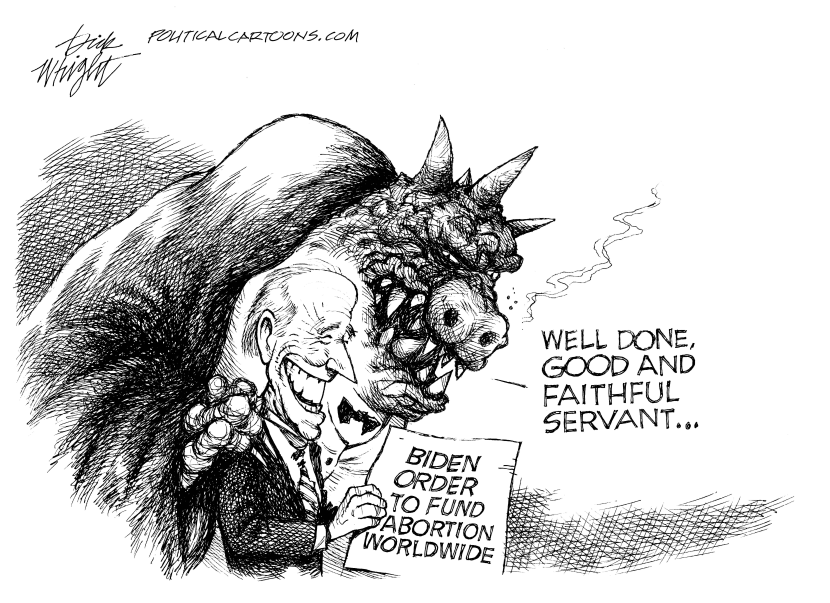
All this was on my mind when I heard that the U.S. Catholic Bishops had started a process which might result in President Biden being denied the Eucharist.

On Friday, in a vote of 168 to 55, with a few abstentions, the bishops agreed to work on a document that would bar politicians who support abortion from receiving communion.

Even though they didn’t specifically name him, this puts them on a direct collision course with President Biden.

Like Nancy Pelosi, another Catholic politician who passionately supports abortion rights, Joe Biden has evolved over the years into a solid defender of Roe v. Wade. Unlike Pelosi, whose faith often seems to be a weapon she uses to attack her critics or a fashionable prop in cable news appearances, Biden is actually quite devout. He attends church regularly, raised his children in the faith, married in the faith, and has often spoken of how that faith sustained him when his first wife and daughter, and then his beloved son Beau passed away.

No one can deny the sincerity of the president’s Catholicism. I think that he is both humble and sincere in his love of the church. And when I heard about the bishops’ vote, I have to admit that I actually felt a pang of regret and sadness for him. You might not believe me, given the things I’ve written in the past, but I truly feel sorry for Biden the man.

But I remember that incident with Sister Inez where my entire world was thrown into the maelstrom because I’d taken communion without making amends for my transgressions. And I thought, if a child of 7 could grasp the monumental nature of her sin, and she’d only stolen some beads, why couldn’t a man 11 times her age realize that supporting the destruction of unborn children was an infinitely greater betrayal of church teaching? Furthermore, no amount of confessing could obliterate that sin if he continued to do everything in his mortal power to keep abortion legal, protected, and widely available. As Sister Inez said, sinning is bad, but not being sorry is worse.

That is the reason why Joe Biden should not be allowed to take communion. Some very important people disagree. One of them happens to be Pope Francis, who recently stated, “When we receive the Eucharist, Jesus … knows we are sinners; he knows we make many mistakes, but he does not give up on joining his life to ours. He knows that we need it, because the Eucharist is not the reward of saints, but the bread of sinners.”

It’s a profoundly beautiful sentiment, but not an encyclical. It’s not meant to be a rule. It’s a pope trying to show human mercy.

And God bless him for that. But we can’t lose sight of the fact that public officials who persist in enthusiastically rejecting a core principle of the church without shame aren’t just damaging themselves. They are living witnesses to the world that there is no such thing as penitence, and that they will continue to sin because they know they can.

Jesus said, “Go and sin no more,” He didn’t channel Billy Joel and say, “Don’t go changing, to try and please me.” He does indeed “love us just the way we are,” but that doesn’t mean we get to keep trashing his church by doing everything we can to violate her one fundamental precept: Honor the sanctity of human life.

Joe Biden is the highest-profile Catholic in the country. If he can’t find it in his heart to respect and accept the core principles of our shared faith, you can’t blame the bishops for wanting to send him a message I learned over 50 years ago.

To be human is to err. To be Catholic is to seek forgiveness. And to deserve forgiveness, we need to say we’re sorry.

Copyright 2021 Christine Flowers, distributed exclusively by Cagle Cartoons newspaper syndicate.

Christine Flowers is an attorney and a columnist for the Delaware County Daily Times, and can be reached at [email protected].
Comments Off on Sinning Is Bad, But Not Being Sorry is Worse

Manchin’s Sin? He Has a Mind of His Own.

I find it interesting that Democrats are ganging up on Joe Manchin.

It’s not exactly surprising, since the West Virginia senator hasn’t been a team player for a while, despite the fact that he is not now and never will be a Republican. But he is not the kind of Democrat that gets fawned over by mainstream media, because he won’t vilify conservatives.

Manchin voted to impeach Trump, but he respects the folks (many of his own constituents) who voted for the man. He has this cockeyed idea that we can still get along, even though we apparently hate each other. And he’s as clever and crafty as his opponents, most of them Democrats. He just has a folksy manner and a Green Beret’s sense of self-preservation.

I think of him as a cross between Sergeant York and Rambo.

The thing that angers Democrats is that he doesn’t fall in line. If he disagrees, he lets it be known, unlike many in both parties who are lemmings to their respective leaders.

Manchin recently announced that he was not going to vote to eliminate the filibuster, which makes him one of only two Democrats, the other looking to be Kristen Sinema of Arizona, who won’t try and handcuff the GOP. The reason Manchin has consistently given for this is a good one: What goes around comes around, and today’s majority is tomorrow’s vulnerable minority. In other words, if you stuff the Republican elephant today, the Democratic donkey might be the one needing the enema tomorrow. You can quote me on that.

If the reaction to Manchin’s decision were the usual “gosh darn, we sure wish he’d play along and just be a regular guy!” I wouldn’t be writing this column. The GOP and rank-and-file conservatives have been pretty darn vicious when it comes to members who leave the reservation, so to speak. Liz Cheney and Mitt Romney can tell you a few things about that.

But I don’t recall any conservatives calling Cheney or Romney slanderous things like “white supremacist,” which is what a liberal like former ESPN commentator Jemele Hill tweeted out the other day in response to Manchin’s decision to preserve the filibuster:

“This is so on brand for this country. Record number of Black voters show up to save this democracy, only for white supremacy to be upheld by a cowardly, power-hungry white dude. @Senator Joe Manchin is a clown.”

To be fair, she didn’t actually call him a white supremacist. She called him a clown, cowardly, power-hungry and the worst insult you could call anyone these days: White.

But the implication was there. In refusing to vote to end the filibuster and give Democrats the final say in every damn thing, Manchin became Jemele’s worst nightmare, a throwback to the guys in sheets.

It’s incredibly ironic, since that other guy from West Virginia who the Democrats absolutely loved really did wear white percale, presumably against a backdrop of evening flames. Yes, I’m referring to the late, not-so-great Robert Byrd, who was an actual member of the KKK for years. Eventually, he became one of the first victims of wokeness and apologized for being the racist that he always, apparently, was.

The Democrats have forgiven him, over and over again. Sure, he was a bigot, and sure, he thought that the KKK was a civil rights organization and sure, he wasn’t particularly concerned about the optics of wearing sheets in public, but the Dems just chalk that up to a misspent youth. He was in his twenties when he joined, and older than that when he publicly condemned the group, but why quibble. And we can even forgive him for writing this in a letter to a colleague in 1946, since he did say he was sorry:

“I shall never fight in the armed forces with a negro by my side … Rather I should die a thousand times and see Old Glory trampled in the dirt, never to rise again than to see this beloved land of ours become degraded by race mongrels, a throwback to the blackest specimen from the wilds.”

Like I said, he apologized, so all good.

Not so with Manchin. People like Jemele Hill will continue to blather on about how Black people saved democracy just so a bigot like Joe Manchin could destroy it all over again. It couldn’t possibly be because the senator has a mind of his own.

Apparently, being an independent thinker is racist these days.

But being a Klan member is a youthful mistake. The Dems are such a forgiving group, aren’t they?

Copyright 2021 Christine Flowers, distributed exclusively by Cagle Cartoons newspaper syndicate.

Christine Flowers is an attorney and a columnist for the Delaware County Daily Times, and can be reached at [email protected].

Comments Off on Manchin’s Sin? He Has a Mind of His Own.

Why We Should Engage in Ritual

When I lived in France many years ago, I went to Mass regularly at Notre Dame Cathedral. My French was not so good at the time, so the ability to attend Mass in Latin was a blessing, because I was able to understand much of what was going on.

It occurred to me that while the Second Vatican Council did some good things for the church, it stripped the ceremonies and celebrations of a great deal of their beauty by eliminating Latin from the Mass.

It also unintentionally segregated Catholics from each other, because taking away the single, unitary language that French, Italian, German, Polish, Latin American, Indigenous and all the other faithful could understand fractured the communication, if not the message.

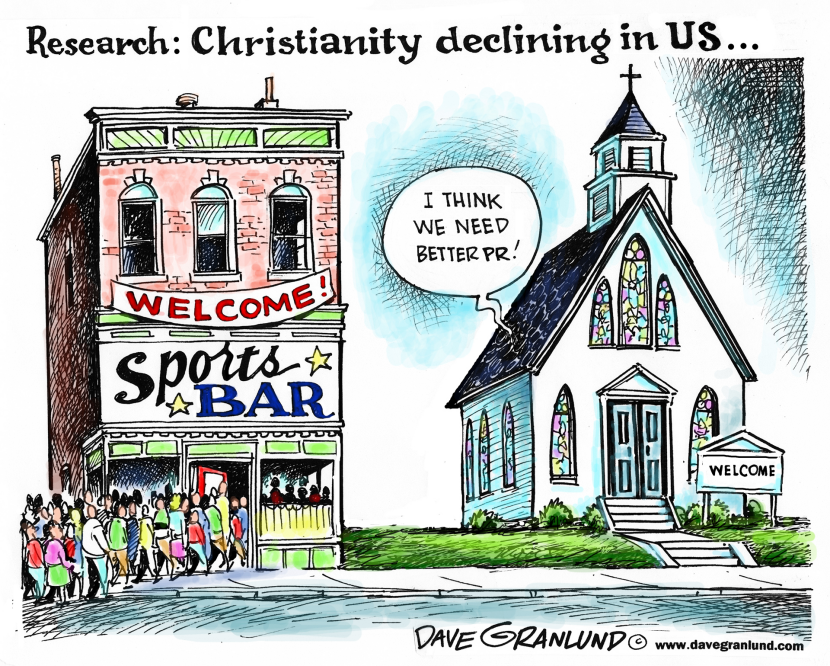
It’s changes like this, the so-called “modernization” of the church, that have reduced the church’s beauty, significance, power and in many ways, its meaning for someone like me.

Who am I? Well, for starters, there has never been a conscious moment when I did not know that I was a Catholic. I don’t remember baptism, but I fully participated in the rituals of my faith through confession, communion, and confirmation. I have not been married nor have I professed Holy Orders, but I have been present when my mother was given Last Rites, in Latin. The solemnity of that moment brought me to tears.

I am someone who sits in the pew and, while listening to the homily or the gospel reading, scans the stained glass windows imagining the back stories of depicted saints, and absorbs the frescoes on the ceiling. I sing when asked to, and sometimes even when I’m not supposed to, because music is intertwined with the message.

To those who say that these are all epidermal things of little value to my spirit and insubstantial in the context of the Mass, let me introduce you to one of my favorite authors, Professor Camille Paglia. Paglia once wrote this about the modernization and almost pasteurization of the modern church, particularly in America:

“My disaffection from American Catholicism, which began during my adolescence in the late Fifties, was due partly to its strident anti-sex rhetoric and partly to its increasing self-Protestantization and suppression of its ethnic roots. Within twenty years, Catholic churches looked like airline terminals – no statutes, no stained glass windows, no shadows or mystery or grandeur. No Latin, no litanies, no gorgeous jeweled garments, no candles, so that the ordinary American church now smells like baby powder. Nothing is left to appeal to the senses. The artistic education of the eye that I received as a child in church is denied to today’s young Catholics.”

She’s right. I was born in 1961, at a time when little girls were still taught to wear lace head coverings at Mass, and given sparkling rosaries to hold in our hands while sitting in the pew. There was theater and drama and poetry in the way that we prepared to hear the Word of the Lord. Unlike our Protestant brothers and sisters, who perhaps had a more focused approach to faith (get there, pay attention to Christ, don’t be distracted by the irrelevant bells and whistles) we Catholics dressed up. Rituals were important. They are much less so today.

I recently saw an interview with former Philadelphia Archbishop Charles Chaput, who made the interesting observation that the increasing trend of Catholics to opt for cremation instead of burial takes the focus off of the life that passed. The rituals of mourning that are common when we conduct funerals convey a certain measure of gravitas that a collection of ashes in a box on the mantle do not.

Not everyone will agree, of course. But three of my immediate family members are gone, two are buried and one is cremated, and when I visit my two parents in that quiet place under the towering trees at St. Peter’s, I feel them. It is a destination, and a conscious decision to visit them. With my brother, I do not even know where his ashes are collected. I only have his memory which, precious as it is, has no place or substance or roots in my daily reality.

If you have made it all the way through to the end of this piece, you might still be wondering what my point might be. To be honest, it is as trivial and as important as this:

We are on this earth for a brief moment. Eternity comes afterwards. But while we are here, we should engage in as much ritual as possible to remind us from whence we came, of where we are headed, and how fortunate we are to have had these present moments of beauty. The temporal nature of this life doesn’t mean that it needs to be spartan or utilitarian. Quite the opposite.

Now excuse me while I head out to the cemetery, with a bouquet of flowers and a heart filled with gratitude.

Copyright 2021 Christine Flowers, distributed exclusively by Cagle Cartoons newspaper syndicate.

Christine Flowers is an attorney and a columnist for the Delaware County Daily Times, and can be reached at [email protected].
Comments Off on Why We Should Engage in Ritual

Why We Must Rise Up and Battle Anti-Semitism

Mark Ruffalo came out on Twitter the other day and angered a lot of people, but not the people he usually tends to anger.

“I have reflected & wanted to apologize for posts during the recent Israel/Hamas fighting that suggested Israel is committing ‘genocide.’ It’s not accurate, it’s inflammatory, disrespectful & is being used to justify antisemitism here & abroad,” Ruffalo wrote. “Now is the time to avoid hyperbole.”

I actually missed his comments about Israel committing genocide, but that’s because I generally tune out that kind of hyperbole. Still, it was a bit of a gut punch to see that a person with his far-left following would engage in that sort of language, knowing where it leads.

Anti-Semitism is on the rise in the United States, and it’s no longer a product of the white supremacists, neo-Nazis, survivalists, domestic terrorists, and sociopaths that the media and society in general has lumped together under the convenient heading “right-wing zealots.” They still exist, of course.

But the true and more troubling source of anti-Jewish bigotry these days comes from the left, the tolerant, hate has no home here, we love all of you, kumbaya, open tent, left. That has never been more obvious than in the days following the conflict in the Middle East involving Hamas on one side, and Israel on the other.

The fact that the mainstream media has attempted to frame it as a conflict between “Palestinians” and Israel is simply one sign of the bigotry that is perhaps so internalized that not even journalists who think they are acting in good faith recognize it.

Israel was not fighting against “the Palestinians.” Israel was defending itself against a terror group that has been funded as if it were a sovereign nation by other sovereign nations, including Iran and Russia.

But that false moral equivalency is only part of the anti-Semitism.

Many on the left argue that they can’t be anti-Semitic because there are Jews in America, not to mention Israeli human rights organizations, that condemn Israel’s policies in the West Bank and Gaza. That is hopelessly naïve.

The people who are throwing rocks at Jews in New York, and tweeting out as a CNN contributor did that “we need another Hitler,” and driving through the streets with Palestinian flags waving while screaming about apartheid Israel are not interested in politics. They are interested in what Iran’s Mahmoud Ahmadinejad wanted: Removal of the “cancerous tumor” called Israel.

The fact that very few outlets are calling out the rank bigotry of the left is troubling, but not surprising. Network television is happy to air hours of programming about the bigoted GOP that tries to suppress Black votes, the brutal white supremacy of the police that targets people of color, the horrific acts of violence by white men against Asian Americans. We’ve all seen it.

But I am still waiting for CNN, for example, to have one of their “breaking news” reports about Palestinian Americans chasing down innocent boys in yarmulkas walking home from yeshiva. We see momentary clips, true, but never any in-depth, deep dive reporting.

And when Ilhan Omar says “it’s all about the benjamins,” or AOC recovers long enough from her PTSD to issue some rant about apartheid Israel, their friends on the left will make excuses. Always excuses, never an acknowledgement that this language leads to broken bones.

This rise of anti-Semitism on the left seems linked in some important ways to the race awakening in society triggered by the Black Lives Matter protests last year. And that is the most troubling thing about this phenomenon, the idea that a desire to respect people of color must come at the expense of history’s oldest targets of hatred.

The Wall Street Journal, one of the few mainstream media outlets that has the guts to actually focus on this phenomenon, ran a column a few days ago by Gerard Baker, who made the following observation:

“All this contributes to an uneasy sense of a widening clash of civilizations that is increasingly the objective and likely outcome of the modern left’s program. The embrace of critical race theory and woke ideology in the cultural and political establishment, like its more traditional Marxist forebears, neatly reduces all tensions in human relations to a simplifying narrative of oppressor and victim, only this time not on the basis of economics but race.”

Bigotry is evil, no matter who exhibits it. But it’s about time to acknowledge that the left is as adept and talented in their bias as their political opponents.

Just ask Mark Ruffalo.

Copyright 2021 Christine Flowers, distributed exclusively by Cagle Cartoons newspaper syndicate.

Christine Flowers is an attorney and a columnist for the Delaware County Daily Times, and can be reached at [email protected].

Comments Off on Why We Must Rise Up and Battle Anti-Semitism

Why Roe v. Wade May Soon Be Aborted

I’m not going to change your mind about abortion.

This is not a “hearts and minds” sort of essay, seeking common ground on a battlefield bloodier than Gettysburg. This is a simple acknowledgement that, for the first time in 48 years, there is a strong possibility that the most cited, most manipulated, most controversial Supreme Court decision of the last century will be consigned to the margins of history.

Last week, the Supreme Court decided to take up the most consequential abortion case since Planned Parenthood v. Casey was decided over thirty years ago. I call that case “Baby Roe,” because while it didn’t create the right to abortion in a feat of constitutional prestidigitation, it insulated that right from many of the attacks launched by the pro-life movement. Casey introduced the words “undue burden” to the lexicon, and any state law that was deemed to place an undue burden on a pregnant woman’s right to an abortion was struck down.

Enter, Mississippi. In a preview of what might happen if Roe is finally overturned and the issue is returned to the states where it belongs, this deeply-red bastion of conservatism passed a law that would ban virtually all abortions after 15 weeks. Two lower courts invalidated the legislation, and the move by the supremes to grant certiorari is – if not a sign of changes to come – at the very least a tantalizing development for abortion foes.

Up until now, the justices have been fairly squeamish when it came to this volatile issue. While they were willing to deal with some of the tangential issues – like how far away protestors had to stay from abortion clinics and what kind of certification abortionists needed to perform the procedure – they tried to steer clear of actual bans.

The last time the Supreme Court ruled on abortion was last year, when a majority that included Chief Justice Roberts struck down a Louisiana law that required abortion doctors to have admitting privileges at local hospitals. Abortion advocates did the usual “sky is falling” theatrics at the possibility that some clinics would have to close, but the ultimate decision didn’t address the legality of abortion itself.

This time, it’s different.

In the first place, the Mississippi law doesn’t just limit who can perform an abortion. It limits who can have an abortion. If a woman is over 15 weeks pregnant and doesn’t fall into the very narrow exceptions of fetal abnormalities or medical emergencies, she can’t have an abortion. This is a direct hit on Roe’s holding that a woman has a fundamental right to an abortion, even in the last months.

This could be the thing pro-life activists and those of us who honor the integrity of the Constitution have been waiting for.

When Roe was decided by an overwhelming majority of old white men (and a Black one) in robes, they needed to look as if they were doing something legitimate from a procedural perspective. They clearly understood that their decision to legalize abortion was going to be controversial, so they needed to give it some constitutional heft. And so, they used condoms.

Not in the literal sense, of course. I have no comment about those old men in robes and their private lives. I’m talking about the precedent they used to support this fanciful idea that terminating a pregnancy is part of a woman’s “privacy.” They relied on Griswold v. Connecticut, a case that had been decided a few years before which held that the choice to use birth control was part of the right to privacy, and no state could interfere.

In other words, the court held that the choice “not to get pregnant” was protected by the Constitution. I’d even agree.

But what Griswold did not decide is whether “not being” pregnant or becoming “un-pregnant” was an inherent part of the right to privacy. And that’s where Roe veered off the highway of the acceptable and into the ditch of the undeniably tragic. Because Justice Harry Blackmum was able to convince six of his colleagues to become partisan politicians and abandon their duties as neutral arbiters of the law, a precedent was set that legalized the destruction of two full generations of Americans.

Perhaps, finally, that will end.

Roe did not just “create” abortion rights. It is, itself, an abortion of the law. Even the sainted Ruth Bader Ginsburg thought it was a poor decision. Let’s deal with the part where seven justices ripped up the Constitution to make some activists happy. Let’s tell Hamilton and Madison we’re sorry.

We can let the states deal with the fallout. It should have been that way from the very beginning, before millions of unborn Americans were guinea pigs for a creative old white man in a robe.

Copyright 2021 Christine Flowers, distributed exclusively by Cagle Cartoons newspaper syndicate.

Christine Flowers is an attorney and a columnist for the Delaware County Daily Times, and can be reached at [email protected].

Comments Off on Why Roe v. Wade May Soon Be Aborted

Why the Failure to Condemn Hamas?

If you’re the sort of person who sees no difference between the Israeli military defending its citizens and Hamas terrorizing civilians, you might want to pass on this column.

This column is for the sort of person who realizes that violence is horrible, that killing civilians is horrific, that politics is dirty and that the world is not designed for the peacemakers. This column is also for those who will disagree on how we get to a point where warring tribes can come to some middle ground of safety and understanding. It is a column that recognizes the profound policy clashes between Netanyahu and Abbas, and it’s directed at those who might even differ on the role that the United States should be playing as mediator.

What it is not is a press release written by Ilhan Omar and Rashida Tlaib that focuses on the humanity of Palestinian children while ignoring that Israeli children, who have a right not to have their schools, homes and highways destroyed by rockets.

I have many Jewish friends with family in Israel who’ve spent the last week on the phone, on the internet, and on their knees praying. I also have many Arab friends, some Muslim, some Christian, who are horrified at this renewed Intifadah that threatens the welfare of their own loved ones. Not one of those friends, regardless of how they pray, supports Hamas. Not a one.

I am not an expert in the geopolitical conflicts in the Middle East. I am an expert in refugees and the displaced, and have handled the cases of Palestinians who were forced to carry passports from “Jordan” or some other country that had given them refuge. I understand the pain of loss, of severed roots, of wandering with no fixed destination. My own roots sink deep into the soil of my ancestors, Irish and Italian, French and Swedish. My identity is tied up in people who died centuries before I was even born.

So I do not dismiss the pain of the Palestinian, the ones who seek a home and a peace they can bequeath their grandchildren.

But I cannot ignore the Faustian bargain that some Palestinians and their more vocal western supporters have made with the devil, a devil that rains rockets down on the heads of innocent Israeli children. That is not a myth. That is what is happening as you read these words, in your safe corner of the world.

You can talk to me about Sabra and Shatilla, and other atrocities, and I will listen politely. You can talk to me about the arrogance of settlers, and I might even agree with you. You can talk to me about Netanyahu’s hard line in the fertile earth, and I would not reject it. You can even talk to me about the fact that America has poured billions over the decades into the Israeli army that is using its weapons against Hamas, and in the process, killing innocent citizens used as human shields by the terrorists.

I will agree that it is not a black and white situation.

But what is black and white is that Hamas is evil, and the failure to condemn it unconditionally is equally evil.

What has no nuance is the fact that Israel has been fighting for its existence since before I was born, surrounded by enemies or, at the very least, people who would not weep if her buildings were razed and her people pushed into the sea.

Sadly, many of those people also live here, in America. They hide their bigotry behind political platitudes. They write editorials. They send money to organizations that, through indirect means, support terror campaigns. They invite speakers to college campuses who push for the destruction of our best ally in the holiest of lands. They do all this, but they cannot hide their intentions. They are Ilhan, and Rashida, and the members of CAIR, and all of those who make no distinction between children murdered with deliberation by terrorists, and children who were the tragic and collateral damage of an attempt to cut out the terror tumor.

God bless the innocent, and the children. And God save Israel.

Copyright 2021 Christine Flowers. Flowers is an attorney and a columnist for the Delaware County Daily Times, and can be reached at [email protected].

Comments Off on Why the Failure to Condemn Hamas?