Impeachment Isn’t Exactly the Trial of the Century

Eighty-five years ago this month, Bruno Richard Hauptmann, accused of kidnapping and murdering the infant son of Charles Lindbergh, stood trial in what the news media described as “The Trial of the Century.”

Using that standard, the impending confrontation in the Senate over the impeachment of President Donald Trump qualifies as “The Trial of the Week.”

While Hauptmann’s trial riveted the nation for weeks, there is a growing impeachment fatigue in the country, a feeling that interest in round the clock coverage has waned, replaced by a weary “just get it over with already” air of resignation. The fascination with watching and hanging on every word uttered by Congressional leaders as they move toward removing a president from office has diminished, victimized in large measure by incessant posturing and partisan bickering.

The haste with which the impeachment inquiry began was abandoned by House Speaker Nancy Pelosi’s abrupt decision to delay submitting to the Senate the two House approved articles of impeachment because she was unhappy with the Senate procedures.

Her decision to withhold the articles for an indeterminate period caught many of her colleagues unaware but, recognizing party solidarity is more important than an orderly process, leapt aboard and crowed that the Speaker’s move was brilliant politics.

Politics? Certainly. Brilliant? Not so much.

For someone who had masterfully navigated the minefield of conflicting pressures and demands from her factionalized party, Pelosi overplayed her hand by unilaterally deciding to halt a process she set in motion and setting up a confrontation with Senate Majority Leader Mitch McConnell.

McConnell is not about to be bullied by Pelosi into accepting terms and conditions of the Senate’s trial procedure. The House, he said, has impeached the president and it is now the Senate’s Constitutional responsibility – not Pelosi’s – to determine guilt or innocence under rules it develops and approves.

In addition to injecting herself into the prerogatives of the upper house, Pelosi gifted to Republicans the opportunity to renew their criticisms of the impeachment process as a sham.

It opened a new line of partisan attack as well. The articles of impeachment – abuse of power and obstruction of Congress – they said, were so flimsy and so lacking in evidence of wrongdoing that Pelosi feared submitting them immediately to the Senate would reveal their true motive – overturning the 2016 election results while keeping the issue alive through the 2020 election season believing that Democratic candidates would benefit.

McConnell has remained unmoved by the arguments made by Pelosi and Senate Minority Leader Chuck Schumer of New York that a Senate trial include witnesses under oath and the submission of documents.

All are aware acquittal will be the outcome, that 67 votes in favor of impeachment is unattainable. There is a bit of Kabuki theater at play, each player following a script even though the denouement is apparent well before the final curtain.

McConnell desires a process in which the Senate moves with dispatch to consider the allegations. He believes the longer Pelosi delays the pressure will build on her to concede to the Senate.

Republicans will ratchet up criticism of the Speaker, portraying her as stubbornly thwarting a Constitutional process for political advantage. They will mock the House floor speeches about reverence for the Constitution and “no one is above the law” as so much pious bleating to disguise crass power politics.

Should Pelosi persist, there will come a point when she will be forced to make a choice, to acknowledge her position is untenable, that she has overplayed her hand and risks losing public support.

The point is approaching quickly – if it hasn’t already been reached – when a resolution is required, when the time for delay and distraction is over and it is time to move on. Pelosi cannot afford to stand in the way.

The Senate deliberations and debate will certainly not rival the Trial of the Century, and the nation will turn its attention to issues of more direct personal concern.

Rather, American voters and taxpayers will remember “The Trial of the Week,” and, whether it went their way or not, will rebound nicely.

Copyright 2019 Carl Golden, distributed exclusively by Cagle Cartoons newspaper syndicate.

Carl Golden is a senior contributing analyst with the William J. Hughes Center for Public Policy at Stockton University in New Jersey. You can reach him at cgolden1937@gmail.

Comments Off on Impeachment Isn’t Exactly the Trial of the Century
For Good or Bad, Pelosi Owns Trump’s Impeachment

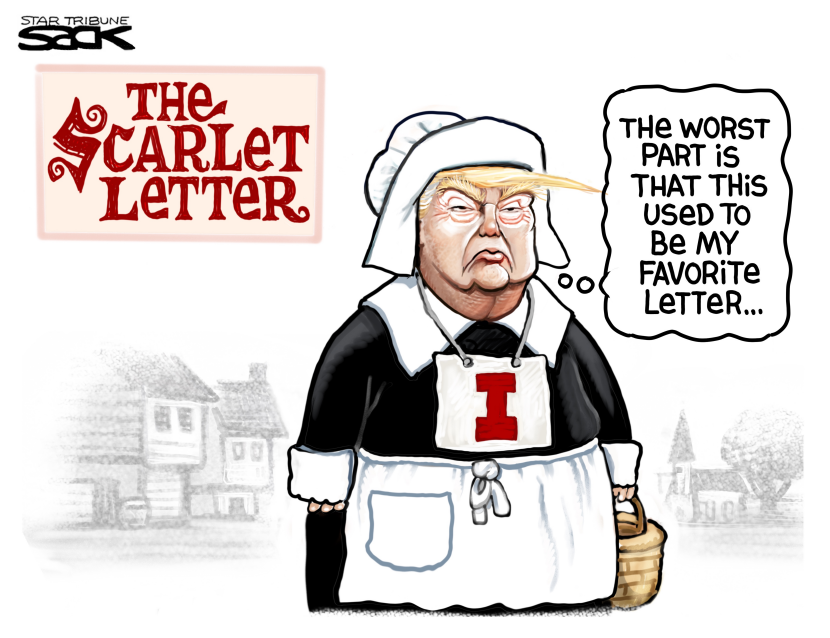
From the very beginning, House Speaker Nancy Pelosi was a reluctant impeachment warrior.

Her political instincts, honed over 31 years in the House and two stints as its presiding officer, warned her that without the country behind her, any effort to overturn the 2016 election and remove President Trump from office would backfire on Democrats, creating a public relations nightmare and potentially costing the party its majority.

She kept the aggressive newcomers – those who provided the majority in the 2018 wave – at bay, counseling patience while keeping close watch on the rising pro-impeachment sentiment.

She understood her pre-condition – convincing the country to support a move against the president – hadn’t been met. Her leadership team and senior House members stood by her and dealt with the party’s restiveness by insisting the time wasn’t yet right.

Pelosi moved incrementally – approving committee investigations and compiling evidence to determine if a formal impeachment process should begin – to lay the groundwork for the historic step of lodging formal charges against the president.

In the face of mounting pressure to act forcefully, she instructed the House Intelligence Committee to open hearings to gather proof of presidential misconduct sufficient to meet the Constitutional requirements for impeachment.

Despite suggestions Pelosi caved in to the loudest voices in the room, her decision was rooted firmly in the political environment. She was satisfied that the country – though divided – supported formal proceedings and could be convinced Congress had no alternative but to begin an impeachment process.

Whatever misgivings she may have had, Pelosi now owns impeachment. She will go down in history as the Speaker who ordered the House to override the will of the voters and remove the duly elected president, even while acknowledging that the charges against him – abuse of power and obstruction of Congress – would not be sustained in the Senate.

Trump will continue in office and seek another term in 2020 as only the third chief executive to be impeached, and the first in history to seek re-election under such circumstances.

It comes as support for Trump’s removal has begun to wane in the country, a worrisome omen that the committee hearings and an unprecedented level of media attention has failed to convince many Americans that Trump’s transgressions – while distasteful and arrogant – warrant driving him from office.

Trump and his supporters struggled to undermine the validity of the investigations, accusing Congressional Democrats of abusing their Constitutional power solely because they are still smarting from his 2016 victory.

The evidence produced, the administration argues, is wafer thin and based on second and third hand knowledge, biased conclusions and innuendo, and accusations brought by disgruntled individuals with a decidedly partisan tilt.

California Congressman Adam Schiff, chairman of the Intelligence Committee, spent nearly a year insisting that Trump was guilty of impeachable – if not criminal – offenses. But critics claimed he never offered substantiation for his accusations.

Schiff was caught in several instances of shading the truth and contradicting himself, while New York Congressman Jerry Nadler, chairman of the Judiciary Committee, came across as a rather cartoonish figure, a caricature of the big city machine pol. He was clearly out of his depth, conducted often chaotic hearings and failed to control the process.

Pelosi was sufficiently confident in her vote tally that she gave wavering Democrats who represent Trump friendly districts the freedom to go negative to protect themselves in re-election bids. During the entire process, she demonstrated a deft political touch combined with a steely determination to retain control of a renegade band of villagers carrying pitchforks and torches and marching toward the White House.

The outcome – quick acquittal of Trump in the Senate – was clear from the start, but Pelosi was willing to accept that in return for what she firmly believes is the sworn duty and obligation of the House.

She seems to believe in Winston Churchill’s observation of his legacy: “History will be very kind to me, for I intend to write it.”

Copyright 2019 Carl Golden, distributed exclusively by Cagle Cartoons newspaper syndicate.

Carl Golden is a senior contributing analyst with the William J. Hughes Center for Public Policy at Stockton University in New Jersey. You can reach him at cgolden1937@gmail.

Comments Off on For Good or Bad, Pelosi Owns Trump’s Impeachment

More for Joe Biden To Worry About

For eight years, Joe Biden sat at Barack Obama’s right hand, loyally serving the administration, promoting its agenda and providing advice and counsel in the development and implementation of policy initiatives, global and domestic.

Now, as he reaches for the White House himself, it must be frustrating and galling for him as he begins each day confronting news accounts of the Democratic Party establishment’s votes of “no confidence.”

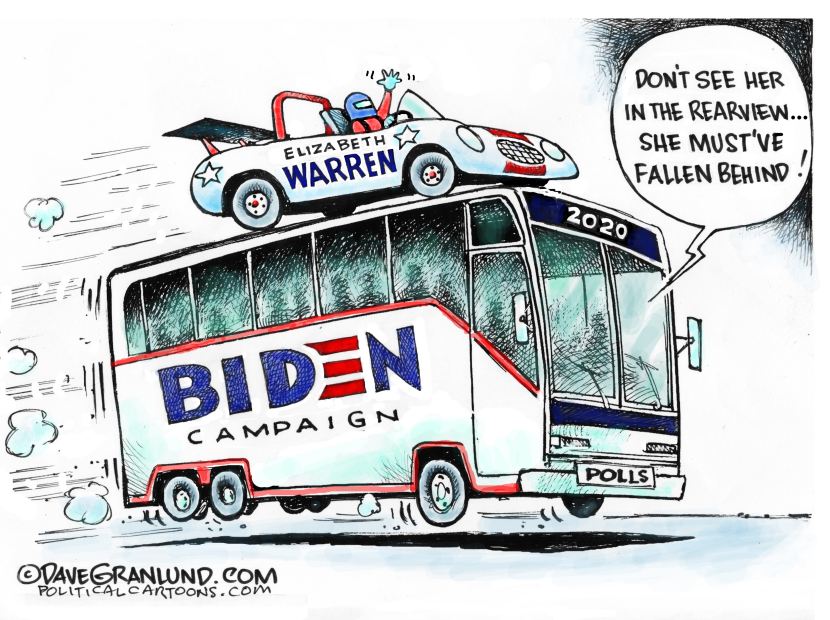
Maintaining a lead in national polling since he announced his candidacy in April eases some of the sting of what must be a demoralizing level of anonymous sourcing and analyses of his campaign, but concerns over his ability to close the deal with voters has become a persistent narrative thread.

The establishment nervousness is two-fold:

– Despite his lead, Biden is in danger of losing the nomination to either Sen. Elizabeth Warren of Massachusetts or Sen. Bernie Sanders of Vermont, both of whom share far left fringe positions which will doom their chances of defeating President Trump.

– Even if Biden secures the nomination, his campaign has been marked by gaffes and stumbles, raising serious doubts about his ability to compete with Trump. Lurking in the background is the alleged conflict of interest posed by his son’s accepting a $50,000 per month position on the board of directors of Burisma, a Ukraine energy company, while his father served in the White House.

The concern runs so deep that for months party leaders have searched for alternatives, a quest which has resulted in former New York City Mayor Michael Bloomberg re-assessing his decision to forego a candidacy and in former Massachusetts Gov. Deval Patrick going all in on his.

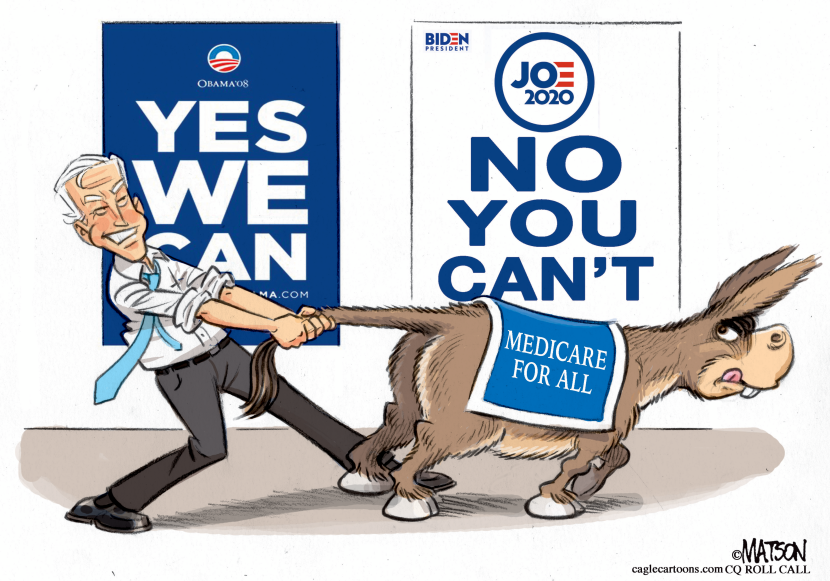
Biden has occupied the ideological center lane largely alone, resisting the pull of the far left toward multi-trillion-dollar spending programs touted by Warren and Sanders. He’s portrayed himself as a reasonable and pragmatic centrist devoted to achieving bipartisan solutions rather than embracing ideas that stand no chance of winning congressional approval.

While it’s largely been a three person contest – Biden, Warren and Sanders – Pete Buttigieg, the 37-year-old mayor of South Bend, Ind., has muscled his way into the top tier. But he’s seen as someone whose star will flame out once the traveling road show makes its way into the Super Tuesday states.

The remainder of the field slides further into irrelevancy each week, failing to gain traction in polls and – more importantly – as fund raising dries up.

Where Bloomberg and Patrick fit into this equation remains to be seen. Both are in the centrist Biden mold and presumably will echo the pitch of the establishment figures whose entreaties brought them into the race in the first place, who claim Biden is a weak candidate whose intellectual agility isn’t what it once was.

Biden has given no sign that he’s considering standing down in favor of either Bloomberg or Patrick, and his polling level hasn’t eroded in light of the their entering the contest. Still, the anxiety persists that he could be overtaken by either Warren or Sanders, either of whom, it is feared, would fall to Trump.

Bloomberg or Patrick, the theory goes, could more effectively fend off the two senators, giving Democrats a nominee who could appeal to voters who abandoned the party in 2016.

Moreover, the nagging suspicions about the involvement of Biden and son in Ukraine would disappear from the campaign. A Democratic candidate whose name did not come up with regularity in any discussion of President Trump’s actions regarding Ukraine would be a plus.

It is understandable that Biden, with his long record of service in the Senate and the Obama Administration, would feel a trace of bitterness over the public efforts to snatch the White House from his grasp. He seems determined to soldier on, presumably comfortable in his standing in the party and the country and willing to test them against an ex-mayor and ex-governor.

Biden sees them as spoilers. Others may see them as saviors.

Copyright 2019 Carl Golden, distributed exclusively by Cagle Cartoons newspaper syndicate.

Carl Golden is a senior contributing analyst with the William J. Hughes Center for Public Policy at Stockton University in New Jersey. You can reach him at cgolden1937@gmail.
Comments Off on More for Joe Biden To Worry About

Democrats See Trouble at the Top of Their Ticket

A president teetering on the brink of impeachment…whose public approval is as much as 15 points underwater…who trails the leading opposition candidates… who may cost his party its majority in the Senate…who burns through top level staff at an unprecedented rate…who publicly belittles members of his cabinet.

Given the totality of these circumstances, the Republican Party should be desperately scouring the countryside for an alternative.

But, wait. It is Democratic opposition leaders who are frantically searching for an individual they can persuade to enter the contest, pledging money, organization, unity and an unobstructed path to the party nomination.  They worry and fret that none of the current field of 16 – including a former vice president and five sitting Senators – is capable of recapturing the White House.

Instructed by history, the accepted judgment declares that a president weighted down with such personal and political baggage cannot possibly survive. It declares further that victory over a president laboring for re-election under such deadweight is a virtual certainty.

Why then has panic crept into the psyche of the Democratic establishment, convincing some that it is in their best interest to seek an outsider?

For them, the embarrassment of canceling hotel ballroom reservations for the Hillary Clinton victory celebration and trashing inaugural ceremony invitations is horrifyingly fresh. 

Fear that the leading candidates – former Vice President Joe Biden and Sens. Elizabeth Warren of Massachusetts and Bernie Sanders of Vermont – will wither under the anticipated brutal assault and record-shattering spending from the Trump campaign is sufficiently genuine that the names of others have entered the public dialogue.

Speculation has fallen on former New York City Mayor Michael Bloomberg and former Secretary of State and 2004 nominee John Kerry as potential candidates who could ignite the party, rise above the ceaseless petty squabbling among the current field, and provide the jolt of energy to halt Trump. Disney chief executive Robert Iger drew some attention before he disclaimed any presidential ambitions, and former Starbucks chief Howard Schultz flirted with an independent run before declining.

And, of course, there’s Hillary, who’s dropped hints about her availability and eagerness to gain redemption through a re-match with Trump. But the prospect of another Clinton campaign produced so much agita among Democratic leaders they publicly suggested (in the nicest possible way) it was time to move on.

It appears as this point any effort to convince Bloomberg, Kerry or someone else to come to the rescue has fallen short.  It is admittedly a hard sell and time is not on their side, what with fewer than 100 days until the Iowa caucuses.

It’s fitting that Donald Trump, the most unorthodox president in American history, be the one to upend conventional wisdom, to re-write decades of sagacity and insight and shatter deeply-embedded preconceived notions about the psyche of American voters and their willingness to follow a well-worn political path.

Will the wisdom that his re-election is doomed be validated?  Have the American people had their fill of the “strum and drang” that has surrounded his Administration from the moment he uttered “I do” on the Capitol steps on Jan. 20, 2017?

Whether he can overcome what most candidates would consider insurmountable obstacles remains to be seen.  Even suffering impeachment by the House and acquittal by the Senate doesn’t seem to be an issue for him.  His governing and campaign style will not change a whit.

It will fall to the Democratic Party to convince the American people that Biden is still mentally razor sharp, that neither Warren nor Sanders is part of the left’s lunatic fringe, or that Peter Buttigieg’s experience as mayor of a city of just over 100,000 qualifies him to lead a nation of 330 million.

If “electability” is the goal, can any of these four achieve it?

Like Diogenes, party leaders should stow the lantern and place their faith in conventional wisdom.

Copyright 2019 Carl Golden, distributed exclusively by Cagle Cartoons newspaper syndicate.

Carl Golden is a senior contributing analyst with the William J. Hughes Center for Public Policy at Stockton University in New Jersey. You can reach him at cgolden1937@gmail.

Comments Off on Democrats See Trouble at the Top of Their Ticket

Do the Democrats Need Hillary or Michelle to Enter the Race?

It began with 25 candidates. It’s been reduced by half, yet concern persists among Democrats that the party should look beyond the still standing contenders and seek an individual capable of party unification and persuade him or her to enter the race.

It is an acknowledgement that each of the current candidates is burdened by baggage – ideological or personal – but seem determined to take the contest through a string of expensive, exhausting and bitter primaries.

Former Vice President Joe Biden, whose lead has shrunk to single digits or vanished altogether, has been hurt by periodic mental lapses and scrambled syntax. His and his son’s involvement in governmental and business affairs in Ukraine hangs darkly over his head.

Voters will hesitate to deliver the presidency to a 78-year-old heart attack survivor – Vermont Sen. Bernie Sanders – despite his fervent and committed base.

Massachusetts Sen. Elizabeth Warren, the leader, co-leader or strong second place finisher in polling averages, has moved steadily leftward, embracing policies with which huge swaths of the nation disagree.

Despite the party’s commitment to electability as the criteria for choosing a candidate, there remains concern that none of the three leaders measures up. The dilemma is in which direction should the party look for an alternative, someone it can rally around and convince the current field to abandon their quest.

To whom, might the party turn? Two names surface with some regularity: former Secretary of State and failed 2016 candidate Hillary Clinton and former First Lady Michelle Obama.

In typical self-aggrandizing fashion, Clinton has ginned up speculation about her availability with a series of public appearances, media interviews and a ubiquitous social media presence, criticizing Trump and basking in the attention. But convincing the current candidates to stand down for her would be a herculean task. She is a polarizing figure who many find untrustworthy and unlikeable, blaming her for booting away certain victory in 2016.

Clinton entering the race would not clear the field but tear the party apart, re-open wounds from 2016 and deliver to Trump the opportunity to raise her questionable – if not unethical – conduct as Secretary of State. The Democrats would be robbed of their most potent weapon – Trump’s behavior and possible impeachable conduct – by repeating the litany of accusations against Clinton.

While Michelle Obama carries none of Clinton’s baggage and could clear the field, her candidacy is wishful thinking. She is the country’s most admired woman, a bestselling author, and an eloquent advocate for the causes in which she believes. She and her husband are financially secure (the purchase of a $15 million beachfront mansion in Martha’s Vineyard, for instance) and both are loathe to surrender their comfortable blend of private and public life.

There is absolutely no reason why Obama would willingly take on what will surely establish a new low for the most brutal and brutalizing campaign in American history.

If unhappy Democrats intend to make a move, time is running out. The Iowa caucuses and the New Hampshire primary are little more than three months off. The window of opportunity to persuade an outsider to step in will slam shut at that point.

Three years ago, voters confronted two flawed candidates and were left to determine whose flaws were less egregious than whose. If 2020 is Trump versus Biden, Warren or Sanders, voters face much the same choice.

By the time the presidential election arrives, it is likely that Trump will have been impeached by the House but acquitted by the Senate. His campaign will be a relentless and savage effort toward vindication as much as his re-election.

Copyright 2019 Carl Golden, distributed exclusively by Cagle Cartoons newspaper syndicate.

Carl Golden is a senior contributing analyst with the William J. Hughes Center for Public Policy at Stockton University in New Jersey. You can reach him at cgolden1937@gmail.

Comments Off on Do the Democrats Need Hillary or Michelle to Enter the Race?

The Media Should Cover Trump, Not Play His Game

“Newspaper editors are men who separate the wheat from the chaff and then print the chaff.”

Whose words?

President Trump? Vermont Sen. Bernie Sanders? California Sen. Kamala Harris? Massachusetts Sen. Elizabeth Warren?

No… It was uttered by Democratic presidential candidate Adlai E. Stevenson in 1952.

Using the media as a whipping boy is, of course, nothing new.Trump may have raised it to an art form – “fake news…enemy of the people” etc. – but criticism of the media has been as much a part of campaigning as lawn signs, posters, straw hats and balloons.

More history? Presidents Eisenhower and Kennedy both were critical of the media and, in the late 1960s and early 1970s,Vice President Spiro Agnew spent most of his time and energy berating the media with colorful alliterative phrases like these: “Nattering nabobs of negativism…effete corps ofimpudent snobs,” etc.

Lest there be any doubt, the atmosphere today is immeasurably more poisonous.Past criticisms seem almost quaint and gentlemanly.

In earlier decades, the power and influence of the print media was supreme, considering newspapers were virtually the only trusted source of news.It controlled the field, and attacks on it could be shrugged off or ignored altogether. Attacking the New York Times, for instance, was likened to throwing spitballs at a battleship.

The revolution in communications technology shattered those norms, loosening the grip of the print media on the public discourse.The vacuum was filled by an unfettered, undisciplined, unregulated amalgam of groups and individuals who drove political debate at a dizzying, nearly incomprehensible pace.

“I read it on the internet” became the default position in promoting or disputing a point of view. In-depth analyses of complex policy issues were replaced by Twitter, Instagram, 60 seconds on YouTube. Success is now measured by the number of one’s Twitter followers.There’s no need to appear insightful or understanding – just keep those thumbs working on a handheld keyboard.

No one has mastered this environment better than the president.He unleashes a daily barrage of Twitter messages – half truths, untruths, distorted historical allusions, conspiracy theories and exaggerations.

He has framed the public debate,forced the media to follow his lead, chase down his latest tirade, defend itself, and attempt to provide context and meaning to rapidly moving events.

In the process, too many have fallen into the trap of engaging Trump directly and personally, an understandable impulse but one which plays directly into the president’s hands.

As tempting as it is to respond in kind, it is a mistake for reporters to give in to it.Trump enjoys home field advantage and swapping insults with him is a losing game. There is no upside for the media to gamble its reputation simply because it desires the temporary inner satisfaction of getting the better of an exchange with the president.

The media’s responsibility is to cover him, report what he says and does, point out the flaws and the foibles, explain the impact of his actions and their meaning to the American people.In other words, do what reporters have always done.

Competitive pressures – the demand to get it first has erased the need to get it right – has undermined public confidence in the media.News judgment and the inherent skepticism which led to more intense questioning of sources have been overlooked. Errors are magnified, mistakes admitted, and stories retracted, all feeding Trump’s obsession with heaping humiliation on the offenders as evidence of a media to de-legitimize his election.

It is Trump, though, who has demonstrated his nimbleness in navigating the media landscape while compiling political points with his base. A handful of candidates for the Democratic presidential nomination – most notably Sanders – have discovered there is advantage to be gained and attention attracted by turning their wrath on the media.

The media has been dragged into what is arguably the most highly charged political environment in recent memory, subjected to accusations of sloppy and biased coverage,focusing on the trivial, taking the path of least resistance and ignoring issues.

Candidates routinely grumble and grouse about media coverage but it’s degenerated into public shouting matches and allegations of the most vicious personal sort. As unseemly as it is, it’s likely here to stay and worsen.

There’s no incentive to behave otherwise.

It almost makes one pine for the good old days – separating the wheat from the chaff while listening to the nattering nabobs of negativism and the effete corps of impudent snobs.

Copyright 2019 Carl Golden, distributed exclusively by Cagle Cartoons newspaper syndicate.

Carl Golden is a senior contributing analyst with the William J. Hughes Center for Public Policy at Stockton University in New Jersey. You can reach him at cgolden1937@gmail.

Comments Off on The Media Should Cover Trump, Not Play His Game

Many Democrats Remain Undeterred by Long Odds and Low Numbers

In every election campaign, there comes a point when cruel reality intrudes, forcing candidate and staff to confront the growing likelihood that victory is out of reach and further expenditure of time, money and dedication to a cause is futile.

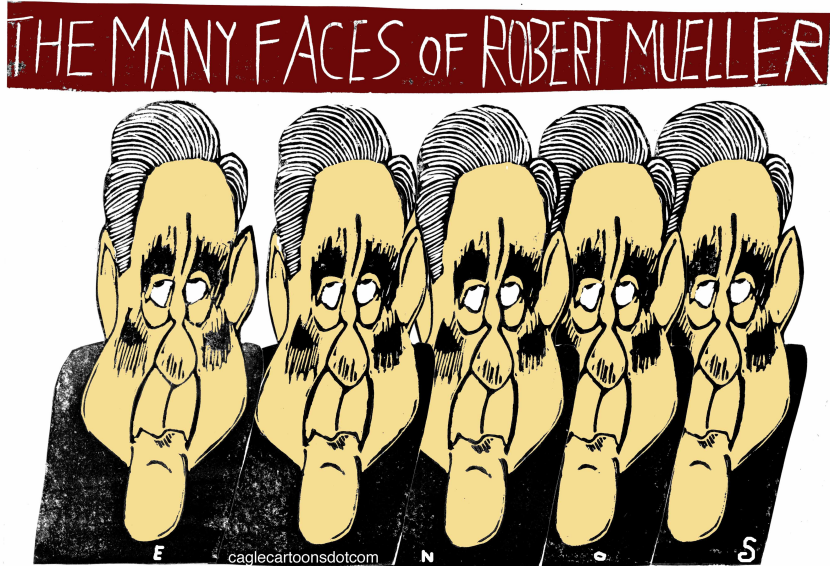
For more than 20 candidates remaining in the race for the Democratic presidential nomination, that moment has arrived.

It is a personally wrenching decision, a public acknowledgement that one’s beliefs and principles have failed to create a deep impression on the public mind and support has diminished to an unsustainable level.

For those Democrats who have consistently failed to exceed three per cent in the Real Clear Politics polling average – national as well as in individual states – continuing their quest is a willing suspension of disbelief.

Using the RCP three percent average as the benchmark measurement to remain in the race, 17 announced candidates would fail to make the cut.While nine candidates have already qualified for the next debate in September, four have failed to break three percent.

Of the remainder, several – including sitting governors, and ex-Congress members – have failed to achieve greater than one percent.Even four of the candidates whom have qualified for the debate have consistently fallen under three percent and, while hope springs eternal, their candidacies are hanging by a thread.

If all below three percent conceded, the field would narrow to an eminently manageable five – former Vice President Joe Biden, Sens. Bernie Sanders of Vermont, Elizabeth Warren of Massachusetts, and Kamala Harris of California, and South Bend, Ind., Mayor Pete Buttigieg.

In less than six months, voters in Iowa will make their way to caucuses and, for the moment at least, the third and fourth tier candidates have nothing to lose by continuing their campaigns even though the hopes of a number of them will lie buriedunder snowdrifts in the state’s cornfields.

Seemingly undeterred by the long odds against them, rationales for keeping their candidacies alive range from consideration as the vice presidential running mate, securing a Cabinet or high level post in a Democratic Administration, attempting to influence the party’s direction and agenda, building an identification for a later run, or merely because it’s fun and ego-boosting.

The size of the field has wrought havoc on the two debates held so far, chaotic and embarrassing exercises in personal insults, raised voices, discourteous interruptions, talking over one another, and – sadly – offering little of substance on issues.

The universal takeaways from these confrontations has been that of a party shoved further and further to the left, embracing out of the mainstream ideas that will come back to haunt the eventual nominee.

Debating proposals to decriminalize illegal border crossings, end private health care insurance, and spend trillions of dollars on social welfare programs plays directly into President Trump’s wheelhouse.

Even though the “Moderates need not apply” sign has been posted outside national party headquarters, Biden – the quintessential middle lane contender – has held the polling lead ever since he entered the race. The former vice president has littered the landscape with misstatements and non-sequitur’s, raising concerns about his intellectual agility but he’s been able to overcome them by remaining the candidate most favored to defeat Trump.

Shrinking the field by persuasion, appeals to loyalty, or emphasizing the overwhelming need to turn Trump out of the White House may succeed, particularly after the Iowa caucuses and certainly after the New Hampshire primary.

Force will not. The party boss days are long gone, replaced by the cult of self-interested personality.Pressure will be met with counter pressure, stubbornness and animosity. Voluntary withdrawal, leaving with dignity intact and pride in having given it one’s best shot is the only way to cull the field and assuring that all involved will continue to talk to one another.

The immense personal difficulty in reaching the decision should not be minimized or dismissed. Belief in one’s self is a powerful motivator, even though it occasionally clouds one’s better judgment and blinds one to a reality seen and understood by others.

The political environment can be an exciting and exhilarating place, but it can also be a cold and cruel place, bringing down well-meaning individuals possessed of noble aims.

By next spring, trees will be in bud, temperatures comfortable, songbirds in full throat and five Democrats will remain standing.

Copyright 2019 Carl Golden, distributed exclusively by Cagle Cartoons newspaper syndicate.

Carl Golden is a senior contributing analyst with the William J. Hughes Center for Public Policy at Stockton University in New Jersey. You can reach him at cgolden1937@gmail.
Comments Off on Many Democrats Remain Undeterred by Long Odds and Low Numbers

Democrats Should’ve Been Prepared For Disappointment

In justifying his demand for ex-special counsel Robert Mueller to testify publicly about his investigation into alleged Russian meddling in the 2016 election and his 448-page report, Judiciary Committee Chairman Jerrold Nadler of New York quipped: “Nobody reads the book, but everybody will watch the movie.”

It turns out the movie was a box office bomb.

The leading man fumbled his lines, lost track of the narrative, mumbled responses, appeared bewildered and finally refused to answer questions. For Democrats, Mueller’s overhyped and much anticipated appearance was an embarrassment.

Nadler and his like-minded colleagues should have foreseen the outcome.Instead, they allowed wishful thinking to override cooler and more objective understanding.

Mueller was the epitome of a reluctant witness.He was already on record as refusing to testify, followed by a warning that he would refuse to comment beyond the findings in his report. Nadler, though, apparently believed he could lead Mueller into areas where he clearly did not want to go and elicit responses deeply damaging to Trump. Support for impeachment, he felt, would quickly spread and force Speaker Nancy Pelosi to abandon her misgivings and give in to the pressure.

None of it happened.

Pelosi remained unmoved, recognizing that taking Mueller’s testimony to the American people as the foundation for impeachment wouldreinforce the perception that Democrats were motivated by a revenge-driven desire to upend the result of the 2016 election.

To satisfy the pitchfork and torch crowd, Pelosi ratcheted up her rhetoric accusing Trump of misdeeds and a cover-up while emphasizing that congressional committee inquires and litigation would continue.

Her political calculation turned on a belief the Democrats’ majority would be imperiled if the 2020 campaign was a proxy vote on impeachment. She is willing to allow the impeachment bloc to continue to cry for Trump’s head, but she is unwilling to allow it to become the party’s sole message.

“Vote Democrat and Impeach the President” may play well in some Congressional districts, but a coherent, issue-oriented agenda on topics such as immigration, trade, taxes and spending, and criminal justice reform will play more effectively.

Pelosi and a majority of her caucus understand that ending the Trump Administration is in the hands of voters and should remain there, rather than indulge in an exercise destined to fail in any event.

While articles of impeachment stand a reasonable chance of approval in the House, conviction in the Senate is out of the question.A protracted, bitter partisan debate will bring out the worst on both sides and further erode the confidence of the American people in their government.

Mueller’s testimony broke no new ground. His two-year investigation and report were a damning portrayal of a political campaign populated by characters ofquestionable motives, but eventually concluded there was insufficient evidence of a conspiracy involving the Trump campaign and Russian operatives.

His findings and testimony that his investigation neither supported nor excused obstruction of justice allegations against Trump has given both sides the opportunity to claim victory.

On this point, the waters were muddy when the report was released and Mueller clearly had no intention of clearing it. Trump, of course, interpreted Mueller’s testimony as vindicating his” no collusion, no obstruction” position while reiterating his witch hunt characterization of the investigation.

Pelosi recognizes that acquiescing in demands for impeachment plays into Trump’s hands and his campaign will fill the air with accusations that Democrats are attempting to abuse its Constitutional authority to achieve what it failed to win at the ballot box.

A majority of House Democrats – despite their intense dislike for Trump – share Pelosi’s view that the path to maintaining control lies in convincing voters they can solve the difficult problems facing the nation rather than engaging in a drawn out public brawl with Trump – an individual who not only enjoys this kind of political hand to hand combat but is rather proficient at it.

In truth, Mueller’s six hours of testimony added very little to the storehouse of knowledge concerning the allegations that continue to swirl around the 2016 election. The politically hard-headed understood his appearance was a public relations kabuki dance that would reflect poorly on Democrats.

While Nadler may have had high hopes for his movie, the headline in the trade paper Variety turned out to be “Hearings Lay An Egg!”

Copyright 2019 Carl Golden, distributed exclusively by Cagle Cartoons newspaper syndicate.

Carl Golden is a senior contributing analyst with the William J. Hughes Center for Public Policy at Stockton University in New Jersey. You can reach him at cgolden1937@gmail.

Comments Off on Democrats Should’ve Been Prepared For Disappointment

Democrats Risk Irrelevancy in Sprint to the Left

As the roughly two dozen Democrats seeking their party’s nomination for president continue to gleefully sink their teeth into one another, the portrait that has emerged is of a band of self-serving pols who’ve shed self-respect in favor of pandering to a vocal segment of the party base that has abandoned the country’s mainstream.

The campaigns have become a panicky, headlong flight to the left embracing ideas that as recently as four years ago would have been dismissed as loony and a guarantee of electoral disaster.

Should this trend continue, consider the following possible outcomes:

– A party with no coherent message aside from “We despise Donald Trump.”

– A nominee so bruised and battered by his or her own party that regaining credibility is problematic.

– A party so far to the left that it risks becoming an out of touch fringe group.

– A party in support of ideas which are anathema to most Americans and stand no chance of Congressional approval.

– A party in favor of spending trillions of dollars with no way to pay for it.

And lastly, but most devastating of all, the re-election of Donald Trump.

You know what’s not a winning message? Making the case to the American people that entering the country illegally should be decriminalized (essentially, an open borders policy), pledging to provide free health coverage to undocumented immigrants and calling to abolish the Immigration and Customs Enforcement agency (ICE).

Then there is the added burden of justifying forgiving $1.4 trillion in student loan debt, eliminating private health insurance for 180 million Americans and requiring all public colleges to be free.

The party’s lurch to the left began in earnest in 2016 with the surprising show of strength by Vermont Sen. Bernie Sanders, but the movement has picked up such strength that it has bypassed him and appears irreversible.

Four years ago, Sanders was an outlier. Today, he’s in the party’s mainstream and has been supplanted as leader of the rebellion by younger, more militant personalities.

The ideological dilemma is attributable in considerable measure to the unwieldily field of candidates each trying to one-up the others by suggesting that opposition to far left demands is a betrayal of party principles.

The rules governing the next round of candidates’ debates will be more stringent, and failure to make the cut undermines viability in terms of support and financing. Leaving the race is not a requirement for them, but soldiering on after failing to meet their own party’s conditions is pointless.Contributions will dry up and supporters will look elsewhere.

The second and third tier candidates are easily identified, even those with some prominence; e.g., Sens. Cory Booker of New Jersey, Amy Klobuchar of Minnesota and Kristen Gillibrand of New York, and former Rep. Beto O’Rourke of Texas.

All enjoy bases of support but have failed to poll above three points. All will likely succumb to frostbite in the corn fields of Iowa in February, if not sooner. The others who trail them are irrelevant, and common sense and sober judgment suggests abandoning their quests while their reputations are still more or less intact.

Whether the party can arrest the leftward sprint and settle on a nominee who can appeal to the moderate centrists in the party and the country is open to debate.

Of the top tier, only former Vice President Joe Biden holds the credentials and history of broad-based acceptance, the very qualities under siege from his closest competitors – Sens. Kamala Harris of California, Elizabeth Warren of Massachusetts, and Sanders, along with South Bend, Ind., Mayor Pete Buttigieg.

The validity of the conventional wisdom that, for Democrats, success relies on running to the left in the primary and returning to the center in November will be sorely tested next year against an incumbent president who defies ideological description and marches to the beat of his own unique and unpredictable drummer.

Democrats are in striking distance of the White House and holding their majority in the House of Representatives, along with an outside shot at turning the Senate.Their leading candidates all poll very well in head to head matchups with Trump.

If, however, the move to the left has placed the center beyond reach, the party risks irrelevancy,fighting among themselves to claim leadership of a shrinking base disconnected from the national interest.

Copyright 2019 Carl Golden, distributed exclusively by Cagle Cartoons newspaper syndicate.

Carl Golden is a senior contributing analyst with the William J. Hughes Center for Public Policy at Stockton University in New Jersey. You can reach him at cgolden1937@gmail.
Comments Off on Democrats Risk Irrelevancy in Sprint to the Left

Sarah Sanders Doesn’t Deserve the Media’s Abuse

As White House Press Secretary Sarah Sanders packs up her office and prepares to leave the West Wing at the end of the month, it is tempting to wonder how she’ll look back on her two years serving as the voice of what is arguably the most unorthodox administration to ever lead the nation.

There is no more thankless job in western civilization than serving as the spokesperson for President Trump while dealing on a seven-day a week schedule with a media whose collective persona on any given day ranged from hostile to whiny, respectful to belittling, smug to courteous, small-minded to insightful.

Her daily press briefings became steadily more contentious and argumentative until she decided to ditch them altogether. Whether the President will permit Sanders’ successor to resume the tradition is unclear, but the relationship with the media is unlikely to change significantly because the Trump is convinced he is his own most effective press secretary. His designated surrogate is expected to follow the narrative as laid out on the boss’ Twitter feed, no matter its accuracy, its disconnect from reality or its often personally insulting characterization of his critics.

The media also bears some responsibility for the death of the daily briefing, turning it into a self-aggrandizing play to the television cameras exercise while playing directly into the hands of a president who believes they are “the enemy of the people. ”

Sanders’ frustration often came through in her briefings as she defended Trump or struggled to explain to a roomful of skeptical reporters the president’s latest rant, his frequently cockeyed allusion to historical events or his vague hints at taking unilateral action to punish any person or nation which displeased him at the moment.

The rhetorical contortions Sanders and her predecessor Sean Spicer suffered through as they sought to clarify the presidential commentaries and rationalize his actions were not only personally embarrassing but seriously undermined their credibility. Once lost, credibility is impossible to restore.

More than once, she shaded the truth and tiptoed perilously close to the line separating honesty from lying. Her assertion that she’d been contacted by FBI agents disturbed over the activities of Special Counsel Robert Mueller was a blunder which haunted her and was used by her critics as evidence of lying in the service of her boss.

The acrimonious relationship between the administration and the media clearly reached critical mass and Sanders faced no option but to end the briefings. The situation was beyond repair and any effort to patch things up, acknowledge the mutual antagonism and move past it would surely fail.

She does not, however, deserve the abuse heaped on her as she heads for the exit. By flinging insults at her, reporters, cable news talking heads, columnists and editorial writers serve as reminders of the low esteem to which the media has tumbled. Former press secretaries eager to regain relevancy and B-list entertainers whose audiences deserted them long ago piled on and embarrassed themselves.

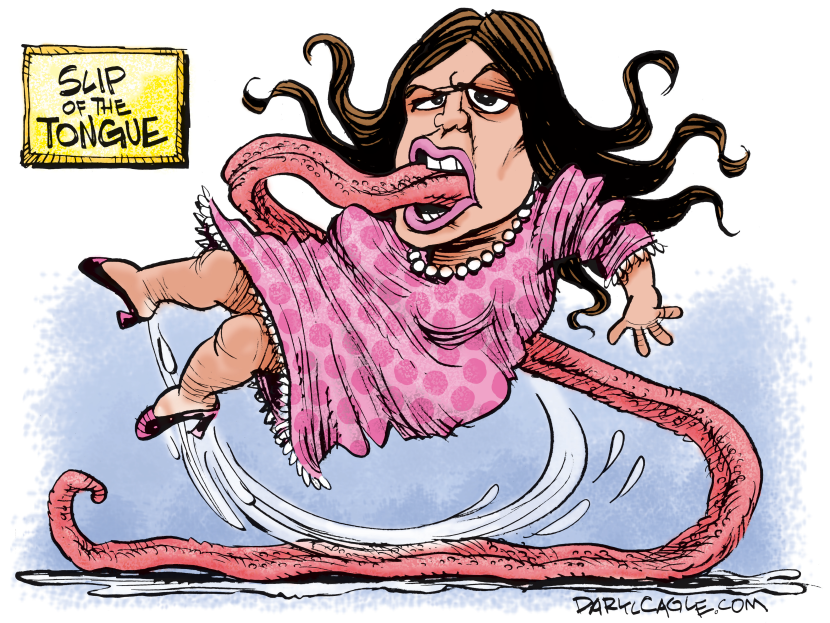
Express their differences with her if they must, but display some class by at least acknowledging the immense difficulty of the job, the relentless pressures, and the self-control necessary to holdtongue and temper when confronted by ill-informed and disrespectful self-promoters masquerading as journalists.

To be sure, she chose the arena in which to compete, knowing full well that the environment could often be a vindictive, merciless blood sport and she could walk away at any point.

The line she walked – representing a President who consistently displayed a casual appreciation for the truth while striving to maintain her credibility – often proved impossible. At some point, departure was inevitable; it was simply a matter of when.

The job is one in which scars outnumber medals and anyone who takes it believing otherwise, should find another line of work.

Sanders has insisted that her tenure in the White House was an honor she’ll carry forever, that it was the job of a lifetime Doubtless there were times when it was all of that, offset by times when it was not.

She’s headed back to her home state of Arkansas where she should sit in a rocker on the front porch, watch the sun sink over the Ozarks, smile to herself and tell CNN to go to hell.

Copyright 2019 Carl Golden, distributed exclusively by Cagle Cartoons newspaper syndicate.

Carl Golden is a senior contributing analyst with the William J. Hughes Center for Public Policy at Stockton University in New Jersey. You can reach him at cgolden1937@gmail.

Comments Off on Sarah Sanders Doesn’t Deserve the Media’s Abuse