Subscribers Only Content
High resolution image downloads are available to subscribers only.
Not a subscriber? Try one of the following options:
OUR SERVICES VISIT CAGLE.COMFREE TRIAL
Get A Free 30 Day Trial.
No Obligation. No Automatic Rebilling. No Risk.
While Major League Baseball fiddles with its rules — such as adding designated hitters in the National League, and limiting the ways defenses can shift — players seem more preoccupied than ever with the game’s unwritten rules.
This was on vivid display the other day in the final inning of play between the Washington Nationals and visiting San Francisco Giants. With a 7-1 lead in the top of the ninth, the Giants’ Thairo Estrada attempted to steal second base as batter Brandon Crawford blooped a single to left. Estrada was thrown out at home, ending the inning, but leaving the Nationals angry nonetheless. Why? Because an unwritten rule says players should not attempt to steal with a significant lead. Such action is perceived as “showing up” the other team.
As they left the field, two Nats’ players, Victor Robles and Alcides Escobar, took a detour toward the Giants’ side on the third-base line and appeared to exchange words with some San Francisco players. The Giants were annoyed. Why? Because another unwritten rule says players should not step toward the other team’s dugout, lest it be interpreted as a threat requiring retaliation, such as throwing a pitch at a batter.
The most ridiculous and comical behavior nowadays concerns decorum by hitters after launching homers. Some pitchers object when the batter stands for a moment admiring the hit, or flips his bat in a macho gesture, or glares at the pitcher. Back in 2013 Carlos Gomez of the Milwaukee Brewers paused ever so slightly after smacking a homer and then, in the opinion of many members of the opposing Atlanta Braves, dawdled as he rounded the bases. Both benches cleared and several players, including Gomez, were ejected.
A game in 2020 between the San Diego Padres and Texas Rangers was a comical classic of its kind. Leading 10-3 in the eighth inning, the Padres’ Fernando Tatis Jr. hit a grand slam to make the score 14-3. When the next batter stepped up, the Rangers’ pitcher threw a fastball behind his back in anger. Why? Because Tatis had swung at a 3-0 pitch, another no-no in lopsided games.
The Texas manager, Chris Woodward, said later, “There’s a lot of unwritten rules that are constantly being challenged in today’s game.”
There are, indeed. For instance, opposing players shouldn’t walk across the mound, which is seen as sacred ground by pitchers. Or, don’t bunt against a pitcher who is throwing a no-hitter. Also, opposing batters shouldn’t walk in front of the catcher. And, a runner must not yell at a fielder while he’s attempting to make a catch.
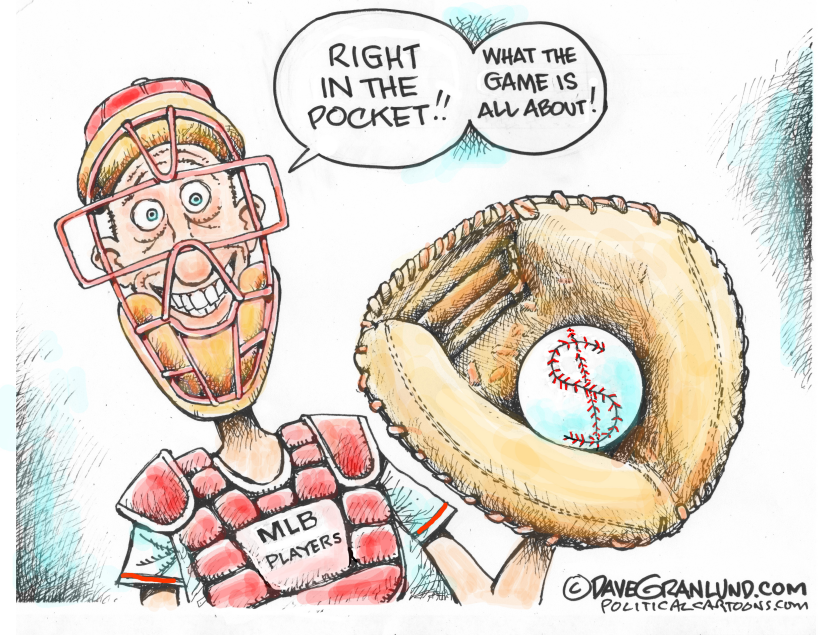
Much of this unwritten stuff is hard to fathom, except to note that as players’ wallets have fattened over the years, their skins seem to be getting thinner.
–
Copyright 2022 Peter Funt distributed by Cagle Cartoons newspaper syndicate.
Peter Funt’s new memoir, “Self-Amused,” is now available at CandidCamera.com.
