Subscribers Only Content
High resolution image downloads are available to subscribers only.
Not a subscriber? Try one of the following options:
OUR SERVICES VISIT CAGLE.COMFREE TRIAL
Get A Free 30 Day Trial.
No Obligation. No Automatic Rebilling. No Risk.
This year marks the 60th anniversary of the ratification of the Voting Rights Act of 1965 — one of the most consequential laws in the nation’s history.
Signed after the Selma-to-Montgomery marches, the act augmented the 15th Amendment’s promise that no American could be prohibited access to the ballot box because of their race. Towns and counties where Black voter registration had previously been less than 10% witnessed registrations surge. Black citizens who had long been denied access to participation in the political process acquired representation on school boards and in town halls, state legislatures, and Congress.
The Voting Rights Act provided solid evidence when the federal government enforces equality, diversity, and inclusion, democracy becomes stronger.
Over the next several decades, the act was extended and expanded. Then, however, in Shelby County v. Holder (2013), the Supreme Court struck down a section of the act as unconstitutional because it violated states’ power to implement and control elections. The court ruled that the section was outdated and not responsive to current conditions. The decision had an immediate effect and led to states employing strict photo ID laws and voter roll purges.
Questions about the Voting Rights Act’s constitutionality have simmered underneath the surface at the Supreme Court. However, last month, in an order expanding a Louisiana redistricting case, the court decided to revisit the issue.
With arguments scheduled to take place Oct. 15, there is considerable concern what remains of the 1965 law after its brutal evisceration in the Shelby County case will be dramatically weakened, if not legally revoked in its entirety, by the conclusion of the court’s next term.
At the center of this drama is Donald Trump — an individual whose reputation as president is marred by rampant voter disenfranchisement, who perceives voting as virtually a popularity contest and is terrified of being defeated. This was why he challenged the integrity of our democratic mechanisms in 2020 after being defeated by Joe Biden instead of maturely conceding that several million more Americans voted for the latter.
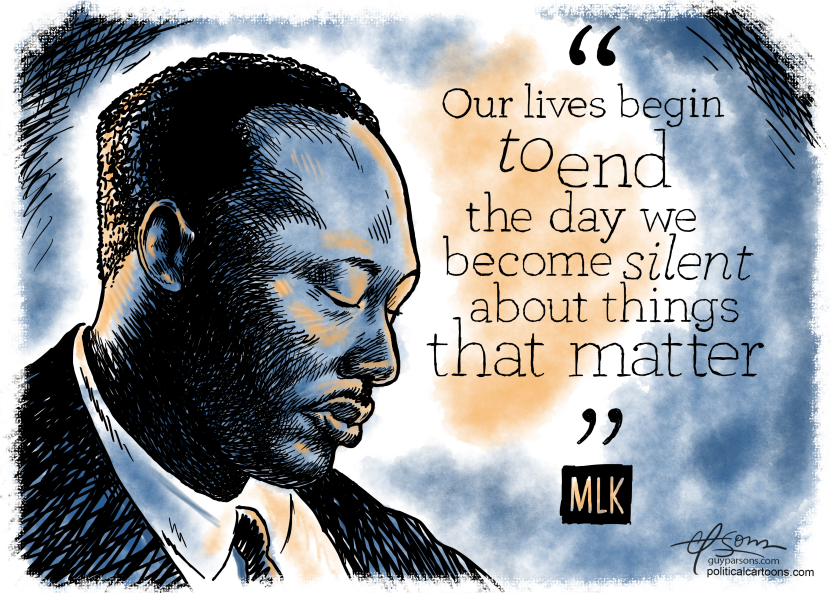
Trump’s ruthless efforts against voting rights soldiers on as he steadily populates the courts with right-wing judges who continue to chip away at civil rights laws. Increased barriers to voting and the alarmingly minimal level of resistance from those still able to exercise their right to cast a ballot has empowered him to run roughshod over media conglomerates and prompt corporations to abandon diversity, equity, and inclusion programs. Unbounded by any resistance from his own party and, regrettably, a sizable segment of feckless Democratic leaders, Trump has unleashed a full political blitzkrieg on the civil rights movement’s storied legacy — going so far as to open files on Dr Martin Luther King Jr in an effort to distract attention from his own political problems.
The memories of March 7, 1965, are indelibly seared into the history books. It was a time when the horrific violence unleashed on marchers rattled the nation. Images of a young John Lewis and dozens of peaceful protesters getting their heads cracked open by Alabama state troopers on the Edmund Pettus Bridge spread across the nation. That was the price Lewis and his peers paid for attempting to exercise their First Amendment rights to free speech and to march. The scenes of bodily carnage became known as Bloody Sunday.
Later that evening, several television networks interrupted their regularly scheduled programming to inform the public of the bloodbath that had occurred earlier that day in Selma, Alabama. Public outrage was immediate, and one week later, on March 15, 1965, President Lyndon Johnson addressed a joint session of congress urging passage of the Voting Rights Act.
Intense public pressure culminated in Congress passing the act and President Johnson signing it into law on August 6, 1965. Had it not been for civil rights champions like Lewis, it would have taken much longer for Blacks, particularly in the South, to gain protections for their voting rights.
More than 60 years later, the national outrage of Bloody Sunday, which sparked mobilization toward passage of the Voting Rights Act, has been replaced by a numbness to Immigration and Customs Enforcement raids, the arrests of elected officials, and the snipping of social safety nets.
This is why the anniversary of the Voting Rights Act is of such enormous importance. The anniversary should be remembered not just for nostalgic reasons, but for the act’s future implications. Will the legal promise of equal representation be retained? Will disingenuous legal theories perversely designed as “color blindness” arise? Will sinister and draconian legislation sharply diminish protections that generations of Americans of all races and ethnicities marched, bled, and died for to secure?
The stakes could not be higher. Will the nation continue to honor the hard-won protections of the Voting Rights Act or allow them to be erased under the guise of “constitutional purity” — meaning White supremacy.
–
Copyright 2025 Elwood Watson, distributed by Cagle Cartoons newspaper syndicate
Elwood Watson is a professor of history, Black studies, and gender and sexuality studies at East Tennessee State University. He is also an author and public speaker.