Subscribers Only Content
High resolution image downloads are available to subscribers only.
Not a subscriber? Try one of the following options:
OUR SERVICES VISIT CAGLE.COMFREE TRIAL
Get A Free 30 Day Trial.
No Obligation. No Automatic Rebilling. No Risk.
The formidable attention dedicated to the controversy surrounding the Epstein files has overshadowed the release of the files of the late Dr. Martin Luther King Jr and the complexities of his life past and present.
The files were released by the National Archives last month, and most scholars and historians have argued there is little new information within the nearly quarter million pages that reconstruct the previous concrete narrative of James Earl Ray’s pleading guilty to King’s murder in 1969.
Previously, in January 2025, National Archives officials had released over 6,000 documents in accordance with an executive order signed by President Donald Trump over the staunch opposition from members of the King family.
Everyone, including historians (like myself) and the public at large, has been told the official story that King was assassinated on the balcony outside his motel room in Memphis, Tennessee, on April 4, 1968, where he had stepped outside to get some fresh air and chat with his buddies after a long day of business. Ray, a 40-year-old escaped fugitive, later confessed to the crime and was given a life sentence (99 years) in prison.
As time passed, Ray retracted his confession, stating he was the fall guy for a man named Raoul. Up until his death in 1998, Ray steadfastly maintained his innocence. His revoked confession and the FBI’s often sordid managerial style under the notorious J. Edgar Hoover, who once branded King as “enemy No. 1,” have sparked a plethora of varied conspiracy theories over who really killed the civil rights icon. King’s children have publicly declared that they are not convinced that James Earl Ray was the person who had assassinated their father, leading them to contest the Justice Department’s conclusion that it “found nothing to disturb the 1969 judicial determination that James Earl Ray murdered Dr. King.”
Coretta Scott King, his widow, requested the probe into King’s death be reopened, and in 1998, then-Attorney General Janet Reno directed the Civil Rights Division of the U.S. Justice Department to do so. They concurred with the findings of a 1999 wrongful death lawsuit in which it was found that King was the victim of a broad conspiracy that involved government agents.
His son, Dexter King, who died in 2024, met with Ray in prison in 1997, saying afterward that he believed Ray’s claims of innocence. With the endorsement of the King family, a civil trial in state court was held in Memphis in 1999 against Loyd Jowers, an individual who supposedly harbored information about a conspiracy to assassinate King. Several dozen witnesses testified, and the jury concluded that Jowers, who died in 2000, and unnamed others, including government agencies, had participated in a conspiracy to assassinate King.
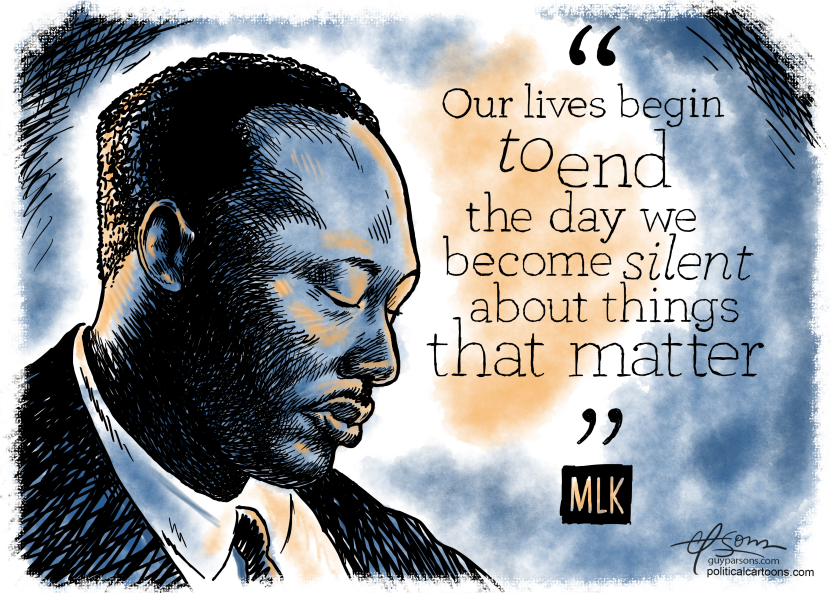
King has been dead for almost 60 years, and people tend to forget the progressive messages he attempted to convey. He was an ardent champion of economic justice, a fierce anti-militarist, and a tireless proponent for revolutionary and systematic transformation that confronted racism, anti-Semitism, poverty, and war. Unlike many so-called leaders of today, King was willing to contest standard orthodoxies of the status quo and endure personal consequences for his beliefs.
Despite that, the right has selectively quoted King in an attempt to disassemble the very progressive legacy he avidly pursued. More than a few conservatives salaciously invoke the speech in which he stated that his hope was that children “will not be judged by the color of their skin but by the content of their character” to denounce DEI and programs designed to help historically marginalized groups. Such disingenuous interpretations falsely promote the manner in which King thought about race.
He believed race was a pertinent issue in American life and must be aggressively confronted. King’s daughter, Bernice King, commented in a statement after the release of her father’s files that “a 1967 poll reflected that he was one of the most hated men in America.” She added that “many who quote him now and evoke him to deter justice today would likely hate, and may already hate, the authentic King.” I totally concur with this assessment.
Since the 1980s Reagan era, right-wing social movements have sinisterly co opted King’s legacy, declaring themselves as the new minorities who are under siege. These right-wing groups argue white Christians are the real victims of multicultural democracy and, in fact, are “the new Blacks.” This delusional and dishonest version of social reality has transcended into the “great replacement theory,” the far-right conspiracy theory that white people are being demographically and culturally replaced with minorities.
Up until his assassination, King directly dealt with all of the unrelenting adversity that came his way. His legacy, revered by many, denounced by some, and complex to others, will continue to be the subject of fierce debate long into the future, though his role in history will not.
–
Copyright 2025 Elwood Watson, distributed by Cagle Cartoons newspaper syndicate
Elwood Watson is a professor of history, Black studies, and gender and sexuality studies at East Tennessee State University. He is also an author and public speaker.