Time to end sanctuary cities

And so, the Trump administration begins.

The newly inaugurated president has set an extraordinarily high bar for his second term, with executive orders to secure the border, increase fossil fuel production, end the federal government’s DEI programs, revive the economy, and much more.

Because Trump’s agenda is wide-reaching, expectations among his supporters are high and therefore failure to reach his announced goals would be a huge disappointment to them. Trump’s honeymoon period could be briefer than the typical 100 days allowed for incoming presidents.

But if Trump can succeed on ending illegal immigration and removing criminal aliens – voters’ top concern – then he will at least have reversed former President Joe Biden’s open borders era. Tom Homan, the border czar, has promised to begin his alien removal program in sanctuary cities, a headache to immigration enforcement since the early 1970s.

Berkeley, Calif. claims to have been the first sanctuary when it offered refuge to Vietnamese war victims. Despite Berkeley’s dubious claim – most Vietnamese nationals were legally present refugees – sanctuary cities ballooned to today’s 300 across 13 states. The largest sanctuary cities are New York, Los Angeles, Chicago, Philadelphia, San Diego, San Francisco and Seattle.

Sanctuary is the practice of shielding illegal aliens who have violated federal immigration law and blocking them from immigration officers’ reach. Originally limited to a handful of church groups that welcomed a family or two that illegally crossed the border, sanctuary cities have grown into something much larger and more dangerous. Self-proclaimed sanctuary communities have harbored convicted murderers, rapists and kidnappers, and have spent tens of millions of dollar on shelter and on providing social services.

Homan has repeatedly stated his priority is to remove criminals, especially those in sanctuary cities. Until the New York Times and the Wall Street Journal identified Chicago as the first Immigration and Customs Enforcement target, Homan had scheduled as many as 200 agents to descend on the Windy City to begin operations. The leaks, Homan said, put officers’ safety at risk and may cause him to re-evaluate the removal schedule

Chicago, a sanctuary city for 40 years, is perfect for Homan to begin his enforcement operation. In 1985, then-Mayor Harold Washington signed an executive order granting sanctuary to all people, regardless of their immigration status, and providing access to city services and benefits. Washington’s order was formalized into the “Welcoming City Ordinance” in 2006 which barred local law enforcement from cooperating with federal immigration authorities.

Illinois Governor JB Pritzker signed a similar order for the entire state in 2021. As a result, the arrival of 628,000 illegal aliens cost state taxpayers $2.9 billion annually. Since 2022, more than 20,000 migrants have settled in Chicago, many of whom slept at O’Hare International Airport, at local police stations, in public parks or on the streets. Overall costs to house the illegal alien influx tops $330 million.

Instead of ending sanctuary policies which would deter illegal aliens, both Illinois Gov. Pritzker and Chicago Mayor Brandon Johnson blame the federal government while demanding it provides aid and work permits for illegal aliens. Because of its tenuous budgetary conditions, exacerbated by financing illegal aliens, S&P downgraded Chicago’s credit rating to BBB, a step above the lowest investment-grade, BBB-, which is a notch above junk level.

But another option in addition to deporting criminals that would cripple sanctuary cities is available to the Trump administration. Sanctuary cities violate federal immigration law, which says no state or local government may prohibit or in any way restrict local officials from communicating with immigration authorities about a person’s immigration status.

Yet another option is for the federal government to stop sending millions of dollars to cities that violate immigration laws and, through their craven disregard, jeopardize public safety. Every year, the Department of Justice doles out hundreds of millions to sanctuary jurisdictions under three funding programs — the State Criminal Alien Assistance Program, the Byrne Justice Assistance Grants, and the Community Oriented Policing Services program.

These monetary awards represent about 40 percent of the available funding under these programs. Sanctuary jurisdictions receive funding despite actively hindering cooperation between local law enforcement agencies and federal immigration authorities. Consequently, the funding programs subsidize cities that violate federal law and undermine community welfare.

California, by a wide margin, receives the greatest aggregate sum from the three programs. Defunding sanctuary cities would avoid the dramatic arrest process – handcuffs, police cars and ICE officers – that would create negative press coverage for the administration.

To end the criminality that sanctuary cities represent, the Trump administration should seal the border, covered in one of his election night executive orders, remove dangerous criminals from sanctuary jurisdictions, and stop sending the defiant municipalities money.

Copyright 2025 Joe Guzzardi, distributed by Cagle Cartoons newspaper syndicate.

Joe Guzzardi is an Institute for Sound Public Policy analyst who has written about immigration for more than 30 years. Contact him at [email protected].

Comments Off on Time to end sanctuary cities

Trump’s slap in the face to his strongest supporters

In the days immediately following his decisive victory, President-elect Donald J. Trump was cruising right along. His avowed enemies, such as Meta’s Mark Zuckerburg,  embattled Canadian Prime Minister Justin Trudeau, and MSNBC’s “Morning Joe” co-hosts Joe Scarborough, scurried to Mar-a-Lago to kiss and make up.

Then, the unlikely happened. During the Christmas and Hanukkah seasons, a brouhaha broke out between MAGA loyalists and immigration expansionists Elon Musk and Vivek Ramaswamy, who want to expand the H-1B visa program, which allows companies to hire foreign workers in specialty professions.

Trump, to his base’s horror, sided with Musk, Ramaswamy, India-born venture capitalist Sriram Krishnan, the incoming senior artificial intelligence policy advisor, and ex-PayPal COO David Sacks, recently nominated to become Trump’s AI “czar.” Multi-millionaire and billionaire Silicon Valley tycoons are in accord that issuing tens of thousands more H-1B visas is essential.

Musk defended the program, arguing misleadingly that the U.S. has a “dire shortage of extremely talented engineers” and compared importing IT workers to the NBA drafting international hoopsters. That’s quite a stretch of Musk’s imagination, since each year U.S. universities graduate thousands of citizens with STEM degrees.

Adding fuel to the fire, Trump spoke glowingly about the H-1B workers he hired at his properties and echoed the expansionist’s theme that the U.S. needs “exceptional talent,” a common misnomer used to describe foreign-born visa employees who may have only average IT skills.

Trump’s affinity for H-1B workers is a dramatic about-face from the position he held during his first term, when he emphasized the importance of hiring Americans first. To his supporters, Trump’s siding with the expansionists was not only a cataclysmic betrayal, but also brought into question whether Musk had supplanted the president as the administration’s supreme potentate.

Musk is Trump’s most important donor, his most influential social media contributor, a key policy advisor and a Mar-a-Lago regular. But Musk’s most critical role: he was vital to Trump’s re-election campaign. As the “who’s the president gossip?” continued, Trump, speaking at the conservative Turning Point USA’s AmericaFest conference in Phoenix, deflected the question and stated, tongue-in-cheek, that it would be unconstitutional for the South Africa-born Musk to become president.

Trump has a golden opportunity to fulfill his vow to defend American workers and test the elitists’ deception that H-1Bs are the most qualified workers and essential to their corporations’ successes. The scrum between the elitists and the MAGAs might be resolved definitively if Trump could muster up the courage to cancel the next H-1B visa lottery. By definition, a lottery cannot exclusively produce “the best and brightest.”

If the impossible happened and the lottery were eliminated, that would mean that Meta, Microsoft, IBM, etc. would have to get along with their already-employed IT workers – no more massive layoffs – or hire U.S.-born IT workers. Breitbart’s Neil Monro, a long-time H-1B analyst, wrote “the annual inflow of white-collar visa workers is at least 500,000. The resident [H-1B] population is at least 1.5 million, nearly all of whom work longer hours at lower pay in the hope of getting green cards from the U.S. government.” Put the emphasis on “lower pay” and “green cards.”

The H-1B visa is dual-intent, which means that a foreign national can enter the U.S. as a nonimmigrant but retain the option to eventually apply for a permanent residency green card.

Since its inception as part of the Immigration Act of 1990, the H-1B visa has been abused and its original intent – to provide a non-immigrant temporary permission to work in the U.S. legally – has been hijacked. The corrupt American university system, which continues to enroll foreign students – 1.2 million as of academic year 2023-2024 – at an increasing percentage of its total student population, forces citizen students to compete with the entire world for admission into coveted STEM programs. Specifically, 56% of international students studied STEM fields, and China, America’s top global threat, receives 27.4% of the H-1Bs. India received 25.4%.

Writing in the Economic Policy Institute, Daniel Costa and Ron Hira concluded among the many flaws in the H-1B visa, none is more egregious than allowing employers to legally hire and underpay workers relative to U.S. workers in similar occupations in the same region. For those who advocate for ending illegal immigration but then add that they’re all-in on legal immigration, note that the H-1B visa is a legal vehicle to enter the U.S., take jobs even though Americans’ employment and wages are undercut.

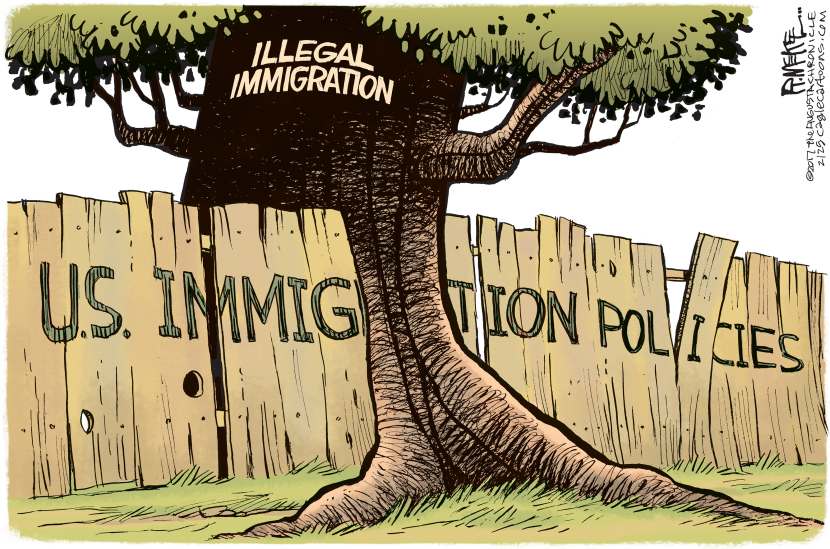
Whether it’s illegal immigration like what’s gone on for four years at the northern and southern borders or legal via the H-1B visa, Americans want less immigration. Trump wasn’t elected to undermine his supporters’ reduced immigration hopes, the very issue that helped return him to the White House.

Copyright 2025 Joe Guzzardi, distributed by Cagle Cartoons newspaper syndicate.

Joe Guzzardi is an Institute for Sound Public Policy analyst who has written about immigration for more than 30 years. Contact him at [email protected].
Comments Off on Trump’s slap in the face to his strongest supporters

Californians vote to accelerate their decline

On November 5, the presidential election captured most of the nation’s attention. But few paid any mind to California’s congressional races, since the results were a foregone conclusion. A quick look at the re-elected individuals show a sorry assortment of unindicted felons, power-crazed subversives, anti-American worker proponents and fervently pro-illegal immigration advocates.

Not only did this motley group win but their margins were staggeringly large.

Nancy Pelosi, who may have been the shadow president puppeteering Joe Biden for the last four years, won her 20th term representing California’s 11th congressional district with 81% of the vote. The 11th is mostly San Francisco, once known as the object of Tony Bennett’s affection in his signature song, “I Left My Heart in San Francisco.” The “City by the Bay” is now recognized for rampant smash-and-grab robberies and widespread homelessness.

San Francisco’s sanctuary city status makes it an ideal municipality for Venezuelan gang Tren de Aragua to set up shop to embark on its illegal alien crime sprees. Since 2019, 47% of businesses in the area have shut their doors, including 22 big-name stores in high-end Union Square, the San Francisco Standard previously reported. Residents, especially among the high wage-earning Gen Zers, have fled. With a terrible track record like Pelosi’s district has amassed, the 84-year-old should have been booted. Instead, she won in a landslide.

Another Bay Area ne’er-do-well and unindicted felon, Eric Swalwell, breezed to victory in the 17th Congressional District. Swalwell lied to Congress when he repeatedly insisted he had conclusive evidence then-President Donald Trump colluded with Russia.

Perhaps Swalwell felt that lying about Trump would inject life into his moribund, short-lived, ego-fueled, three-month presidential campaign in 2019. Sleeping with a known Chinese spy, Fang Fang, who doubled as Swalwell’s chief 2014 campaign fund raiser, should have raised eyebrows among his constituents. No such luck, however. Swalwell sailed to a 68% victory margin over his Republican opponent.

No House representative has done more to assure that well-paid, white-collar tech jobs go to foreign nationals, mostly Indians and Pakistanis, than immigration lawyer Zoe Lofgren. Representing California’s 18th District, Lofgren racked up 65% of the ballots cast. Voters who want their representatives to work tirelessly on foreign nationals’ behalf chose the right candidate in Lofgren. At age 77, Lofgren, on the heels of her easy re-election margin, will begin her 16th term. During her 30 years in Congress, Lofgren scored an “F” immigration grade, consistently voting against border or interior enforcement and in favor of amnesty.

One of her most recent American worker betrayals: Lofgren sponsored H.R. 3194, the U.S. Citizenship Act, that would expand immigrant and non-immigrant worker visas. The legislation would have allowed approximately 600,000 non-immigrants who are, in Lofgren’s opinion, “essential” workers, to receive green cards. Additionally, the legislation would issue more than 11 million new employment preference green cards over a 10-year period, plus offer green cards to non-immigrants with an advanced degree in STEM. The green cards would give work authorization to any Bureau of Labor Statistics employment category, not just IT workers.

In the U.S. Senate race for Dianne Feinstein’s seat, temporarily held by Laphonza Butler, Adam Schiff handily defeated Steve Garvey, former Los Angeles Dodgers and San Diego Padres baseball star, when he captured 60% of the vote. Schiff, like Swalwell, is an unindicted felon who also endlessly parroted the Russian collusion lie.

The majority of California’s congressional delegation has 0% immigration grades, yet – like Pelosi, Swalwell, Lofgren, Schiff and dozens more – voters consistently re-elect them. Residents disgusted with the illegal alien invasion, widespread crime, out-of-control homelessness, and the ever-rising cost of living should remember those negatives the next time they go to the ballot box.

As French philosopher Joseph de Maistre wrote in 1811 “Every nation gets the government it deserves,” an explanation of how California’s voters gave a green light to continuing the state’s crisis with their short-sighted ballot box selections.

Copyright 2024 Joe Guzzardi, distributed by Cagle Cartoons newspaper syndicate.

Joe Guzzardi is an Institute for Sound Public Policy analyst who has written about immigration for more than 30 years. Contact him at [email protected].

Comments Off on Californians vote to accelerate their decline

States join immigration enforcement battle

The national frustration over President Biden’s immigration agenda was reflected not only in the presidential election’s results but also in Arizona.

Proposition 314, a border security measure that makes it a state crime to enter Arizona from Mexico and outside of a legal port of entry, passed overwhelmingly. Nearly 63% of Arizonians voted for the measure, which just 37% opposed, according to the Arizona Secretary of State’s Office results page.

Opponents have compared Prop 314 to Arizona’s “Support Our Law Enforcement and Safe Neighborhoods Act,” which passed in 2010 and was partially struck down by the U.S. Supreme Court of the United States. The Court left one provision of that bill intact, requiring Arizona law enforcement to make an attempt, when feasible, to determine a person’s immigration status during a “lawful stop, detention, or arrest” if there is a reasonable suspicion “that the person is an alien and is unlawfully present in the United States.”

Lawful stops would include, among other crimes, traffic violations, home invasions or drug sales. Prop 314 has similar restrictions. Before law enforcement personnel could begin the removal process, it would have to capture on video and identify the illegal immigrant crossing or articulate based on their professional experience that the suspected alien dressed in camouflage or was part of a large group packed into a van, or other actions consistent with unlawful entry.

The proposal covers more than border crossing requirements – also included are increased penalties for fentanyl sales that results in death, a requirement that legal immigration status be confirmed before welfare benefits are granted, and that legal employment status be confirmed through E-Verify. Arizona judges could, after reviewing the evidence presented to them, issue deportation orders to any illegal alien who refuses to leave voluntarily.

Although voters approved the proposition, the border-crossing provisions would not necessarily immediately become law. The text says it can’t be enforced until Texas’ SB 4 is approved. Both Texas and Iowa have taken action similar to Texas’ proposal, which is being challenged in federal court, a process which could take years. The good news is that, after Arizona completes its November 25 state certification, the added penalties for fentanyl-related deaths and identity misrepresentation become law.

Even though Arizona’s full proposition may be years away from becoming law, pro-immigration advocacy groups and the discredited ACLU are taking steps to block it. The ACLU made the familiar claims that it would “break families apart, exacerbate racial profiling, and increase criminalization of immigrants and communities of color.”

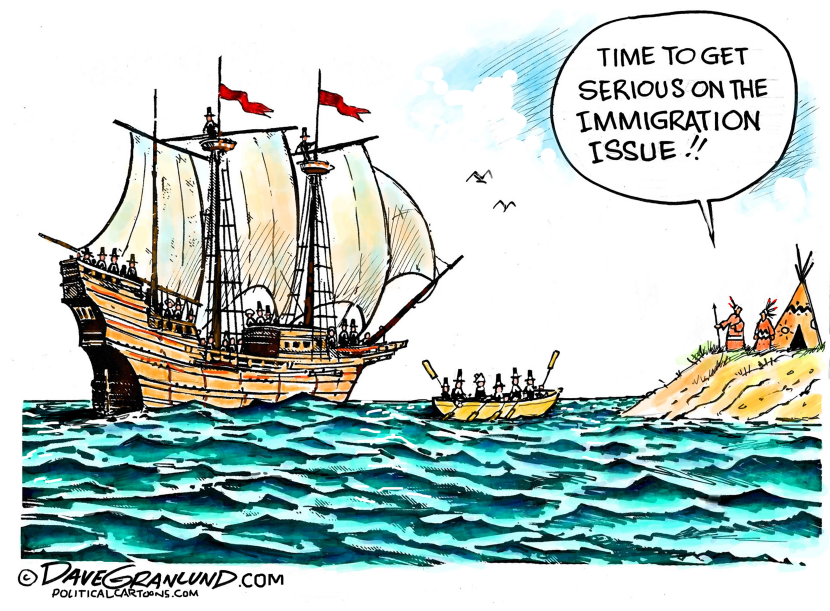
Residents in states that have seen their schools, hospitals and police forces adversely affected by the entry of millions of illegal immigrants are imploring their local governments to assist the feds in restoring a rational immigration system. Nationwide, Immigration and Customs Enforcement, Homeland Security Investigations and Enforcement Removal Operations have about 35,000 agents. Stacked up against ten million or more illegal aliens, the odds against meaningful enforcement are unbelievably bad indeed. The enforcement agencies need the help state governments can provide.

Former Texas U.S. Representative Barbara Jordan and keynote speaker at the 1976 Democratic National Convention gave the best guideline for immigration policy: “Those who should get in, get in; those who should be kept out, are kept out; and those who should not be here will be required to leave.”

Copyright 2024 Joe Guzzardi, distributed by Cagle Cartoons newspaper syndicate.

Joe Guzzardi is an Institute for Sound Public Policy analyst who has written about immigration for more than 30 years. Contact him at [email protected].
Comments Off on States join immigration enforcement battle

American Indians have a long, storied history in baseball

Between 1884 and 1947, from the year that Moses Fleetwood Walker played for the American Association’s Toledo Mud Hens until the Brooklyn Dodgers inserted Jackie Robinson into the lineup, the most prominent minority in baseball was American Indians.

One of the most insightful chapters in Larry Ritter’s classic, “The Glory of Their Times,” is based on his interviews with John Tortes “Chief” Meyers, the slugging catcher who played for John McGraw’s New York Giants and, in his career’s twilight, for the Dodgers and Boston Braves, from 1909 to 1917. Although Meyers, a California Cahuilla Indian, had matriculated at Dartmouth and was better educated than most ballplayers, his peers often treated him poorly. Meyers answered with his bat, compiling a .291 lifetime batting average. His 1912 mark of .358 was second in the league only to the Chicago Cubs’ triple-crown winner Henry Zimmerman’s .372.

From 1890 to the 1950s, the nickname “Chief” was attached to virtually every Indian wearing a baseball uniform, a subtle form of racism in a less enlightened era. In addition to “Chief” Meyers, there was Albert “Chief” Bender, a Minnesota Chippewa whose pitching led the Philadelphia A’s to three World Series title. There was Bob “Chief” Johnson, one-quarter Cherokee, a five-time .300 hitter who knocked in 100 or more runs eight times for the Philadelphia Athletics. There was also Allie “Super Chief” Reynolds, a one-quarter Creek and a member of the New York Yankees dominant 1950s teams.

Some big-league Indian players managed to avoid the “Chief” sobriquet, including the most well-known of them all, Jim Thorpe.

The first Indian to reach the major leagues was Louis Sockalexis, an outstanding outfielder with the National League’s Cleveland Spiders from 1897 to 1899. Sockalexis was a Penobscot from Maine, who, like Meyers, attended college – Holy Cross – before becoming a professional player.

Moses J. “Chief” Yellow Horse was a Skidi Pawnee and the first full-blooded American Indian to play professional baseball. Yellow Horse was born on January 28, 1898 on an Oklahoma reservation where the federal government had forced his father’s Pawnee family and the rest of the Skidi tribe – or Wolf Band camps – to walk from their Nebraska camps to poor land south of the Arkansas river.

Thousands died along the way; disease and starvation killed others in the following years. Yellow Horse and his father worked on Wild West shows, where he got a reputation as a comedian with a fondness for alcohol. The government’s Indian agency directed that Yellowhorse attend the Chilocco Indian Agricultural School, and there he developed his baseball skills. He made it to the minor league Arkansas Travelers, where his reputation for unhittable pitches and alcohol-related exploits on and off the field spread across Oklahoma and into Arkansas. Batters who faced both Yellow Horse and Walter Johnson said Pawnee’s fastball was speedier.

In 1921, Yellow Horse joined the Pittsburgh Pirates with high but unfulfilled expectations. Rooming with the alcoholic future Hall of Famer Walter James “Rabbit” Maranville accelerated Yellow Horse’s demise. Ultimately, he lasted just two injury-plagued and demon rum-filled seasons with the Bucs.  He drifted from minor league’s Sacramento Solons to the Ft. Worth Panthers, and finally the Omaha Rourkes where, in 1926, he pitched his last game.

Unable to find another franchise willing to gamble on him, Yellow Horse returned to Pawnee where, because of his alcoholism and rowdy behavior, his tribal brothers spurned him. From 1927 to 1945 Yellow Horse, lost within his tribe, earned barely enough to sustain himself. Then, in 1945, abruptly and without intervention, Yellow Horse gave up drinking. Now sober, Yellow Horse found steady employment, first with the Class-D Ponca City Dodgers as a groundskeeper and then with the Oklahoma State Highway Department.

By the time Yellow Horse died in 1964 at age 66, he had turned his life around and had earned all Pawnees’ respect. Still, Yellow Horse’s Northern Indian Cemetery gravesite is evidence of Indians’ undeserved second-class citizen status. Gravediggers placed Yellow Horse’s headstone in a remote corner in the Indian part of the cemetery separated by a long row of cedar trees from the white section.

Footnote: American scholars have learned through their interactions with tribal elders that most American Indians do not want to be referred to as Native Americans and most certainly not by the politically correct, all-inclusive term “indigenous people. To preserve their rich but vanishing history, Indians want to be called Indians.

Copyright 2024 Joe Guzzardi, distributed by Cagle Cartoons newspaper syndicate.

Joe Guzzardi is a Society for American Baseball Research and Internet Baseball Writers’ Association member. Contact him at [email protected].

Comments Off on American Indians have a long, storied history in baseball

Whither Kamala?

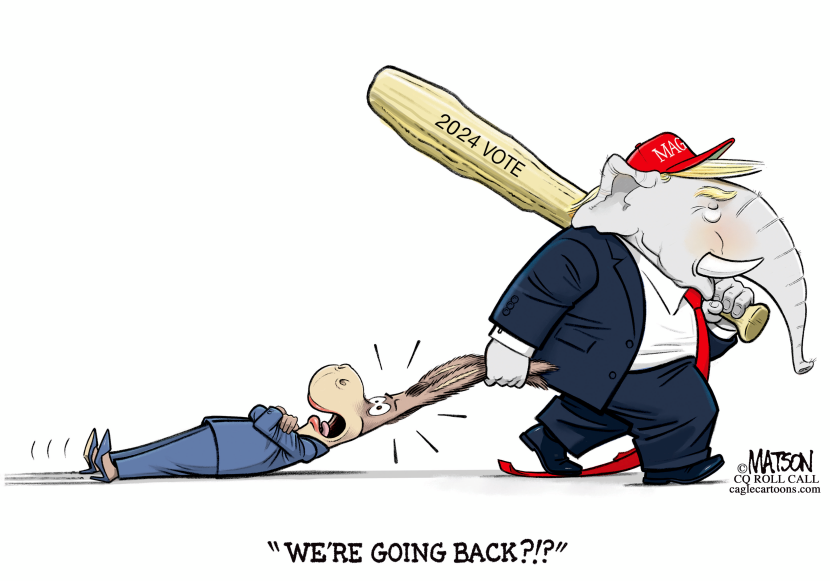
Despite the sound defeat that Vice President Kamala Harris suffered in the 2024 presidential election, she’ll likely remain in the public eye.

“I concede this election, I do not concede the fight that fueled this campaign: the fight for freedom, for opportunity, for fairness, and the dignity of all people,” Harris said in her concession speech last week. “A fight for the ideals at the heart of our nation, the ideals that reflect America at our best. That is a fight I will never give up.”

For high-visibility, vainglorious politicians who have held powerful positions like Harris — San Francisco district attorney, California attorney general, U.S. senator, and vice president — giving up 20 years in the limelight goes against the grain.

Harris could follow the examples previously defeated presidential candidates set.

She could start a foundation like Jimmy Carter did after his 1980 defeat to Ronald Reagan. The Carter Center, which builds sustainable housing and prevents disease from spreading in developing countries, helped the former one-term president win the 2002 Nobel Peace Prize. After Al Gore narrowly lost the 2000 election to George W. Bush, in 2005 he established the Alliance for Climate Protection, renamed The Climate Reality Project. Foundations are nice but hardly the stuff of substantial public exposure.

Or Harris could follow President Richard Nixon’s strategy. After his 1960 defeat to President John F. Kennedy and a subsequent loss in California’s 1962 gubernatorial race to Democrat incumbent Pat Brown, Nixon spent years promoting GOP candidates nationwide and, by 1968, had accumulated political favors that he cashed in on.

Another Harris presidential bid, theoretically possible, is not in the cards because it would end in a comparison to Adlai Stevenson, a two-time loser to President Dwight David Eisenhower in 1952 and 1956.

More options for Harris include joining a high-end law firm, becoming a lobbyist, or retiring to private life and wait for book or Netflix deal advances to come in. The Obamas got $65 million from Penguin Random House to release both their memoirs. Harris and spouse Doug Emhoff are not Michelle and Barack, but they would still command a hefty advance.

A safe bet on Harris’ future is that she will run to replace termed out California Governor Gavin Newsom, a perfect situation for her. The gubernatorial election is in 2026, which gives Harris time to kick back before stumping again. Campaigning in California would be cake for Harris, as opposed to trying to sell herself to a skeptical national electorate. Harris is a known quantity in California and would benefit from incessantly glowing media coverage.

As of today, Harris’ likely competition, many of whom might drop out rather than face certain defeat in a primary, are California state Senate President pro Tempore Toni Atkins, California Lieutenant Governor Eleni Kounalakis, California Superintendent of Public Education Tony Thurmond, Health and Human Services Secretary Xavier Becerra, former Caifornia California State Controller Betty Yee, and former Los Angeles Mayor Antonio Villaraigos, who ran and lost an unsuccessful 2018 gubernatorial campaign.

Harris has statewide name recognition while the others are, in many corners of California, unknown. One issue that Harris and her potential challengers share is unbending support for open borders and amnesty for already-present illegal immigrants.

The most interesting thing to watch in a Harris gubernatorial bid would be how she interacts with Newsom. For more than a year, Newsom displayed everywhere his naked ambition to displace President Joe Biden. When Harris took over as the nominee, Newsom vanished.

Consider Newsom’s snide remark about Harris after her coronation: “We went through a very open process, a very inclusive process. It was bottom-up, I don’t know if you know that. That’s what I’ve been told to say.”

Insiders know Newsom favored an open convention to replace Biden, confident he would win. No doubt he secretly delighted that Harris absorbed a drubbing and is now 2028’s leading candidate.

In politics, four years is an eternity. When 2028 rolls around, Newsom or any other Democratic presidential nominee may be campaigning in a California that, based on the right-shift towards Trump since 2016, may be as red as it is blue.

Copyright 2024 Joe Guzzardi, distributed by Cagle Cartoons newspaper syndicate.

Joe Guzzardi is an Institute for Sound Public Policy analyst who has written about immigration for more than 30 years. Contact him at [email protected].
Comments Off on Whither Kamala?

Illegal immigration is crushing many public schools

From coast-to-coast, the surge at the southern border has crushed the public school system.

Reuters sent a survey to more than 10,000 school districts across the U.S. to gauge immigration’s impact on public schools nationwide. Of the responding 75 school districts that serve 2.3 million children, 33% said the increase in illegal aliens has a “significant” effect. In the real academic world, significant translates to negative.

The Reuters story did a respectable job of outlining the challenges schools face – the problems of integrating foreign-born students into traditional American education. Since 2022, more than half a million school-age migrant children have arrived in the U.S., according to immigration court records that Syracuse University collected. In some communities, this has exacerbated overcrowding in some classrooms, compounded teacher and budget shortfalls, and forced teachers to grapple with language barriers and escalating social tensions.

Reuters pointed out the obvious – that teachers across the nation face the nearly-insurmountable task of educating non-English speaking students. It’s a challenge that will intensify, since foreign-born nationals from more than 150 countries speaking dozens of languages have either crossed the border or have been flowing into the interior.

Districts will have to hire more budget-draining English as a Second Language teachers, assuming they can be found. In Charleroi, the district will have to recruit Haitian Creole speakers, no doubt in short supply in Western Pennsylvania. But tiny Charleroi, population about 4,200, will have to find the instructors since in a little over a year, as many as 3,000 Haitians have moved into town, almost doubling its population. In 2021-22, the number of Charleroi’s non-English speaking students in area schools was 12 – now it’s 220, an increase of more than 1,700 percent. Finding suitable teachers is made more difficult because, ideally, the job’s candidates will not only speak Haitian Creole but also have a teaching background. Very few who fit the bill can be found locally.

As a former English as a Second Language instructor during the Southeast Asian refugee resettlement into California’s immigrant-heavy San Joaquin Valley, I have some from-the-front observations about how the unanticipated arrivals put a school district and its long-time teachers into a state of controlled chaos. Much like the U.S. cities that are coping with huge arriving migrant totals, Chicago, Boston, Denver, etc., my district had to accommodate legally present refugees from Vietnam, Cambodia, Laos, Thailand as well as itinerant laborers from Mexico and Guatemala.

For teachers who had no trained background in international student instruction, the burden of managing so many kids from so many non-English speaking countries was overwhelming. One unsuccessful method of coping was called “pull outs.” A translator fluent in, for example Cambodian, would enter the classroom, take the Cambodian students to a corner, and instruct them in the lesson given to him by the teacher. Multiple problems arose – did the Cambodian aide fully understand the assignment? Did the aide convey the lesson in an effective manner? The teacher doesn’t speak Cambodian, so he or she wouldn’t know. All of this took time away from the teacher’s responsibility to educate traditional students.

Multiple other language-related problems were ongoing – the often-transient migrant students enrolled after the school year started and left abruptly before it ended. Office personnel could not communicate with parents about important school issues. Finding and paying for appropriate language textbooks was a lengthy and expensive process.

The existing system harms everyone. The international students learn little and miss out on building a solid educational foundation. Teachers and other administrative cannot keep up. U.S. kids miss out on important classroom time. And taxpayers foot the hefty education bill, an estimated $800 billion in 2021 pre-invasion costs.

As long as the border remains open, citizens and international students will continue to fall behind and taxpayers will fund every open border consequence.

Copyright 2024 Joe Guzzardi, distributed by Cagle Cartoons newspaper syndicate.

Joe Guzzardi is an Institute for Sound Public Policy analyst who has written about immigration for more than 30 years. Contact him at [email protected].

Comments Off on Illegal immigration is crushing many public schools

Consistently wrong pollsters try again in 2024

In 1964, I cast my first presidential ballot for Arizona Senator Barry Goldwater.

Since that election, 15-four-year cycles, I’ve been a registered Republican, a registered Democrat, and a registered Independent. I have lived in New York, California, Washington, and Pennsylvania. At no time did I ever miss in-person voting which must, I assume, qualify me among pollsters as “a likely voter.”

Yet during the last six decades, I have never received a telephone call from a pollster asking me for whom I planned to vote. Moreover, after I inquired, I learned that no family member, friend, neighbor, or work colleague has been polled.

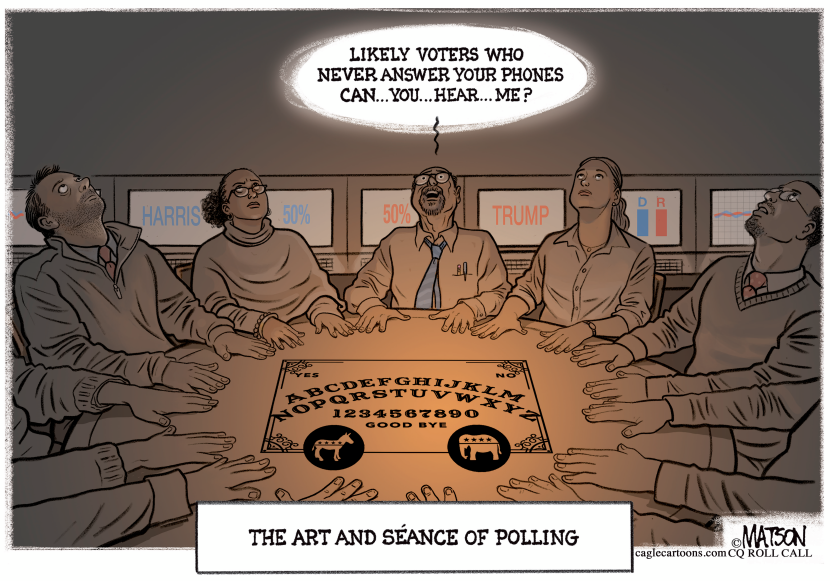
Who, then, is polled? Given my long-standing experience as a confirmed but never polled voter, I wonder what the non-stop fuss in print media and television is all about: “Harris is up two points in Wisconsin, but down two points in Michigan!” or “Trump is up four in North Carolina and gaining in Arizona.” Comparable stories not only have headlined but consumed most of the print ink or broadcast air with one talking head after another chattering predictable points that depend on their political leaning.

Since the 2016 and 2020 polls were dramatically off the mark, no one should put any credibility in the 2024 election predictions.

In 2016, Donald J. Trump’s victory shocked many Americans, especially pollsters who showed his opponent, Hillary Clinton, leading the race up right up to Election Day. All data they were looking at seemed to predict her victory. Clinton’s campaign, confident she would win, had the champagne ready to pop. But Trump, who disdained data gathering, carried swing states Wisconsin, Michigan and Pennsylvania, which Democrats thought were in the bag.

After the ballots were counted, Trump had won 306 electoral votes, compared to Clinton’s 232, securing him the presidency. The pollsters offered weak excuses for their embarrassing failures including a farfetched claim that the results were skewed by whether a male or female picked up the phone.

The 2016 misfire was supposed to serve as a wake-up call for pollsters, but it did not. The 2020 election would be, according to the polling, an easy Joe Biden victory. But Biden won by only three points versus his projected margin of eight – another humbling for the touted polling industry.

Pollsters have spent the years since 2020 experimenting with ways to induce hard-to-reach voters to participate in surveys and testing statistical techniques to improve accuracy. But expert opinion is mixed on whether polling outcomes are due for a repeat of 2020, which a professional association of pollsters called the most inaccurate in 40 years. New developments, such as the shift of black and Latino voters away from Democrats and toward Republicans and the increase of online surveys that use unproven sampling methods create additional potential for error.

Referring to 2024’s polling reliability, Stanford University political scientist Jon Krosnick said, “We are headed for more disaster.”

Pollsters do a better job of identifying the core issues that worry voters. The numbers one and two are the economy and immigration. But neither the polling organizations nor the candidates have comprehensively linked the two.

Immigration directly impacts federal, state, and local economies. In March 2023, three years into the ongoing four-year invasion, the Federation for American Immigration Reform published its study, “The Total Fiscal Cost of Illegal Immigration.” The nonprofit estimated that, at the time of its report, 15.5 million illegal immigrants resided in the U.S. Beginning in 2023, the net cost of illegal immigration to the U.S., including K-12 education, emergency medical care, and other affirmative benefits, is at least $150 billion. Subtracting the tax revenue that illegal aliens pay, just under $32 billion, from the gross negative cost of illegal immigration, $182 billion, the think tank arrived at its $150 billion total.

Eighteen months have passed since their report was published, and millions more illegal aliens have entered with taxpayers funding every step they take once inside the U.S.

The Biden-Harris administration has given the green light to millions of unvetted illegal aliens who have unlawfully crossed or, unprecedented, been flown into the interior via the unconstitutional program for Cubans, Haitians, Nicaraguans and Venezuelans that admits 30,000 foreign nationals monthly.

Voters who consider the economy their main concern should realize that unchecked immigration contributes to high living costs including the tax hikes necessary to pay billions for illegal aliens’ resettlement.

Copyright 2024 Joe Guzzardi, distributed by Cagle Cartoons newspaper syndicate.

Joe Guzzardi is an Institute for Sound Public Policy analyst who has written about immigration for more than 30 years. Contact him at [email protected].
Comments Off on Consistently wrong pollsters try again in 2024

In historic case, common sense prevails on immigration

Proponents of common sense immigration reform won a rare but crucial victory when a district court judge ruled a lawsuit from a Massachusetts group against three federal agencies can proceed.

At issue is the Biden administration’s abject failure to conduct an environmental analysis as required by the National Environmental Policy Act’s guidelines. Since 2021, Biden and Harris have opened the border, resulting in millions of foreign nationals entering the interior.

Simply defined, federal agencies are required to evaluate the environmental impacts of their major actions. Often referred to as the nation’s environmental Magna Carta, the guidelines are intended is to ensure federal decisions that affect the environment are made in good faith and in full view of the public. Which is why federal agencies are required to study the effect of open border immigration practices and to allow public comment before putting laws into effect that might dramatically increase population and are therefore injurious to the natural environment.

Several weeks ago, at a bench trial, Julie Axelrod, the Center for Immigration Studies’ director of litigation, successfully argued out of control immigration – and the significant population increases and environmental damage that accompany it – has a detrimental effect on Americans lives.

Two witnesses – former Acting Commissioner of Customs and Border Protection Mark Morgan and former Chief of the Border Patrol Rodney Scott – explained how the border wall and the “Remain in Mexico” policy were critical twin pillars in their border security strategy, and whose abrupt termination at the Biden administration’s onset precipitated the ongoing border crisis.

The multiple amnesties and border security laws have been, at best, loosely enforced or, at worst, criminally disregarded, have led to tens of millions of illegal aliens admitted in the six-plus decades since President Nixon signed the National Environmental Policy Act into law. The Department of Homeland Security has never conducted the statutorily mandated environmental impact study before implementing its immigration agenda.

Secretary Alejandro Mayorkas, an experienced immigration lawyer, knows that his agency must comply with the guidelines, but like so many in the Biden administration, he has fearlessly disobeyed established laws.

Politically correct environmentalists who question whether open borders have detrimental effects on limited natural resources, should see the images of the more than 12,000 Haitians awaiting processing in a makeshift camp under Texas’ Del Rio Bridge. Similar scenes of huge gatherings of illegal aliens either heading for the border or debarking in major cities from busses have played out during Biden’s term.

In 2021, the Arizona Department of Environmental Quality estimated each border crosser leaves approximately six to eight pounds of trash in the desert during his journey. Include other border states and add three years of greenlighting millions of illegal aliens, and the trash total would be “staggering,” according to the report’s co-author, Bruce Westerman.

Despite the tons of trash that illegal aliens strew across the Southwest, the Sierra Club and other prominent environmental groups have abandoned, as Axelrod noted, what should be their principal mission – protecting and conserving flora and fauna.

The legal victory is the first step in securing Americans’ right to have their surroundings protected from the reckless and illegal immigration agenda of Biden and Vice President Kamala Harris. The case will now move forward to determine appropriate remedies, with briefings scheduled for later this year.

Axelrod urged future public engagement and hearings to assess how immigration affects local communities. Urban sprawl and the pressure put on public services like schools, hospitals and police departments are the most obvious and drain local budgets.

Overcoming years of criminal negligence that subverts sovereignty is an uphill climb, but the arduous journey has started.

Copyright 2024 Joe Guzzardi, distributed by Cagle Cartoons newspaper syndicate.

Joe Guzzardi is an Institute for Sound Public Policy analyst who has written about immigration for more than 30 years. Contact him at [email protected].
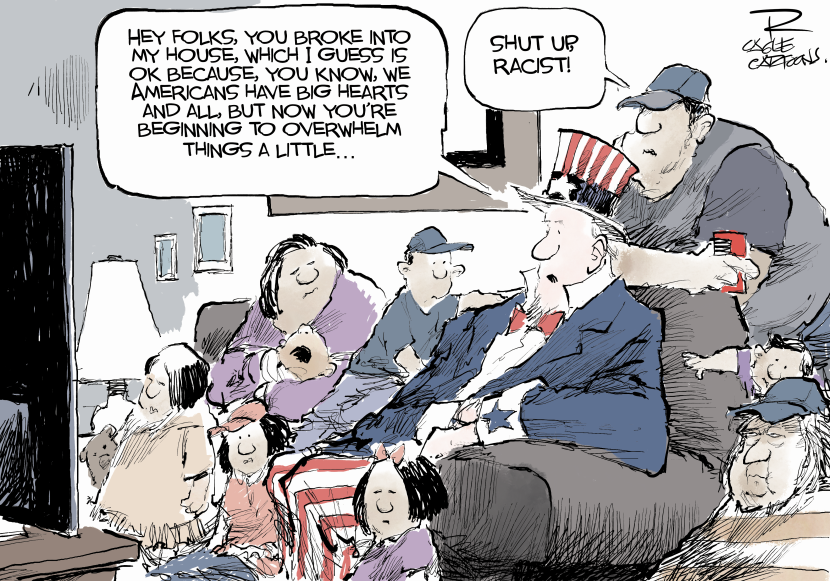
Comments Off on In historic case, common sense prevails on immigration

Why MLB falls short in attracting Black players

With a single stroke of his pen, Major League Baseball Commissioner Rob Manfred rewrote a century of baseball history.

Oh, to have been a fly on the wall when baseball’s suits, a 17-man, John Thorn-led commission, met six times to evaluate, despite incomplete data, incorporating Negro Leagues’ statistics into the existing record book. Notwithstanding Sabermetricians’ best efforts, they only located about 75% of Negro Leagues’ box scores.

Before the ink dried, Josh Gibson replaced Ty Cobb as baseball’s all-time batting champion, took over Babe Ruth’s career slugging average record, and is now officially the last player to hit over .400 in a season.

As ESPN Senior Writer Howard Bryant, who is Black, described Manfred’s ahistorical pronouncement: “The decision was met with great applause, but in addition to being reconciliatory, it was also a spectacular display of historical distortion and institutional arrogance.”

More statistical revisions will come soon; the commission is still digging into decades of Negro Leagues’ games that involve hundreds of players. Questions about which games and feats should count will be endless. Satchel Paige’s 50 no-hitters, the total he insists he hurled, might replace Nolan Ryan’s seven as the new career record. Anything is possible. The commissioners have their computers and their new-fangled analytical methods.

Monte Irvin, who played for the Newark Eagles and the New York Giants, noted the obvious: unless the players compete in the same league, no meaningful parallels can be drawn. Irvin’s on-the-record opinion is that the Negro Leagues, because the teams had shallower pitching staffs, can’t compare to the majors.

Manfred claims his baseball ideological history makes amends for the terrible biases that kept talented black players out of the major leagues because of their skin color. “Correcting an injustice,” is how Manfred attempted to explain the inexplicable. The inherent suggestion that MLB’s stamp of approval validates the Negro Leagues is an insult to Gibson, Paige, Irvin and hundreds of others. The Negro Leagues do not need validation.

The commissioner’s gesture does little tangible for the black players’ families that suffered through decades of shameful treatment and does even less for today’s Black kids yearning to reach the major leagues. If MLB wants to do something productive for black youths, it should build a network of baseball camps, like those it has spent hundreds of millions to develop in the Dominican Republic. Envision this: Manfred summons the thirty MLB owners and demands that, since baseball is an $12 billion industry, part of that revenue should be allocated to developing U.S. Black players.

The California Winter League, baseball’s first integrated league, played from 1900 to the mid-1940s. The greatest baseball stars competed in that league – Walter Johnson, Cool Papa Bell, Andy Pafko, Bob Elliot, and Jackie Robinson, among others.

Consider how Pirates’ great Andrew McCutcheon viewed the challenges for increased Black players’ participation in MLB. In a 2015 column published in the Pittsburgh Post-Gazette, McCutcheon wrote about growing up in Central Florida, poor and unable to get rides to the big showcase tournaments. He envied Dominican players that MLB could, because of the local camps, sign, develop, and nurture.

The Institute for Diversity and Ethics in Sport found that African American players represented just 6.2% of players on 2023 MLB opening day rosters, down from 7.2% in 2022. The totals were the lowest since the study began in 1991, when 18% of MLB players were African American. Dominican players comprise about 30% of MLB’s active rosters.

McCutcheon suggested MLB build camps, scout high schools, Pony League, Nebraska’s cornfields and Chicago’s South Side. If MLB wants to “correct an injustice” to African Americans, as Manfred insists, give them an equal opportunity to earn the lucrative contracts that abound in baseball today.

Every year, owners wring their hands and shed crocodile tears about its shortage of Black players. The penurious owners should put their money where their mouths are. Right now, their money is in the Dominican Republic.

The inescapable conclusion: MLB owners use the billions their teams generate from ticket, merchandise, and TV revenue to fund Dominican academies whose players that will eventually displace American kids on the baseball diamond.

Copyright 2024 Joe Guzzardi, distributed by Cagle Cartoons newspaper syndicate.

Joe Guzzardi is a Society for American Baseball Research and Internet Baseball Writers’ Association member. Contact him at [email protected].

Comments Off on Why MLB falls short in attracting Black players