Fed Chair Calls Slow Wage Growth ‘A Puzzle’

In its new study, “Tapping the Skills of Highly Skilled Immigrants in the United States,” the Migration Policy Institute stated that, according to economists, by the end of this decade, the nation will have a 5 million shortage of job-qualified persons with postsecondary educations. Immigrants’ rising education levels might, wrote MPI, represent a great opportunity for the U.S. economy. Yet, MPI noted, one-quarter of immigrant college graduates in the U.S. – nearly two million people – are either unemployed or work in jobs that require no more than a high school degree.

MPI supports higher immigration, and the integration of immigrants. Nevertheless, MPI found that two million college-educated immigrants are unemployed or underemployed. The logical conclusion to draw from MPI’s research would be to cut migration until the existing foreign-born population reaches full employment, or close to it. Until then, adding immigrants only makes job competition more challenging for new migrants, American workers, and already present lawful permanent residents.

For years, immigration activists have argued that with alleged labor shortages looming, the appropriate strategy is, in anticipation of the inevitable crunch, to import workers immediately. The more prudent approach, however, would be to wait until the predicted shortage becomes reality, and then adopt an as-needed immigration policy. Scare tactics – the labor shortage wolf cry – never come to fruition because, among other reasons, there are millions coming out of our high schools and colleges and entering the labor pool. In 2018, 3.6 million students graduated from high school, and in 2017, 1.29 million received associate degrees, 2.03 million graduated with bachelor’s degrees, 982,000 with master’s degrees and 209,000 earned doctorates.

Truth be told, labor shortages are good news for American workers, and for those recent graduates just beginning their job searches. Shortages translate into an easier path for unemployed people to find jobs, a stronger employment market for people who previously quit the workforce, and a greater incentive for businesses to pay higher wages to attract the employees they need.

Another positive outcome to workers’ rising incomes: they get a larger share of the economic pie, a benefit that has been denied to them in the cheap labor era. Federal Reserve Board Chair Jerome Powell acknowledged as much when he said at a Washington, D.C. news conference last month the meaningful pay hike elusiveness was a “puzzle.” But Powell offered up one strong possibility: American workers aren’t generating enough additional value for each hour on the job.

Despite the outcry about labor shortages, corporate-promoted and media-endorsed, the facts belie the claim. National wage growth for the last few years has been tepid, about 2.7 percent, and not an indicator that employers have reached the desperate stage. Realized wage gains still aren’t strong enough to offset the losses suffered after the Great Recession.

Returning to the MPI study, if two million postsecondary-educated immigrants are unemployed or underemployed, then the conclusion must be that higher immigration levels would hurt all.

Census Bureau data shows that 1.03 million legal and illegal immigrants settled in the U.S. in the first six months of 2016. Based on historic patterns, a total of 1.8 million immigrants likely came during the entire 2016 year. Newly arrived immigrants included work-authorized green card holders, and long-term temporary visitors, such as guest workers and overseas students, many of whom eventually become permanent residents.

Simply stated, immigration, especially immigration that includes employment authorization, is too high. To keep upward pressure on wages, and to keep labor markets tight, immigration should be reduced.

Joe Guzzardi is a Progressives for Immigration Reform analyst who has written about immigration for more than 30 years. Contact him at [email protected].

Comments Off on Fed Chair Calls Slow Wage Growth ‘A Puzzle’
‘Sissified’ Baseball Turns Off Fans

After a recent Chicago Cubs and Pittsburgh Pirates matchup, a reporter asked Bucs’ manager Clint Hurdle if he worried that the game had become “too sissified.” Abruptly, the interview’s tone shifted. Gone was the predictable post-game pap. Hurdle rejected the allegation that baseball has gone soft, and inferred that his 40 years as a major league player, coach and manager made him a more qualified observer than the reporter.

Seen through Hurdle’s eyes, the reporter was nothing more than a troublemaker, intent on embarrassing the manager, marginalizing the players, disgracing the entire Pittsburgh Pirates organization, and casting aspersions on baseball ,’ the great American game.

During a game back in May, Cubs’ first baseman Anthony Rizzo ventured far out of the base path, and took out Pirates’ catcher Elias Diaz. Rizzo violated the home plate slide rule which took effect in 2014. The question the reporter was really asking Hurdle is why his pitchers didn’t exact revenge by throwing at a Cubs batter, the time-honored retaliation when one team, by design, hurts an opposing player.

Although Hurdle never answered, the question looms large. The home plate slide, the second base slide rule and scheduled days off, along with almost any minor injury labeled “discomfort” or “tenderness” that lands a player on the disabled list, prove the reporter right.

Nothing reflects baseball gone squishy more than the 100-pitch limit for starters. Every inning of every game, broadcasters tediously remind the fans of the arbitrary 100-pitch count maximum by monotonously ticking off the current number of pitches thrown. To defend the pitch count, team executives claim that their pitchers are multimillion dollar investments, and must be handled with kid gloves.

If kid gloves are the cure, don’t let pitchers get out of bed until two hours before game time. Consider these cases: Hall of Fame pitcher Nolan Ryan missed time when a coyote bit him; Greg Harris skipped two starts with an inflamed elbow after flicking sunflower seeds; after trying out a new drill that included running backwards, Jamie Easterly stepped into a gopher hole and hurt his back; and Ernie Camacho signed 100 fan autographs, then made a beeline to the team doctor complaining about elbow stiffness.

The pitch count obsession is beyond silly. Pitchers throwing no-hitters get the hook as soon as they approach 100 tosses. But 50 years ago, within living memory and not from Old Hoss Radbourn’s 1880s era, Denny McLain, during his 31-win, 336 innings pitched, Cy Young Award season, threw 266 pitches in a single game against a slugging Baltimore Orioles team that featured fearsome sluggers Frank Robinson and Boog Powell. Many of McLain’s pitches would have been what today’s analysts call “high stress,” yet he soldiered on. Since the human body has undergone neither physiological nor anatomical change in the last half century, the restrictive pitch count puzzles fans.

Empty seats reflect fans’ frustration. Attendance has plunged to a 15-year low, down 6.6 percent from last year. This year could be the first season since 2003 with an average attendance below 30,000. ML–officials point to several reasons why attendance is low, all of them valid: early season frigid weather, too many lousy teams, as many as six might end up with winning percentages below .400, and a $76 average ticket price. But more to the point ,’ the game has undergone too many radical changes on the field and from computer-generated stats to keep fans engaged.

A simple suggestion from this corner: No more changes. Leave baseball alone. Let the game be the game.

Joe Guzzardi is a Society for American Baseball Research and Internet Baseball Writers Association of America member. Contact him at [email protected].

Comments Off on ‘Sissified’ Baseball Turns Off Fans

Trillion-Dollar Apple Wants More Cheap Workers

A telling Mercury News story pits high-tech industry leaders against the U.S. Citizenship and Immigration Services, and its Director Francis Cissna.

According to the story, Apple CEO Tim Cook and Salesforce co-CEO Marc Benioff are among the many tech industry executives pushing back against the Trump administration’s efforts to tighten H-1–visa regulations and possibly cut their aggregate annual number. The visa allows U.S. companies to hire foreign nationals, and in the process denies job opportunities to Americans or displaces existing workers. Silicon Valley wants to increase the official 85,000 H-1–cap.

True to historical norm, a week after Cissna’s speech, a 60-member strong lobbying group named the “Business Roundtable” wrote to Department of Homeland Security Secretary Kirstjen Nielsen to express “serious concern about changes in immigration policy that are causing considerable anxiety for many thousands of our employees while threatening to disrupt company operations.”

The Roundtable also plugged the H-4 visa that allows H-1–visa spouses to work, a 2015 executive action provision that Congress never approved. In addition to the aforementioned Apple and Salesforce, other Roundtable signatories included Cisco, IBM, JPMorgan Chase and outsourcing giant Cognizant.

Recently released federal data, however, belies the executives’ strong inference that the bottom is falling out. In 2017, Facebook received 53 percent more H-1–visas than in 2016; Google, a 31 percent boost, and Apple, a 7 percent hike. In 2017, Google spent more on immigration lobbying than any other corporation.

In his address at the National Press Club, Cissna stated that “all these [visa] programs” are rife with “all sorts of fraud and abuse.” People trying to “game” U.S. immigration laws is, Cissna said, an “eternal problem” for his agency.

To support his conviction that U.S. immigration is too easily manipulated, Cissna offered this hypothetical example. An individual comes to the U.S. as a tourist, then he changes status to student, and studies for four years. Next, he gets a master’s degree, then changes status again to H-1B, stays for three more years with an automatic three-year extension. Finally, he can qualify for Optional Practical Training, and remain three more years. In all, Cissna noted, a foreign national arrives as a tourist, on a temporary nonimmigrant visa, but remains for up to a dozen years without ever having been interviewed by an immigration official. “Not prudent,” said Cissna.

Cissna’s solution is unthinkable to employers who have come to rely on not only the H-1B, but also the H-2A agricultural, the H-2–non-ag, and myriad other employment-based visas. Said Cissna: “I would really love it if Congress would just pass a one-sentence provision that would just prohibit American workers being replaced by H-1–workers.”

The multi-billion-dollar corporations that rely on H-1Bs – trillion-dollar in Apple’s case – and their billionaire executives who profit from cheap labor would rue the day that their pipeline to low-cost workers was cut off. But millions of unemployed and under-employed Americans would breathe a sigh of relief and ask what took so long.

Joe Guzzardi is a Progressives for Immigration Reform analyst who has written about immigration for more than 30 years. Contact him at [email protected].

Comments Off on Trillion-Dollar Apple Wants More Cheap Workers

Labor Day is No Celebration for Struggling Americans

Trying to figure out how many employment-based visas the State Department issues is a dizzying task.

The major categories include the H, temporary workers; the TN, NAFTA professionals; the P, athletes, artists and entertainers; the L, intercompany transfer; the O, extraordinary ability, and on and on. In most cases, spouses and minor children can enter with the primary visa holder, and most spouses are work authorized.

State Department statistics show that the total number of temporary employment-based visas issued generally has increased since fiscal year 2000. A dip followed the 2008 Lehman Brothers failure and related financial shocks, but there’s been a steep trend up since. About 800,000 work-related visas are issued annually.

Add to the 800,000 the more than one million legal, permanent, employment-authorized immigrants that arrive every year, and the result is a constantly expanding, foreign national workforce whose presence makes it more challenging for American citizens to find good jobs or keep the ones they have. In 2016, 1.5 million foreign-born came to the U.S., up from 2015’s 1.38 million.

Although the annual totals are staggering, the challenge comes not so much in a single year, but in immigration’s autopilot nature, and the near impossibility to move Congress from its donor-dependent, expansionist mindset to put American workers and their families first. Especially vulnerable are lower-skilled, underemployed Americans with only a high school education.

Since 1965, Congress has quadrupled immigration. Yet, just before Congress recessed, House Republicans Dan Newhouse of Washington and Andy Harris of Maryland introduced amendments that would expand the numbers of H-2A temporary agricultural visas and H-2–non-ag visas used in landscaping and the hospitality industry.

Despite employers’ insistence that they’re fully dependent on foreign labor and that their businesses will fail without imported workers, another less savory reason motivates many to use visa workers – cheap labor.

Three Democrat-led commissions warned against allowing more H visa workers who could be exploited. First, Congress’ 1979 Commission on Immigration and Refugee Policy, chaired by University of Notre Dame president Rev. Theodore Hesburgh, concluded after an 18-month review that, among other negatives, more H visas would establish “a second class of aliens… in our country who are not fully protected by the law and its entitlements and who could not participate effectively in mainstream institutions.” Rev. Hesburgh’s study also correctly predicted that temporary visa increases would “stimulate more migratory pressures… .”

Second, President Jimmy Carter’s 1979 National Commission on Manpower Policyadvised that it was “strongly against” H visa expansion.

Third, Texas Democrat and U.S. Representative Barbara Jordan, who studied immigration policy for six years under President Bill Clinton and chaired the 1990 Commission on Immigration Reform, found that “guest worker programs depress wages, especially for unskilled American workers, including recent immigrants who may have originally entered to perform needed labor but who can be displaced by newly entering guest workers.” Further, the commission found the programs don’t slow illegal immigration. In summary, Rep. Jordan stated unequivocally that guest worker programs are “a grievous mistake.”

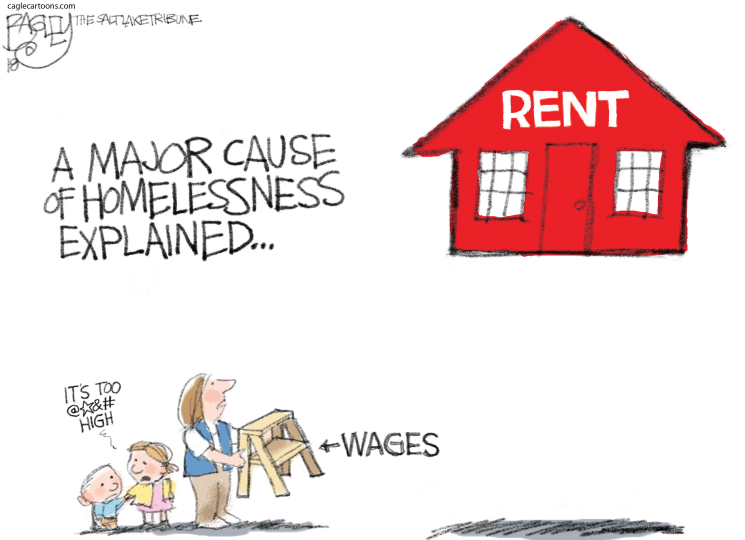
Bottom line: looser labor markets every year, one million or more legal, employed-authorized immigrants plus Congress’ decades-long, steadfast refusal to take expert advice to cut employment visas make for an unhappy Labor Day for struggling Americans.

Joe Guzzardi is a Progressives for Immigration Reform analyst who has written about immigration for more than 30 years. Contact him at [email protected].

Comments Off on Labor Day is No Celebration for Struggling Americans

GOP Swamp Alligators Busy Subverting Workers

From an unlikely place – deep red Kansas – comes a plot to add to the cheap labor workforce. In 2016, President Trump carried Kansas by more than 20 points. Nevertheless, Republican U.S. Rep. Kevin Yoder, from Kansas’ 3rd District, joined up with other cheap labor addicts to subvert American workers.

Yoder, hellbent on creating maximum wreckage on U.S. tech workers, introduced his Fairness for High Skilled Immigrants Act, HR 392, which seeks to eliminate per-country caps that establish a ceiling for citizens from individual countries. Critics view removing country caps as a not-so-thinly veiled attempt to import more low wage H-1–visa workers, predominantly Indian nationals.

As well, various amendments were attached to a must-pass Department of Homeland Security funding bill to undermine American workers. Another House Republican, Washington Rep. Dan Newhouse, introduced an amendment that would allow the H-2A agricultural guest worker visa to be used for year-round workers. Currently, the visa is limited to temporary or seasonal agricultural workers. The Newhouse change would extend the already unlimited number of H-2A visas issued each year to include dairy farmers.

Additionally, the amendment by Rep. Andy Harris (R-Md.) would permanently exempt returning workers from being counted against the annual 66,000 H-2–cap. Employers use the H-2–visa to hire low-skilled or temporary landscaping, hospitality and seafood processing foreign workers. Harris’ amendment could quadruple the H-2–annual allotment.

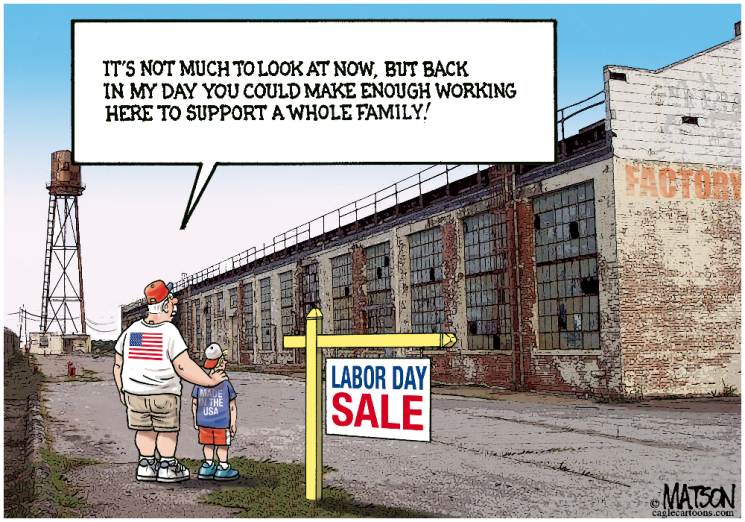
The amendments subject vulnerable under-employed Americans to more job competition from employment-based visa holders, a victory for the relentless pro-immigration lobbyists, but a defeat for struggling working Americans across industries.

In his August 7 letter to House Speaker Paul Ryan, U.S. Commission on Civil Rights member Peter Kirsanow excoriated Yoder, and predicted that the major illegal immigration increases sure to follow will harm all Americans, especially blacks.

Kirsanow wrote that illegal immigration, and high legal immigration levels, have been largely responsible for the declining employment prospects and wages of low-skilled Americans generally, and black men in particular. Collectively, the amendments endanger the 3.9 percent unemployment rate, the 6.5 percent black unemployment rate, and the 2.8 percent wage and benefits gain, the decade’s largest.

Appropriations committee chair Rodney Frelinghuysen (R-NJ) allowed the amendments to pass on spineless voice votes, the apex of political cowardice. The full Congress didn’t debate the amendments or allow for public comment, the time-honored process for creating laws. After the bill passed along party lines, 29-22, committee members skedaddled out of town to begin their undeserved vacations.

Not all is lost, however. The House Rules Committee can strip the amendments. Even if they slip through, a full House vote awaits as well as a Senate-House conference and President Trump’s veto pen. But Yoder and the other Republicans have revealed themselves to their constituents as the dupes of special interest groups.

Still, the committee’s shameless anti-American worker actions leave a nasty aftertaste among voters who hope for better, but are rarely rewarded.

Joe Guzzardi is a Progressives for Immigration Reform analyst who has written about immigration for more than 30 years. Contact him at [email protected].
Comments Off on GOP Swamp Alligators Busy Subverting Workers

Visa Overstays Problematic for U.S. Tech Workers

The Department of Homeland Security’s recently released Entry/Exit Overstay Report on visa overstays found that more than 700,000 foreign nationals didn’t honor the terms of their temporary authorization to work or visit in the United States. Analyzed in depth, DHS found that among the overstays, India had 21,000, the largest number. Some of the 21,000 eventually returned home, but after their assigned departure date.

In 2017, DHS said 127,435 Indian students and researchers entered the U.S. on F, J and M visas. Of these, 4,400 Indians overstayed. Figures indicated that 1,567 Indians left the U.S. later on, while 2,833 remain in the U.S.

For nonimmigrants who entered on a student or exchange visitor visa, DHS determined that there were 1,662,369 total F, J or M visa holders scheduled to complete their U.S. study programs. However, 4.15 percent stayed beyond the authorized departure date when their program ended. For India, the rate was 3.4 percent, below the national average.

The DHS data raises troubling questions about the number of student visas issued and the disregard some have for adhering to their visas’ terms. Visas routinely morph into jobs, specifically in the tech industry, that often displace American workers. Foreign nationals currently enrolled in U.S. higher education institutions with F or M visas total more than 1, million. India ranks second behind China in enrollment from overseas, 211,703 versus 377,070.

Significantly, 48 percent of international students were in science, technology, engineering and math, the STEM fields, and eligible for the Optional Practical Training after their graduation. Now available for STEM graduates for up to 36 months, OPT originally had timeframes of 12, and then 17, months.

Employers use the F-1/OPT program to circumvent the congressionally established 85,000 H-1–visa cap. The Pew Research Center confirms that OPT is an employer bonanza. Between 2008 and 2016, OPT grew 400 percent, and either displaced American workers or forced them to compete for new jobs with overseas workers.

Little wonder that OPT is so popular with overseas students and domestic employers. Students look for an employer willing to offer an OPT job, gain a STEM extension, then an H-1–sponsorship which in turn creates a green card opportunity, and ultimately U.S. citizenship. Citizenship is a long way from the original temporary F visa with the understanding that students will return home upon coursework completion, and apply what was learned in the U.S. to improve their native countries. Employers, for their part, benefit from cheaper labor.

H-1B, M and F visas are harmful to U.S. students, workers and prospective employees. Overseas students compete with Americans for a fixed number of college enrollment slots; the employment-based H-1–visa creates head-to-head job competition of foreign nationals versus Americans, and OPT, never congressionally approved, extends visa holders’ work permission stays in the U.S.

Congress should view tech issues through the American workers’ eyes. The annual inflow of guest workers is equal to about half of all tech hires each year at a time when U.S. colleges are graduating plenty of STEM workers.

In his congressional testimony, Rutgers University Professor Hal Salzman summed up the reality. Said Salzman: “The U.S. supply of top performing graduates is large and far exceeds the hiring needs of the STEM industries, with only half of new STEM graduates finding jobs in a STEM occupation, and only a third of all STEM graduates in the workforce holding a STEM job.”

Congress must protect Americans against job loss and displacement that unnecessary visas and irresponsible immigration programs like OPT create.

Joe Guzzardi is a Progressives for Immigration Reform analyst who has written about immigration for more than 30 years. Contact him at [email protected].
Comments Off on Visa Overstays Problematic for U.S. Tech Workers

A Stunning Dereliction of Duty the Feds

The Department of Homeland Security’s latest Entry/Exit Overstay Report represents more disappointing evidence that the U.S. exercises inadequate enforcement of its immigration laws. Too often, those who want to enter, enter. And those who, once here, wish to stay, stay.,

DHS’ fiscal year 2017 analysis of nonimmigrant, temporary arrivals through official Ports of Entry that includes tourists, temporary workers, students, business travelers and exchange visitors totaled 52,656,022. Of those, 701,900, 1.33 percent, overstayed. The largest offending category is student or exchange visitors, the F, M and J visa holders; Canadian overstayers top the list of violating nations. About 40 percent of visa holders overstay, and they’re a major contributor to illegal immigration.,

While the 1.33 percent indicates that the overwhelming majority depart pursuant to their visas’ expiration date, the raw 701,900 number tells a different story. Three quarters of a million is roughly the equivalent to the employment-based guest workers who come to the U.S. annually. The logical conclusion is that most overstays are either illegally employed off the books, have submitted falsified I-9s or will eventually find a job to sustain themselves.,

For more than three decades, the U.S. has failed to fix the not-too-difficult-to-correct overstay problem – staggering ineptitude that foreign nationals have taken advantage of.,

Entry-exit verification was first included in the 1996 Illegal Immigration Reform and Immigrant Responsibility Act, and subsequently reiterated various times in Congress. The 2002 visa tracking law required that an integrated biometric database be established so that the State Department and the Department of Homeland Security would have real-time access to law enforcement, immigration and intelligence information on every alien who seeks admission to the U.S.,

Congress and DHS have renewed demands for action in various forms in 2004, 2007, 2008 and 2009. Yet only nominal progress has been made on biometric identification, an essential security component.,

Abu Dhabi, for example, installed its biometric border entry/exit system more than a decade ago to ensure that those removed from the country could not reenter under a new identity and with falsified passports. More than 9,400 passengers have been identified traveling into or out of Abu Dhabi with forged identities. Earlier this year at Florida’s Orlando International Airport, U.S. Customs and Border Protection began facial recognition technology for all international arriving and departing passengers, a process that takes less than two seconds.,

The feds’ repeated failures are discouraging, to say the least, to frustrated Americans who demand border security. In an era when Costco can identify the exact location of every gallon of milk in its 750 worldwide warehouses, the flimsy excuses that DHS offers, mostly related to costs, a red herring since the expenses could be recouped through higher visa fees, and the tourism industry’s self-serving objections, don’t wash.,

Through its failure to pursue overstays, DHS tacitly condones the practice, and therefore encourages more of the same. But biometrics would deny visa overstays future entry, effectively deter more visa violations and encourage timely departures.

Ending overstays protects the homeland, the government’s first duty. Greater entry/exit diligence helps U.S. workers who otherwise would compete for jobs with visa holders whose permission has expired, but nevertheless illegally take American jobs.

Joe Guzzardi is a Progressives for Immigration Reform analyst who has written about immigration for more than 30 years. Contact him at [email protected].
Comments Off on A Stunning Dereliction of Duty the Feds

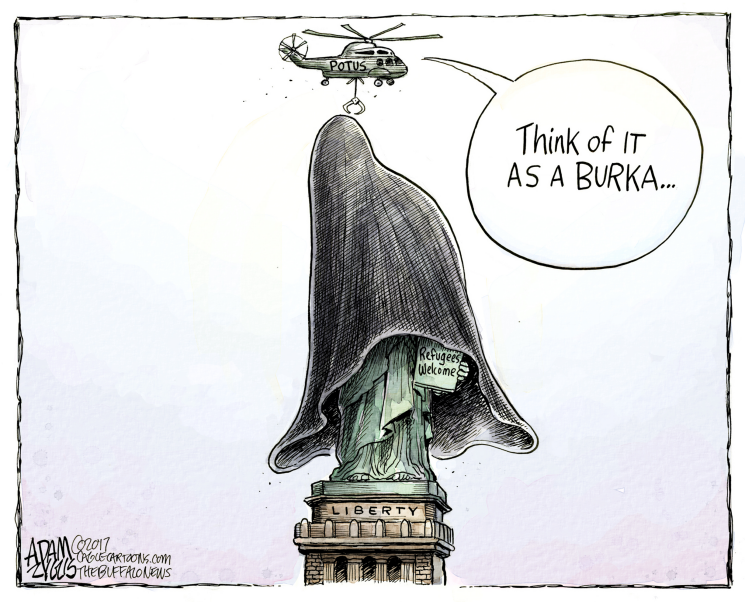
Refugee Industry Heads to Capitol Hill

The refugee resettlement industry is in full panic mode. Some may question whether “industry” is the correct word. But the multi-million dollar budgets voluntary agencies (volags) have at their disposal and the lofty salaries the directors earn reveal that resettlement is a big and lucrative business, largely American taxpayer-funded.

Aided by a favorable Supreme Court decision, President Trump wants ever-fewer refugees. To the contractors’ dismay, last year President Trump threw out 5,000 as his recommended cap. As of July 1, 2018, the State Department has admitted 16,229 refugees, a pace well below this year’s 45,000 ceiling.

With the October 1 deadline looming for the president to make his annual determination on the FY 2019 refugee ceiling, the stakes are high for the nine federal contractors. Lower refugee totals put at risk volags’ substantial cash flow that includes $1,950 for each refugee and each child with the contractor pocketing $750 in federal and state grant money, as well as other perks. To protect their monetary interests, the volags gathered on Capitol Hill this month to lobby for higher refugee totals.

Six of the nine volags are religious-based groups. By lobbying on Capitol Hill, they ignore the church-state separation principle. When Thomas Jefferson, James Madison and other Founding Fathers wrote about religious liberty’s importance, they also condemned church interference in federal policy. Moreover, the IRS specifically prohibits churches and other nonprofits from engaging in political activity like lobbying. The IRS code that pertains to 501(c)(3) volags states that they must completely refrain from political campaigning.

Yet in his August 3 op-ed published in the widely read and influential news magazine, The Hill, Rev. John McCullough, Church World Service CEO and president wrote a scathing commentary that attacked President Trump’s long-standing wish for fewer refugees, a sentiment many Americans share.

David Robinson, the State Department’s former Refugee Bureau acting director, shared his from-the-front perspective. Robinson wrote that “the federal government provides about 90 percent of its collective budget” and its lobbying umbrella “wields enormous influence over the Administration’s refugee admissions policy. It lobbies the Hill effectively to increase the number of refugees admitted for permanent resettlement each year… . If there is a conflict of interest, it is never mentioned… .The solution its members offer to every refugee crisis is simplistic and the same: increase the number of admissions to the United States without regard to budgets… ” Note the repeated references to lobbying even though the law prohibits it.

Like other federal immigration legislation, the 1980 Refugee Act and its consequences went unchallenged until the current administration. Proving the folly of never bucking the status quo, Refugee Resettlement Watch’s Ann Corcoran wrote that nearly four decades after the last American left Vietnam, the U.S. still accepts Southeast Asian refugees. More than 1.5 million have entered and contributed to nonrefugee chain migrants.

Congress should turn its attention to the hard math behind refugee resettlement: refugees immediately access food stamps, public housing, cash assistance, health care and child care. The Department of Health and Human Services doles out approximately $1.5 billion in grants to state and local agencies, schools, and nonprofits for refugee-oriented legal advocacy, language education, mental-health services and domestic-violence prevention.

Continuing refugee business as usual is a mistake; resettlement contractors profit, while the American communities where refugees are relocated struggle through difficult transition periods. The multi-millions in dollars the U.S. spends domestically on refugee programs would go 12 times as far if distributed in refugees’ home regions to provide for their shelter and care until they can safely return home. No nation including the U.S. can indefinitely accept the world’s displaced populations.

Joe Guzzardi is a Progressives for Immigration Reform analyst who has written about immigration for more than 30 years. Contact him at [email protected].
Comments Off on Refugee Industry Heads to Capitol Hill

Trump’s Wall is the Wrong Priority

Once, August was a tranquil time on Capitol Hill. But that’s no longer the case. After months of contentious wrangling over health care, taxes, tariffs, Supreme Court appointments and immigration, President Trump keeps the pot stirred. He recently announced, and then repeated, that he would have “no problem doing a [government] shutdown” this fall if he doesn’t get his coveted Southwest border wall funded as well as other legal and illegal immigration reductions put into place.

Congressional approval for wall construction, or any other physical barrier along the Southwest border, is perhaps the most challenging and unwinnable fight that President Trump could pick. Senate Majority Leader Mitch McConnell and House Speaker Paul Ryan are cool to a shutdown which makes President Trump’s goal virtually impossible to achieve.

President Trump’s insistence on mounting a high-visibility campaign to build a wall baffles immigration analysts. They understandably wonder why the president doesn’t instead engage in a more winnable battle and demand that Congress pass mandatory E-Verify.

With Democrats automatically against any proposal that the White House wants to advance, prevailing on E-Verify would be no cakewalk for the president. But a debate over the online program which confirms that all new hires are legally authorized to work in the United States puts opponents in the untenable position of defending illegally present foreign nationals getting American jobs instead of U.S. citizens or lawfully present residents. A 2016 Pew Research Center Hispanic Trends report found illegal immigrants are well represented in occupations other than farming, specifically in construction, production, the service industries, transportation and the civilian labor force.

Jobs and immigration rank high among the important issues that concern voters. E-Verify ensures that only authorized workers hold jobs, and at the same time it discourages illegal immigration. Persuasive evidence exists that E-Verify reduces illegal immigrants’ job market presence, and therefore creates wider employment chances for legal workers and increases their wages. According to a May 2018 Washington Post story, and based on 2017 Federal Reserve Bank of Dallas data, in Arizona, which pioneered mandatory E-Verify checks in 2008, the number of unauthorized workers dropped 33 percent below what had been projected without the requirement.

Numerous other benefits that E-Verify creates are, first, a wage boost for male Mexican immigrants who are naturalized citizens, and earnings increases among U.S.,B born Hispanic men. Second, if employers adopted mandatory E-Verify, theft and fraudulent use of Social Security numbers would be reduced. Third, immigration officials wouldn’t have to separate families or spend money and valuable time deporting people. When foreign nationals can’t get jobs, they’ll move back home voluntarily.

Finally, the most effective deterrent to illegal immigrant employment is prosecuting criminal employers who hire them, an action which requires courage and a determination to end unlawful entry in an era when the Chamber of Commerce has undue influence on immigration policy. Anything less lets employers off the hook.

Candidate Trump talked up E-Verify. But despite the program’s obvious benefits to American workers, President Trump rarely mentions it. When Congress reconvenes in September, mid-term election stumping begins in earnest, and promises to create jobs will be nonstop. Pro-American worker candidates should wholeheartedly endorse E-Verify.

Joe Guzzardi is a Progressives for Immigration Reform analyst who has written about immigration for more than 30 years. Contact him at [email protected].

Comments Off on Trump’s Wall is the Wrong Priority

Earth Overshoot Day Offers Sustainability Lessons

August 1 will mark Earth Overshoot Day, the day that worldwide humanity will, in only seven months, have taken more resources from the Earth than can be replenished within a single year. During a calendar year, the globe’s 7.6 billion residents consume through overfishing and overharvesting forests more than Earth can replace and emit more carbon dioxide into the atmosphere than ecosystems can absorb, about 1.7 Earth equivalents as measured in natural resources.

With 328 million people, the United States ranks third behind China and its 1.4 billion people and India with 1.2 billion in total population. Within seven years, India’s inhabitants will exceed China’s. Nigeria, currently the world’s seventh largest country, is growing the most rapidly and is expected to surpass the U.S. by 2050. The United Nations Department of Economic and Social Affairs projects that the unsustainable global population will reach, unless immediate behavioral changes to slow the current growth pattern occur, 9.8 billion in 2050, and 11.2 billion in 2100.

But the challenges that Overshoot Day highlights are daunting. The group of 47 least developed countries (LDCs) has a high fertility level, 4.3 births per woman in the 2010 to 2015 period. As a result, the populations of those 47 countries have grown rapidly, 2.4 percent. Although some slowing is anticipated over the coming decades, the combined population of the LDCs, roughly one billion in 2017, is projected to increase by 33 percent between 2017 and 2030, and to reach 1.9 billion persons in 2050. Africa will also experience high population growth rates. Between 2017 and 2050, 26 African countries are expected to double their populations.

Most Americans will be surprised to learn that the U.S. is on the list of nine countries that will generate half the world’s population growth between today and 2050. The other eight include India, Nigeria, the Democratic Republic of the Congo, Pakistan, Ethiopia, the United Republic of Tanzania, Uganda and Indonesia.

But as the Earth Overshoot Day website notes, “The past does not necessarily determine our future.” With cautionary optimism, the site offers attainable solutions to reverse the devastating course the world has taken.

Among the suggestions are to reduce carbon footprint and to build and inhabit compact cities that offer energy-efficient buildings, integrated zoning and effective public transportation systems. Also suggested is to more efficiently produce food with an objective to waste less of it – some plant-based foods use fewer natural resources in the development process than animal-based. Because personal transportation makes up 14 percent of humanity’s carbon footprint, fewer cars on the road is an essential first step to lowering the human impact.

These lifestyle changes require a firm commitment to having smaller families, or no families. Reducing family size by an average of one half child – or one child per every two families – would mean one billion fewer world residents in 2050 than the UN’s predicted 9.7 billion, and four billion fewer than the anticipated 11.2 billion expected when the next century dawns. Many children born in 2018 will have a high probability of living until 2100, and should have the opportunity to inhabit a less densely populated planet.

The U.S. can lead in the effort toward worldwide sustainability. But, disappointingly Congress has for decades neglected its responsibility to support meaningful advances in ecological preservation. To repeat, however, “The past does not necessarily determine our future.” But now is the hour for dramatic lifestyle changes, some perhaps person

Joe Guzzardi is a Progressives for Immigration Reform analyst who has written about immigration for more than 30 years. Contact him at [email protected].

Comments Off on Earth Overshoot Day Offers Sustainability Lessons