Spring Training and the True Story of the Grapefruit Nickname

Baseball fans got good news earlier this month – or at least as good can be expected during COVID-19.

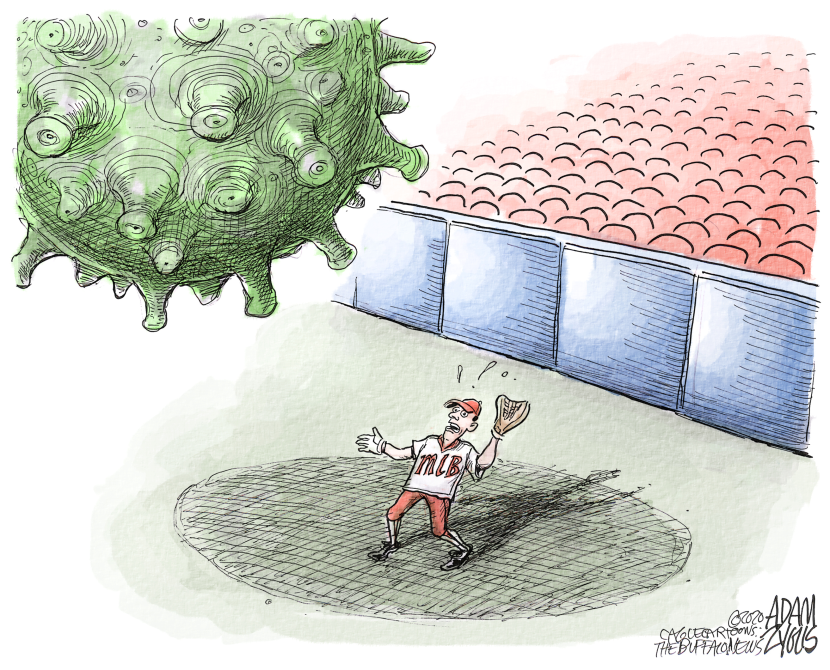
Major League Baseball approved a plan to go forward with Spring Training, also known as the Grapefruit League. Fans, who may or may not be allowed to watch the games, think that the reference to grapefruits evolved from the Florida camps where citrus grows in abundance.

But actually, the grapefruit nickname came about from a 1915 publicity stunt that involved two of baseball history’s most famous characters: Casey Stengel, then an excellent Brooklyn Dodgers outfielder, and his manager, Wilber “Uncle Robbie” Robinson, about whom a New York Times reporter wrote: “It is doubtful that baseball ever produced a more colorful figure than the esteemed Wilbert Robinson.”

A third party to the hoax was Ruth Law, the fifth woman to earn a pilot’s license and a famous aviatrix who once said that the best way to get her to do a dangerous trick while airborne was to tell her she couldn’t do it. Law then stunned male pilots, including Orville Wright, when she became the first female to perform multiple aerobic loops and to fly at night. Wright, claiming women had no business piloting aircraft, had refused to teach Law how to fly.

In 1915, the same year that Law looped her airplane 16 times over a Birmingham, Ala. country fair, the three protagonists in the grapefruit farce found themselves in Daytona Beach, Fla. Casey and his Dodgers teammates were conducting spring training drills; Law was dropping golf balls from her plane over a local course to generate interest in the sport.

Suddenly, the Dodgers – specifically Stengel – thought that dropping a baseball from a plane to a player on the ground would be a fine idea. Stengel convinced Law to pilot her plane, and to drop a ball to the player waiting below.

But no Dodgers player came forward. Eventually, the team persuaded the good-natured Robinson to dust off his catcher’s mitt – during his 17-year playing career from 1886 to 1902, he had been a solid catcher for four teams – and try his luck.

Robinson was likely inspired by his 1908 memory when Washington Senators catcher Gabby Street, dressed in street clothes and on his 15th try, caught a baseball dropped from the top of the Washington Monument, a distance of 550 feet. Mathematicians calculated that on its way down, the ball had picked up 300 pounds of force, and traveled 95 miles per hour.

Once airborne, Law realized that she had forgotten the baseball back in her hotel room. She did, however, have her lunch, which included a grapefruit. When Law leveled off at 500 feet, she dropped the grapefruit, and the orb struck Robinson in his chest.

Onlookers recalled that the Dodgers manager, now felled and covered in sticky red juices, thought he was mortally wounded. A dazed Robbie called out “Help me, lads, I’m covered with my own blood.” Only when the Dodgers rushed over to Robinson’s side, but burst out laughing hysterically, did the manager realize that he had been the target of a friendly joke gone bad.

In the years following the madcap grapefruit caper, Robinson continued to manage the Dodgers who, until his 1931 retirement, adopted the nickname “Robins” in honor of the popular skipper. Stengel had a storied player and managerial career that peaked when he piloted the New York Yankees to an unmatched five consecutive World Series titles, 1949 -1954. Casey’s curtain call with the Amazin’ Mets was less successful.

By 1916, a determined and skilled Law had shattered the existing cross-American flight speed record when she flew non-stop from Chicago to New York. After World War I broke out in 1917, Law lobbied unsuccessfully to fly military aircraft. Denied permission, a resolute Law broke more women’s aviation records that included soaring to 14,700 feet in 1919.

Eventually, Law retired from flying, moved to Los Angeles and took up gardening. Ironically, despite Orville Wright’s early rejection of her request for instruction, in 1948 Law attended a Smithsonian event in Washington, D.C. to celebrate the Wright Brothers’ Kitty Hawk donation to the museum.

Although Law had a record-setting aviation career, she inexplicably traveled to Washington by train, a longer than four-day journey

Joe Guzzardi is a Society for American Baseball Research and Internet Baseball Writers Association member. Contact him at [email protected]

Comments Off on Spring Training and the True Story of the Grapefruit Nickname
Biden’s Problematic Polling

Presidential honeymoons have remarkably different lengths. President Barack Obama’s honeymoon, at least with the press, began the day he announced his candidacy, February 10, 2007, and the blissful union continues today.

On the complete opposite end of the honeymoon spectrum is President Donald Trump, an impeachment target from before his inauguration in 2017 until February 2021, a month after he left office.

Surprisingly, the polls show that President Joe Biden is, after only four weeks in the White House, having a rough go of it with the very Democrats that helped elect him. The Morning Consult poll, a partnership with the left-leaning journalism company Politico, found that several of Biden’s Executive Orders – especially those immigration-related – are among the most unpopular with voters.

Of the voters polled, only 45 percent support including illegal immigrants in the census, and only 46 percent approve halting the Trump administration’s Remain in Mexico policy which the Biden administration has undone. Effective February 19, the first of an eventual 25,000 migrants will begin entry into the United States. Others entered earlier and illegally were, despite the COVID-19 pandemic, caught and released with orders to appear in immigration court at a later date.

Biden’s lenient immigration policies have encouraged large migrant caravans to come north. As one of thousands of border-bound Hondurans told CNN, Biden is “going to help all of us” to become legal residents. When asked how the administration could refute the widely held perception that the 100 percent surge increases meant that migrants interpreted that the borders were open, an opinion Mexican President Andres Manuel Lopez Obrador shares, White House press secretary Jen Psaki avoided giving a straightforward answer.

The least popular among Biden’s executive Oorders is his goal to expand refugee admission to 125,000 from President Trump’s 15,000, a greater than 800 percent increase. Among those polled, 48 percent of voters somewhat or strongly oppose the president’s plan to increase refugee resettlement in the upcoming fiscal year, while 39 percent support it.

Summing up the February 5-7 survey among 1,986 registered voters, and accounting for a 2 percent error margin, Morning Consult’s Senior Editor Cameron Easley wrote that “Orders pertaining to immigration and immigrant rights constitute five of his seven least popular actions among voters, and are particularly animating for Republicans.” As a result, Easley concluded, “immigration will be tricky political territory for the president.”

The nationwide apprehension about Biden’s expansive immigration executive orders is easily understandable. At the border, COVID-untested migrants, their total as yet unknown, have been released into Texas, a development that Democratic state Sen. Juan Hinojosa called “very alarming.”

From Texas, many migrants enter other states’ general populations, and could put those residents at risk. An anonymous Customs and Border Protection official told local reporters that as per a longstanding practice, when long-term holding solutions become impossible, “some migrants will be processed for removal, provided a Notice to Appear, and released into the U.S. to await a future immigration hearing.” Without identifying catch and release, the anonymous CBP officer identified the process to a tee.

Biden’s proposed refugee intake increase has generated similar concerns about Americans’ health and safety. Weaker screening and less vetting of international refugees could unnecessarily add to the domestic COVID crisis.

Americans are puzzled at what the thought process may be behind Biden’s urgency to liberalize immigration laws when there’s no link to how his actions help the millions of economically distressed, employment-anxious citizens and lawfully present residents. Biden’s immigration actions will expand the labor pool – the Bureau of Labor Statistics employment-population ratio that measures the number of people employed against the total working-age population is a dismal 57.5 percent.

Biden is urging Congress to pass amnesty that would legalize and provide lifelong valid work permission to millions of aliens, a big gamble for the new president. With only a five-seat margin in the House of Representatives, the Senate tied at 50-50, and with history showing that the mid-term elections cost the majority party about 25 seats, Biden could be, as the Morning Consult poll editor warned, plunging into cold and murky water.

Joe Guzzardi is a Progressives for Immigration Reform analyst who has written about immigration for more than 30 years. Contact him at [email protected].

Comments Off on Biden’s Problematic Polling

Congress Dismisses U.S. Working Class Americans

Events on Capitol Hill and the Southwest border are unfolding at dizzying pace. The outcome of those developments will have long-lasting and irreversible effects.

At the center of the chaos is immigration, the tumultuous topic that has embroiled Congress since the Immigration Reform and Control Act that President Ronald Reagan signed into law in 1986, 35 years ago.

During the budget resolution debate that will pave the way for a mid-March final vote on President Biden’s $1.9 trillion coronavirus relief bill, Republicans filed a staggering 900 amendments. Two Republican senators proposed blocking stimulus checks from being paid out to unlawfully present aliens. Surprisingly, given the openly hostile relationship between the two parties, eight Democrats voted with Republicans on the commonsense proposal.

Nearly 16 million Americans are receiving unemployment benefits, and millions more have stopped looking for work. Last December, the labor force participation rate hit 61.5 percent, its lowest level in years. Americans’ pain and suffering should be the first consideration of Congress. Senate Majority Leader Chuck Schumer, however, later introduced an amendment that removed the Republicans’ proposal.

Long story short, as it currently stands, illegal immigrants will receive $1,400 checks.

Another amendment, this one introduced by Texas Republican Ted Cruz, also portended bad news for unemployed and underemployed Americans. Cruz proposed that Congress restrict employment-based visas until the economy recovered from the coronavirus-induced stagnation. Nevertheless, unsurprisingly but still disappointingly, Congress, including eight Republicans, rejected Cruz’s proposal – one that is again, like blocking stimulus checks for illegal immigrants, a rational measure. During an average year, about 700,000 foreign national guestworkers enter the U.S. to work in a wide range of low- to high-skilled jobs.

Here’s an interesting sidenote on the Senate Republicans who advocate for easy corporate access to cheap labor. Of the eight, five, including Susan Collins (Maine), Bill Cassidy (La.), Ben Sasse (Neb.), former Senate Judiciary Chair Lindsey Graham (S.C.) and Dan Sullivan (Alaska), were re-elected in 2020, and won’t have to face voters for six years. A sixth, Pat Toomey (Pa.), announced his retirement in October.

Meanwhile, down on the border, conditions are rapidly deteriorating. In his February 9 story, Washington Times reporter Stephen Dinan wrote that the alien influx, particularly among children, has reached such proportions that Texas’ Customs and Border Protection has opened a new tent facility to process migrants. Although the Biden administration’s official explanation for the border surge is a combination of migrants fleeing the COVID pandemic and natural disasters in their home countries, the asylum seekers have confided in immigration officials that Biden’s immigration stance, more welcoming than the previous administration, encouraged their journey.

Texas isn’t the only state struggling to accommodate the migrant rush. Arizona’s Pinal County Chief Deputy Sheriff Matthew Thomas said that dating back to late 2020, and in anticipation of Biden’s “hands-off” attitude toward illegal immigration that includes stopping border wall construction and restoring catch-and-release, human trafficking and drug smuggling cartels have ramped up their operations. Thomas stressed that once the word got out that Biden had ordered wall construction ended, aliens headed toward the unfinished and still wide-open sections, and proceeded northbound.

The deputy sheriff warned all Americans that fewer agents and the lack of federal immigration law enforcement under Biden’s open borders policy is more than a local Arizona problem. Pima County is “a spot they [migrants] get through to get to their final destination, and they’re being sent all over the country.”

Studying Biden’s immigration-related executive orders and memorandums, none can be identified as helping Americans get through the pandemic to get back on their feet toward full employment. Biden’s orders aim to increase refugee resettlement, ease asylum guidelines, end public charge regulations, undo interior immigration enforcement and halt border wall construction. In Biden’s package of orders, U.S. citizens lose. And should Biden prevail in his quest for an amnesty for millions that would include lifetime valid work permission, American losses become more acute.

Judging by the way the Biden administration is ruling after merely a month in office, the members seem unaware that they have only the narrowest margin in Congress, and that the GOP is lurking in 2022’s tall grass.

Joe Guzzardi is a Progressives for Immigration Reform analyst who has written about immigration for more than 30 years. Contact him at [email protected].

Comments Off on Congress Dismisses U.S. Working Class Americans

$15 Wage Hurts Vulnerable Workers

President Biden is going full speed ahead with his plan to raise the federal minimum wage to $15 an hour. The Democrats’ latest approach to convert Biden’s campaign promise to more than double the existing minimum wage from $7.25, where it’s been since 2009, is to include the increase in the $1.9 trillion COVID-19 relief package.

Republicans are balking. They insist that extraneous issues thrown into the COVID legislation decrease the credibility Democrats have in demonstrating their sincerity about helping Americans weather the pandemic. Democrats nevertheless pledge to press on with or without GOP support, another challenge to Biden’s plea for unity.

On January 26, Sen. Bernie Sanders (I-Vt.) and leading Democrats introduced the Raise the Wage Act of 2021 that would, in four installments and over a five-year period, boost the federal minimum wage to $15. Sanders, the incoming chair of the Senate Budget Committee, said that with or without Republicans, the government needs to pump money into the economy to ensure that “people are not working on starvation wages.”

The Raise the Wage Act would increase the pay floor to $9.50 an hour in 2021, then to $11 in 2022. The minimum wage would rise to $12.50 per hour in 2023, $14 in 2024 and then $15 in 2025.

On its face, Sanders’ argument makes sense. In today’s economy, $7.25 an hour barely buys a pizza slice. But the current economy is pandemic-shattered. Small businesses are closing, and those that have managed to stay open are eking by with minuscule margins.

Nearly 100,000 businesses, those most likely to hire minimum wage workers – restaurants, gift shops, gyms, beauty shops and mini-marts – have filed for bankruptcy and are permanently closed. Businesses that remain open such as home improvement companies, contractors, plumbers, mechanics and towing outfits are unlikely to hire new employees at the $15 wage.

Yelp’s Local Economic Impact Report, a monthly survey of small business listings, asked owners how they planned to staff in 2021. They replied that they’ll “transition to new operating models,” which are unlikely to include a major wage spike.

The most severely hit small businesses are minority-owned. A Federal Reserve Bank of New York analysis concluded that through April 2020, nearly half of all Black-owned business had shut their doors, and were more than twice as likely to close as their white counterparts. Published in August 2020, the New York Fed’s report wrote that Black businesses experienced the steepest closure decline, a 41 percent drop. Latino-owned business fell by 32 percent; Asian-owned dropped by 26 percent. Contrasting these stats, white-owned small businesses fell 17 percent. A more recent survey conducted by Small Business Majority found that within the next three months, as the pandemic worsens, an additional 29 percent of Black-owned businesses anticipate that they will have to permanently lay off employees.

Entrepreneurs of color said that, to remain open in 2021, they would have to “dramatically change” their business models, an operating shift that most certainly will not include paying a $15 hourly minimum wage. Since Black employers are likely to hire Black employees, the proposed $15 wage of Biden and Sanders will devastate those it claims it will help most – minority workers. Moreover, the nonpartisan Congressional Budget Office projected that $15 an hour would kill as many as 3.7 million jobs and send many families’ annual incomes below the poverty threshold. And the first to lose their jobs will be the most vulnerable of all, Black teenagers.

CBO said that a federal minimum wage of $15 per hour would increase the wages of 17 million workers in an average week during 2025. While the $15 federal minimum wage would boost some workers’ earnings, the CBO also said that some of the higher earnings would be offset by higher joblessness rates.

If the Biden administration is serious about helping American workers, and especially minorities, it should take a page from President Theodore Roosevelt’s playbook. Roosevelt, a progressive back when progressivism was considered a noble political goal, and something completely different than what it has morphed into today, said: “This country will not be a good place for any of us to live in unless we make it a good place for all of us to live in.”

A $15 minimum wage will hurt the at-risk population. It’s an idea that Biden should set aside to reconsider once the economy has recovered.

Joe Guzzardi is a Progressives for Immigration Reform analyst who has written about immigration for more than 30 years. Contact him at [email protected].

Comments Off on $15 Wage Hurts Vulnerable Workers

Put Pete Rose in Hall of Fame Now!

For the first time since 1960, no new player will be added to Cooperstown Baseball Hall of Fame. Based on the voting, Barry Bonds and Roger Clemens, players associated with performance enhancing drugs, are stuck in place, and have diminishing chances of ever gaining admission.

But the Baseball Writers Association of America should reconsider another notorious player: Pete Rose.

The debate about whether Rose belongs in the Hall of Fame has been going on since Major League Baseball banned him from the game for life in 1989. Two years later, the Hall of Fame passed a new rule that no player on the MLB lifetime ineligible list could appear on a ballot. The rule was specifically written to punish Rose.

The problem that many fans have is the sanctimony with which the two organizations treat Rose, yet willfully dismiss much more egregious cheating charges against PED cheats and an entire MLB team – the 2017 World Series champion Houston Astros.

Rose admitted that he wagered on baseball, including the team that he managed, the Cincinnati Reds. When the ban was handed down, Rose accepted his fate. But Rose has petitioned for re-instatement several times, including his most recent effort after information became public that electronic sign stealing helped the Astros win the World Series three years ago.

Rose’s lawyer argues that baseball is hypocritical to have what amounts to two sets of rules regarding cheating – one cast iron regulation that applies exclusively to Rose while looking the other way at the Astros, and according to indisputable evidence, PED abusers like Clemens, Bonds, Mark McGuire, Sammy Sosa, and Manny Ramirez, who are or have been on HOF ballots.

I’m not a lawyer, but I can read and understand English. Under the Federal Anabolic Steroid Control Acts of 1990, the possession, distribution or use of steroids without a valid medical prescription is a federal offense punishable by up to five years in prison and/or a $250,000 fine.

Although unindicted, players suspended for using banned drugs appear to have committed federal felonies. By comparison, in Ohio where Rose placed most of his bets, off track gambling is most frequently classified as a misdemeanor. Again, I’m not a lawyer, but that’s how I interpret the Ohio statutes.

What the Rose case boils down to is that MLB and the HOF are willing to give the Astros and PED criminals a pass, but not one of baseball’s all-time greats. Then-Astros manager AJ Hinch received a one-year suspension, and he’s back piloting the Detroit Tigers. The Boston Red Sox rehired Alex Cora, then-Astros coach and identified by insiders as the mastermind of the Astros’ cheating scandal. Manfred didn’t strip the Astros of their World Series title. The National League’s 2011 Most Valuable Player, the Milwaukee Brewers’ Ryan Braun, admitted that he used PEDs, but he still has his award. In 2015, the Miami Marlins Dee-Strange Gordon, a PED user, won the NL batting title; he’s still in the record books.

In November 2018, Manfred added another farcical layer to the Rose affair when MLB announced that MGM Resorts had been officially designated as its “official gaming partner.” Said Manfred: “There’s been a huge change in public opinion on sports gambling.” Manfred approves of the Washington Nationals permitting a BetMGM sportsbook at Nationals Park this season, but his “huge” tent, isn’t big enough to include Rose.

Meanwhile Rose, approaching 80, remains on the outside looking in. In addition to his 4,256 hits record, Rose is the only player in MLB history to play more than 500 games at five different positions. Among Rose also played in a record 3,562 games, and between 1965 and 1985 he was named to the NL All-Star team 17 times.

Rose reasonably asks that his name be placed on the writers’ annual ballot or the Veterans Committee, which will convene again during winter 2023. If writers reject him, Rose said that he can live with that outcome.

MLB and the HOF are petty and vindictive. Giving Rose a shot at what he deserves would give the two spiteful and bitter institutions a chance to demonstrate dignity and forgiveness.

Joe Guzzardi is a Society for American Baseball Research and Internet Baseball Writers Association member. Contact him at [email protected]

Comments Off on Put Pete Rose in Hall of Fame Now!

Biden Amnesty Expands U.S. Labor Market

If there’s one thing that President Biden has made abundantly clear, it’s that he will grant an amnesty to an unknown number of illegal immigrants.

Not a single individual knows what the exact illegal immigrant population is, and that’s the first problem that the new Biden administration faces. Nevertheless, Biden has made immigration his chief legislative priority.

Biden has repeatedly referred to the alien population as 11 million, a total that’s plenty big enough. But others, perhaps closer to the ground than the new president, have put the alien total at more than 20 million.

From an administrative perspective, a 9 million difference is huge. To qualify for Biden’s amnesty, which The Washington Post reported as an eight-year path to citizenship that begins with a five-year temporary legal status, followed by Green Card issuance pending background check and tax reviews, aliens must have resided in the U.S. by January 1, 2021.

Millions of background checks and tax reviews will be an insurmountable task for immigration officials, and ones from which they’ll quickly seek relief, i.e., an expedited approval process. President Ronald Reagan’s 1986 Immigration Reform and Control Act, which then-Sen. Biden voted against, covered a comparatively modest 2.7 million aliens.

Many amnesty hopefuls won’t have official government identification. Biden’s final legislation may end up designating (in cautiously worded language) rent receipts, utility bills, school enrollment forms or even library cards as adequate residency proof. But if more substantive IDs are mandated, the applicants might end up paying underground counterfeiters to obtain high quality, but still phony, documents to confirm their amnesty eligibility.

Biden’s plan offers much more to migrants – expanded refugee resettlement, looser asylum guidelines and more immediate citizenship to Temporary Protected Status holders. For aliens and other migrants who may not have had employment authorization before, Biden’s plan will include it. Millions of new workers will enter a workforce that has about 25 million unemployed or underemployed Americans.

Conspicuously missing from Biden’s expansive immigration plan is an olive branch for congressional Republicans and the millions of Americans opposed to an outright amnesty gift. Biden could learn something from Reagan’s Immigration Reform and Control Act, which offered a bone to its detractors.
First, employers had to attest to the legality of their workforce. Hiring or recruiting illegal aliens, allowed pre-1986, was barred and should have weaned employers off cheap labor. And to ensure that employers followed the new law, Congress promised stronger interior and border enforcement. Within just a few years, those promises were broken, and Reagan’s act was on its way to becoming the amnesty that’s remembered as a failure: Congress delivered amnesty, but reneged on enforcement.

Few who favor commonsense immigration – that is, a policy that works for native-born and immigrants alike – are swayed by Biden’s commitment to study the causes of migration and work to solve them. Those are familiar, but empty, words. In 2015, President Barack Obama sent Biden to Central America to resolve what the Associated Press described as a “migrant crisis.” Today, nearly six years later, Central Americans migrants continue to head north.

Biden has more than amnesty on his immediate agenda. He hopes to reinstate a program that grants temporary legal residence to Central American minors. He also wants to set up a reunification program for Central American relatives of U.S. citizens that would expedite their admission.

If Biden’s immigration dreams become a reality, Americans workers will have millions more to compete with in a tough labor market.

Joe Guzzardi is a Progressives for Immigration Reform analyst who has written about immigration for more than 30 years. Contact him at [email protected].

Comments Off on Biden Amnesty Expands U.S. Labor Market

Once Again, Soulless MLB is Robbing its Fans

Soulless Major League Baseball Commissioner Rob Manfred is determined to squeeze the life out of the game’s minor leagues.

When the 2021 season begins, and no one knows when that might be since COVID-19 wiped out 2020, minor league baseball will be minus about 40 established franchises. Other leagues will be reclassified.

Designated for an overhaul is the Appalachian League, founded in 1911, which fielded 10 teams scattered throughout Virginia, West Virginia, North Carolina and Tennessee’s picturesque mountains.

Hall of Famers Greg Maddux, Kirby Puckett, Cal Ripken, Jr, and flamethrower Nolan Ryan got their baseball starts in the Appy Summer League. But when the decade-long Professional Baseball Agreement with the Minor Leagues ended after the 2020 non-season, Manfred determined that the rookie level Appy League would lose its professional status, and become a summer college wood bat league.

Manfred’s money-driven decision reduces baseball opportunities for aspiring young players, and eliminates jobs for local workers.

Manfred’s slash and burn approach to eliminating the minor leagues is irreversible. Going back is impossible, so a step back in time to remember earlier eras’ great minor league teams that thrilled fans, bonded communities and, like the Appy League, provided a launching pad for baseball’s all-time greats is in order.

The San Francisco Seals’ Pacific Coast League tenure began in 1903 and is one of baseball’s most storied franchises. In 1909, the Seals racked up an astonishing 132-80 record. During the league’s existence, 200-game long seasons were common. Since late-spring through early-fall weather in cities like Seattle, Portland and San Diego was mild, playing a 200-game schedule was easy.

Yankees star Joe DiMaggio and the Seals are synonymous. In 1933, DiMaggio played his first Seals game as a shortstop (while his older brother Vince patrolled center field). Before long, DiMaggio took his accustomed place in center.

During his rookie season, DiMaggio strung together a league record 61-game hitting streak. Before long, DiMaggio was in New York Yankees’ pinstripes, and led the Bronx Bombers to nine World Series titles in his 13-year career that ran from 1936 to 1951.

When DiMaggio’s Hall of Fame career ended, he had achieved the remarkable feat of averaging only 34 strike outs in 716 annual plate appearances. Joltin’ Joe’s consecutive game hitting streak will never be broken. Father Gabriel Costa, a U.S. Military Academy mathematics professor, broke down Joe D.’s streak, and although considered one of the most unassailable baseball records, fans underappreciate the achievement’s magnitude.

Arcadia Publishing’s book, “San Francisco Seals,” described DiMaggio as a legend who could “do it all,” run, throw, hit and field.” Moreover, authors Martin Jacobs and Jack McGuire wrote, DiMaggio had “plenty of guts and hustle,” and his “mind was always ahead of the game.”

Down through the years, many great Seals stories have been told and retold. The best among them involves the team’s fastidious multimillionaire owner, Paul Fagan.

In February, 1950, Fagan banned husked peanuts’ sale in Seals Stadium, and instead offered fans salted peanuts. Fagan had done the math, and in a written statement, complained that “We lose five cents on every bag of peanuts sold in the ballpark. That’s $20,000 a year. It costs us 7 1/2 cents to pick up the husks and our profit on a dime bag is just 2 1/2 cents. The goober has to go.”

Backlash was immediate. C.L “Brick” Laws, who owned the Seals’ cross-bay rival Oakland Oaks, chided Fagan. Laws asked Fagan if he planned to delete “buy me some peanuts and Cracker Jacks…” in the old Tin Pan Alley song “Take Me Out to the ballgame.” A day later, Fagan relinquished, ruefully admitting that “Mr. Peanut wins.”

In his autobiography, Di Maggio explained why the league was minor league players’ preferred destination. “I had the good luck to spend my entire minor league career in the PCL, in which all travel and accommodations were first-class, and with my hometown team, the San Francisco Seals, at that.”

Years ago, I met a 92-year-old San Francisco native who told me that the Seals, driven out of town in 1958 by the MLB Giants, “are still number one in my heart,” a sentiment that most minor league team rooters share.

Joe Guzzardi is a Society for American Baseball Research and Internet Baseball Writers Association member. Contact him at [email protected]

Comments Off on Once Again, Soulless MLB is Robbing its Fans

Tight Asylum Rules Protect the Homeland

As President Trump’s White House days dwindle, he’s taking strong action to shore up measures that will make the asylum process more secure, and less fraudulent.

The Department of Homeland Security issued a new set of guidelines which will go into effect nine days before President-elect Joe Biden’s inauguration and will ensure border crossers don’t bypass asylum in other safe countries specifically to gain U.S. admission. Most migrants deem the U.S. a nation that offers more generous affirmative benefit programs than other possible destinations, and is therefore a preferred landing spot.

For the most part, the updated DHS regulations will reinforce the existing “Remain in Mexico” directive and U.S. Code Title 42, which require that prospective border crossers, mostly from Guatemala, Honduras and El Salvador seeking U.S. asylum through the Southwestern border will first have to request asylum in Mexico. In March, the Supreme Court ruled that “remain in Mexico” could stay in effect.

President Trump’s critics call the new regulations “death to asylum“ and “draconian,” predicting that the revised rules will make it more difficult for migrants to pass a “credible fear” claim. Toughening up on unverifiable, hearsay credible fear allegations is a goal that every U.S. citizen should hail. Understanding why tighter asylum procedures are necessary, especially in light of assembling Central American caravans headed north, is important.

The website Immigration Equality explained that once a migrant arrives at a designated U.S. port of entry without a visa, he can claim that he fears returning home would endanger his life. At that point, an asylum officer must grant an interview, during which he will inquire about explicit fears. The asylum officer “presumes that the information gathered is all true.” If the asylum officer finds that a person does not have credible fear of persecution, ICE may remove that person.

But an asylum seeker has two more chances at a favorable ruling. He can challenge the asylum officer’s finding before an immigration judge, who will review from scratch the original finding, and then make a de novo decision. If the second judge also rules against the asylum seeker, a third re-interview or a reconsideration of the original finding may be requested.Although not often granted, the weeks and months that elapse between the first and third requests present ample time for the migrant to disappear into the general population, where his deportation likelihood is slim.

Tellingly, nearly 90 percent of those who claim credible fear when they arrive at the border pass the initial screening. But then, immigration judges grant asylum to less than 20 percent, and for Central Americans, the total drops to less than 10 percent.

Over the last several years, credible fear claims have soared as smugglers and immigration advocacy groups have taken advantage of legal loopholes that clog up the asylum processing system and, in the process, ensnare valid petitioners whose likely approval claims become backlogged for years. Through October, there were 1.3 million cases pending in immigration court, and 43 percent were asylum claims.

Most migrants come to the U.S. for economic or family reunification reasons, neither valid for asylum. In 2019, the anti-Trump, pro-immigration New York Times debunked migrants’ credible fear claims. In “More Migrants Are Crossing the Border This Year,” the Times story stated that “murder rates in the Northern Triangle countries have been declining in recent years, and economic imperatives are believed to be the most important push factor for the majority of recent arrivals.”

Given the evidence that the Times and immigration analysts have laid out, which cast doubts on credible fear allegations, objections to migrants staying in a safe country while the U.S. considers their asylum appeals are ill-advised and partisan.

Word that Biden will reverse President Trump’s policy that returns asylum seekers to Mexico has spread throughout Central America. Predictably, large migrant groups are traveling north or have formed at the border.

Biden would do well to leave President Trump’s safe nation policy in place until he comes up with a more manageable plan. Otherwise, Biden will begin his presidency coping with a chaotic border influx similar to the ones that plagued Obama’s administration in 2014 and 2016.

As Mark Morgan, the acting Customs and Border Protection Commissioner ruefully told The Washington Times: “The unfortunate groundwork for a new border crisis has already begun.

Joe Guzzardi is a Progressives for Immigration Reform analyst who has written about immigration for more than 30 years. Contact him at [email protected]

Comments Off on Tight Asylum Rules Protect the Homeland

A Rose Bowl Memory

As a kid growing up in post-World War II Los Angeles, the Rose Bowl was the year’s single most anticipated event.

In sports, the Dodgers were still in Brooklyn, the Lakers in Minneapolis, and the Rams had only recently relocated from Cleveland. The thought that professional ice hockey might one day be played in sunny Southern California was too preposterous to take seriously. In some circles, the Academy Awards were Los Angeles’ annual highlight. Kids would have to be dragged kicking and screaming to Oscar winning films like “From Here to Eternity,” or “Around the World in 80 Days.”

When my parents announced on Christmas Day that one of my gifts was tickets to attend the January 1st 1955 Rose Bowl game with my dad, my excitement couldn’t be contained. That year, the Rose Bowl matchup pitted the Number 1 ranked Ohio State Buckeyes against the #17 University of Southern California Trojans. While few gave the Trojans a chance, bowl games were always the perfect setting for major college upsets.

Fans of the then-Pac 8 eagerly anticipated watching the Big-10 conference representatives, considered more powerful than their West Coast rivals. The undefeated 8-0 Buckeyes, led by Hall of Fame coach Woody Hayes and Heisman Trophy winning running back Howard “Hopalong” Cassidy, faced the 6-3 Trojans who finished a dismal sixth in the Pac-8. Under the Rose Bowl era’s early rules, Pac-8 winner UCLA couldn’t represent the conference in back-to-back years.

Ask anyone who’s lived in Los Angeles to predict January 1 weather, and their replies will be the same. No matter how foul the weather is on the days leading up to the Rose Bowl or how awful during the following days, by kickoff, skies will be sunny, and the temperature warm.

But for the first time in more than three decades, January 1, 1955 was not only rainy, but a torrent. No sooner had my father’s eyes opened on Rose Bowl morning than, as sheets of rain fell outside, he tried to beg off. Dad pleaded with Mom to intercede on his behalf. No dice, Mom said, the Rose Bowl is your son’s Christmas present, and he’s looked forward to the game for a week.

Off to Pasadena my father and I set, he somber and me excited. With 90,000 fans sitting shoulder-to-shoulder, umbrellas were useless. The temperature was no day at the beach, either, hovering in the mid-50s. As rain dripped down our cheeks, we sat through the entire lopsided game that from the beginning Ohio State dominated, 20-7.

Here’s how the Cleveland Plain Dealer described the game:

“Through mud, slime, murk and driving rain, Ohio State’s dauntless Buckeyes today reached the all-time zenith of the University’s football history. Ploughing through muck in the fog and semi-darkness, the Buckeyes vanquished Southern California, 20 to 7, in the worst weather conditions of Rose Bowl history.”

As bad as the day had been for my father, it was about to worsen. Finally drying off post-game in the family Ford, dad turned the ignition key and we heard the awful grinding sound that dead batteries emit. Driving from our house to Pasadena with his headlights on, dad forgot to turn them off once we parked. Realizing that we would be stranded for at least a couple of hours, my father let out a string of profanities that turned the parking lot blue.

Stadium security summoned AAA, and eventually, redemption in tow truck form worked its way through the tens of thousands of vehicles trying to exit. Our long drive home was in stony silence. Years passed before my family could laugh about Rose Bowl 1955.

I left Los Angeles long ago, and on return visits I saw Rose Bowl games under Chamber of Commerce skies. But nothing will ever replace in my memory that rain-drenched January 1st.

As I look back on New Year’s Day more than 65 years ago, I realize that I’ve developed a deeper affection for my loving father who resisted going to the rain soaked-Rose Bowl, but in the end, took me anyway.

As he did in 1955, and continued to do until the day he died, dad always kept the promises he made to me.

Joe Guzzardi is a Society for American Baseball Research and Internet Baseball Writers Association member. Contact him at [email protected].

Comments Off on A Rose Bowl Memory

Born on Christmas: Three Baseball Hall of Famers

Of the 42 Major League baseball players born on December 25th, three are enshrined in Cooperstown’s Hall of Fame.

First on the list is fan-favorite Chicago White Sox’ second baseman and defensive specialist Nellie Fox, who played in every game from 1953 to 1959. Because of his excellent bat control, Fox, with his ever-present tobacco chaw bulging out of his cheek, struck out only 216 times in 10,351 plate appearances.

Second comes 25-year career stolen base and runs scored leader Rickey Henderson, who from 1979 to 2003 played for nine teams, most notably the Oakland Athletics.

The third Christmas baby has the most eye-popping statistics but is nearly forgotten: pitcher James Francis Galvin, who broke in with the 1875 St. Louis Brown Stockings but spent most of his career with the National Association Buffalo Bisons and the Pittsburgh Alleghenys, later renamed the Pirates.

In his 15 years as an early Dead Ball era superstar, Galvin’s accomplishments defy chronicling. In his Society for American Baseball Research essay titled “Pud Galvin,” Charles Hausberg cited a Pittsburgh Gazette reporter who wrote that to completely detail Galvin’s life and career “would be a task of time and would … require a volume in size almost equal to the dictionary.”

Galvin was baseball’s first 300 game winner, but also its first 300 game loser. A quick glance at his pitching statistics explains why “Gentle Jeems,” as Galvin was also known, had so many highs and lows. In single seasons, Galvin notched seven 20 game or more wins; he also racked up 46 wins twice, and 30 games once. On the flip side, Galvin lost 20 or more nine times, and 35 games once. To reach those highs and lows, Galvin pitched 6,003 innings, and completed 646 of his 688 starts. Galvin also tossed professional baseball’s first perfect game.

Buffalo cranks, as fans were called in the late 19th century, loved the pitching ace and slick-fielding, 5-feet-8, 190-pound Pud. Galvin’s 1883 and 1884 seasons when he won 46 games in each year showed why the fans admired him. But by 1885 Galvin, injured and overworked, lost his magical mound touch. Buffalo’s front office sold Galvin to the Allenghenys, and sent him off with a brutal farewell: “We couldn’t lose any more games if a pitcher were taken from the grand stand.” Galvin then entered into a period of ineffectiveness that, by 1892, ended his career.

After his retirement, a Sporting Life reader summarized Galvin’s monumental career in a letter to the editor. The crank wrote that, by his calculation, Galvin pitched in front of 800,000 fans, traveled 112,000 miles or about four and a half times the earth’s circumference, threw 100,000 pitches that traveled, once struck, 6,000 miles.

More than a century after his death, Galvin was suddenly back in baseball’s news. Researching his 2007 book “The Dark Side of the Diamond: Gambling, Violence, Drugs and Alcoholism in the National Pastime,” Roger I. Abrams discovered that Galvin was baseball’s first performance-enhancing drug user. Abrams found an 1889 Washington Post story which reported that a Pittsburgh medical college included Galvin as one of its subjects who took the Brown-Sequard elixir that contained monkey testosterone. However, modern day medical scientists, who debunked the elixir’s alleged enhancing qualities in 2002, maintained that Galvin’s one-time use of the unproven concoction shouldn’t taint his otherwise spotless reputation.

Galvin was born poor, and after a series of post-baseball failures the included umpiring, laying pipe, construction and tavern ownership, he died penniless in 1902 at age 45 from chronic gastritis. Forgotten for decades, Galvin entered the Hall of Fame in 1965. Galvin’s plaque emphasizes that his durability and strong constitution in the two-man starter era allowed him to take his regular turn, and pitch deep into the game.

At the Hall of Fame ceremony Walter Galvin, one of Pud’s two living children from among the eleven siblings born to Bridget Griffin and the inductee, spoke to the crowd. Walter, then 78, simply said to the assembled guests, “I thank you for remembering him. You waited a long time to catch up with the old gent.”

Joe Guzzardi is a Society for American Baseball Research and Internet Baseball Writers Association member. Contact him at [email protected]

Comments Off on Born on Christmas: Three Baseball Hall of Famers