Pride in origins matters, and a person’s name reflects that

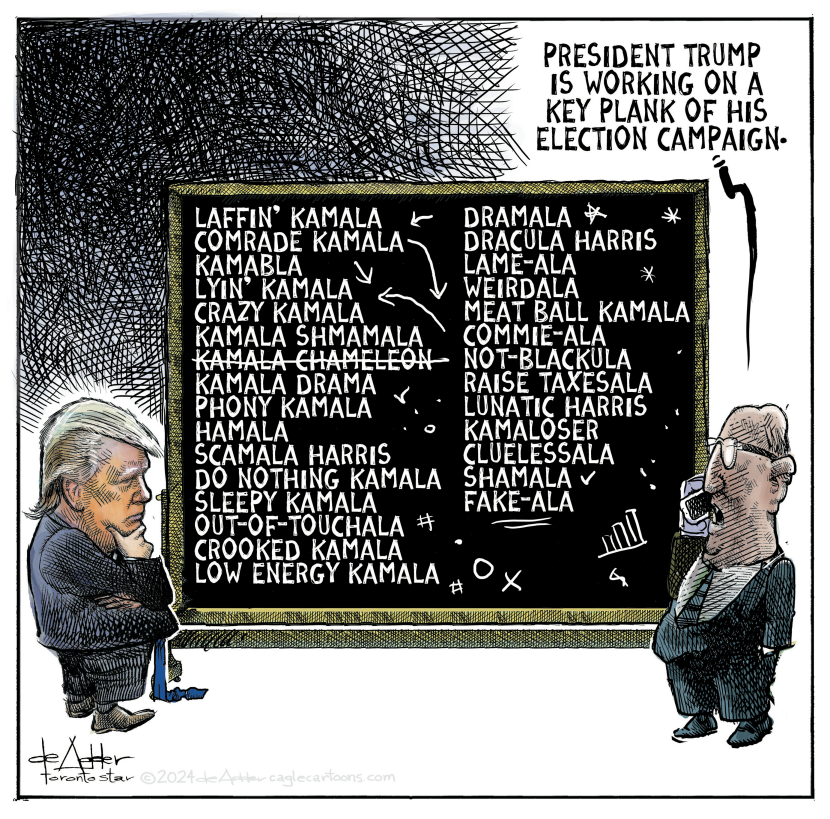
When the media started mispronouncing Kamala Harris’ name, I have to admit I rolled my eyes more than once at the pearl clutchers on the left who saw it as a deliberate insult to the Democratic presidential candidate.

The way they emphasized the wrong syllable into a racist and sexist slur seemed laughable, particularly since it was an unusual name to begin with and Americans are generally not gifted in linguistics.

As a former high school French and Spanish teacher and someone who has also taught Italian, I forgive anyone who gets tongue-tied with foreign languages.

But then I had a little epiphany when a 1960s heartthrob passed away last week. James Darren was probably the most handsome of the Philadelphia crooners who rose to fame over six decades ago.

While he didn’t have the pipes of Bobby Rydell or the subversive sex appeal of Fabian or even the beach bod wholesomeness of Frankie Avalon, he was a classically handsome Italian boy of a certain style and generation with his chocolate brown gaze, his swarthy complexion and his shiny crown of ebony hair.

How did I know he was Italian?

Certainly not from his name. Where were the vowels?

“Darren” was a nice bland creation of a WASP-y past where PR folk sanded away the troubling edges of an overly ethnic past.

Everyone in Darren’s native South Philly knew him by his family name, Ercolani.

But even though this Italian surname was easy to pronounce, relatively speaking, I suspect that it was too ethnic for those melting pot days when people in the entertainment business strove to fit in with the bland Sandra Dee ideal.

Here’s a list of some other famous stealth Italians:

• Anthony Dominick Benedetto: Tony Bennett

• Robert Louis Ridarelli: Bobby Rydell

• Francis Thomas Avallone: Frankie Avalon

• Jasper Cini: Al Martino

• Concetta Rosa Maria Franconero: Connie Francis

• Anna Maria Italiano: Anne Bancroft

• Michael James Vitenzo Gubitosi: Robert Blake

• Dino Paul Crocetti: Dean Martin

Italians weren’t the only ones who sliced off letters or completely reworked their names.

Spartacus was brought to brilliant life by a guy who entered the world as Issur Danielovitch and exited as Kirk Douglas.

The guy who helmed the MDA Labor Day Weekend Telethon was known as Joseph Levitch to his mother and father, while the rest of us called him Jerry Lewis.

The gorgeous redhead who seduced men in Gilda was billed as Rita Hayworth but seduced her parents as a gorgeous brunette baby baptized Maria Rita Cansino.

I’m often told how lucky I am to be called Flowers, and some have even asked if our family changed it when they came over “on the boat.”

For the record, I have very little information about my Irish daddy’s family history, which is why I identify so strongly with my Italian mother’s side. As it is, no one has any idea looking at me what my bloodline might be, and my last name gives no clue.

But I know.

A friend recently made an important point when she said if you don’t have any significant role models growing up, it becomes much more difficult to believe you have a place in the pantheon of achievement.

Today, that principle is not only accepted, it’s fundamental.

We’ve actually overdone it with the DEI insistence on micro-diversity, where every aspect of a person’s identity must be represented and celebrated.

We’ve gone from a melting pot, where we all tried to fit in even at the expense of our ancestors, to standing out so far that we have made a mockery of the word “United” in United States.

Still, pride in origins matters.

That’s why I was so thrilled to see Antonin Scalia elevated to the Supreme Court, and why I was outraged when the bigots tried to erase Columbus.

The opposite of pride is shame.

That is why I think so many of the singers and artists I mentioned before changed their names, either willingly or because some studio executive forced them to.

Ironically, that is why so many of us gathered to defend statues of Columbus. We didn’t care about the statue per se. We cared about what it represented.

We, the Italians of James Ercolani’s native South Philly, refused to be shamed into erasure.

So in a sense, names do matter.

And for that reason, I will make sure that I pronounce Kamala’s name correctly, from now on.

Copyright 2024 Christine Flowers, distributed exclusively by Cagle Cartoons newspaper syndicate.

Christine Flowers is an attorney and a columnist for the Delaware County Daily Times, and can be reached at [email protected].

Comments Off on Pride in origins matters, and a person’s name reflects that
Too many people shunned by loved ones over politics

As I watched the Kennedy siblings close ranks against Robert F. Kennedy, Jr. because of his support for Donald Trump, it reminded me of the fragility of human bonds.

Over the past eight years, since Trump burst onto the political scene, I’ve witnessed the crumbling of so many relationships, including marriages and childhood friendships, based upon an absolute inability to deal with difference and dissent.

I know very few conservatives who have disowned liberal friends. The opposite is far more common.

On social media, I’ve had a number of followers share sad tales of their families broken up over politics. One mother grieved a son who cut off all communication on Memorial Day in 2020 after she said “all lives matter.” Another Trump supporter said they’re no longer allowed in their 89-year-old father’s house.

The overwhelming response agreed with me that the majority of the social and familial excommunications came from liberals canceling conservatives from their lives. But I did get a few examples of the opposite:

“That’s not true. My father disowned anyone who didn’t vote MAGA” and “Oh, the only people I know who have disowned family over beliefs have been conservatives, including my own father.”

Most people I’ve come across in this situation feel saddened but resigned to the fact they had sacrificed important relationships for deeply held principles. Very few if any said they’d silenced themselves to maintain the peace.

I tend to think that’s because when you’re attacked over your beliefs, as opposed to any direct offense or harm you might have caused the other person, you aren’t willing to modify your views to be accepted back into the fold.

Two reasons: First, you don’t feel the need to lie in order to reach a fabricated detente.

Second, and I believe this is the paramount reason, is that a person who would excise you from their lives like a tumor because you disagree with their political choices is not a person who ever really loved you in the first place.

It’s like that great philosopher Billy Joel once wrote: “Don’t go changing, to try and please me … I love you just the way you are.”

There are, of course, certain lines in the sand that are like the Rubicon: once crossed, the damage is irreparable.

They are all personal things, like cheating. Trust, once violated, is forever lost. That principle extends to betrayals of any kind, not just romantic.

But shunning someone because you don’t like their political views after a lifetime of friendship or kinship, especially if neither of you have met or are likely to meet that politician is the height of arrogance and intolerance.

I’ve been very fortunate never to have had anyone that I truly care about cut me off because of my politics.

There was that one high school classmate who blocked me on Facebook because I posted some nice things about Melania Trump, and I have actually lost some professional opportunities because of my outspoken criticism of abortion, but most of the people I have chosen to include in my inner circle have open hearts and open minds.

Which brings me back to Bobby Kennedy.

The thing that really angered me the most about his family’s very open, very vocal betrayal is the idea that they have a patent on their late father’s character.

Each one of them, including sister Kerry, who has made the rounds on every TV station that hates Donald Trump, has somehow floated the idea that they are the custodians of their father’s memory.

The corollary is their brother is an interloper.

You almost expect them to tell us he was actually adopted, which is laughable because if a family ever shared the same obvious DNA it is the family of Robert F. Kennedy Sr.

This is one of the most insidious aspects of these family breakdowns, where one member does something that others don’t like, and there is an almost Amish-like shunning of that person as if they were aliens or traitors to some familial creed.

That is magnified tenfold when the family in question is as famous and iconic as the Kennedys.

The irony is that the reputation that RFK Jr.’s siblings are trying to preserve is a fabrication, the truth of which is lying at the bottom of a river in Chappaquiddick.

That said, no one should be afraid to vote for or support the political candidate who speaks to them.

No one should be afraid that friendships and relationships stitched together over a lifetime of shared experience should be as fragile as one vote in one election cycle.

And yet, here we are.

Copyright 2024 Christine Flowers, distributed exclusively by Cagle Cartoons newspaper syndicate.

Christine Flowers is an attorney and a columnist for the Delaware County Daily Times, and can be reached at [email protected].

Comments Off on Too many people shunned by loved ones over politics

Kamala disingenuous with her ‘one of us’ narrative attempts

Kamala Harris has been trying to connect with the little people, the ones in semi-flyover country who might be a little squeamish about her San Francisco liberalism.

In just one example, Harris has stated – inaccurately as it turns out – that she paid her way by working at McDonald’s.

I am not exactly sure what she paid her way through, because it turns out that the fast food job was for pocket money and not to pay rent, a mortgage, student loans or tuition. It was likely for the things I used my pocket money for: makeup, magazines like Mademoiselle and Glamour that taught me how to put on makeup, and unhealthy snacks that made the makeup irrelevant.

I would venture that over 80% of boomers and Gen Xers, and maybe even millennials earned their extra cash while slinging burgers. But it’s a little pretentious to put that on your resume as proof that you are a woman of the people.

Nothing wrong with it, but it follows a Kamala pattern: make yourself seem bigger than you really are.

I worked at Roy Roger’s, who had better burgers by far than McDonald’s. I was forced to wear a cowgirl hat, a white peasant blouse, a bandana skirt and a kerchief around my neck.

I never thought that working in a fast food restaurant made me special, or that it was like working in the coal mines.

It never equated with what my grandparents had to do, which was leave school in the third grade to go and work to support their respective families. It didn’t even match what my mother did, working at a drugstore and then as a telephone operator after high school and turning over her paycheck, unopened, to her parents.

Do I consider my time with the franchise akin to working in a salt mine?

No. Did the money I earned filling orders for rude strangers help pay my bills? Not really, since my father was paying most of them anyway.

Did my time in the trenches make me a better person? Hardly, since that was the summer when I really learned to curse.

It was my first job, and it was my worst job, but it was nothing special. And I would be incredibly embarrassed to include it in a campaign ad. But this is typical of the Harris campaign.

It seems as if the current VP takes bits and pieces of her life and burnishes them as if she were writing fiction and not an actual memoir.

In that sense, it is ironic that her campaign has attacked JD Vance for his inauthenticity, when it is she who is plucking out details from an existence no less privileged than the one I lived.

Kamala Harris is, like most of the people running for office these days, a product of the middle class. In her case, with two professional academics for parents and a lot of wealthy mentors who helped her along the way, she grew up squarely in the middle of the economic hierarchy.

And to be fair, there is no honor in poverty, even though I have written admiringly of those who overcame adversity and triumphed.

There is, however, honor in honesty.

Harris has been given a lot of breaks in her life, and to ignore that and pretend that she is just like every one of us who had to work behind a counter and get grease stains on our really unattractive uniforms is a bit ridiculous.

This “one of us” narrative doesn’t help her with the blue states, because they don’t care and are already voting for her.

They would vote for her if she was the new CEO of Amazon. It doesn’t help her in the red states, because they see what an inauthentic ruse this is, this attempt to connect with the middle of the middle.

I wish that candidates would simply say, this is who I am, this is how I grew up. I may not be like you but I will work hard to serve your needs.

I don’t need to have been born on a reservation to know that Native Americans have been horribly treated by our government. I don’t have to be Black to know that racism still exists. I don’t have to be a man to know that an awful lot of women used the MeToo movement to destroy lives instead of redress grievances.

And I don’t have to have worked in a fast food restaurant to know what it is to be a normal American.

Empathy is not all it’s cracked up to be.

Copyright 2024 Christine Flowers, distributed exclusively by Cagle Cartoons newspaper syndicate.

Christine Flowers is an attorney and a columnist for the Delaware County Daily Times, and can be reached at [email protected].

Comments Off on Kamala disingenuous with her ‘one of us’ narrative attempts

Vance elevated himself out of the dysfunction he was born into

About a week ago, I attended a JD Vance rally.

It had aspects of one of those rousing Trump “I’m Proud to Be An American” events.

There were GOP officials, there were signs announcing things like “Kamala Kaos,” there was a lot of red, white and blue, and there was music, including Gloria Gaynor’s evergreen “I Will Survive.”

The energy was high, even in the rather limited space of South Philly’s Arena.

But the purpose of the event wasn’t to cheerlead for the vice presidential nominee or his absent running mate. It was much more serious.

Vance was there to discuss the opioid crisis, and he showed a humility that Trump never would by ceding the podium to families who had been touched by the plague of addiction.

There were the parents who had lost a daughter to the disease, a story that was doubly heartbreaking because she’d been in recovery and seemed to have come out on the other side of the tunnel.

There was the woman whose brother is an active addict and whose mother keeps Narcan in her closet in case he overdoses while sitting on her couch.

Vance was able to tie these tragedies into the problems at the border and the failure of the current administration to stem the tide of fentanyl, but it was much less politics than it was about people.

And Vance knows that story from the inside of the maelstrom.

As famously documented in his memoir “Hillbilly Elegy,” he grew up the son of an absentee father and a drug-addicted mother.

That book was made into a profound and devastating film of the same name. I had read the book when it was first published, and am re-reading it now since Vance was picked as Trump’s VP. It could have been my father’s story.

There are differences, of course. Appalachia and Philadelphia are not the same, but little boys and their sorrows are shared across geography and generations.

My father, like Vance, had very little contact with his own father growing up. His mother, like JD’s mother, had her issues, even though she was more present in his life than the VP candidate.

One of the things, though, that made me think that Teddy and JD had lived parallel lives was the grandmother.

JD’s Mamaw was a force of nature, imperfect in many ways, angry and aggressive and unforgiving, but she knew how to love and protect those she loved.

My father’s grandmother, his Nana, was similar in that last regard.

An immigrant from Sweden, strict Lutheran with an unforgiving and demanding streak of her own, she provided a buffer for my father against the environmental turmoil swirling around him.

She gave him money when he was hungry, hid him from the rage of adults, made him go to school, although that was often a losing battle, and taught him the importance of the church.

By the time I remembered Nana, she was an invalid in a hospital bed on the top floor of a row home in Southwest Philly. I’d be forced to sit with her and rub her feet while we watched endless episodes of Lawrence Welk when I would have preferred playing with the kids in the street.

And when I dared complain, my father would look at me with a glacial blue stare that warned me to be silent.

He must have been remembering what she had been, and done, for him.

So I understand JD Vance a little bit better than the leftist pundits who mock his words, take them out of context, call him a Silicon Valley phony, and generally try to undermine his character.

When you come from nothing, or near nothing, your first and greatest victory is getting out of the valley.

Vance did that in a spectacular manner, and without the help of monied mentors. So did my father, who served in the military, went to college at night while juggling three and sometimes four jobs, and died at the age of 42 having been recognized as one of the greatest lawyers of his generation.

Early deprivations have a tendency to strengthen the resolve of those who don’t whine or make excuses for the random cruelty of destiny.

You might not support Vance’s candidacy, and I respect that.

You might take issue with his language about cats and ladies, and while I think you have absolutely no idea how deeply the VP candidate honors women, I’m not going to judge your … judgment.

But this is not about politics. This is about character.

And if you cannot see that JD Vance is a part of the powerful narrative of American struggle and American triumph like many before him, including my own father, I feel sorry for you.

Copyright 2024 Christine Flowers, distributed exclusively by Cagle Cartoons newspaper syndicate.

Christine Flowers is an attorney and a columnist for the Delaware County Daily Times, and can be reached at [email protected].

Comments Off on Vance elevated himself out of the dysfunction he was born into

Kamala Harris’ response to a protest illustrates an attitude

A few years ago, when the U.S. Senate was considering the nomination of Jeff Sessions as attorney general under Donald Trump, Elizabeth Warren started reading into the record some comments that impugned the character of the nominee.

In particular, she quoted from a letter written by Coretta Scott King that accused Sessions of trying to prevent Black citizens from voting.

Then Senate Majority Leader Mitch McConnell interrupted her, citing Rule 19 of the Code of Conduct which prevented any senator from imputing, to any other senator, conduct unbecoming.

Warren objected, demanded the right to continue reading into the record, and was allowed to finish. But the media did what the media always does, and completely misrepresented the story.

It turned into some victorious Henry V moment whereby the senator from Massachusetts stared down the enemy with soaring rhetoric — borrowed from someone else, by the way — to rally the troops.

And that gave way to an entire cottage industry of shirts, hats, mugs and dolls with the tag line #ShePersisted.

I remember at the time thinking that this was hilarious.

Women have been told that we are dismissed in society, that our words do not matter, that we must struggle to be heard. I suppose that in some environments that is the case, but overall there are very few women who don’t know how to get the message across.

The ones who complain about being silenced are simply the ones who are not effective communicators, which brings me to Kamala Harris.

The other day at a rally in Detroit, Kamala was talking to the crowd about the economy and all the horrible things that Donald Trump would do if he were elected again.

She received a good deal of applause, because there is an undeniable amount of enthusiasm out there for her candidacy, at least right now before the wheels fall off the Tim Walz bus.

At the rally, a group of anti-Israel protesters started chanting, and this was Kamala’s response: “You know what? If you want Donald Trump to win, then say that. Otherwise, I’m speaking.”

It was said in her trademark nasal whine, which gave it a very-substitute-teacher-ish effect, as in “I’m Miss Harris and I’m here at the blackboard and I am speaking, so simmer down!”

I recognize the tone and the words. I used the tone quite often as a teacher, including the period that I taught at an all-boys school on the Main Line.

I was rather insecure of my authority, because I was in my late twenties, very petite and one of only three females on the faculty.

On Friday afternoons, I had a class of AP French students, and our classroom had a big window that looked out onto the driveway in front of the school.

Halfway through the class, students from a nearby girls’ school would drive up in their cars and flip their hair and do the things that girls do in order to get attention.

Many of the boys would be looking out the window, clearly more engaged in the action outside than what Mademoiselle Fleurs had to say about conjugating the subjunctive.

At one point, I had to put down the chalk and say, in a tone about as whiny and annoying as Kamala, “Boys, I am talking! The only female you should be paying attention to right now is me. Otherwise, you will be paying attention to me tomorrow, at detention.”

I remember going home and thinking that I’d shown a definite lack of gravitas. It’s a trap so many women fall into. We think that we need to demand respect when it should be earned.

And that’s what I see in Kamala. It might be a stylistic thing, but it matters.

We are being told how wonderful it will be to have a woman, especially a woman of color, at the head of government. We are told that she is competent, fearless and intelligent.

And even if we disagree with her policies — and so many of us do because they are quite radical when you examine them — we are supposed to at least respect the historic nature of her campaign. She is woman, hear her roar.

But I think about how Donald Trump would react in the same situation, and I know that he wouldn’t whine “Hey I’m talking!”

He’d insult, he’d push on, he’d make a joke, he might even demand that the person be beaten up. But he wouldn’t wag his finger and pout.

So my advice for the lady who wants to be president is to stop acting like an annoyed AP French teacher on a Friday afternoon.

Copyright 2024 Christine Flowers, distributed exclusively by Cagle Cartoons newspaper syndicate.

Christine Flowers is an attorney and a columnist for the Delaware County Daily Times, and can be reached at [email protected].

Comments Off on Kamala Harris’ response to a protest illustrates an attitude

A defense of JD Vance from a childless woman

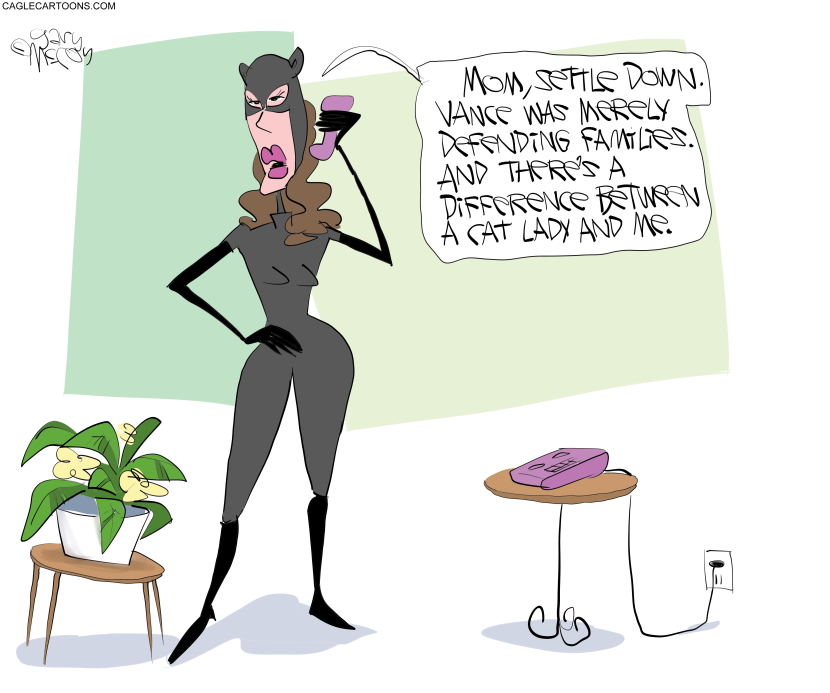
I am what JD Vance would have called a single cat lady.

Actually, I don’t have, nor do I particularly like, cats. I am more along the lines of a single black Lab lady, or a single bearded dragon lady. But the label still matches my civil status.

I have neither spouse nor spawn, which puts me in the demographic targeted by the Republican VP candidate in his critical commentaries on the state of civilization.

And guess what? I agree with him.

I was not offended when I heard Vance make his offhanded comment about the current vice president. He wasn’t being cruel or misogynistic, despite the hue and cry from progressive women and the men they are not having children with.

He was making an astute observation about the drastic sea change in societal standards that has taken place over the last few decades, and why it’s so problematic.

Vance understands the value and importance of women, and if you read his own memoir, which reads like the most fantastic fiction, he owes his life and his success to his grandmother and his older sister.

At a personal level, some of the most important women in my own life were childless, namely, the nuns who raised me.

I can’t remember the names of every lay teacher who passed through my 13 years of elementary and secondary school, but I can describe in detail every single sister who stood before me in her habit, and filled my thirsty mind with the riches of literature, history and language.

One in particular, a 4-and-a-half-foot tall member of the religious Delta Force named Sister Mary David, changed my life.

Gratia tibi ago, soror.

So no, you do not need to have children to matter.

That’s not what Vance was saying, and all of the women pretending otherwise are not only silly, they are dishonest.

There is a shortsighted narcissism that sets in when you think that you are the alpha and omega of your own universe. Believing that “you are enough,” as we have been taught repeatedly in some cult-like mantra of self-care, is probably going to raise your own self-esteem but will simultaneously give you an inflated sense of your importance in the world.

It also hastens your extinction, for obvious biological reasons which this B student doesn’t need to explain here.

As children we are taught the nursery rhyme:

“Little drops of water / Little grains of sand / Make the mighty ocean / And the pleasant land

So the little moments / Humble though they be / Make the mighty ages / Of eternity.”

I always took that to mean that we need humility to place ourselves in the context of a greater society, that we alone aren’t much but that together
we create the “mighty ages of eternity.”

And then we have John Donne who provided a more eloquent but no less compelling argument for community:

“No man is an island / Entire of itself / Each is a piece of the continent / A part of the main …

Each man’s death diminishes me / Therefore, send not to know / For whom the bell tolls / It tolls for thee.”

And at the risk of enraging my conservative friends, this was the theme of Hillary Clinton’s oft-quoted truism, “It takes a village.”

But back to Vance.

I don’t feel that I was being lectured to by Trump’s VP pick.

I think that he was simply stating the obvious, that we are not put on this Earth to post on Instagram about how fabulous it is to be able to go on vacation without bratty kids or redecorate our amazing penthouse apartments with the money we would have used on daycare, or have bikini bods because we never suffered from stretch marks.

And we weren’t “only” put on this earth to have children.

But the refusal to see them as not only necessary to our survival but to our humanity as well, is something worthy of the greatest condemnation.

I say this as someone who can see how women who desperately want children but can’t have them would be hurt by Vance’s words.

But that’s only because they are being deliberately misrepresented by ill-intentioned people.

It is not the state of being childless, but the actual celebration of being without issue that is contemptible.

It’s no coincidence that most of the people doing the latter also celebrate abortion as a right.

So this single “not particularly attached to cats” lady has no problem with a guy who describes the immediate, long-term and essential joy in children.

The other cat ladies need to lighten up.

Copyright 2024 Christine Flowers, distributed exclusively by Cagle Cartoons newspaper syndicate.

Christine Flowers is an attorney and a columnist for the Delaware County Daily Times, and can be reached at [email protected].
Comments Off on A defense of JD Vance from a childless woman

Kamala Harris’ campaign is MAGA: Make Abortion Great Again

There is an almost cult-like trope circulating on social media involving Kamala Harris.

There are numerous variations, but it essentially involves stating a few key details about yourself like “I’m a white woman from New Jersey with cats” or “I’m a Jewish woman with two degrees” or “I’m a mother and a grandmother” or even “I’m a stepfather and supportive husband” but they all end with the same not-so-cryptic phrase: “I understand the Assignment.”

The “A” in “Assignment” is usually capitalized, like some code word, as if the writer had just been enlisted in a 21st century Manhattan Project. And it’s very creepy.

Of course, the people who are sharing their version of this trope think they’re cool and somewhat subversive, pretending to be in on a secret that, in all actuality, is the most obvious joke of the campaign cycle: the suggestion that Kamala Harris is the last best hope for women in the upcoming election.

Ever since Joe Biden was forced to withdraw from the race by desperate Democrats who pretended to be blindsided by the current president’s medical incapacitation, his VP has barged, er, stepped in to assume the mantle for her party.

The voices this Joan of Snark hears are from far left Democrats, the pro Hamas pro BLM pro Burn It Down wing of her constituency that was having a hard time getting through to the stodgier, slightly more moderate Biden.

And while before the mantra was “we must save democracy,” an obvious dig at Donald Trump, now it has morphed into “Revenge of the Uterus!”

From the moment she stepped before the cameras to ever-so-reluctantly become the de facto Democratic nominee, although that’s still not official, Kamala has made it clear that her primary focus in the campaign would be abortion.

She calls it reproductive rights, but since her goal is to strip human rights from unborn women, that term is laughably albeit tragically inaccurate.

It’s clear that the intention of these latter day Village of the Dem-ed is to create a groundswell of support for the woman who will unleash the kraken of abortion in every village.

That may sound overly dramatic but it pales in comparison to the abortion rights crowd, drunk on their fictitious “Handmaids Tales.”

Having witnessed the reaction of abortion supporters to the overturning of Roe and before that, the masses of women who proudly marched in the streets with knitted vaginas on their heads, I’m not at all surprised that Kamala has found, excuse the pun, fertile ground among these women and their terrified male partners.

For some reason, we are encouraged to believe that the VP is a role model for all women, and that she speaks in our name. Without any official mandate or referendum, she has been anointed as the voice of American women, chosen to save democracy by saving the right to what Erica Jong colorfully wrote about as the Zipless You-Know-What in her legendary novel “Fear of Flying.” I call it Fear of Consequences.

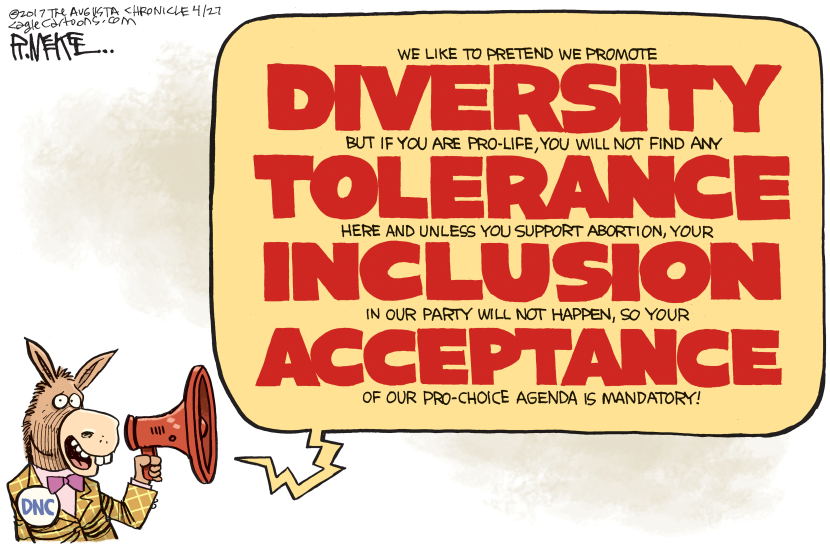
And that is the great hypocrisy of the Assignment. There is no desire to create a democratic society where all voices are heard, least of all those who are as yet unborn. This is a campaign to impose some bizarre groupthink on women, whipping us into submission if we don’t accept the radical abortion rights agenda of the far fringe left.

Kamala Harris does not represent women.

She represents a select coterie who embraces abortion as the singular and definitive human right of our time. She has been quite clear throughout her career that this is her passion, working to overturn abortion restrictions at the state and federal levels.

One of her most undemocratic acts was as attorney general of California when she co-sponsored a bill to eliminate CrisisPregnancy Centers, which provide pregnant women with alternatives to abortion.

These centers give financial and emotional support to women who choose not to terminate their pregnancies, but Kamala — beholden to her donors at Planned Parenthood — was intent on protecting them from the competition. This is just one example of this woman’s crusade to destroy the pro-life movement and neutralize the opposition in a most undemocratic way.

Kamala Harris is not just a woman.

She is a progressive’s Stepford Wife of epic proportions, clicking off all of the boxes to perfection: abolish ICE, bail out BLM rioters, eliminate private health insurance, end fracking, end off-shore drilling, destroy the protections of Title IX for men accused of sexual assault and biological women, and the list goes on. She has shown that she’s receptive to all of these things.

But her passion, her Assignment, is to MAGA, Make Abortion Great Again. And she needs to understand that there are many women out here, pro-life women, who refuse to turn in their homework.

And we vote.

Copyright 2024 Christine Flowers, distributed exclusively by Cagle Cartoons newspaper syndicate.

Christine Flowers is an attorney and a columnist for the Delaware County Daily Times, and can be reached at [email protected].
Comments Off on Kamala Harris’ campaign is MAGA: Make Abortion Great Again

Dems and Joe Biden: A classical lesson in modern betrayal

One of the most famous phrases in history is one that my high school Latin teacher Sister Mary David intoned with deep solemnity as we were studying Caesar: Et tu, Brute?

Literally it translates into “And you, Brutus?,” words spoken by a dying despot who, bleeding from many stab wounds, was likely killed by the final blow from his adopted son. But over the centuries it has taken on a more universal meaning, namely, the cry of ultimate betrayal.

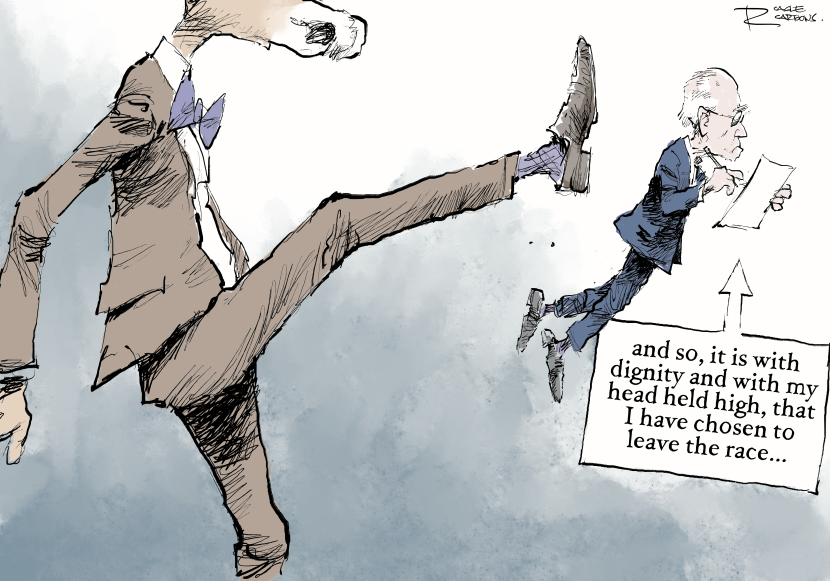
I thought of what Sister Mary David would say about the Democrats ultimately successful but tortured campaign to remove Joe Biden from the presidential race. The diminutive Mercy nun would have likely looked me directly in the eye and said “that was a bloodless assassination.”

It may be tasteless to invoke virtual assassination only days after someone tried to commit an actual assassination against Donald Trump. But we cannot ignore the parallels between what happened to Caesar and what the triumvirate of Pelosi, Obama and Schumer-along with their lesser accomplices-did to Joe Biden.

Let’s dispense with the obvious differences first: Joe Biden is not a despot, nor was he killed. While I find his character and politics anathema, no honest person would call him a dictator. Crazy-in-the-head conspiracy theorists can blather on about forced vaccination plots, and more reasonable folk can legitimately condemn his positions on abortion and Title IX, but he is not Caesar. For that matter, neither is Trump. The rhetoric from the insane wings of both parties is dangerous, and should be ignored.

And, although his cadence, pallor and ability to communicate in an articulate manner would suggest otherwise, he is not actually dead.

The Democrats employed everything short of physical intimidation to get him to step down from the race. They pretend their efforts began in earnest only after they saw his horrific debate performance in June. But they knew, and we knew they knew, for many months. Independent reports and comments made on deep background ,as well as a few on the record, indicate that Biden’s diminished capacity was obvious to everyone inside his inner circle for a long time. They only appear to have started the campaign to unseat him when what they knew was televised for everyone to gape at.

Which brings us to the central question: did the Dems push for Biden’s withdrawal because they care about the nation, or about their own power? In the case of Brutus, a Republican in the ancient sense, his treachery was motivated by a desire to resurrect the Roman Republic and neutralize a dictator. The fact that the dictator was his beloved adopted father made it a deeply difficult task, and a great betrayal.

It’s hard to see the nobility in what the Dems have done. If they cared about the country, they would have demanded Biden’s withdrawal when the signs of age-related dementia became obvious to them. Instead, they waited until it became obvious to us.There is no honor in desperation.

Some might argue they are trying to save the country from Trump, who they consider a fascist. But what do you call people who thwart the will of the electorate by essentially coercing the primary winner to step down? Are they patriots? Traitors? Or something in between?

So the deed is done. We wait for the fallout. We wait to see who will succeed to the throne, so to speak. We will see if there is a bloodless but bitter battle between Octavian and Antony, or Kamala and whoever.

In the meantime, we come neither to praise Biden, nor to bury him. We come to mourn the state of our nation and its flawed and unworthy leaders.

Copyright 2024 Christine Flowers, distributed exclusively by Cagle Cartoons newspaper syndicate.

Christine Flowers is an attorney and a columnist for the Delaware County Daily Times, and can be reached at [email protected].
Comments Off on Dems and Joe Biden: A classical lesson in modern betrayal

Trump, Rwanda and the dangers of political propaganda

It is an old childhood truism that “sticks and stones may break my bones, but names will never hurt me.”

In the United States, where speech is protected with a constitutional and social ferocity like no other country in the world, this has always been the default position. We want strong, full-throated debates, and we don’t want to punish people for using language that offends.

But sometimes, language crosses the line. Sometimes, and even our own jurisprudence recognizes this, language can incite violence. That’s one of the exceptions to the almost absolute protection for free speech. And then we have those situations where language is used not so much to incite as to dehumanize. And if you are no longer human, you are no longer protected against inhumanity.

Take the Rwandan massacres. In 1994, the ruling Hutu government enlisted the aid of several radio stations, most notably Radio Television Mille Collines (RTLM), to spread propaganda among the illiterate Hutu population, urging them to look at their Tutsi neighbors as animals. The station exercised an immense amount of power and influence in the country. Concordia University has gathered the transcripts of some of those recordings, and they chill the blood. According to the preface to those transcriptions:

“From October 1993 to late 1994, RTLM was used by Hutu leaders to advance an extremist Hutu message and anti-Tutsi disinformation, spreading fear of a Tutsi genocide against Hutu, identifying specific Tutsi targets or areas where they could be found, and encouraging the progress of the genocide.”

We all know what happened. Starting in April 1994 and continuing for 100 days, over 800,000 people were murdered by the Interhamwe, the government forces. And those radio broadcasts helped gin up the anger against the Tutsis.

Of course, the genocide would have occurred without the radio transmissions. But the words used and disseminated by those in positions of authority were powerful weapons, turning people’s opinions against an innocent but hated ethnic minority. Words are cheap and plentiful, and the arsenal is easily replenished.

I write this not to compare what happened this weekend in Butler, Pa., to the Rwanda genocide. Donald Trump is not dead, he survived an assassination attempt, and the killer was neutralized. We do not even yet know his motives, and it will likely be a while before we do. In the meantime, conspiracy theorists will weigh in with their tin foil hat opinions. I do not own any of those.

But I am also not insensitive to the fact the political climate has become dangerously heated over the last eight years. When Donald Trump was elected back in 2016, women, in particular, acted as if they had been ordered to purchase burqas, leave school, and keep their wombs open for rental. Minority groups started screaming about the revocation of rights, and we were told that everyone in the Trump administration was one level down from Satan.

But it’s when he left office that things started to really ramp up, to the point that this past week alone, I counted at least 127 times on the combined networks of CNN, MSNBC, ABC, NBC and CBS that Trump was called “a threat to democracy,” or variations of that phrase. I started actually taking notes and writing down the times the words were mentioned after a roundtable on CNN used the terminology on every single broadcast between seven and midnight. It was a script, and they all used it.

When they call someone a “convicted felon” because they actually have been convicted, albeit under questionable circumstances, you can be annoyed at the lack of grace. Still, you can’t say it’s inaccurate. But when you paint someone as a dangerous man, a despot, someone who will destroy the country, force women to push out babies and then die on the delivery table, create concentration camps for immigrants and allow police to kill minorities at will, you create a very dangerous dynamic in society.

Most reasonable people won’t do anything. Most will just shake their heads and say, “Yeah, I hate the guy. What’s for dinner?”

But there are far too many people like the 20-year-old in Butler, Pa., who decided to go out in a blaze of glory targeting the “threat to democracy.” A troubled, diseased mind is susceptible to rhetoric and propaganda. It is political malpractice to give them the push they need.

Thank God Donald Trump survived. Now can everyone just shut up?

Copyright 2024 Christine Flowers, distributed exclusively by Cagle Cartoons newspaper syndicate.

Christine Flowers is an attorney and a columnist for the Delaware County Daily Times, and can be reached at [email protected].

Comments Off on Trump, Rwanda and the dangers of political propaganda

Echoes of the film ‘1776’ are still heard today

As I’ve done for every Fourth of July since the 1976 bicentennial, I settled down last week to watch my favorite patriotic movie: “1776.”

The music is as familiar as it is delightful, the actors are perfectly cast, and the finale never fails to bring tears to my eyes.

Those bells — that bell — chiming as each delegate signs the Declaration of Independence creates a crescendo of suspense. It’s not corny to say that for those few seconds, I fall in love again with being an American.

Conservatives are cast as the villains in this show, a necessary conceit to lionize the rebels like John Adams, Thomas Jefferson and my Philly homeboy Ben Franklin.

To make them look honorable, which they were, it was important to make their rivals look dishonorable.

First we had Edward Rutledge, played by the legendary John Cullum, who represented South Carolina. He leads the contingent that refuses to abandon slavery, and forces Jefferson to rewrite the Declaration so it remains licit for the foreseeable future.

But the Rutledge character is at least given a pleasant, almost seductive personality. Except for being a racist, you actually like him.

The conservative villain who really gets the short end of the celluloid stick is John Dickinson, one of the three delegates from Pennsylvania.

He and Franklin are the polar ends of the commonwealth’s approach to independence: Franklin is one of its most passionate advocates while Dickinson is as passionately opposed.

History has been kind to Ben, a man who would never have survived the MeToo movement had it arrived two centuries earlier. His flaws were overlooked, partly because he was a genius and partly because he hated King George.

Poor John Dickinson has been viewed as a collaborator with power, a man so enamored of money and privilege that he was willing to trade freedom for affluence. The movie doesn’t even try and make him appealing. He comes off as smarmy and petulant, uncaring of the pain his neighbors in Massachusetts are suffering and a panderer to the British crown.

But perhaps, without even intending it, the writers of “1776” gave Dickinson and the other conservative delegates the best song in the show: “Cool, Cool Conservative Men.” These lyrics have always stuck with me:

“Come ye cool, cool conservative men / Our like may never ever been seen again

“We have land, cash in hand / self-command, future planned

“Fortune thrives, society survives/ in neatly ordered lives / with well-endowered wives”

Except for the endowered wives part, the rest of it is pretty reasonable.

Owning property, for which you have paid, having the ability to determine your own destiny, with a thriving and ordered society that is the firewall against chaos. What’s wrong with that?

And when accused by John Hancock of only caring about money and says “Fortunately there are not enough men of property in America to determine policy” Dickinson replies:

“Well, perhaps not. But don’t forget that most men with nothing would rather protect the possibility of becoming rich than face the reality of being poor.”

And that’s always been the conservative, free market small government philosophy of conservatives. Give people opportunities to flourish. Don’t over regulate. Don’t engage in class warfare.

Watching poor John Dickinson get out voted on independence made me happy for the country, because I’m not a fan of British cuisine or rugby.

But at some level, I understand what he was getting at. Contrary to recent slanders from those who use terms like MAGA, Trumpster or fascist interchangeably, the conservative movement has been as deeply wedded to freedom and individual autonomy as any party.

When feminists crow about getting the government out of their uteri, the concept of self-determination is a conservative one. The idea of faith can be claimed by both parties, but the Free Exercise and Establishment clauses of the First Amendment were developed to allow Americans to choose their own form of worship, without government interference.

It may seem counterintuitive, but far from providing obstacles to our founding, conservatives made this nation possible by embracing the idea of controlling your own destiny.

So the next time you watch this fantastic movie, consider the possibility that Pennsylvania had two different but equally important patriots in our delegation.

Perhaps history will catch up and we will one day realize that the conservative, who by all accounts had only one well-endowered wife and no extracurriculars on the side, was as noble as the guy who electrified the nation.

Copyright 2024 Christine Flowers, distributed exclusively by Cagle Cartoons newspaper syndicate.

Christine Flowers is an attorney and a columnist for the Delaware County Daily Times, and can be reached at [email protected].
Comments Off on Echoes of the film ‘1776’ are still heard today