The danger of silencing words

I’ve been called a lot of things in my life, some of them endearing, most of them not.

When Barack Obama referred to conservatives like me as people who cling to our guns and religion, I was offended. Later, when Hillary Clinton called conservatives who weren’t going to vote for her a “basket of deplorables,” it looked as if another Democrat was employing crude, awkward rhetoric to gin up her base. It had the opposite effect, which helped put another guy in office who wasn’t shy about insulting people.

“Muslim ban,” “rapists and murderers” and “bleeding out of her whatever” are some of Trump’s greatest hits. They repelled many Americans while having the exact opposite effect on his fans.

And then we have the current president, who thinks it’s fine to call people like me “semi-fascists,” which is his attempt to tar those of us who pay our college debt and don’t support killing babies in the ninth month as totalitarian brutes. I can’t really blame President Joe Biden for words that someone else wrote for him, since we know that he even needs assistance to insult people these days.

My point is that insults, whether they come from the left or the right, usually just fill up one revolution of the news cycle, inspire social media outrage, and then, pfft, we move on to the next crisis.

Sadly, though, that’s not always the case. This summer Salman Rushdie was brutally assaulted by a knife-wielding zealot from New Jersey. This was a Muslim who had been radicalized into believing that Rushdie deserved to die for having dared write a satirical novel about the Prophet Mohammed decades ago. Rushdie has carried an actual “fatwa” over his head since “The Satanic Verses” was published in 1989, and until recently managed to live his life in relative, guarded peace. But this year, the words he’d written came back against him like bullets.

Words can be powerful, when used in the right way and the right context. Censoring them leads to chaos, and a loss of the most important attribute of humanity: the independent mind.

Words were so powerful that they lit the dark corners of a Siberian gulag in the 1970s. They were so powerful that they triggered a human rights movement in the 19th century American South. They were so powerful that they provided the framework for the Judeo-Christian society. They were so powerful that they ignited a revolution in 18th Century France. They have been used for good, and they have been manipulated into weapons, as we saw with Rushdie. But words themselves are pure, and access to them is essential.

That’s why I support librarians who fight against censorship, even when the books they champion violate my morals and my fundamental principles. That’s why I reject those who want to erase the sort of language they don’t like, and the political right and left are equally guilty of this great sin. That’s why I was horrified to see what happened after the Black Lives Matter protest muzzled those who supported the police, and the New American Cultural Revolution sought to silence those of us who think Western civilization cannot be misrepresented by professional victims. White men did good things, and we cannot be shamed into ignoring that.

For this reason, I was thrilled to hear that two good friends just committed a heroic act: they saved an independent bookstore from closing. Ken and Melody Kurson are the new owners of “The Book House,” a local treasure in Millburn, N.J. I asked Melody what pushed them to invest in this business, and she said:

“Both liberals and conservatives are banning books-and ideas and people-with alarming unselfconsciousness. It’s scary that a value so fundamental to our nation that it’s literally our first law even has to be repeated, but yeah, the free exchange of ideas and words and concepts is the most precious right we have. As for the people who won’t shop in our store because we carry this book or hosted that author … we defer to the great Billy Bragg who wrote “If you gotta Blacklist, I wanna be on it.”

I do too. We should all gravitate towards ideas, and the people who preserve them. Words can’t kill. But silencing them, and the people who use them, most certainly can.

Copyright 2022 Christine Flowers, distributed exclusively by Cagle Cartoons newspaper syndicate.

Christine Flowers is an attorney and a columnist for the Delaware County Daily Times, and can be reached at [email protected].

Comments Off on The danger of silencing words

Student loan forgiveness shifts money to wealthy

My roots are blue. Not the political blue of the current climate. Blue-collar blue. My maternal grandfather had a third-grade education and spent almost three decades picking up trash for the city of Philadelphia.

Neither of my four grandparents went to college, and only one of them finished high school. My mother was the first in her family to obtain a high school diploma, which was a significant accomplishment.

And then there was my father. He excelled in high school, so they knew he had a brain. But Teddy had no money, so he went into the army for a few years, cooling his heels (literally) at a NORAD post in Greenland. When he came home, he used money from the GI Bill as well as money from the many jobs he juggled to get an undergraduate degree at the University of Maryland. He never asked for help, beyond what the government owed because of his military service. If he had, he would have made sure to pay back whatever was loaned, with interest.

I was thinking about my father and grandparents when I heard about the Inflation Expansion Act recently announced by Joe Biden. You might know it by its official name, student loan debt forgiveness. But when you look at the details, it essentially becomes a wealth-shifting formula where middle and lower-income families will foot the additional bill for students who won’t fulfill their financial obligations.

When I posted on social media that no one’s debt should be waived until everyone who actually paid back their student loans is made whole (I called it “Non-Grifter Reparations,”) a lot of the response was positive. Apparently, many of us are incensed by what appears to be a reward for shirking responsibility. Others disagreed vehemently and put the blame on the predatory lenders and the colleges with their bloated endowments.

And to be fair, they’re all responsible for the mess. But it’s completely naïve to just excuse these students who willingly and with full disclosure signed on for these loans. They or their parents were fully aware of the consequences of the agreement, and no one forced them to sign on the dotted line. Anyone who suggests that they were placed in an untenable position has no idea what that even looks like. My father did. Many other fathers, mothers and grandparents did too.

I’m not an economist, but the ones I’ve spoken to are convinced that the program is both too much and too little. It will shift billions of dollars of debt forgiveness onto middle-class taxpayers while making an insignificant dent in the debt of most American students. We hurt the many, to (barely) help the few.

And even though I’m a lawyer and know something about the constitutionality of executive orders in the immigration context, I’m not going to predict the legality of this move. It will be up to the courts to decide if Biden exceeded his executive authority.

The thing that angers me is the absolute immorality of telling one group of people that they get to keep something they didn’t pay for. Unlike bankruptcy where you generally lose the property you can’t afford, no one can take that diploma in Women’s Studies away from you (not that anyone with half a brain would want to.)

Another thing that really angers me about this whole scheme is that it does little to nothing to encourage young people to enter the trades, honorable professions that get short shrift by high school counselors and the public at large. If we’re going to fund education, I’d rather subsidize a future carpenter than contribute to the brain-massaging of an Ecogastronomy major (that exists, by the way.)

My father, and the people like him, took their obligations seriously. They weren’t victims and didn’t whine about entitlements. Joe Biden, who came from my father’s generation and pretends to be like him, is ignoring the singular American virtue that characterized that group: accountability.

To paraphrase someone important: “What profit a president to win some votes, but lose his soul?”

Copyright 2022 Christine Flowers, distributed exclusively by Cagle Cartoons newspaper syndicate.

Christine Flowers is an attorney and a columnist for the Delaware County Daily Times, and can be reached at [email protected].

Comments Off on Student loan forgiveness shifts money to wealthy

Local journalists tell stories national media won’t

A lot of people think that the pinnacle of journalism is working for a publication with national exposure, like The New York Times, Washington Post, Wall Street Journal or The Chicago Tribune. These are the flashy, high-profile jobs that put you in line for the Pulitzers and get you invitations to pontificate on the cable news networks.

While there is a definite cachet in being able to put “of The New York Times” after your name, some of the greatest writers and investigative journalists toil away at small, local papers in parts of the country that we once called “flyover.”

First, a shout-out to the great Salena Zito. A Pennsylvania native who has attained well-deserved national recognition, Zito rose to prominence during the 2016 election cycle when she became what some called the “Trump whisperer,” a woman capable of explaining the peculiarities of the Trump voter to an otherwise incredulous audience of institutional Republicans and horrified Democrats. Zito understands people, and she understands how important it is that their lives and their concerns be accurately represented in the journalism they read.

Unfortunately, that rarely happens in national publications, which often distort the facts of particular cases to advance a larger narrative.

That happened recently in Norfolk, Nebraska. The other day, I got an email from editor Jerry Guenther at the Norfolk Daily News asking me to take a look at a local story that had gotten national attention. He wanted my honest opinion on the way the national media, including CNN, Reuters, MSNBC, and The Guardian were framing the issues. And because it was about abortion, and because I have some experience with how those stories are being depicted by national outlets, I agreed.

In June of this year, before the decision in Dobbs came down from the Supreme Court overturning Roe v. Wade, a 17-year-old Nebraska girl and the 41-year-old woman who assisted her were charged with criminal acts in connection with disposing of the remains of a baby. As the facts began to emerge, it appears that the older woman obtained pills for the pregnant teen, who chemically aborted the fetus. The initial diagnosis was a stillbirth, but further investigation indicated that the death was caused by the pills.

At the time of its death, which was allegedly caused by the chemical abortion, the unborn child was 29 weeks old. That means that it was beyond the period that Nebraska law permits abortions, and medical records indicate that the child itself was healthy with no pre-natal anomalies. Had this baby been brought to term, it would have survived.

This is a baby that was less than two months away from being born. This is a baby that could have been adopted out, since the young mother obviously was unprepared to become a parent. This is a baby that, by all accounts, was healthy and displayed none of the medical conditions which would have justified a later-term abortion. This is a baby that was thrown in a ditch and abandoned.

And of course, the national media have twisted the narrative into a pro-abortion message, suggesting that the “desperation” of the young pregnant woman is a reason that abortion should remain safe and legal. They’re glossing over the fact that the woman knew she was pregnant months before she sought the abortion and also knew that her unborn child was perfectly healthy.

They’re also glossing over the fact that the adult was the teen’s mother, that she was an unlicensed abortionist, that she undertook the act after knowing the baby (her grandchild) was healthy, and that she assisted her daughter and a 22-year-old male in disposing of the remains. The additional horror of the situation is that the trio attempted to burn the baby’s body before burying it.

There are too many details to cover in this piece, many of which chill the blood. The thing that is most chilling, however, is the suggestion that the real culprit is a society that prevents women from getting abortions whenever they want them, as opposed to people who look upon human life as disposable trash.

The reporter who authored most of the local stories, Austin Svehla, has done a magnificent job in presenting the facts in an honest and dispassionate manner. He should be applauded. Sadly, he is being vilified in some quarters because of his work.

Svehla, like many of the local journalists who don’t get asked to pontificate on CNN and MSNBC, are the true professionals, who attempt to shine an honest light on the things we’d rather ignore.

He, Salena Zito and those like them deserve far more than Pulitzers. They deserve our gratitude and respect.

Copyright 2022 Christine Flowers, distributed exclusively by Cagle Cartoons newspaper syndicate.

Christine Flowers is an attorney and a columnist for the Delaware County Daily Times, and can be reached at [email protected].

Comments Off on Local journalists tell stories national media won’t

Forgiving some sinners and castigating others

I was watching an old documentary the other day about classic Hollywood stars. Henry Fonda, a man who epitomized the stalwart, decent American was the narrator, and he walked us through several decades of famous (and sometimes infamous) actors, from Charlie Chaplin to Natalie Wood.

The interesting thing was that most of the people profiled had a public demeanor that differed radically from the private ones. But in the pre-internet age, only a few of them suffered because of it, even with the restrictive Hays Code, which demanded moral purity from the silver screen.

For example, Errol Flynn was a dashing and desirable swashbuckler who leaped into our hearts in films like “Captain Blood” and “The Adventures of Robin Hood.” He played heroic, charismatic and sexy characters. But his personal life was a mess, with many wives, alcoholism, accusations of statutory rape and even some rumors of bestiality. But somehow, his career managed to survive even the racy rumors.

Ingrid Bergman was not so lucky. The woman who played the perfect nun in “The Bells of St. Mary” and became the epitome of class, grace and virtue ended up being vilified on the floor of Congress as an adulteress when she left her husband for Italian director Roberto Rossellini. The difference in treatment is very likely due in part to the fact that she was a woman, and greater virtue was expected from the fairer sex. It also might be attributable to her lack of shame in living her life in the open, with no apologies to shocked and disappointed Americans.

We’ve always had heroes with feet of clay, and we’ve always been a little hypocritical about the way we deal with them. Errol was pretty much left alone, while Ingrid suffered the consequences of her decision to break the social codes. It’s hard to understand why we excuse some sins and sinners but crucify others.

Last week, a female reporter from Philadelphia insisted on asking Pete Rose about “rape” allegations. Rose was in Philly being honored along with other members of the 1980 World Series team, and while he’s a controversial character due to the Hall of Fame ban, he didn’t deserve to be saddled with interrogations about his private life. In the first place, it ruined the day for the rest of the team players, despite what some suggested in their social media posts.

So many other athletes and stars have led their lives on the shady side of the street, and yet the majority of them get away with it. Should we go after all the the wife-beating, multiple Baby Mama cavorting, drug snorting basketball stars with the same glee as we do against Rose, who has steadfastly denied that he ever had sex with an underage female? He has admitted to having sex with a 16-year-old, which is gross when you consider how old he was at the time, but not a crime in most states. The allegations of statutory rape are self-serving and largely unfounded. Interestingly enough, no criminal charges were ever filed. A low bar, true, but when raising these rumors from the dead after decades, it’s a useful consideration (see Cosby, Bill).

The thing that really annoyed me about the attacks on Rose was the continued shadow of MeToo being exploited by a female journalist. For some reason, females (especially female sportswriters) seem to think it’s their obligation to act like Joan of Arc on the equality battlefield, often raising irrelevant issues about greasy retired players who had their glory days before they themselves were even born. Rose may be an amoral old man, but if that was a crime half of Congress would be in jail.

You don’t have to excuse piggish behavior in order to see how wrong it was to make Rose’s history a central part of the Philly commemoration. You don’t have to be a feminist (which I’m not) to be annoyed at this female sportswriter’s attempt to insert herself into a story that has nothing to do with remembering a beloved Philadelphia milestone.

And you don’t need to be perfect, to have done something worth honoring.

Let’s treat people like Errol, not Ingrid.

Copyright 2022 Christine Flowers, distributed exclusively by Cagle Cartoons newspaper syndicate.

Christine Flowers is an attorney and a columnist for the Delaware County Daily Times, and can be reached at [email protected].

Comments Off on Forgiving some sinners and castigating others

Difference between microaggressions and true bigotry

I was out of the country for a few weeks,so I was shocked to read up on a troubling wave of racism engulfing cartoon characters and such.

Apparently, parents at Sesame Place near Philadelphia have claimed that characters like Rosita (and a few others who have gone into the Muppet Protection Program) ignored their children when they attempted to high-five or get a picture with them. Those children were Black, while the Muppets were multi-colorful.

Sesame Place issued a heartfelt apology for the bigotry displayed by its cartoon employees, seeming to accept the narrative that the giant terry-clothed creatures were one step removed from being white nationalists. They were convinced that something was wrong by the incontrovertible proof of cell phone camera footage, which showed Rosita refusing to engage with the little Black girl.

It never occurred to them that the person inside the Rosita costume might not have actually seen the child, or that it was heat and annoyance instead of racism that caused the giant Latina Muppet to rebuff the tot.

Then we had the case of Chuck E Cheese, who ignored another little Black girl who was vying for his attention among a bunch of white kids. Clearly, the giant mouse was actually a rat. There could be no explanation other than that these people who had willingly sought jobs to make children happy only wanted to make children of a certain race happy. It was ridiculous to think that they were anything but David Duke in better-looking sheets.

And at the end of it all, you just have to laugh. The fact we are obsessing about the racism of cartoon characters highlights something that has become more rampant and noxious than chimeric bigotry: the narcissistic sense that the world owes us something.

It all stems from the principle of “microaggressions,” those things that a prior generation would have laughed off as bad manners but which become, to the enlightened children of the Boomers, a human rights violation.

The fact that some children were ignored by giant cartoon characters on a very hot summer day is not in Emmet Till territory. My father spent a summer in Mississippi 55 years ago that was fraught with real racism and immediate dangers. He had a run-in with the Klan, was spat upon by little white children and was refused service at several restaurants because of his skin color. That skin color and the fact that he was doing civil rights work made him a traitor to the race.

Those were not microaggressions. The murder of Medgar Evers, of Martin Luther King Jr., of Viola Liuzzo and the beating of John Lewis were not microaggressions either. That was the true face of bigotry.

To have people complaining that the bruised feelings of little toddlers is in that same emotional neighborhood is repellent, and the people who try and advance that false narrative are moral grifters out for a cultural payday. They want to make us feel as if all of society is geared toward hating little Black children, and that their childhood is lived under the shadow of bigotry.

The fact that there is racism, and there is hostility and there is persecution cannot be ignored. But the people who play these games are the ones who are making it much more difficult for people of good faith and common sense to listen when those real cases of inhumanity occur. It’s the boy who cried wolf. If you even pretend that a Muppet overlooking a child of a certain race is a sign of rank bigotry, you are desensitizing us to the situations where minorities actually are the victims of discrimination.

The whole idea of “microaggressions” is the woke’s revenge against America, a society that has traditionally given the benefit of the doubt to strangers. While people can be rude, and even mean, we generally don’t assume that this hostility stems from any kind of actual prejudice. We just think they’re putzes.

But “microaggression” allows the woke, whether it be the women of MeToo or the aggrieved from the Trans communities, or other members of so-called marginalized groups to reframe this bad behavior and lack of kindness as a civil rights violation. If you choose not to call someone with a beard a “she,” you are transphobic. If you question the wisdom of a young woman getting drunk at a party and then walking home with a strange guy, you are a misogynist. And if you question the motives of a stressed-out Muppet who happened to ignore a minority child, you are a white supremacist.

I’m tired of this. I suspect many of you are, too. And so to those who actually think that microaggressions are a legitimate form of bigotry, I have a suggestion from my dear departed Italian grandmother: Go play in traffic, on Sesame Street.

Copyright 2022 Christine Flowers, distributed exclusively by Cagle Cartoons newspaper syndicate.

Christine Flowers is an attorney and a columnist for the Delaware County Daily Times, and can be reached at [email protected].
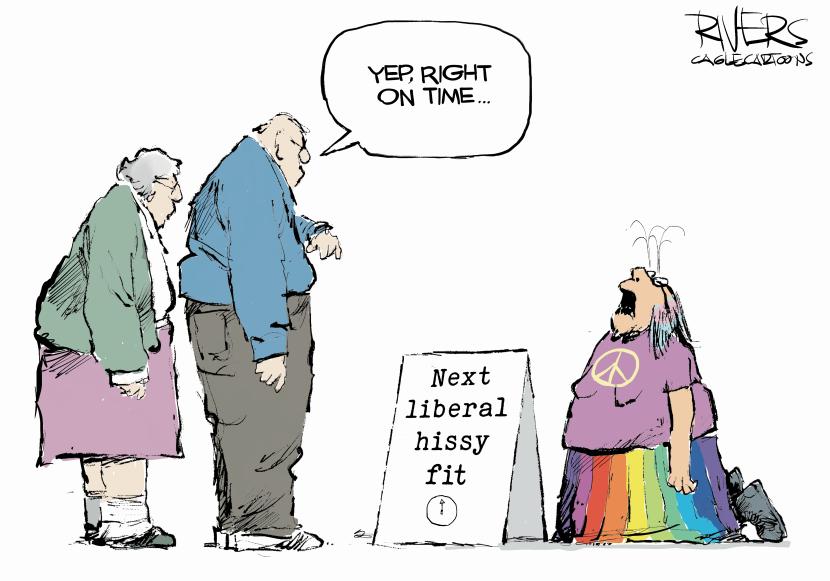
Comments Off on Difference between microaggressions and true bigotry

Why Italians don’t care about Jennifer Affleck’s decision

I’ve been on a two-week vacation in Rome, and one of the great things about being in a foreign country where they have real problems to worry about (including unexpectedly fallen governments) is that the first-world problems of the woke and culturally oppressed don’t make much of an impact.

Case in point: the scandalous matter of Jennifer Affleck, née Lopez.

Jen and Ben, once and future lovers, were married while I was in Italy. That wasn’t shocking, but the timing was a little surprising. The Italian gossip magazines did what they normally do: print glossy photos of pretty people gazing lovingly into each others’ eyes.

It wasn’t until I got a Google alert about an op-ed in The New York Times scolding the former J-Lo for taking her husband’s name as her married name that I realized American women were passing through one of their (our?) first world crises. Apparently, the fact that the multi-talented actress/singer/choreographer/beauty mogul wanted to be known as J-Aff was a moral failing, an affront to independent women, a stone thrown directly between Gloria Steinem’s aviator-shielded eyes.

Italians didn’t care. At least most of them didn’t. And that’s ironic because Italian women don’t assume their husbands’ names when they say “I Do.” They keep their maiden names which, if we’re going to be honest, are their father’s names. They don’t see the need to declare their independence from men with verbal and orthologic grandstanding, because to them, a name is just a name. It’s not a sign of worth. It’s not a declaration of importance or independence. It’s just the thing they put on your birth certificate.

I’m not exactly sure why and when American women started taking their husbands’ last names. It’s likely a throwback to our British ancestors and laws that made women and children the legal property of their husbands and fathers. That’s not a good or admirable thing, but historically, women were not free agents. The name thing was a small and rather insignificant part of that.

This is why I chuckle at the melodrama created by a famous and accomplished woman choosing — choosing — to be known as her husband’s wife. The laws in western countries do not treat women as property. We are presidents and prime ministers. We win Nobels and Pulitzers. We are scientists and soldiers. So who really cares about the name? To paraphrase Shakespeare, an Amazon by any other name would be as powerful.

And yet, in America, we still find ways to be offended. Somehow, Jennifer Affleck’s decision to jettison “Lopez” is another horrific example of the war on women. The ladies that I’ve spoken to over here are a bit perplexed by the meltdown taking place over abortion rights. In a country where abortion was illegal far longer than it ever was in the U.S., this sense that female value and autonomy are tied to the ability to abort is bizarre. Maybe it’s the Catholic influence (that church and state thing is more fluid over here) or maybe it’s just that Italian women seem to have a better understanding of their place and worth in modern society.

Contrary to popular belief, Italy has always had a strong matriarchal streak in its social customs and structures, and history is replete with strong Italian women. In fact, Giuseppe Garibaldi’s wife Anita is a heroic historic figure in her own right. And google the name “Anna Magnani,” then get back to me.

On a personal level, I was raised by strong Italian women. Their names were irrelevant to their intrinsic worth. And they would have laughed if anyone suggested that they were erased when they took their spouse’s surnames.

So being abroad and out of the airspace of aggrieved sob sisters was a joy, one that convinced me that we in America have a rather skewed perception of universal priorities. We have witnessed the re-enslavement of women in Afghanistan. We know that female babies are killed in rural areas of India, China and the Middle East. We know that female infants have their organs mutilated in Africa.

While our women run for and win, high political office. So complaining about J-Aff is an insult to women who really do have something to worry about. Thank goodness I spent most of the faux-crisis surrounded by women who get it.

Copyright 2022 Christine Flowers, distributed exclusively by Cagle Cartoons newspaper syndicate.

Christine Flowers is an attorney and a columnist for the Delaware County Daily Times, and can be reached at [email protected].
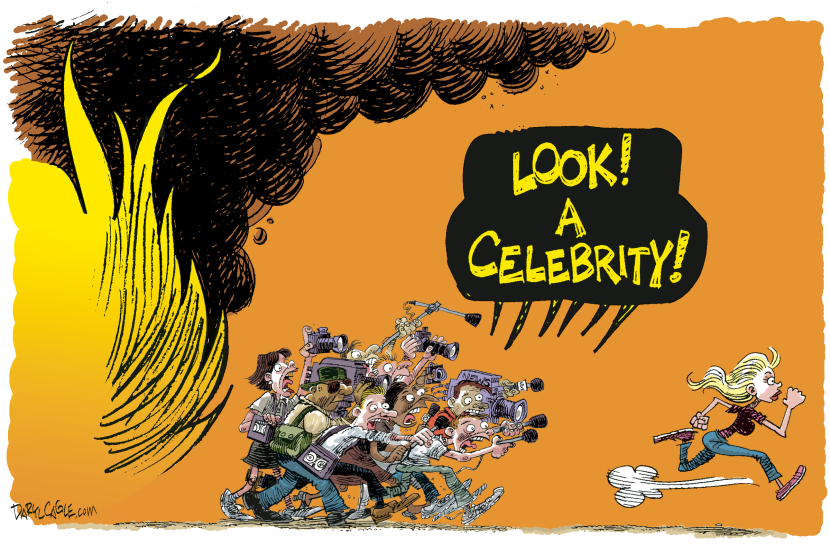
Comments Off on Why Italians don’t care about Jennifer Affleck’s decision

From Rome with a perspective on populism and partisanship

I write this sitting at a cafe in front of the Italian Parliament, waiting for the president to resign.

After two years of watching my own countrymen try and get rid of our leader in two partisan and meritless impeachment shams, the last thing I wanted was to spend my vacation in Rome watching another country give the premature pink slip to its head of state. But here I am. And it triggers a few thoughts.

Unlike Donald Trump, who was the object of a sustained campaign by his political enemies to eliminate him before his term ended, Mario Draghi, leader of the Italian Republic, is resigning. The reasons are too complicated to explain in a column like this, but suffice it to say that he’s lost the support and confidence of enough legislators to essentially paralyze the government. Bills aren’t getting through. Trash is (literally) piling up in the streets. Salaries aren’t being paid. And coalitions that once existed have fractured. It’s sad, and it was avoidable. But something has happened in the last few years that have made the avoidable inevitable. Actually, two things: populism and partisanship. When they’re combined, they upend the democratic process.

Let’s start with populism. On its face, it’s a good thing. Government works for the people. The corollary is that people should have the final say in the laws and policies that impact them, not elected bureaucrats who become increasingly separated from those they represent. But the “people” don’t always agree on priorities. They can work against each other. And when that happens, like the Tower of Babel, you have stasis, dysfunction and paralysis.

Populism is often the enemy of compromise, which is the hallmark of democracy. In the U.S., now that Roe v. Wade has been overturned by the Supreme Court, people are free to discuss how to deal with the issue of abortion post-Roe. The difficult task that awaits is to figure out which voices should sway policy, not which voices get to paralyze the process.

Where populism is, in theory, a very good thing, partisanship is not. It never was. Putting political affiliation before country or state or city is unpatriotic. It’s also immoral.

If you’ve spent any time in Philadelphia over the last six decades, you know that if you’re not a Democrat, you won’t win an election. I am 60 and cannot remember a time when the GOP ran things. I’ve been told it’s happened. I’ve also been told that the Jersey Devil exists, and keeps company during the summers with Big Foot. My point is that Philly Democrats are zombies when it comes to voting: if it’s “R,” they’ll stay far, if it’s “D,” they’ll vote with glee. And that’s not due to anything other than rank partisanship, because the city has gotten progressively dirtier, more dangerous and more dysfunctional under … the progressives.

I’m sure you can find the mirror image examples of what I’m talking about in GOP-run towns. In fact, I’m sure you’ll email me about them. But that’s not the point.

The point is that when people work against each other, either out of personal hostility, fear of the other or general apathy, governments fall to the default level of mediocrity. We have a partisan commission (Cheney and Kinzinger notwithstanding) that is trying to gain political purchase on the backs of political enemies (namely Americans who voted for Trump.) And we have a sort of populism that has turned the “other” into traitors (a word that’s lost all meaning.)

It’s interesting to watch your own country go through the same crazy and narcissistic acts that have just sunk another government abroad. The ocean provides an interesting perspective. I love America just as much as anyone on the January 6 commission, just as much as AOC, just as much as the readers who call me an advocate for treason.

Being abroad when another government falls to its worst actors makes me love America even more. It also makes me worry about her continued ability to function in a world of confused, partisan narcissists for whom compromise is like a crucifix to a vampire.

Copyright 2022 Christine Flowers, distributed exclusively by Cagle Cartoons newspaper syndicate.

Christine Flowers is an attorney and a columnist for the Delaware County Daily Times, and can be reached at [email protected].

Comments Off on From Rome with a perspective on populism and partisanship

January 6 hearings are not Watergate

I was 11 during the summer of 1973 when the Watergate hearings were televised. The memory is still very clear in my mind, and it was a watershed moment for a young girl who thought her country was perfect. It clearly wasn’t.

Now, almost 50 years later, I am even more cognizant of the flaws in our nation, even though I spend most of my waking hours helping other people become American citizens. The flaws pale in comparison to the problems people face in other countries, mass shootings and “women stripped of their rights” included.

But I am not convinced that these hearings are a legitimate exercise in facing up to those flaws because unlike Watergate, it is an utterly partisan process. And that is not entirely the fault of the GOP.

During Watergate, many of the primary players in the investigation were Republicans, including “All the President’s Men” like John Dean, H.R. Haldeman and John Ehrlichman, as well as committee members like Senators Howard Baker from Tennessee, Edward Gurney from Florida and Lowell Weiker from Connecticut. These were not just figurehead Republicans empowered to do the work of their Democrat colleagues. They were co-equals on a committee that had the best interests of the country at heart. The Committee chair, Sam Ervin of North Carolina, was fair and balanced and put his party behind his citizenship.

I wish I could say the same about the January 6th Committee. The Speaker of the House denied the House minority leader his choice of members, and hand-picked Liz Cheney and Adam Kinzinger. That’s fine as far as it goes because both of them are legitimate members of the GOP, but unlike their counterparts at the Watergate Hearings, they seem more intent on channeling Democrats’ grievance than providing a well-rounded view of the events.

Some will argue that it’s the GOP’s fault that they aren’t more involved in the proceedings, since they’ve stonewalled and created a bizarre legion of loyalty to the former president. That is true, and I also happen to think that it’s much less loyalty to the president and much more a “save my own skin” mentality that is motivating those who push back against the work of the committee.

But having seen the way the hearings are being presented on CNN and MSNBC with the almost gleeful replaying of every compromising moment and the “gotcha” attitude of the hosts, I fully understand why a large portion of Americans reject the legitimacy of this committee and these hearings. The hearings are being used to tar, by proxy, anyone who voted for Donald Trump, anyone who refused to disavow his actions as president, anyone who dared question the fairness of the election process and anyone who thinks the Democrats’ social agenda is excessive and extreme.

There are those Republicans who have decided to jump ship in a fairly dramatic fashion, people like the former Trump administration officials who had no problem basking in the glory early on but who distanced themselves when it became clear that public opinion had turned against the president. I have no respect for the women who have snagged high-profile commentator gigs on CNN, people like Alyssa Farah, Olivia Troya and Stephanie Grisham. They are the new generation of Republican ship jumpers like Nicolle Williams and Ana Navarro, who have now made their respective careers in bashing their former colleagues.

Personally, I think Trump acted despicably on January 6th. There is nothing honorable in his actions on that day, and after I saw the Capitol breached, I wanted hearings and clarity. Every American who respects the rule of law wanted the same.

But these hearings are unworthy of us, and of our history. The members are acting like prosecutors in front of a grand jury, and their presentations are one-sided and colored by their own personal animus. Jamie Raskin has a particular amount of hostility for this president, a man he desperately tried to get impeached. When he speaks, we should all turn down the volume.

Some will try and place this hearing alongside Watergate in the pantheon of American profiles in courage. Ultimately, though, I think it will fall somewhere in that indefinable space between the Stalin-like show trials of the McCarthy era, the Iran-Contra debacle, and the sincere attempt to honor our founding principles back in 1973. This one doesn’t come close.

Copyright 2022 Christine Flowers, distributed exclusively by Cagle Cartoons newspaper syndicate.

Christine Flowers is an attorney and a columnist for the Delaware County Daily Times, and can be reached at [email protected].

Comments Off on January 6 hearings are not Watergate

A different perspective for America’s critics

During the Bicentennial year of 1976, I was a 15-year-old history geek. To be alive for the 200th birthday of our nation, particularly in Philadelphia, where it all began, was intoxicating.

My mother got into the act by dressing her five kids as Revolutionary characters: I was Betsey Ross, my three younger brothers were a motley Spirit of ’76 and my five-year-old sister was trapped in a large papier-mache version of the Liberty Bell. As memory serves, the bell part of the costume was so wide she couldn’t make it through most doorways to ask for candy, so there was at least one first grader in Delco who wished the British had won.

The history of this magnificent country is so personal to me that I chose to devote my life to helping create new Americans through my immigration practice. Standing beside someone who was born in another land but has jumped through difficult obstacles to take an oath to this one is a sobering, humbling experience. I’d recommend it if you’re suffering from cynicism or worse, anti-Americanism.

In fact, I’d recommend a trip to one of those naturalization ceremonies for many of the people I saw whining on social media about how they didn’t feel like celebrating on July 4. You know the ones I’m talking about, men and women who assumed that world-weary attitude about how flawed we were, how much inequity there was, how cruel it was to erase rights (that never existed in the first place, Planned Parenthood) and how ridiculous those brainwashed patriots were. Gun violence, misogyny, racism, xenophobia, transphobia, classism, and all of the other ills in Pandora’s Tupperware were trotted out to remind the rest of us that we were idiots to raise the flag, place hand on heart, and give thanks.

The Constitution gives those whiners the right to dissent, and to communicate their grievances to the masses in whatever way they choose, as long as it doesn’t foment violence. There was no point in trying to tell these wizened, bitter folk that the only reason they are able to criticize this country is that they live in it. The only reason they have the liberty to malign the flag or the country’s founding documents is they live in a country that is constantly looking in a mirror and acknowledging its flaws.

Many of the men and women who take that oath to protect, preserve, serve and defend this country at those naturalization hearings have come from places where speaking out will get you a cot in a gulag, or a premature grave. That’s not to say that we should remain silent in the face of injustice. Expression is the keystone of our liberties, and censorship (including self-censorship) is inimical to freedom. Words, in the right mouths and from the right pens, are powerful things.

But there is such a thing as context, and a lot of these grievance mongers are tone deaf. Women who lament the fact that they can no longer access abortion rights wherever and whenever they want should look to their sisters in Afghanistan, and choose their words wisely. Gun control advocates who support draconian measures to limit gun ownership should consider what happens when the government determines exactly how we can and should defend ourselves, especially in places like Philadelphia where criminals will always have access to guns. People who accuse Supreme Court justices of imposing their religious beliefs on the “rest of us” should look to China, where the government actually does impose its “non-belief” on its citizens.

Maybe I’ve been handling asylum cases for too long. Perhaps my view of this country and its meaning is mired in the sepia-toned photos of Main Street, Norman Rockwell and Frank Capra films. But maybe I’m the one who’s truly representative of the majority of Americans, people who recognize the shortcomings, who aren’t blind to the flaws and who still have the ability to understand how very blessed we are.

Copyright 2022 Christine Flowers, distributed exclusively by Cagle Cartoons newspaper syndicate.

Christine Flowers is an attorney and a columnist for the Delaware County Daily Times, and can be reached at [email protected].

Comments Off on A different perspective for America’s critics

Supreme Court ruling is not the end of abortion divide

On what should have been a morning of joy, I could not escape the darkness. Churches have been vandalized. Pro-life clinics have been fire-bombed. Supreme Court justices have been targeted. A president has called millions of Americans enemies to women and our health. The air is heavy with unspoken threats, and the summer promises heat and violence. The victory is real but as fragile as a Faberge egg.

Fifty years of conflict will do that. There was no expectation that the cancellation of Roe would be a moment of universal happiness. There was no possibility that the cheers from pro-lifers would rise to the heavens, clarion clear and singular like the voices of the Whos at the end of “The Grinch Who Stole Christmas.” To think that this day would bring unanimity is to think that the soldiers at Gettysburg could have found a truce. It’s impossible, unreachable, beyond the wildest imaginings of the most hopeful optimist.

And pro-lifers know that. This day, one that was anticipated, legally strategized and prayed for over a period of five decades, was also going to be a day of reckoning. And that day will stretch far into the coming years. Any suggestion that the fight is over is a sign of amnesia. The blood spilled on social battlefields is replenished every time there is a victory for one side, over the other.

It reminds me of this country after the civil war. We had an attempt at piecing the torn factions back together, sewing up the scars on our body politic. Restoration was that attempt at union, at a filling in of the divide. But that failed miserably and gave way to the laws of Jim Crow and retribution. I wish I could say that we were a different group of people now, but recent history has shown that not to be the case.

Whether it be the violence of the George Floyd riots, or the insurrection on January 6th, each in their own way indicated that Americans were no longer willing to coexist with those who disagreed. There is no longer an ability to sit at the table, as William F. Buckley did with his liberal opponents, and hash out the issues of the day with wise words and witty aphorisms. There is no longer even an attempt to view the other side as human.

And so we are now at a point that many of us have longed for since we were very young, and others went to their graves despairing. We are at a crossroads that I personally never believed we’d reach, even in my most fevered dreams. There is a strange paralysis at this moment, the kind of thing that happens when you reach the summit of a mountain that loomed large against a far horizon. When the horizon is inches from your eyes, you feel uneasy.

Robert Browning captured that feeling in his poetry: “A man’s reach must exceed his grasp, else what’s a heaven for.” It might seem to many of us who have fought to overturn Roe that we’ve touched heaven, but in that single moment of success comes the defeat. Now, we have to confront the others who will push us off the mountain, block out that horizon and snatch away that heaven.

They are already beginning to mobilize. As I said before, churches have been vandalized, with the vilest graffiti sprayed across sacred stones. Pro-Life pregnancy centers have been attacked when all they do is counsel women to keep their babies and promise them assistance along the difficult way. Public officials who allegedly serve us all have turned to demonize those Americans who exult at the decision in Dobbs v. Jackson. Schumer, Biden and Pelosi form a potent triad of animus, a three-headed Cerberus of hatred for those who oppose abortion rights. And of course, the justices needed to hide, which is something no American should ever accept.

The people who attack churches, Supreme Court justices and women who stand in front of Planned Parenthood clinics are remnants of an American history that used reactionary tactics whenever milestones of justice were achieved. They are the people who blocked the schools when Black children were trying to get an education. They were the people who prevented women from voting. They are the people who honestly and truly believe that the color of your skin, your birthplace, or your mental abilities can define just how valuable you are to society.

And they will be active, but they will not win. The arc of justice is wide and became wider on June 24, 2022.

Copyright 2022 Christine Flowers, distributed exclusively by Cagle Cartoons newspaper syndicate.

Christine Flowers is an attorney and a columnist for the Delaware County Daily Times, and can be reached at [email protected].

Comments Off on Supreme Court ruling is not the end of abortion divide